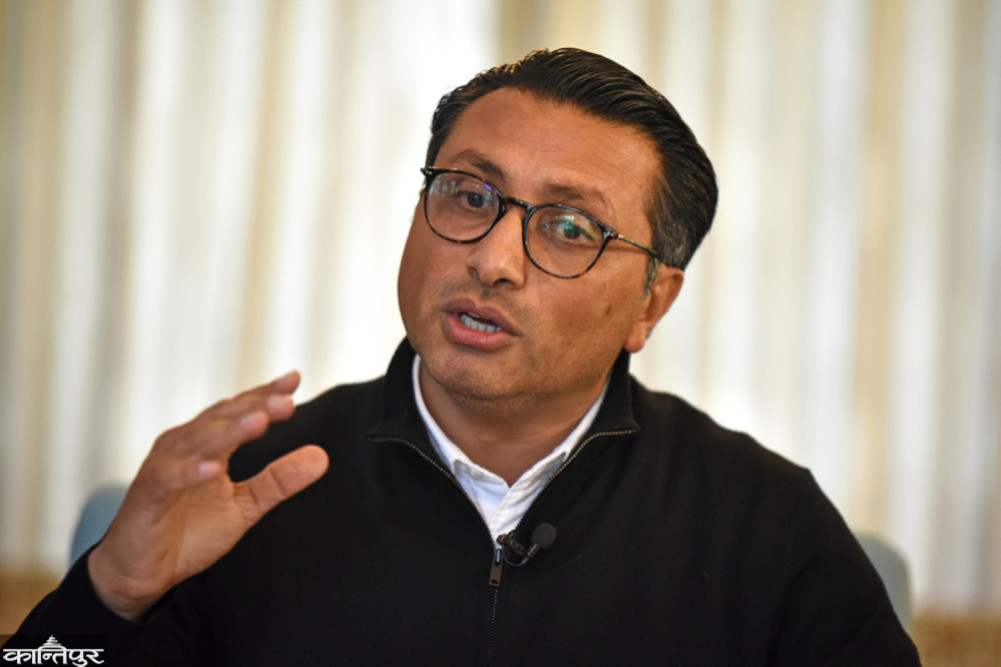
The Finance Minister said, ”In the prime ministerial system, what the Prime Minister says is final. Even when introducing taxes, we brought them after consultation. The current postponement was also done after consultation.”
We use Google Cloud Translation Services. Google requires we provide the following disclaimer relating to use of this service:
This service may contain translations powered by Google. Google disclaims all warranties related to the translations, expressed or implied, including any warranties of accuracy, reliability, and any implied warranties of merchantability, fitness for a particular purpose, and noninfringement.
Prime Minister Balendra Shah said on social media that he has withdrawn the 3 percent tax imposed on education and health. He has tried to explain the reason for the withdrawal, saying that the common man will have to face additional expenses and disappointment if such a tax is implemented as he has said now. Kantipur journalist Yagya Banjade has conducted a brief Q&A with Finance Minister Swarnim Wagle to find out why the government decided to withdraw the tax and how it will be implemented now. Edited excerpt of the same conversation:
The government has decided to withdraw the tax related to education and health equity. Was this a decision taken by the Council of Ministers or through some other process?
The proposal is ready in the cabinet. We have made this proposal based on Section 18 of the Finance Act. I discussed this with the Prime Minister for 1 hour yesterday. The decision was made today on that basis. It was our advice when the tax was imposed. It is said to be postponed now. This has been done according to the idea of the Equity Fund. The aim of which is to establish a dedicated fund for the nutritional diet of Dalit and marginalized children, expansion of health insurance and upgrading of public schools.
We had imagined 4/5 sources of the fund at present. The aim was to create a significant fund of a few billion by collecting education parity fee, health parity fee, excise duty on alcohol, excise duty on tobacco products and some fees related to foreign currency used by Nepalis when going abroad. It has been decided to postpone the implementation of health parity fee and education parity fee for now.
Even though education and health have been postponed, how is the legal process for implementing the parity fund progressing?
The formation order of the parity fund is being drafted like the reconstruction fund. The fees for these two sectors will not be spent. We are discussing options that can be brought from other sources.
It has been said here that the draft has been drafted for postponing the parity fee for education and health. After the Prime Minister says so, it will be implemented. What will be the legal process for this?
The proposal is ready as of yesterday (Monday).
Was the proposal regarding health and education taxes made in the cabinet meeting on Monday?
It was discussed in the cabinet yesterday. In the prime ministerial system, what the Prime Minister says is final. We also consulted when introducing taxes. The issue of postponing it now was also discussed.
After saying that, I felt that there was less information about the impact of such an impact in the previous consultation?
Let's not go there now.
Will this issue be passed in the next cabinet meeting for legal recognition?
That policy will come.