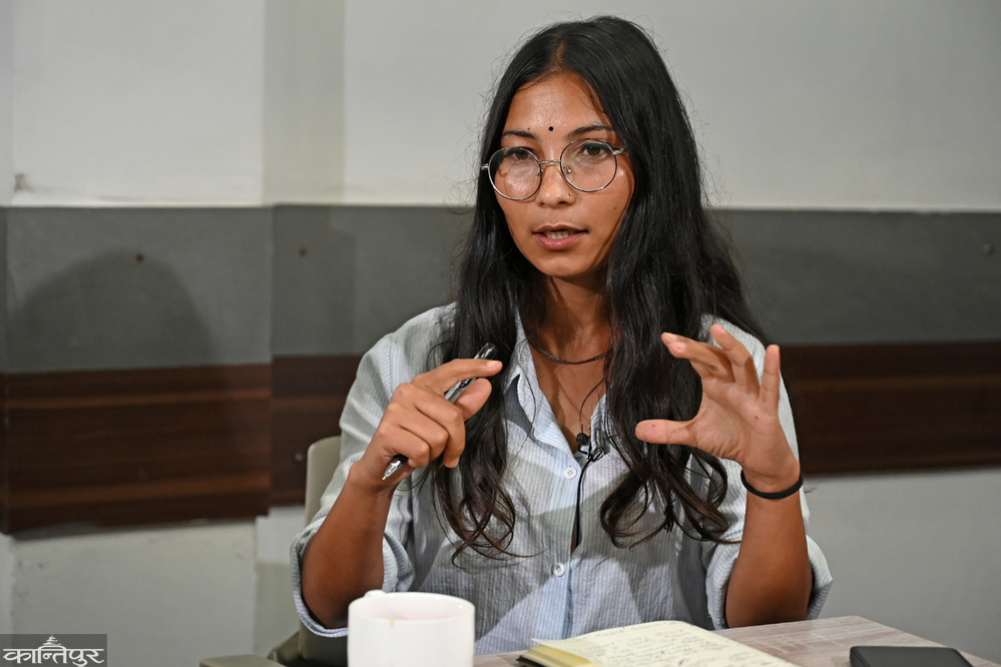
In an interview with Kantipur, a member of the Farmers' Workers' Movement against Meter Bills, Nepal, says: There are also cases of sexual exploitation by moneylenders by promising, ”You don't have to pay your debt, I will waive it.”
We use Google Cloud Translation Services. Google requires we provide the following disclaimer relating to use of this service:
This service may contain translations powered by Google. Google disclaims all warranties related to the translations, expressed or implied, including any warranties of accuracy, reliability, and any implied warranties of merchantability, fitness for a particular purpose, and noninfringement.
Against the backdrop of the failure to implement the previous agreements, the metered rate victims who walked the Janakpur-Kathmandu Justice March have reached a nine-point agreement with the government. This time, the agreement is somewhat detailed, and the implementation time has also been specified. However, the metered rate victims are concerned about the implementation issue. The farmer and labor movement against metered rate, which returned after negotiations with the government, has talked to Nepal's Laxmi Ghimire about the dimensions of the metered rate problem, the reasons for the failure to implement the previous agreements, and the implementation of the current agreement. Here is a conversation with Janakraj Sapkota for Kantipur:
You have been involved in the metered rate movement for four years. You have become like an activist. You have not received justice, but what has changed in your life?
There are many women who have brought the movement to this point. Otakumari and Khumakumari Mahato are the big pillars. Kiran Pariyar from Nawalparasi is also a member of the negotiation team. Saraswati Mishra is ready to fight the wounds of the victims. They have all worked to teach lessons about the character of the state and how the state behaves.
Many people are curious about this movement. Where did you stay during the walk? What did you eat? How was it managed?
This movement is in its third phase. The first was from Bardibas to Kathmandu. The journey began on 16 Magh 2080 from Jhapa in the east and Gaddachauki in Kanchanpur in the west. It reached Kathmandu in 23 days. This time, the walk from Tirhutiagachhi in Janakpur to Kathmandu (until Friday) is on the ninth day. There are district working committees in thirty-five districts. There are working committees in all eight districts of Jhapa, Morang, Sunsari, Madhesh, and Dang, Banke, Bardiya, Surkhet in the west, and Kathmandu. While marching on foot from Janakpur, the victims themselves carried all the necessary items including lentils, rice, salt, oil, blankets, and sleeping mats. We started the movement with preparations.
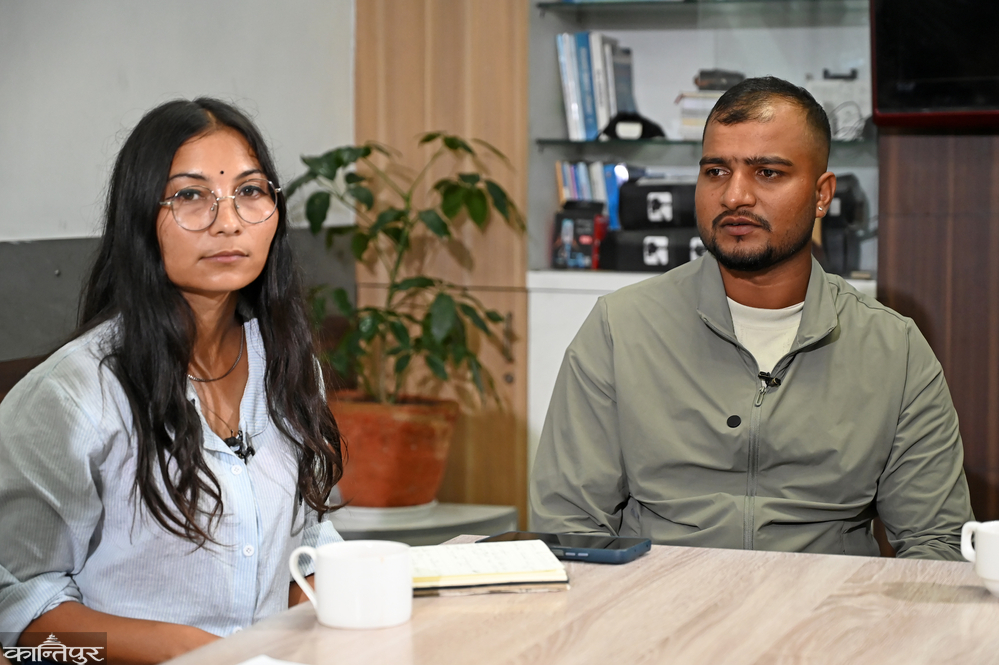 Do you carry lentils, rice, salt, and oil and cook them on the way?
Yes. While walking, you sit and eat in public places such as religious monasteries, dharamshalas, schools, colleges, and other places in the evening. For that, two or four friends would go ahead and make arrangements. The next day, we would start walking from the morning, eat noodles, biscuits, and chiura on the way, and stay in the same place in the evening. While sitting, the arrangement was such that men would sleep in one row and women in the other. While walking like this, many people got blisters and bursts on their feet. Blisters, bursts, burns, and wounds became a daily occurrence. Many had low blood pressure. They also became sick. Some even got fevers. Drinking Jeevan Jal, eating mangoes, and chiura, we reached Nijgadh in Bara. Home Minister Sudhan Gurung coordinated and came for talks there. Talks took place. A draft of 6 points was submitted in the fourth round of talks. Discussions were held on it. The Home Minister sent it to the Chief Secretary in Kathmandu. Then, after expressing commitment from the Prime Minister's Office, he called for talks. The negotiation team was called to Kathmandu. And, after coming to Kathmandu, an agreement was reached.
Women's participation in every meter badge movement seems to be large. The report prepared by the commission led by Gauri Bahadur Karki has pointed out this issue. According to the close observation of the meter badge movement, why are women more affected? What kind of problems are they facing?
Our Nepali society is male-dominated. Women are considered second class. Looking at the meter badge problem, there is a compulsion to take loans from moneylenders for the marriage of their children. On the other hand, it is women who run the house. Men are busy with outside work. It is not that women do not do outside work. Some women also do outside work. However, most women are like prisoners within the confines of the house. The responsibility of meeting all household expenses lies with the woman. To meet household expenses, she is forced to take loans from moneylenders. Another reason is that for the education and health of her children, mothers are forced to take loans from village heads without the knowledge of their husbands.
During the movement, we must have had an intimate conversation while walking from Dhanusha to Nijgadh. Did you come across any strange incidents during that time?
Not only did I walk from Dhanusha, I have been in the meter bill movement for the past four years. And women are suffering a lot during the movement. Women are also the ones who participate the most in the movement. When women take loans from moneylenders, their husbands abuse them, beat them, and their children also abuse them for taking such loans. Women have also been found to be victims of domestic violence. There are also cases of sexual exploitation by moneylenders by promising, 'You don't have to pay your debt, I will waive it'. Women have had to face social humiliation. They have been victims of social and psychological abuse. For example, a recent incident is that of Shanti Devi Mahato of Biratnagar. She had taken a loan of 150,000 rupees from a moneylender. Of the 150,000 rupees, 450,000 rupees have been repaid. But the moneylender grabbed the land and passed it in his own name. Although they had been living there. While they were living there, the moneylender started pressuring her to leave the house like every day. Threatening her, saying, 'I will do this to you, I will do that to you', became a form of violence. After such behavior was repeated, the victim committed suicide at home when the problem was not resolved even after going to the CDO office (district administration).
When did this incident happen?
This is an incident 15/20 days ago. Like this, many mothers and sisters have been subjected to violence. Not only that, 5/6 people have also been martyred in the movement.
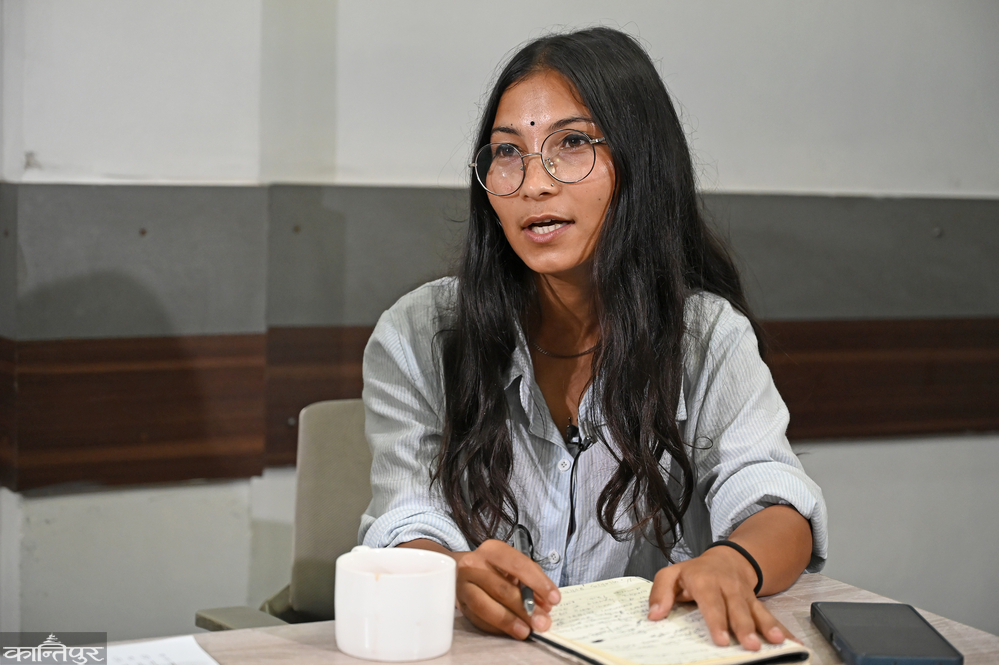 It is customary to go for foreign employment from Madhesh. Even if the government sets ten thousand rupees, there is a compulsion to pay three to four lakhs. There is a situation where husbands go abroad with loans from moneylenders and only women remain at home. What kind of suffering are such women in?
There are many such incidents. Sixty percent of the victims have husbands abroad and women have to take care of the household. For example, when there is no husband at home, the society views women differently. They are viewed through violent lenses. It is found that women who have husbands abroad are subjected to a lot of physical and mental torture. Moneylenders also exploit them. Such criminal incidents seem to be increasing .
Have you told any stories of women who have had to abandon their daughters' education midway, or pay a lot of dowry for their daughters' marriage ?
There are many women in this . For example, moneylenders don't have to repay the loan after you eat ? Don't you have to repay the loan after you take ? There are many incidents of violence when they say that they have to join hands while taking money, and when they are paying, they have to walk around protesting like this . Most of the women who are protesting against the moneylenders, who used to walk around wearing veils yesterday, today, due to the movement, they are able to throw off their veils and question the state . They have developed the ability to fight against moneylenders, fight against society, fight against the government machinery (ward office, CDO office, police office) and the state on the streets for justice .