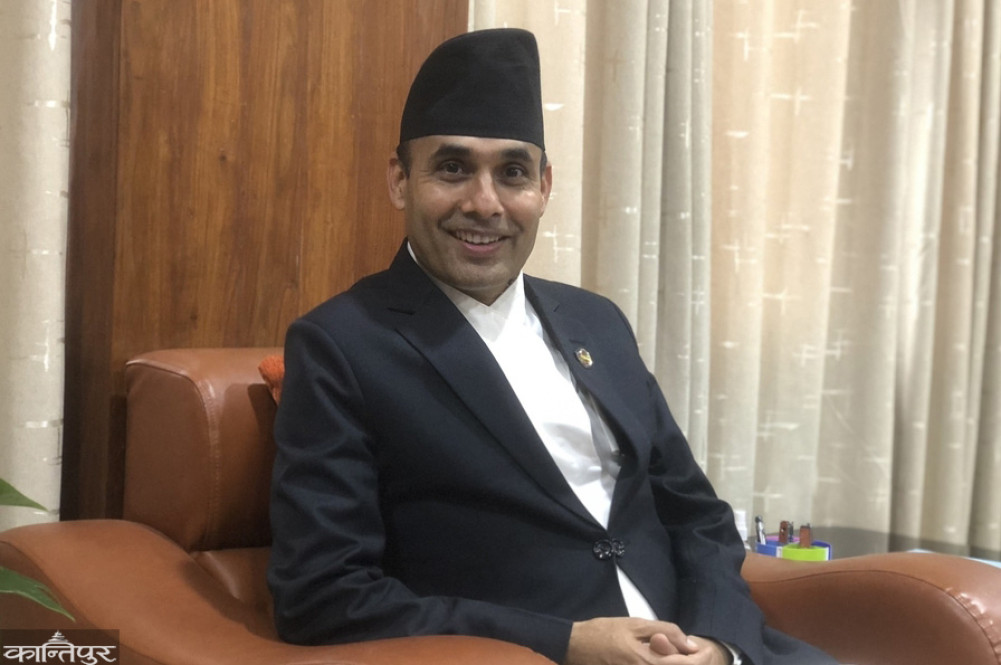
Minister for Communications Bikram Timilsina has expressed his determination to improve the quality of telecommunications, expand 5G, and bring Ncell under government ownership in accordance with the law. He said that the entire communications sector will be made dignified and technology-friendly through responsible use of social media, child safety, and policy reforms.
We use Google Cloud Translation Services. Google requires we provide the following disclaimer relating to use of this service:
This service may contain translations powered by Google. Google disclaims all warranties related to the translations, expressed or implied, including any warranties of accuracy, reliability, and any implied warranties of merchantability, fitness for a particular purpose, and noninfringement.
Vikram Timilsina, elected from Nuwakot-1 by the National Independent Party, is currently the Minister of Information and Communications. The government's 100-point action plan included significant plans related to digital transformation, e-governance, and information technology. Along with the progress made in it, Minister of Communications Timilsina has clarified the issues of introducing a third telecommunications service provider, transferring ownership of Ncell, managing the liability of Smart Cell, regulating social media, and granting/denying service to Starlink. An edited excerpt of the conversation with him, focusing on other contemporary issues in the telecommunications sector:
We had set priorities according to the expectations of the people to make ourselves accountable and facilitate work performance. The government had brought a blueprint for where we would reach in 100 days and what would be technically possible. In it, we had identified 26 points related to our ministry. The work was not limited to those points. However, they were the minimum tasks that had to be done. Some of the tasks were done once, while others are in the process of being continuously implemented. It does not seem like we have failed in our goals during this period. Either we have completed the work, or they are in the process of being implemented and continued. For example, the work of making government websites accessible is a 'work in progress', which needs to be updated according to technology.
Information technology was not removed from the ministry because it was not important. It was taken under the Office of the Prime Minister and Council of Ministers to give it more importance and work in a separate way. We have talked about digital transformation and e-governance, this is not an easy task and it requires special efforts and initiatives. After the formation of the government, we initially worked on the information technology sector and handed over the progress to the Prime Minister's Office. Currently, work is being done on AI governance, cyber security and legal reforms.
In the case of telecom, two things are important - one is coverage and the other is quality. Although our history is long, it has not been possible to build a strong foundation so far. With urbanization and population growth, the existing infrastructure is not enough as demand increases. Since I came to the ministry, I have repeatedly instructed Nepal Telecom to solve problems such as network failure, phone failure and poor data quality. There is a plan to install the required towers across the country within the next one to one and a half years. The process of purchasing about 15/1600 'Inode B' for 4G coverage and quality improvement is beginning, which will bring about a big change.
Regarding 5G, I have advised the regulatory body to prepare for 5G as well. We are planning to roll out 5G from 5/7 major cities soon with a specific timeline. It is necessary to revitalize the telecom sector for digital transformation. The problem that has been going on for years will not be solved in three months, but we are on the right track and our vision is clear.
In the next few years, there will be a huge transformation in Nepal's telecommunications sector. For the digital transformation that we have been talking about, if we do not revitalize the telecom sector or increase its capacity, we will not be able to reach there. In that sense, I have viewed the telecommunications sector with great importance and what I want to ensure is that we will reach where we want to reach.
Telecommunications is a very sensitive and important sector. There have been many games and a lot of irregularities here before. There are incomprehensible incidents here. Therefore, the government has decided to move forward very carefully, deciding what we need, where we need to go, and that path. Regarding the introduction of a third service provider, I am not saying that we will welcome the third one tomorrow. However, in principle, for the geography and population of Nepal, we understand that there should be at least three service providers in the telecom sector to ensure healthy competition. Currently, two operators are providing services in the telecom sector. Now, we should gradually create three service providers because quality, service provider capacity, and service at competitive prices must be ensured. Sooner or later, a third service provider will enter. However, that does not mean that a decision will be made overnight and the information will be published.
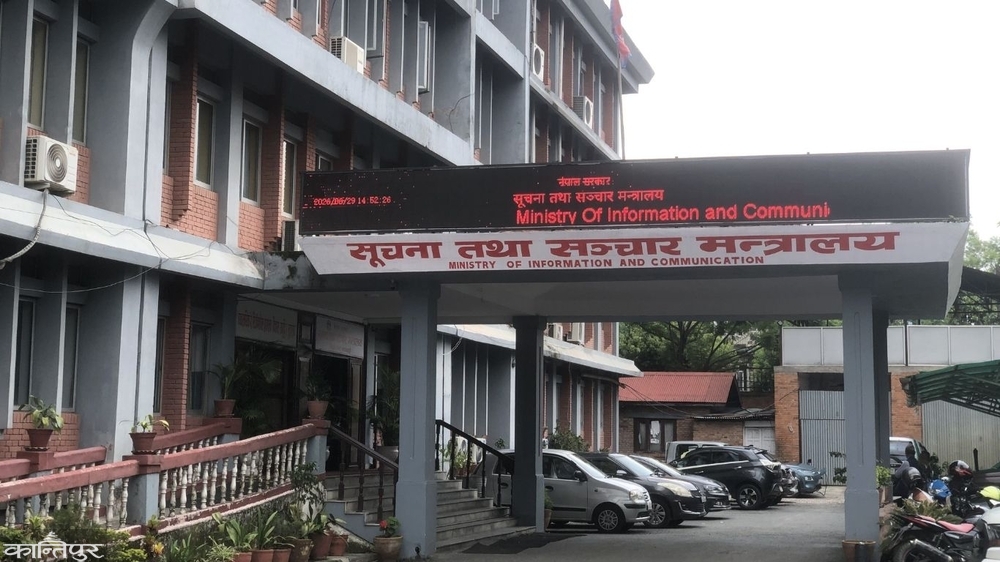
This is a serious issue. Unfortunately, it is a sad matter for the nation that such an important sector of the state is being polluted in this way. There are many irregularities in this and various investigations are currently underway. The independent study team formed by the government has also given its report. Now that report is in the process of implementation and action. Since some things are currently under investigation, it is not appropriate to say all the issues publicly. However, one of the responsibilities of the state is that whoever has been wronged by that organization or company, we are ready to help them in whatever way we can according to the law.
There have also been issues of house rent and other problems. Here, the state itself has been cheated. Why the relevant bodies did not fulfill their responsibilities in the past is also being studied and investigated, and action will be taken against the guilty. Also, I would like to clarify this - Smart Cell did not collapse or become a mess because it came under the control of the Government of Nepal. How Smart Cell itself collapsed would be a separate study, but the government cannot be blamed for this. Our main responsibility is to ensure a safe landing for this service that is being used by many people without any risk. We are committed to solving this problem by holding our subordinate bodies, regulatory bodies and the company itself accountable.
We will proceed according to what the law/regulations say on this issue. According to the Telecommunications Act 2053, it is now time to seriously plan on this issue. I have already sent that message to the concerned company. We should go according to the letter and spirit of the law on how to successfully handover this transition. I have also given my opinion to the Nepal Telecommunications Authority in this regard and the concerned company is aware of this. According to the provisions of the law, preparations should have already begun on how to make this transition and how to come under the government's ownership. Even if not, that preparation will begin now, no one has the right to bypass the law.
In the meantime, the regular work to be done by the service provider, the service delivery must be effective. However, according to the current law, they should consider how to run the company that needs to be handed over to the government for the next 3 years and some more time. There is nothing so complicated about it because both the government agencies and the company should be prepared accordingly regarding the matter that is clearly provided in the law.
No one has the right to not follow the law by imagining that this will happen tomorrow. However, it is our responsibility to not let doubts or imaginations become true. Since it is a service that many people are using, it is the responsibility of the government to successfully implement the law and ensure a safe landing without any risks. The government is aware of its responsibility to make the agencies, regulatory bodies and the company itself accountable and do that work. If everyone fulfills their respective roles, there will be no such problem. The law also has clear provisions, methods and options for this, any of which can be used safely.
The main thing is how to use social media responsibly. I would like to urge users to think before posting or sharing any content. The best thing is self-regulation. We are not in favor of closing or banning social media, we are committed to freedom of expression and democratic values. However, with rights comes responsibility. I have had conversations with representatives of some social media. We are in the process of formulating the necessary policies and regulations by taking suggestions from all stakeholders and citizens.
Representatives of social media have not had any complaints or objections with us. There has been a general exchange of opinions. They believe that we are a government built on a democratic foundation and do not go against democratic values. But our stance is that the government, media, users and outlets should all be equally responsible for the use and management of social media. Users cannot forget their responsibility.
However, I have been studying the impact of social media algorithms, especially on children, both personally and institutionally. Some countries have imposed age-specific restrictions. It is not enough to just make a policy, but there are challenges in implementation. Age matters - who, how much will be exposed, how much will not be, how useful it will be, and how much it will affect a young brain. Even if we have not reached an exact decision, the government thinks that something should be done for children.
Discussions have been held with Starlink representatives. According to Nepal's laws and regulations, any company can come and register. However, Starlink is talking about 100 percent foreign investment, which our existing law does not allow. The law itself needs to be amended to allow 100 percent foreign investment as they want, but special arrangements cannot be made for just one company. Therefore, we have said that they are welcome if they come according to our existing law. Satellite internet is important for geographically remote places. However, we also need to consider how economically feasible it is. I am not aware of Huawei's initiative.
The technology sector is always changing, so old acts/laws must be amended with time. We are moving forward with the work of amending the act to strengthen, regulate and provide quality services to the people in the telecommunications sector. सय दिनको अवधिमा कानुनी सुधारमा सोचेजति काम गर्न नभ्याए पनि अबको एक वर्षभित्र दूरसञ्चार, आमसञ्चार र मिडिया काउन्सिलसँग सम्बन्धित विधेयकहरूमा केन्द्रित भएर काम गर्छौँ । चलचित्र विधेयक अहिले संसदको समितिमा छ ।
भ्रष्टाचारमा शून्य सहनशीलता, जवाफदेहीता र निर्णय प्रक्रियामा पारदर्शिता मेरो मुख्य एजेन्डा हो । मैले सबै निकायलाई स्पष्ट निर्देशन दिएको छु- मबाट पनि र तपाईंहरूबाट पनि अनियमितताको कुनै काम हुनुहुँदैन । कुनै पनि पार्टीको स्वार्थ पूरा गर्न होइन, देश र जनताको हितमा काम हुन्छ । हिजो यो क्षेत्रलाई भ्रष्टाचारको अखडा बनाइयो, तर अब ती काण्डहरूको अनुसन्धान हुन्छ र संलग्नहरूलाई जवाफदेही बनाइन्छ । म पदमा रहुञ्जेल यो प्रतिबद्धतामा दृढ रहनेछु ।