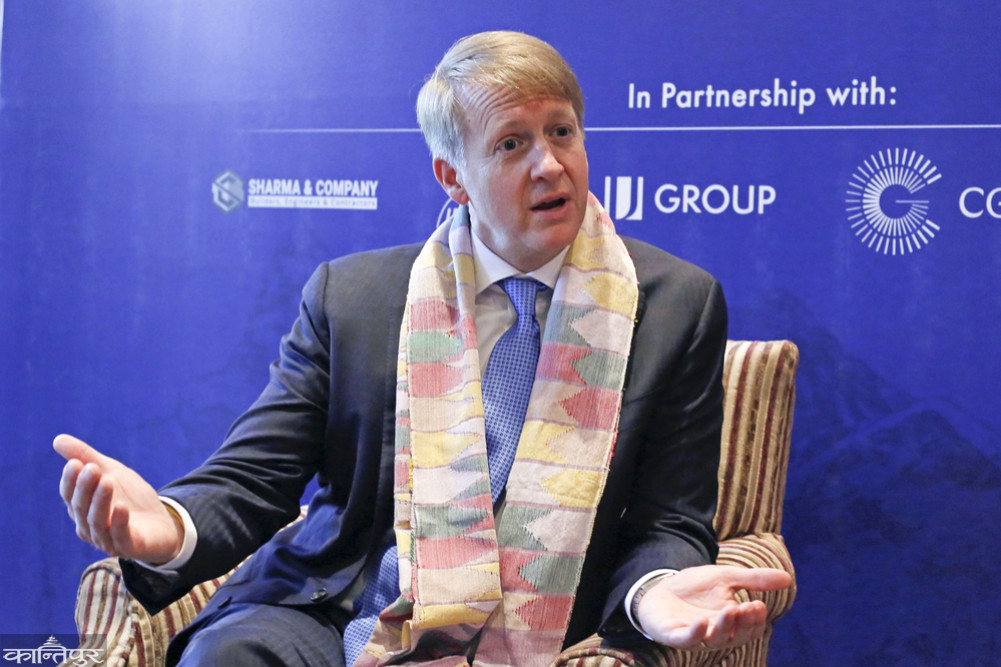
In an interview with Kantipur, David Marriott, Chairman of the Board of Marriott International, said that he has seen great cultural service in Nepal and that Kathmandu is a multifaceted and very interesting city.
We use Google Cloud Translation Services. Google requires we provide the following disclaimer relating to use of this service:
This service may contain translations powered by Google. Google disclaims all warranties related to the translations, expressed or implied, including any warranties of accuracy, reliability, and any implied warranties of merchantability, fitness for a particular purpose, and noninfringement.
Marriott International, which operates 9,900 hotels in 146 countries, is celebrating its 100th anniversary next year. While the Marriott, Fairfield, Moxy and Aloft brands are currently present in Nepal, it is now preparing to operate two premium brands, The Ric Carlton and Westin Hotels and Resorts, in Nepal in collaboration with CG Hospitality International. It has been advocating the idea of accelerating economic development through the hospitality industry. For Kantipur Daily, Gokarna Awasthi and Biken Ke Dawadi spoke to Marriott International's board chairman David Marriott in Kathmandu:
What is Marriott's legacy and corporate culture like?
We are preparing to celebrate our 100th anniversary next year. Completing the 100-year milestone is a very rare event in America. I think our culture and values have kept us going strong for a hundred years. My grandparents started it as a small business in 1927. It was a 9-seat beer stand at the time. My grandfather grew up on a farm in Utah. He had to leave school at the age of 12 to work on the farm. But he knew he needed an education. He eventually contacted a professor at Weber State College. He convinced the professor to let him go to college. How did that early education inspire his future career? My grandfather always felt blessed for that opportunity. He never thought he would have had the opportunity to start his own business without that opportunity and education. That's why my grandfather completed a four-year college degree at the University of Utah. That's where he met my grandmother. His dream was to open a root beer stand in Washington, D.C., because he thought the beer business would be good there because it was warm. He took out a small loan, then drove 2,000 miles in a Model T Ford to open a small root beer stand on May 20, 1927. He believed that if they took good care of their associates, they would take good care of their customers. When they did, the customers would come back. This philosophy applies to all businesses.
How did they grow from a small stand to a large hospitality business?
Where do our values and culture begin? That's always important. My grandparents took good care of their associates. In the early 1930s, they hired a doctor to treat their associates. At that time, healthcare was not widely available. They tried new ways to keep their business relevant to their customers.
Their stand was doing well selling root beer during the summer months. But as winter set in, business slowed down. Then they took the business in a new direction. A transformation was needed. They added hot dishes to the menu and later named their restaurant ‘Hot Soups.’ That transformation was the hallmark of the Marriott brand.
How do these values apply to the Nepali market today?
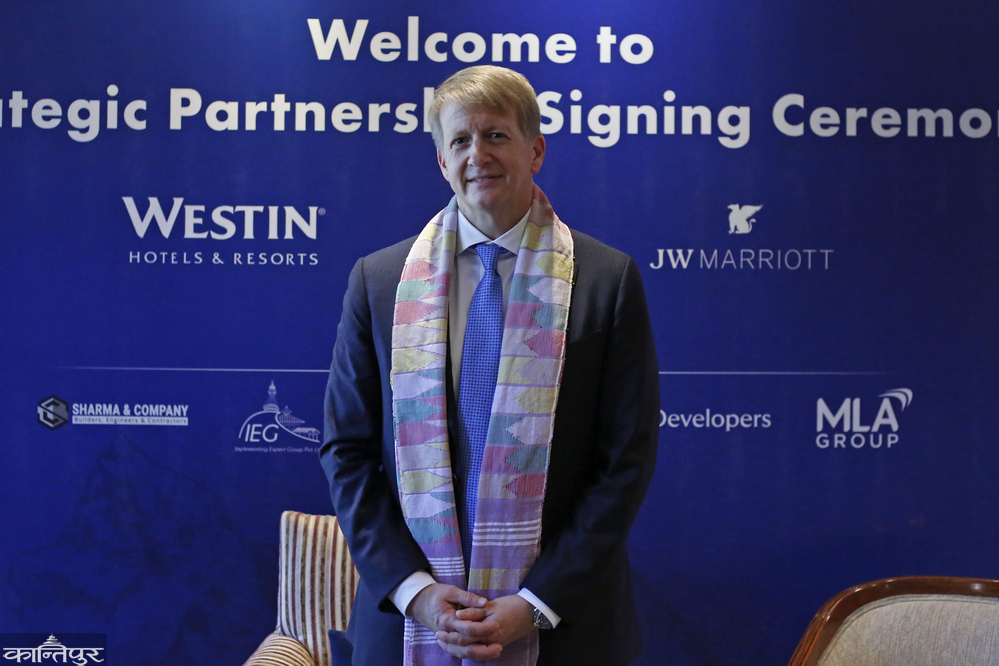
Putting people first is our core belief. The pursuit of excellence, transformation, united action, and service have helped us stand out from the rest in the hospitality industry. It has helped us succeed in the first 100 years. And it will continue to do so.
Coming to a great market like Nepal for the first time, I have met people who are involved in service. They have provided service like my grandfather did when he started the business. They have taught me to care for and serve the customer. I have seen great culture and service here. The people here are dedicated to helping those who visit Kathmandu and making their experience great. It is a multifaceted and very interesting city.
You talked about the vibrancy of this city. Does this energy extend beyond the urban center to the beautiful natural places of the country?
There is a lot of energy in this city. I can feel it. There is an energy that goes far beyond the city to the mountains. People come here to see and experience the mountains. That is one of the true realities of this world.
Is Marriott expanding its presence seeing that potential? Is the decision made because of the potential for luxury brand expansion in Nepal?
We are always looking for opportunities to expand. There are great career growth and development opportunities for our associates in Nepal. There is an opportunity for our customers to experience new places and great destinations. There is also an opportunity for hotel operators to partner with us and grow their business throughout Nepal. Nepal is a destination that people around the world are increasingly seeking – the increasing demand for hotel rooms shows that. And, we are here to meet that demand. I think this market is ready for continued growth and luxury. It is a market where there is a good path for a great future.
You mentioned the Himalayas? Do you want to expand your services outside Kathmandu, or even closer to the Himalayas?
We are constantly looking for opportunities. There is that opportunity in Nepal. We came here because we saw an opportunity for us, for our partners, for everyone. We will find more opportunities.
There are hundreds of Marriott properties in India in this region. What does Nepal need to do to attract the same attention as India for your brand?
That is why we are here today. We are adding two new hotels in Nepal and one in India. We see great growth potential in this market and in Nepal. We feel we can expand from now on. You have to remember, Marriott works strategically. It goes into gateway cities first. Looking at our journey in India, we opened hotels in Goa and Mumbai very quickly. As the brand became popular, we expanded elsewhere. I expect the same here.
Apart from building hotels, what are your other priorities in this region?
I would like to highlight two things here. One of our main tasks is to develop talent locally and hand over hotels around the world to locals. We are producing skilled manpower all over the world. Nepal has a huge talent pool. Nepalis are now working in our hotels abroad and eventually they want to come back. We have seen the same in India.
We have sent thousands of employees from India to work in Marriott hotels in other parts of the world and now hundreds of people are returning home. Some really want to go home, some want to go back because of family. But, there is an opportunity for them.
We would like to add here, there are workers in your hotels abroad, especially in the Middle East, how can their career development and your expansion in Nepal benefit them?
Nepali workers are everywhere. Even today, when I walk through the Qantas First Class Lounge in Sydney, the people who greet me are also Australians of Nepali origin. They are also featured in Qantas advertisements. We have many Nepali colleagues working in the US and other markets. We are creating an ecosystem where people can leap beyond borders. If there are people here who can go and work anywhere in the world, we will give them that opportunity.
When we open the Rich Carlton and the Westin here, there will be some Nepalis, even the Nepalis who are outside may say, ‘I want to go home now.’ Now I have a reason to go home.’
They may have been associated with the Rich Carlton for a long time and may want to go home. We will see such moments all the time. It is exciting because it creates opportunities for our people.
You also talked about the third element of your strategy, which is called Marriott Bonvoy? What role has that loyalty program played in this growth and development?
This is our loyalty program. We have 280 million members worldwide. We have about 75 million people in the Asia Pacific region. In India alone, there are 11 million. We want to travel and experience our hotels in new destinations. When we open a hotel in a new destination, our Bonvoy customers go to experience it. When you talk about bringing luxury, you have to look at the Asia-Pacific region. It is home to 60 percent of the world's population. By 2030, another 700 million people will become middle class. Luxury travel is growing.
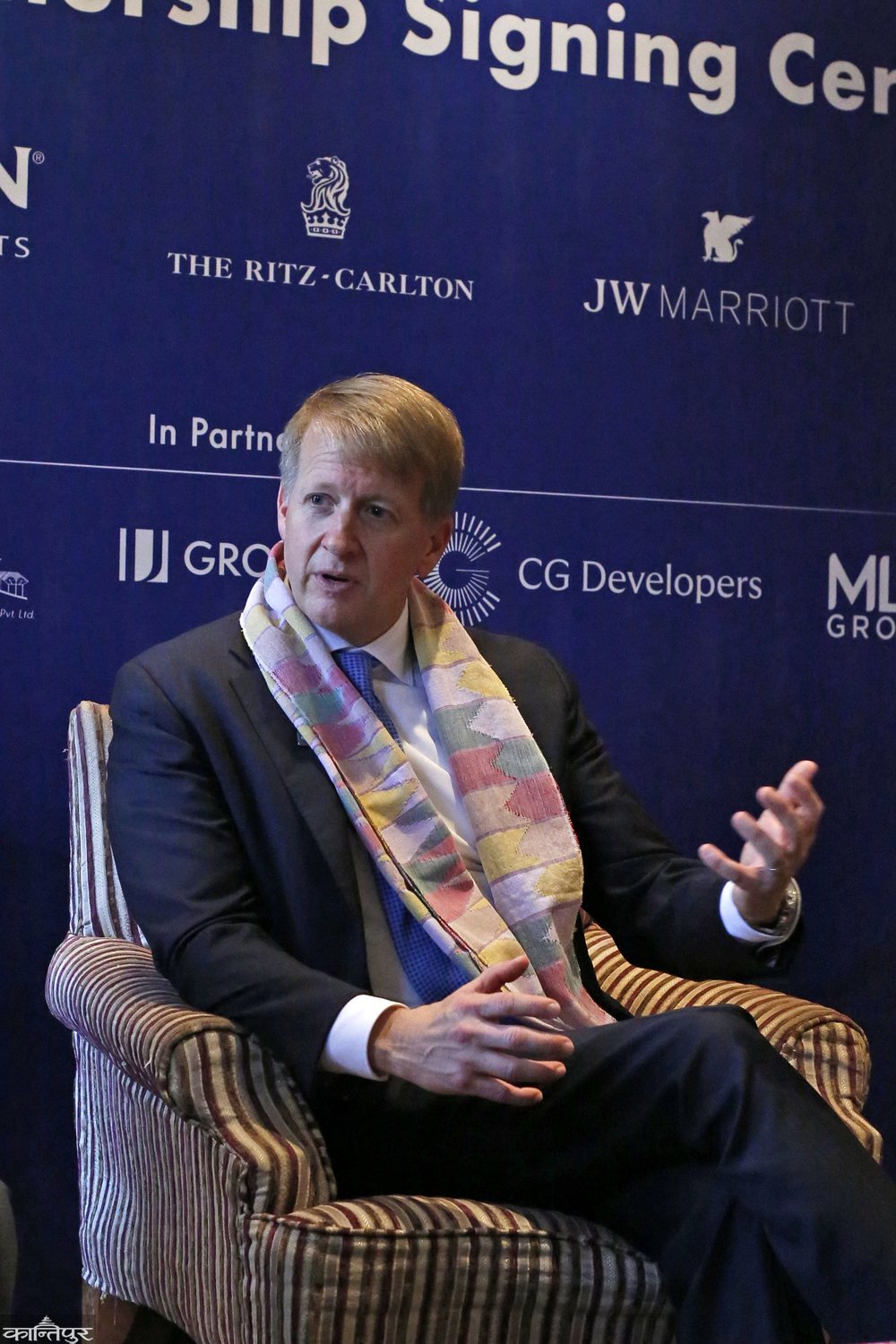
Why did you decide to partner with CG Hospitality for the Ritz-Carlton and Westin in Nepal?
We are looking for partners all over the world. CG Corporation is a great partner for us. This corporation has been amazing for years. We have found the best partner we could imagine for our growth and development in Nepal. We are looking for a partner who shares our values and follows the ‘People First’ philosophy, who can bring about change and provide excellent service to the world. They are connected to that belief. So we are very excited to work with them (CG) in Nepal and India.
Let’s talk about accessibility, what specific infrastructure do you suggest for building?
In many regions and countries around the world, including South Asia and Southeast Asia, we work to convince governments of the power and importance of tourism. Globally, tourism contributes 10 percent of GDP and more than 13 percent of people are employed in the tourism industry. The power of tourism is huge.
We have been working with governments to make tourism accessible. What does it take to make visa processing easier and how can access be made easier? We talk about this. When infrastructure is in place, it becomes easier to get from one place to another. More flights and destination promotion make a country more accessible.
Where have such strategies been successful? Can you give some examples?
You can look at countries like Vietnam. This country, which used to receive less than 10 million tourists, now receives more than 21 million tourists. With the development of infrastructure in India, we are going to be active in increasing tourism in this way. People have money. Gen-G generation in particular wants experiential travel. They want to get out and experience different destinations. Their destinations should be made accessible. This means developing beautiful hotels and infrastructure in the destination.
Nepal is working to attract more foreign investment. What are your suggestions to the Nepal government and local businesses?
I think Kathmandu needs to be marketed as a destination. The mountains are accessible. How reliable is Kathmandu? Awareness needs to be raised on that.
Do you have any suggestions for business people in Nepal?
People want to spend money on our industry, Nepal and tourism. This is good news for us. People want to experience such amazing mountains in Nepal, which are not found anywhere else in the world.
People carry these memories with them for the rest of their lives. As the market becomes more accessible, you will see more and more people visiting this destination. They will come to this great destination to experience the amazing mountains in Nepal.