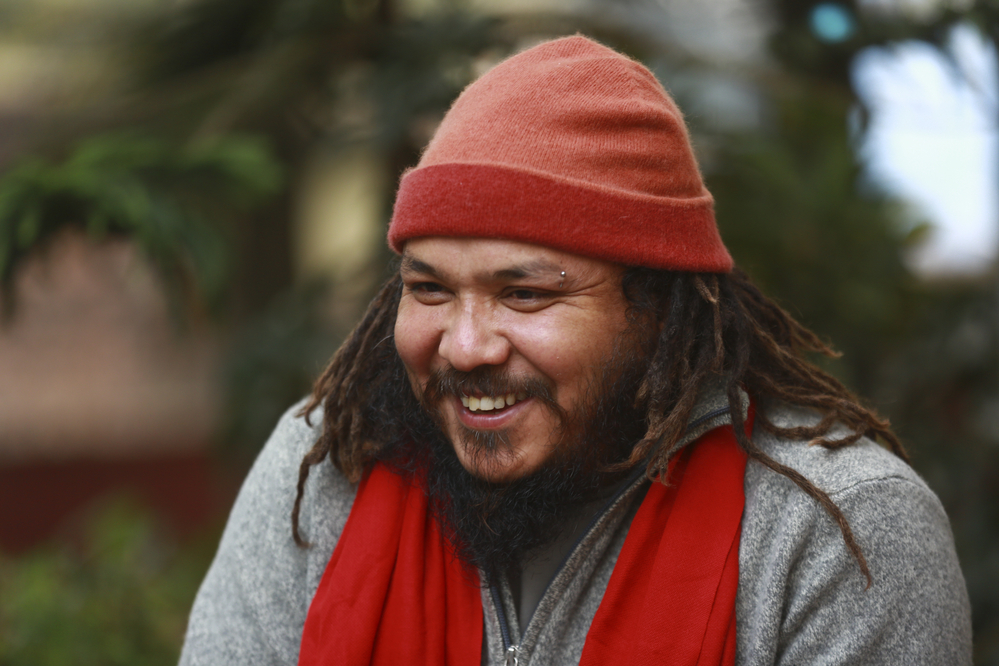
The Berlinale requires only 7 jurors from a crowd of thousands of filmmakers. I have been selected for that. Sometimes dinner with the Chancellor, sometimes with the director. The emails and invitations I have received now are things I never imagined in my life.
We use Google Cloud Translation Services. Google requires we provide the following disclaimer relating to use of this service:
This service may contain translations powered by Google. Google disclaims all warranties related to the translations, expressed or implied, including any warranties of accuracy, reliability, and any implied warranties of merchantability, fitness for a particular purpose, and noninfringement.
While watching films at the high-vision hall his father used to show in Mugu, Meen Bham never imagined that he would one day become an international jury member at a world-renowned film festival. Perhaps it was the influence of ‘Andhadhundha’, ‘Sholay’, ‘Chino’ and ‘Kusume Rumal’ that he watched in his village that led him to run away to Kathmandu and learn acting at the National Theatre.
He acted in ‘Karnali Dakhkin Bagdo Cha’ and ‘Ghanchakkar’ at Gurukul. Before studying film and venturing into directing, Meen got a taste of festival films. When he saw the films that reached the festival, the dream of making a film and reaching the festival was planted in him. Meen, who has been fulfilling his dream at the world-renowned festival, was recently selected for the international jury of the Berlinale. He will work as a member of the team led by famous German director Wem Winders. Kantipur journalist Reena Moktan spoke to director Bham about jury selection, the presence of Nepali films in the global market, and the local popularity of Nepali films in South Asia:
You became a jury member of the Berlinale, what is the experience of being a jury member when a film is selected and when it is selected?
Especially when I was talking about films with my filmmaker friends Avinash (Bikram Shah), Pooja (Gurung), Vibhushan (Basnet), the topic of festivals would come up. After making a film, I also got inspired to go to film festivals. But I never expected to become a jury member. When I first went to Berlin in 2013, I was selected by Berlinale for Talent. What was interesting at that time was that the head of the jury was a filmmaker I really liked, Wanker Y. At that time, he had a class for talent called ‘Valentine’s Day with Wanker Y.’ It was amazing to be a jury member again after 13 years. Sometimes age and work experience do not qualify you to go there.
Whether it was going to Cannes in 2018 or Venice in 2015, I always saw filmmakers I idolized, Bela Tar and Nuri Bilge, on the jury. When I saw them on the jury, I never saw an example of us getting there. As a filmmaker, it was an expectation, a dream. Sometimes it is up to the filmmaker to get his film to such a festival. But, it is not always the jury. I have never seen my other favorite filmmaker, Kim Ki-dak, go anywhere as a jury. He has made so many films that he has earned a name in world cinema. In my case, the vision of the festival was also a coincidence. The festival sometimes pulls you. If your film goes to Cannes, Venice and Berlin try to steal you. If you go to Venice, Cannes and Berlin pull you. Sometimes it is fun for a filmmaker to be in such a pull. After being selected in the main competition of the Berlinale, now Venice is trying to call me. In fact, the reputation of such a festival is to connect contemporary filmmakers with it. This does not happen again during times of struggle.
How exactly were you selected for this festival?
They don't say anything about how they invite you as a jury member. They sent out proposals for the jury 6 months ago. However, they don't send invitations to anyone until the head of the jury is confirmed. I had thought that this year's Berlinale would have people from Wembley to Bella Thorne, Leonardo DiCaprio, and Martin Scorsese on the jury. But I myself received an email last July. However, at that time, the head of the jury had not been finalized. At that time, I was 'OK' with the proposal to become a jury. However, in the meantime, elections were held due to the Genji movement in the country. At that time, when all the candidates were being confirmed, I was in a situation where I said ‘no’. My mind was on the fact that I should contest the election. I had thought of contesting the 2084 election, and since the election was to be held on 21 Falgun 082, I was not going to Berlin. They kept asking me to either say ‘yes’ or ‘no’. Then I got stuck in the special general convention of the Nepali Congress. A month passed.
By then, I had to say yes. In a way, I had already said yes. However, I had made a place for them to say that if I wanted to contest the election, I could withdraw it. They looked at that matter a little awkwardly. I was with Gagan ji (Gagan Thapa) and Vishwa ji (Prakash Sharma) for 2 hours while registering my nomination. In fact, I had already talked to Vishwa ji about this. He advised me to come after the elections and work in the party's internal central committee now. I spoke to Gaganji when I had 2 hours left to register my nomination. At that time, Kathmandu had not been decided.
While discussing which area of Kathmandu to get the ticket from, I thought a lot. I felt that if I backed out of this proposal now, they would never call me like this. Berlinale needs only 7 jurors from the crowd of thousands of filmmakers. I will be active in films for the next 20/30 years. In these 20 years, they will call a total of 150 jurors. How will they call me again? This is a matter related to my film career. Will I get that exposure, that experience again? The election will come later. There was a discussion with Gagan and Vishwaji about whether I will get it again. And that's when I decided - I will go to Berlin as a juror. The way I came out of the hall of Hotel Aranya with joy, everyone thought that I had brought tickets. I met Sachin Timalsina at that time and hugged him and kissed him on the cheek. I am happy for you, I told him that you are getting a ticket. I was very happy that I made the right decision at that time. Some of my friends were sad that I did not get a ticket, but I was happy that I did. 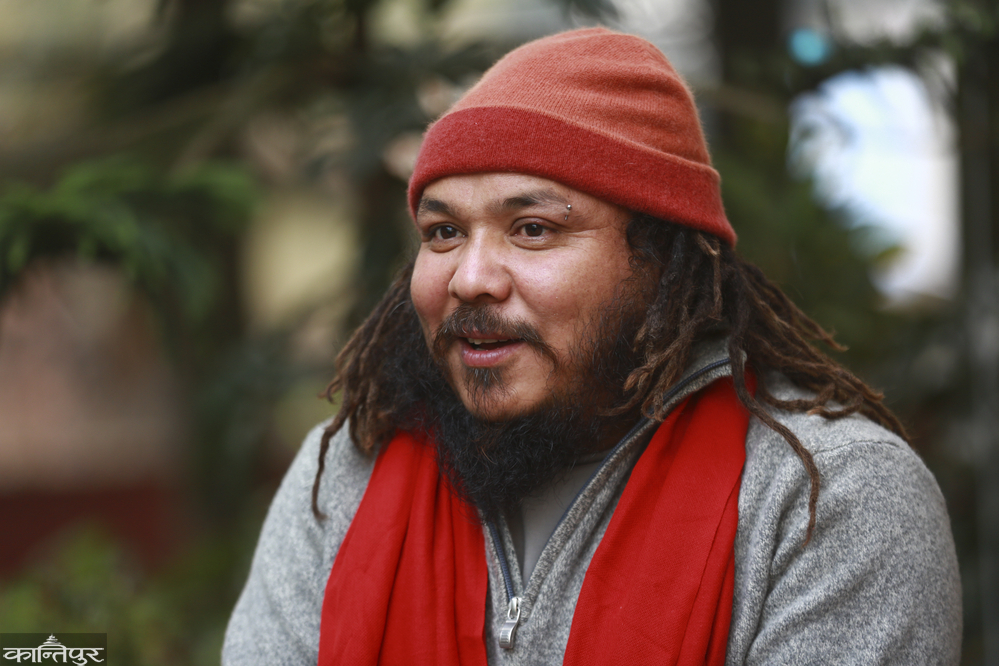
So, didn't you grab a ticket to Berlin after not getting a ticket to contest the election?
No. I was in a position to get tickets in areas 1, 2, 3, 4 and 10 of Kathmandu, where I would get tickets. At least I was in discussions for a long time about the distribution of other tickets.
Minakshi Sedde, who has worked for India and South Asia at Berlinale, congratulated you on the fact that Shambhala was selected from South Asia after 30 years and now the jury has also been selected from Nepal. As Minakshi said, are we much ahead of India in South Asia? What are your duties while you are going to Berlinale representing Nepali film and Nepal? Surely it is not just the job of distributing awards?
I had some experience as a jury member in America, Russia and Australia. I was the head of the jury in Russia. However, I found the protocol in Berlin very different. I don't get to meet many people in Berlin either. The reason is that I don't get to meet 'influence' from them. I don't get to meet filmmakers at all. The protocol is difficult, but also fun. Sometimes dinner with the chancellor and sometimes with the director. The emails and invitations I have received now are things I never thought of in my life. It is exciting to be able to stay with the convenience of two/three assistants. Earlier, when I was a jury member at a festival, there would be a discussion after watching the film. But, now, there is a schedule of sometimes discussion, sometimes watching the film alone. On top of that, there will be in-depth discussions on some films, which we used to do only in film school. Personally, the exposure, networking and experience I get is amazing. The protocol is difficult, but also fun. Sometimes I have dinner with the chancellor and sometimes with the director. I didn't get the networking I have now even when I went with 'Shambala'. This is Nepal's participation in world cinema, its representation and influence. Yesterday I went to eat dalbhaat at a place. The hotel lady told me that a foreigner had talked about me there the day before. Many ambassadors have now emailed and called me. It would be difficult to even mention their names here. But, their inviting me to meet them and have dinner together is soft power. When we are jurors like this, the message that there is a film industry in Nepal reaches world cinema. This time, there are four jurors from Asia. Where it is difficult to select two South Asians, our geography and our film industry have a deep imprint on world cinema. This is soft power. That is why I am very happy for the country more than for myself.
Earlier, during the time of Satyajit Ray, India was much ahead in global mapping. Of course, Bollywood is after Hollywood in mainstream films. However, India is far behind in art house films. During Satyajit Ray's time, Americans and Europeans idolized him. Then some Sri Lankan filmmakers strengthened their presence in world cinema 20/30 years ago. Then India came forward again, Masaan, Udaan, Lunchbox and some independent films of Aamir Khan attracted the attention of the world. After Satyajit Ray, Mira Nair to Deepa Mehta made this industry, which was not popular in world cinema, aware. After them, Anura Kashyam came. Udaan, Masaan, Lunchbox came with her. But, after that, Nepal's influence in world cinema increased. Indian filmmakers should not be angry about this, it is true that we are far ahead in world cinema.
For example, this time Berlin has selected four Nepalis in Talent, while we have examples where up to five people were selected in the same place. When five talents from our Nepal were selected, only two were selected from India. Out of the four thousand talents who apply from all over the world, only a hundred people from Nepal apply. In comparison, only a thousand people apply from India. Out of a thousand, two/three people are selected. Four/five people are selected from Nepal at once. That also shows how fast our pace has become. For example, four/five hundred people apply at the Asian Film Academy in Busan. Earlier, 50 percent of the applicants were from India and 30 percent from the Philippines. The rest were from Nepal and Bhutan. However, looking at the current statistics, it is clear that there is a large presence of Nepalis from the application process to the selection process.
What does all this show? Every year, Nepali filmmakers are being selected at the festival. Avinash (Bikram Shah)'s film won Cannes. Naveen Subba's film was at the Toronto International Film Festival. Fidel (Devkota) and Deepak (Rauniyar)'s film was in Venice. Of course, Bollywood also dominates Indian films. But, out of the two to three hundred films sent from there, at least one or two are selected. But in Nepal, out of the films sent by four or five people a year, two or three are selected. In this way, Bangladesh was also in the world cinema of unity, and it has returned.
Now Nepal is ahead not only in the context of South Asia, but now in the whole of Asia. First, the wave of world cinema was in Japan. Then it went to Iran. Then it reached South Korea. From there, it is towards Vietnam. Now, the film industry of Vietnam is growing rapidly. After that, Nepali films will lead Asia. The lack of policy reforms in our state and the importance given to film and art will prolong the process for a few years. However, if the state policy level facilitates this, Nepal will come to the world cinema as soon as it says 'Asia'. Now that the jury has been selected, I can 'recommend' our filmmakers. With this selection, I can connect Nepali filmmakers, local artists and local talents with this festival. This responsibility has given me this opportunity to connect new filmmakers. When Naveen (Subba) Dai and Tshiring (Ritaar Sherma) Dai reached the world market ahead of us, we used to laugh. Seeing them there made us hopeful. In 2024, your film 'Shambala' was selected for the first time from Nepal in the main competition of the Berlinale. What kind of film do you make to be selected in such an important competition?
I always got a good team. Sometimes I got a co-writer like Avinash. Sometimes I got an editor like Kiran Shrestha. When did I find a production designer like Ram Bahadur Khadka? The team I got when I was making Jun(Jun film, they were very new in the field. They may have lacked knowledge and experience, but the hunger and fire inside was like mine. When you meet such a team, you can make such a film with fun. You can also make it better. People mature with experience. Earlier, it took me three months to write a script, now it takes three weeks. To make the best film, or to be what you say, the hunger inside me is never satisfied. The day that is satisfied, even if there is a budget of billions, someone should give inspiration, the game is over! The fire that burned inside me has not been extinguished. The hunger and thirst have not been quenched. May I be able to work with a person who is hungry and has fire like me, such a record is kept in life. Rest assured, I am not the only one who is hungry and thirsty. First, China's Chloe Zhao was the first to win the Best Picture at the Oscars Women used to be called The subject may be . For example, I am not in the habit of wearing a daura saree . When I wear it, it does not match my style . I accept that situation . In our country, films have been established as a subject to be viewed from a close perspective . Films are larger than life, if you want to do it exactly, you just have to place a camera in front of the character . Films are fiction, right . When Kiran Dai (Manandhar) paints, doesn't the question of culture arise ? And we applaud sci-fi films that say that films are fiction, nothing is impossible . And does fiction films have culture or not ? We only look at what is there from a political perspective . It ruins us a lot . Such comments do not affect me . Such abuses and complaints do not touch me that much . However, such things Filmmakers get slapped in the first bite.
In America and Europe, how positively do they look at this aspect? They praise how many human stories they have brought. In our country, questions are raised about the deterioration of community, caste, and cultural aspects. This brings about destruction. Is this what happens in art? It should have been done in documentaries. It is not done in dramas either, it is not understood that it should be done there. Film critics have a big hand in this. It should not be practiced with that perspective. They tell me that you did not make this documentary while making dream sequences and fictions? Where is our consciousness?
You have reached many festivals from Mugu to Kathmandu and from Kathmandu. It is also heard that arthouse films did not earn much in the domestic market. What are the problems and struggles you have faced in these 14 years, from Bansulli to the present situation? Is it?
Honestly, my struggle is nothing more than that. It is not sad. It is not difficult. It is not a struggle. It is a natural thing to do at work. There is some struggle when driving. On this path, if you look at many things that come in your work as sadness, you will be sad. If you consider it a struggle, it is a struggle. But, in the early days, my struggle was to speak English. It was with technology, and it is still there. If someone gives me a new phone, I cannot use it properly. Because I am not used to it. If you give me a camera, I cannot turn it on. But now, there is another struggle, a problem created by the mind. It may be weaker than this, if the next film does not reach Cannes or Venice tomorrow, the struggle of what to do happens to those in this field. Which is natural. It does not drown, it inspires. 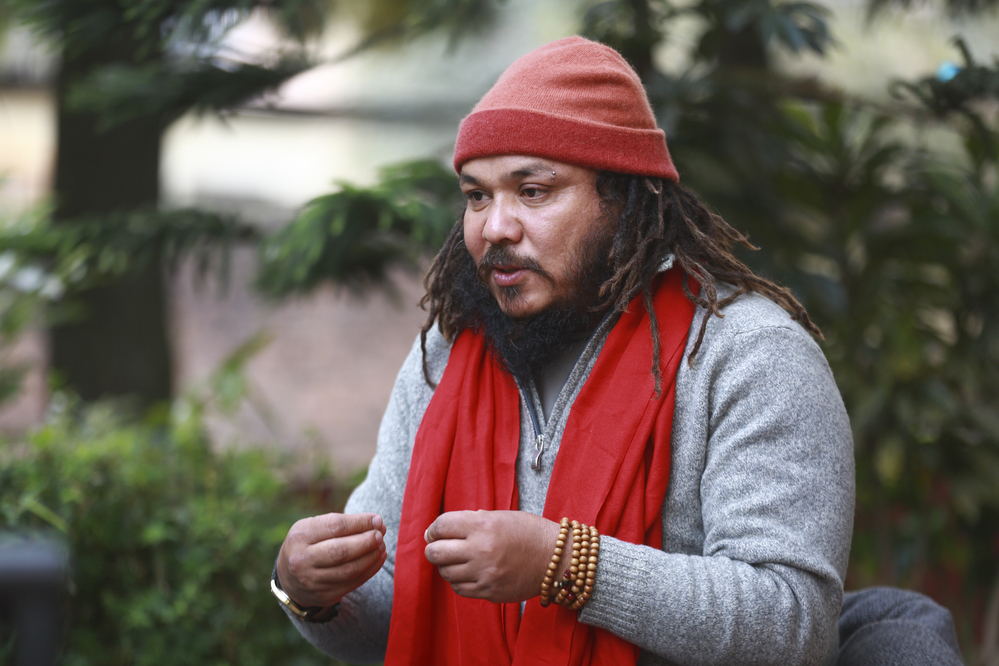
Another difficulty, Financing and funding. Having made three films, where I am now, if I were in Europe or any other developed country, I would not have had to struggle to find money. They have the faces of the film industry that sell, big companies. In India, who is there who sells globally like Irrfan Khan? If we had that, we would have been financially secure. We did not end up in a country where big companies are attracted to films. That is the only difficulty, this problem will be with us for the rest of our lives.
If I were in Europe or any other developed country, I would not have had to struggle to find money.
When did the dream of taking a film to a festival begin?
That was before I made the film, before I studied at film college. Because I watched similar films. I got to work in similar networks. Whatever kind of films we make, It's not that different. If you look at Korea, Japan and America, the films that have gone to festivals and won Cannes are winning the hearts of the audience. Only films that appeal to the mass audience are in the festivals.
But, Nepal is the opposite. The films that have not yet reached the festival do not have a good impact on the box office. Here, the art house and commercial groups are still seen separately!
policy came out. A lot has been done on the Film Bill and the Censor Board in the meantime, what is your opinion on that? The This discrimination is made by the state policy. At the domestic box office in Korea, Bong Joon Ho's 'Parasite' makes money. Who wins the Oscar? Parasite. Who wins Cannes? Parasite. That discrimination is made by the state. Personally, I am equally close to our so-called commercial and so-called art house groups. Why can't they go to commercial film festivals? I saw the film 'Dil Chahta Hai' in Berlin. Shahrukh Khan had also reached there with his commercial film at that time. It is not that such a film should not be shown at the festival. But, our film had a narrow dream, made it small-minded. The state should also send its suitors to such a festival from loot. The
censorship is nonsense. I am currently trying to write it in the manifesto issued by the party I am affiliated to. If the party I am affiliated with comes to the government, I will lobby as much as I can. There is no need for censorship. Is there censorship in books? Is there censorship in plays? Films are more fiction. In countries where the state is not people-oriented, is afraid of the people, they censor films. The police If they wear uniforms, we should ask the police, how can we make a film in this country? If it is like this, how can we make a film in Nepal? We don't need such a hassle when we say that we will make a film with a new voice one by one, and work globally with Hollywood artists. We don't need censorship. Only if there is classification. The basic law of the country says that alcohol can be sold for fun, and taxes must be paid. Thamel runs all night, alcohol is sold all night. Cigarettes are smoked. But, should we censor a film made with the idea of smoking cigarettes? Should we take Sara's contract? If she is riding a bike, are we the mouthpiece of the government by writing 'Let's follow traffic rules'? Are we the mouthpiece of the Ministry of Health? In fact, we don't even want the Film Development Board. That too should be abolished and a Film Commission should be formed.
Censorship is nonsense. There is nothing called censorship. No need . Is there censorship in books ? Is there censorship in plays ?
The state should organize big festivals like Busan, Goa Film Festival I have taken responsibility for art, literature, music and tourism in the manifesto. I am not saying that if these things are not included in the manifesto tomorrow, I will not stay in the party. But, after that, I will not write the manifesto.