Once upon a time, citizens were afraid of the state, but now they question it, so the time has come for the state to satisfy the citizens. Leftist parties have become more dream-oriented, and since they have to compete with such parties, non-leftist parties have also started writing manifestos with more emphasis on the subject of imagination and dreams.
We use Google Cloud Translation Services. Google requires we provide the following disclaimer relating to use of this service:
This service may contain translations powered by Google. Google disclaims all warranties related to the translations, expressed or implied, including any warranties of accuracy, reliability, and any implied warranties of merchantability, fitness for a particular purpose, and noninfringement.
There is a prevailing perception in Nepali society about election manifestos - 'They are a bundle of talk that has no obligation to be implemented.' However, in every election, parties bring out manifestos. They remain in power or around power, but they do not look at their own manifestos.
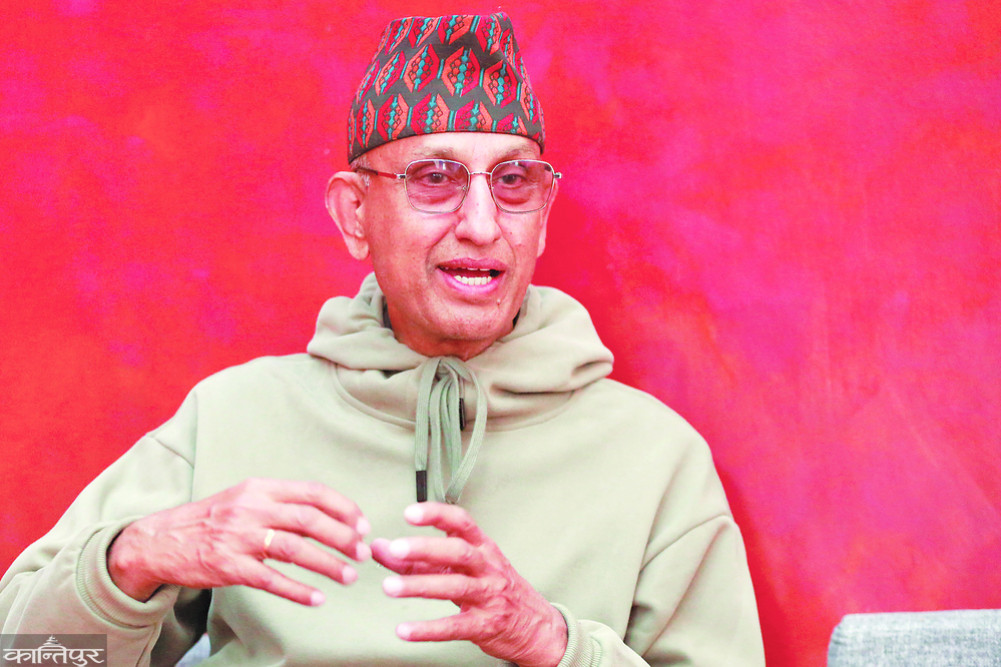
They do not even feel responsible for it. Nevertheless, the initiative of bringing a manifesto after every election, 'like a bell tied around a cat's neck', has not been broken. For the 21st Falgun election as well, the parties are working hard on writing manifestos. In this context, Krishna Acharya and Kishore Dahal spoke to Congress leader Mahesh Acharya for Kantipur about the concept of a manifesto, its objectivity, and the strong and honest leadership required for its implementation:
There are only 40 days left for the election. Candidatures have been registered. However, the election manifestos of the major parties have not yet come. Therefore, as the former Finance Minister, we are talking to you in the context of the election manifesto. Let us first talk about the concept of an election manifesto. What is this concept? Why do parties bring a manifesto? What is its historical and theoretical basis?
In elections, voters choose the best option among the options. That is why they seek information about parties. They want to know what their representatives will do after they enter the government. On the other hand, in elections, parties have to win the trust of the people by proposing their identity and action plan. In the process, parties propose their struggle and future action plan to the people. They present themselves as friends of the people's joys and sorrows. They bring it in the form of a manifesto.
In countries where new democracies have emerged, many agendas are proposed for debate among the people at once. Now, there is no longer only the agenda of traditional civil rights. There are new dimensions of human rights. Many issues such as participatory democracy, access, identity, prestige, and the changing relationship between the state and the citizen have come to the fore. Once upon a time, citizens had to fear the state, but now they question it. Therefore, it is time for the state to satisfy the citizens.
With the right of citizens to vote and the process of forming a government approved by the people through it, the parties had to propose their programs saying, 'Why are we eligible to enter the government and what do we want to do after entering the government?' Through that, they had to win the people's votes. Even among the parties that come in this way, the people had to choose the appropriate party. The manifesto creates an opportunity to further broaden the voters' right to choose.
With what mindset do the parties prepare their manifestos? What is the compulsion to envision an ideal in the election manifesto?
Political parties narrate their history and show themselves superior to others. In competitive politics, there is an obligation to explain their 'ideology' and its superiority. In our country, there was intense competition between the leftist and democratic parties. Similarly, there were also forces that represented the beliefs of the traditional monarchy. 'Ideological' divisions and debates were bound to occur between them. Therefore, theoretical issues also find a place in the manifesto.
In the question of showing a golden future by saying that we will rejuvenate in a short period of time, there is an unnatural competition in Nepal. This has been happening since the beginning. The reason for this is also the 'ideological' division. That is why there are different perspectives on solving problems related to social, economic, political, ecological, environmental, agricultural, forestry, production, employment, and labor. A manifesto was written in an unnatural way to say, 'We are superior and our statement is correct.' There was more imagination and dreams.
The amount of dreams is high in the leftist movement. Their rise illustrates that. They say, 'The use of capitalism so far has failed. The proletariat of the world will be united. The chains on the hands and feet of the proletariat will be broken and the future will be theirs.' They became more dream-oriented. Since they had to compete with such parties, non-leftist parties also presented themselves with more emphasis on the subject of imagination and dreams. They wrote manifestos.
In elections, parties present their agenda to the people through manifestos. The people have to choose one of them. However, the people do not get the opportunity to say their agenda. The concept of presenting a manifesto seems one-sided like the 'one way road'. How can it be made two-sided?
The manifesto is not just a 'platform' for a party to present its agenda, but rather a medium of two-way dialogue. However, the presenter has the nature of presenting his own issues more. Assuming that the people have sought these issues, he puts more agendas. However, this is for both sides. Because, the party introduces its past, leadership, conduct, behavior, and program to the people.
Citizens also seek the role of parties in solving problems they face in areas such as development, rights, and service provision. Based on that, they select the most qualified among the qualified. To select, one must understand about the parties. For that, a manifesto is needed.
Since 2048, you have been responsible for everything from making the manifesto to implementing it. Sometimes you have also been in the role of an observer. Why were the very beautiful ideas expressed in the manifesto not implemented? Why did society not get hope? Why did anger increase?
I am not saying that the manifesto does not contain elements of an unnatural dream. But the main issues mentioned there are not impossible to implement. Let us take the issue of good governance as an example. It is not impossible to minimize the corrupt behavior in the state and administrative machinery. However, the party leadership has failed to be accountable to the people and transparent in the implementation of the manifesto it has written. There is a reason for this. Because, the leadership development process and internal competition within the party are weak. There is no practice of implementing the conclusions drawn from open discussions. There is a single hegemony everywhere.
The manifesto was not made with the support of the leadership. The team that wrote the manifesto is different. They wrote the manifesto by objectively interacting with the situation in the country, carrying the views of many friends within the party, and adjusting the issues raised by the people in the villages. The leadership did not assimilate that manifesto. It did not even feel accountable. In that case, there is always duality. When in the party, the language the leadership speaks is that of the people. Aggression and excitement are mixed. They can put pressure by banging the table.
After coming to power, the same person cannot work beyond the limits of the constitution and law. Therefore, cooperation should be done with people in the opposition. In a parliamentary democracy, one must move forward by satisfying both one's party and the opposition. For that, one's skills, efficiency, and qualifications also depend. To implement the program, it is necessary to assimilate it. If a policy and program have been formulated within the scope of the leadership's vision, then it must show commitment to its implementation. After coming to power, one must be able to motivate the administration machinery to prioritize the implementation of one's programs.
Questions have started to arise that the promises written in the manifesto have not been fulfilled. All parties should do a self-review of that. Now, only such programs should be written in the manifesto that can be fulfilled. The manifesto should be made credible.
Many topics are written in the manifesto. But topics that can be done, are visible, and are in line with national needs within a five-year period should be written. The work that can be done and the legal and administrative obstacles that may arise during the implementation phase, the need for motivation, and monitoring should be taken into account. The Prime Minister should know the list of 50 that these are 'projects' of national importance. We should monitor every evening and remove obstacles by keeping our team informed about where there is delay. If that happens, there could be change in the country.
But such aspects were not paid attention to. Power struggle was given more importance. Our time was spent on gaining power. Power alone is not everything to instill trust in the people. I do not believe that one becomes the leader of the country as soon as one becomes the Prime Minister. To become a leader, one must win the hearts and trust of the people in other ways. It is necessary to confirm that honesty and character work. There must also be ability. The implementation of the program can be facilitated only by a combination of all aspects, including honesty, ability, the art of coordination, the art of motivating, the quality of getting support from within and outside the party.
If a leader with ability comes forward and says that he will deal with the problem and if there is public opinion that can trust his character, if this person is said to do something, if his honesty motivates the bureaucracy, if his honesty creates a situation where he can communicate with other political parties, then the plan can be implemented. Right now, the dialogue has stopped. Once a political party comes to power, it does not communicate with another. A culture of intolerance has grown. Not only between parties, but also within a party, intolerance is intense. There is no open dialogue within any party. Different ideas have been suppressed. A small group of such leaders has captured state power.
What kind of leadership is needed to implement the imaginative plans written in the manifesto? Is the willpower of the leader enough or does he need additional qualities?
The political leadership must make the manifesto realistic. It must be assimilated. The state machinery must be motivated for implementation. Wherever there are obstacles, if there is the ability to remove them, the program written in the manifesto can be implemented. But the emergence of such leadership must be one that has emerged from the party's internal democratic competition, has received the support and cooperation of many, and listens to everyone's opinions. The bureaucracy listens to its concepts. The opposition party also listens to it. But it is difficult for a leadership that has disputes within its own party and is on the verge of a split to implement the manifesto.
We do not have imaginative leadership. Due to conduct and behavior, the people did not have a leadership that the people could trust. Whatever the leadership says, its conduct is also the same, it is no longer a position that it is a trustworthy leadership. Therefore, there should be an imaginative leadership that is strengthening the party's internal democracy, motivating the bureaucracy, and selecting plans. It should be one who knows the operation of the state machinery, inter-agency relations, and coordination, not based on being in prison and being old.
Should the manifesto also be made practical and implementable?
That is also true. I think we have reached that stage. Now, instead of having a lot of manifestos and covering all issues, we should bring programs by looking at the availability of resources in a five-year term. Now all parties can estimate how many resources can be mobilized in the country in five years, how much the private sector can be motivated, how active the private sector can be. Therefore, the efficiency of selecting plans that can be implemented should be shown during the manifesto writing. There is also a responsibility to make the manifesto writing realistic.
Right now, we are in a special type of election created by the Gen-G movement. What is the agenda we need at this time? What are the areas that parties should prioritize?
The most visible agenda is good governance. The issue of good governance is linked to the effectiveness of the economy. It is also linked to the credibility of political leadership. The Gen-G movement was mainly a search for good governance. Let Nepal make a leap forward in the economic sector soon. Let income-earning opportunities increase. Let employment opportunities increase. There should be no painful migration. Let there be transparency. Let the people hear and see what the government and the state are saying to do.
There is no big difference in Nepali politics at the moment. Almost the same thing is seen in the documents of any political party on the issue of priorities. There are some 'core areas' where investment needs to be focused. Our comparative advantage is energy. If extensive investment starts in this sector, Nepal's economy can be rejuvenated in a short period of time.
I would like to remind you of the reforms we carried out in 2048. At that time, the door was opened to the private sector for investment. At that time, policy decisions were made, laws were reformed, and foreign investment was invited. फर्केर हेर्दा त्यतिबेला ठूलो पूर्वाधार तयार गरिएको थियो भन्ने लाग्छ । जसकारण नेपालकै निजी क्षेत्र पनि ऊर्जामा लगानी गर्न सक्षम भएर आएको छ । यदि हामीले उपयुक्त वातावरण बनाइदियौं, लगानी मासिँदैन र नाफाको सुरक्षा हुन्छ भन्ने विश्वास दिलायौं, नीतिगत र कानुनी सुधार गर्यौं भने नेपालको निजी क्षेत्रले नै अन्तर्राष्ट्रिय लगानीकर्तालाई पनि ल्याउँछ ।
पर्यटनको क्षेत्रमा पनि ठूलो सम्भावना छ । संसारभरका मानिसहरू नेपालका गाउँगाउँमा पुग्न तत्पर छन् । नेपालले उनीहरूलाई आकर्षित गर्न सक्छ । हामीले यहाँ शान्ति, सुरक्षा र भौतिक पूर्वाधार छ भन्ने अनुभूत गराउनुपर्छ । कुनै असहज परिस्थिति भयो भने सरकारले सहजीकरण गर्छ भन्ने आत्मविश्वासलाई संसारभर विस्तार गर्नुपर्छ । देशभित्रका लगानीकर्ताको पनि विश्वास जित्नुपर्छ ।
त्यस्तै नेपालको कृषिको आधुनिकीकरण गरिनुपर्छ । अहिले पनि नेपालले विदेशबाट धान चामल आयात गर्नुपर्ने अवस्था छ । जबकि हाम्रै माटो उब्जाउ छ । नेपालमा लगानीका लागि उपयुक्त ढंगको वातावरण सिर्जना गर्न सकियो भने बाह्रै महिना फलफूल र तरकारी उत्पादन गर्न सकिन्छ । भारतका छिमेकी राज्यहरू सबल हुँदै गएका छन् । बिहार र बंगालमै पनि आर्थिक गतिविधि तीव्र हुँदै छ । नेपालका निम्ति यी ठूला बजार हुन् ।
हामी अझै पनि वन सम्पदाका उत्पादन आयात गर्छौं । नेपालका नेताहरूले वन भनेको नवीकरणीय ऊर्जाको स्रोत हो भनेर अझै बुझ्नुभएको छैन । वैज्ञानिक रूपमा वनको उपयोग गर्ने हो भने काठमा आधारित उद्योग चलाउन सकिन्छ । निजी क्षेत्रलाई वन बनाउन अनुमति दिए पनि हुन्छ । खेती गर्न अप्ठ्यारो जमिनमा रुख रोपे भइहाल्छ । त्यससँग सम्बन्धित उद्योग चलाउन सकिन्छ । उत्पादन बढाएर निकासी गर्न सकिन्छ ।
अर्को क्षेत्र हो, सूचना प्रविधि । यहाँका युवा र अमेरिकाका युवाले एउटै सामग्री पढ्न सक्छन् । इन्टरनेटले यो सुविधा उपलब्ध गराएको छ । त्यसैले यहाँका युवाले संसारभरका युवामाझ आफूलाई प्रतिस्पर्धी बनाउन सक्छ । सूचना प्रविधिका धेरै क्षेत्रमा अवसरका आयाम सिर्जना भएका छन् । त्यसका लागि सरकारले वातावरण बनाउनुपर्छ ।
जेन–जी आन्दोलनले सम्भावना पनि देखाएको छ । युवाले इन्टरनेटबाट संसार देखेको छ । र, उसले प्रश्न सोधेको छ– संसारका अरू देश जस्तो नेपाल किन भएको छैन ? विदेशमा रहेका ४० लाख युवाले सोधेका छन्– नेपाल किन अरू देश जस्तो भएन ? नेतृत्वको अक्षमता, प्रशासन संयन्त्रमा भएको भ्रष्टता, नीतिगत अन्योल, सत्ताका निम्ति गरिएको लुछाचुँडीले हाम्रा महत्त्वपूर्ण वर्षहरू व्यर्थ हुँदै गएका छन् । जेन–जी आन्दोलनले उठाएको सवाल यही हो । यो यथार्थ पनि हो ।
म फेरि २०४८ मै फर्किन्छु । तीन–चार सालको त्यो कार्यकालमा अन्तर्राष्ट्रिय लगानी ओइरिएर आयो । देशको आर्थिक वृद्धि झन्डै आठ प्रतिशतसम्म पुग्यो । रोजगारीका अवसर पनि बढ्यो । त्यतिबेला लिइएको आर्थिक उदारीकरणको नीतिले नै दशकौं लामो राजनीतिक अस्थिरतालाई पनि थेग्यो । माओवादी द्वन्द्वलाई पनि थेग्यो । भूकम्प जस्ता ठूला प्राकृतिक विपत्ति र भौतिक क्षतिलाई पनि थेग्यो । गरियो भने सम्भव हुँदोरहेछ नि त । यतिबेला भने सबै राजनीतिक दलहरूले निजी क्षेत्रलाई अगाडि नबढाई देशको कायाकल्प हुँदैन भनेर बुझेको अवस्था छ ।
तपाईंले प्राथमिकता दिइनुपर्ने भनेर जुनजुन क्षेत्रको चर्चा गर्नुभयो । ती क्षेत्रमा प्रगति गर्नका लागि नीतिगत उथलपुथल पनि चाहिन्छ कि कार्यान्वयन भइरहेका नीति नै पर्याप्त छन् ?
सुधारको नयाँ लहर जरुरी छ । राज्यले आदेश गरेर अर्थतन्त्र चल्दैन । लगानीकर्ताको आत्मविश्वासले चल्ने हो । अर्थतन्त्र चलाउनका लागि सरकारको इमानदार प्रयत्न पनि चाहिन्छ । किनकि सरकार आफैं पनि एउटा खेलाडी हो । हामीले अवलम्बन गरेको प्रणालीअनुसार सरकारले पनि आर्थिक क्षेत्रमा केही न केही गतिविधि गरिरहेको हुन्छ । सँगसँगै सरकारभन्दा चार गुणा गतिविधि निजी क्षेत्रले पनि गरिरहेको हुन्छ । त्यसैले निजी क्षेत्र पनि हाम्रो देशको आर्थिक खेलाडी हो ।
नीतिगत सुधार आवश्यक पर्छ । जुन क्षेत्रमा अधुरा नीति छन् । त्यसमा सुधारका लागि तत्काल प्रक्रिया अवलम्बन गरिनुपर्छ । तर, नीतिगत सुधारले मात्रै पुग्दैन । कानुनले बल प्रदान गर्नुपर्छ । संविधान र कानुनले सुनिश्चित गर्नुपर्छ । देशभित्रको होस् वा बाहिरको, लगानीकर्ता संविधान र कानुनबाट ढुक्क हुन चाहन्छन् । देशभित्रका लगानीकर्ताको मनोबल उच्च बनाएर उनीहरूको सीप, पुँजी, दक्षता, प्रविधिलाई उत्प्रेरित गर्नुपर्छ । उत्पादन मात्रै होइन, सूचना प्रविधिदेखि पर्यटनसम्म लगानी गर्न उत्प्रेरित गर्नुपर्छ ।
राज्यले जिम्मेवारी लिनुपर्ने र निजी क्षेत्रलाई खुला छाडिदिनुपर्ने क्षेत्रका विषयमा हामीकहाँ लामो समयदेखि फरकफरक मत छन् । राज्यदेखि नागरिकसम्मकै विभाजित छन् । हाम्रा दलहरूले कस्तो अवधारणालाई समात्नुपर्छ ?
आर्थिक क्षेत्रमा राज्यले मूलतः समन्वयकारी भूमिका निर्वाह गर्नुपर्छ । कुनै बेला यस्तो अवस्था पनि थियो, गरिब मुलुकमा उद्यमशीलताको अभाव थियो । निजी क्षेत्रमा पुँजीको अभाव थियो । बैंकिङ प्रणाली वा अन्तर्राष्ट्रिय क्षेत्रबाट लगानी आउन सक्ने अवस्था पनि कम थियो ।
त्यतिबेला राज्यले पुँजी भएको एउटा निकायका रूपमा पुँजीको लगानी गर्ने काम गर्यो । निजी क्षेत्र नफस्टाएको अवस्थामा राज्यले जोखिम लिनुपर्ने दायित्व पनि थियो । तत्काल लाभ नहुने क्षेत्रमा निजी क्षेत्र प्रवेश नगर्ने भएकाले पूर्वाधार लगायतका क्षेत्रमा राज्य नै अघि सर्नुपर्यो ।
यसर्थ, पुँजी नभएको अवस्थामा, पुँजी भएको निकायको रूपमा, पुँजी लगानी गर्नका निम्ति राज्य अगाडि सर्नुपर्थ्यो । प्रविधिमा उसैको पहुँच भएको हुनाले ऊ अगाडि सर्नुपर्थ्यो । जोखिम लिनका निम्ति निजी क्षेत्र अगाडि नसरेको हुनाले ऊ नै अगाडि सर्नुपर्थ्यो । त्यसैले पूर्वाधार निर्माण, सडक निर्माण, ऊर्जा, नहर, स्कुल/कलेजमा लगानीका लागि राज्य अघि सर्नुपर्थ्यो । तर अब हरेक क्षेत्रमा निजी लगानी बढ्दै गएको छ ।
राज्य संरचनाको उदयको चरणमा पूर्वाधार पनि राज्यको जिम्मेवारी थियो । शिक्षा र स्वास्थ्य पनि राज्यकै जिम्मेवारी हो । बाटोघाटो, पुल पुलेसा, नहर, बिजुली बनाउने जिम्मा राज्यकै थियो । यद्यपि, बुझ्नुपर्ने के हो भने सरकारले गर्ने खर्च फजुल पनि हुन्छ । अपव्यय पनि हुन्छ । भ्रष्टाचार पनि हुन्छ । हामी सुशासन र पारदर्शिताको कुरा गर्छौं । तर राज्यको एकाधिकारी अंगका रूपमा उसले गरेका कामहरूमा पारदर्शिताको न्यूनता हुन्छ । जवाफदेहिता पनि कम हुन्छ ।
अब बिस्तारै निजी क्षेत्रलाई छाड्दै जानुपर्छ । यसमा राजनीतिक दलहरूबीच मतैक्य चाहिन्छ । हुन त एउटा जमानामा एमाले वा ‘माओवादी’ ले विदेशी लगानीकर्ता ल्याउने विषयलाई अन्तर्राष्ट्रिय साम्राज्यवादी शक्तिहरू भन्थे । त्यस्तो सैद्धान्तिक धरातलमा रहन्थे । विदेशी पुँजी र लगानीबाट आएको नाफालाई शोषणका रूपमा अर्थ्याउँथे । मार्क्सवादले सिकाएको त्यस्तै थियो । नाफा आर्जन नगरी देशको समृद्धि हुन सक्दैन भन्ने सत्यलाई कम्युनिस्ट आन्दोलनले अहिले भने अनुभूति गरेको छ ।
जुनजुन क्षेत्रमा हामीले लगानी गर्नुपर्ने छ, त्यसको एउटा सानो अंश मात्रै राज्यको पुँजीबाट लगानी हुन सक्छ । राज्यसँग विकास खर्च पनि छैन । राजस्वबाट आएको रकम सबै प्रशासनिक खर्चमा जान्छ । प्रशासनिक खर्चका लागि समेत ऋण लिनुपर्ने ठाउँमा पुगेपछि राज्यले लगानी गर्ने भनेर उसको भूमिकाको अपेक्षा गर्नु बुद्धिमत्तापूर्ण हुँदैन । त्यसैले राज्यले निजी क्षेत्रमा भएको पुँजी परिचालन गर्नका निम्ति अनुकूल नीतिगत, कानुनी र प्रशासनिक सहजीकरण गर्नुपर्छ । प्रशासनिक क्षेत्रले पनि लगानीकर्तालाई मैत्रीपूर्ण व्यवहार गर्नुपर्छ ।
राजनीतिक नेतृत्वले यस्ता विषय प्रस्टसँग भन्नुपर्छ । उसले अनुगमन गर्नुपर्छ । नेताले कुनै नीति र कार्यक्रमको कार्यान्वयन भएको छ कि छैन भनेर अनुगमन गर्नुपर्छ । भारत र चीनसँगै हामी प्रगति गर्न सक्छौं । नेपालमा त्यस्तो सम्भावना छ । जनतामा त्यस्तो सामर्थ्य छ । नेपालका युवाहरूलाई अवसर सिर्जना गर्ने हो भने युरोप, अमेरिका, भारत र चीनका युवासँग प्रतिस्पर्धा गर्न सक्छन् । किनकि अब ज्ञानको पहुँच नियन्त्रित छैन । इन्टरनेटका कारण अब ज्ञानमा करिबकरिब समान पहुँच सम्भव भएको छ ।
तुलनात्मक लाभका क्षेत्रहरूको पहिचान गरेर स्वदेशका निजी क्षेत्रको लगानी, अन्तर्राष्ट्रिय लगानीलाई आमन्त्रित गर्न सक्छौं । अहिले प्रतिस्पर्धात्मक विश्व छ । ठूला मुलुकले भूगोल नै परिवर्तन गर्दा हुने परिस्थिति आइसक्यो । हामी भने लामो समयसम्म अभावको स्थितिमा रह्यौं । त्यसैले कुन बाटो हिँड्ने भनेर लामो अन्योलमा रहन सक्दैनौं । हामीले दुवै छिमेकी मुलुकसँगै विकसित हुँदै जाने नीति लिनुपर्छ ।
संसारभरका लगानीकर्ताको नजर नेपालमा पार्न सक्यौं र संसारभरका लगानीकर्ता नेपालमा आए भने नेपालको राष्ट्रिय अस्तित्वको रक्षा गर्नका निम्ति सहयोग पनि पुग्न सक्छ । अन्तर्राष्ट्रिय रुचि, पर्यटक, अध्ययनको केन्द्रमा नेपाल पर्यो भने हाम्रो सार्वभौमिकताको रक्षा त्यसैले गर्न सक्छ । त्यसैले पनि छोटो समयमा आर्थिक प्रगति गर्न आवश्यक छ । त्यसका लागि निजी क्षेत्रलाई धेरै ठूलो परिवर्तनको वाहक बनाएर अगाडि बढ्नुपर्छ । उसैले अन्तर्राष्ट्रिय लगानीकर्तालाई पनि आमन्त्रित गर्न सक्छ ।
एउटा पार्टी पाँच वर्ष सत्तामा बस्नु भनेको जम्मा १८२५ दिन मात्रै हो । तर, हामीकहाँ ५ सय दिन टिक्न पनि मुस्किल पर्छ । घुमिफिरी सबैजसो दल सत्तामै वा वरपर हुन्छन् । यद्यपि, आफ्नै चुनावी घोषणापत्र कार्यान्वयन नहुनुको जिम्मेवारी कसैले लिनुपरेको पाइँदैन । त्यसैले घोषणापत्रको कार्यान्वयनलाई कानुनी र नैतिक विषय पनि बनाउनुपर्ने हो कि ?
दलहरूलाई सुधारका लागि सबैभन्दा ठूलो धक्का जनताबाटै आउँछ । हरेक चुनावमा त्यस्तो देखिने गरेको छ । मतदाता पनि सचेत बन्दै गएको पाइन्छ । अघिल्लो पटक गरेको वाचा किन पूरा नगरेको भनेर सोध्ने काम त भएको छ ।
हालैको जेन–जी विद्रोह प्रश्नको उठान हो भन्ने ठान्छु । लोकतन्त्रले दिएको र सिकाएको अधिकारको प्रयोग हो भन्ने ठान्छु । अहिलेको नयाँ पुस्ताले बाबुआमाले भनेको वा सरकारले भनेको भनेर कुनै पनि विषयलाई आँखा चिम्लेर मान्दैन । प्रश्न गर्छ । उसको प्रश्नको जवाफ नदिइकन, उसलाई सन्तुष्ट नबनाइकन कुनै पनि पार्टी अगाडि बढ्न सक्दैनन् ।
युवाहरूले सडकमा आएर प्रश्न गरे– खै सुशासन ? कुनै गाउँपालिकामा तस्बिर राख्न भएको खर्च उसले पत्याउँदैन र पूर्ण विवरण माग्छ । प्रश्न सोध्छ । किनकि चेतनाको स्तर बढेको छ । अहिलेका युवाले पृथक् ढंगले सोचिरहेका छन् । तुलना गरिरहेको छ । हाम्रो समाज विज्ञानमा थाहा नपाउने गरी परिवर्तन भइरहेको छ ।
युवाको ‘थट प्रसेस’ को आधारभूमि बदलिएको छ । किनकि सात घण्टा इन्टरनेटमै व्यस्त हुन्छ । ऊ साथीसँग कलेजमा बिताउँछ । अबेर घर फर्किन्छ । उसले बाबुआमासँग समय नै बिताउँदैन । बाबुआमाका कुराबाट ऊ दीक्षित भएको छैन । इन्टरनेटका सामग्रीबाट उसको विचार बनिरहेको छ ।
नेपालको समाज तीव्र गतिले बदलिइरहेको छ । लोकतन्त्रले हरेक राजनीतिक नेतृत्वलाई प्रश्न गर्न सिकाएको छ । मलाई यस अर्थमा ढुक्क लागेको छ कि, मेरो पार्टीमा अहिले ठूलो परिवर्तन भएको छ । नयाँ पुस्तासँग संवाद गर्न सक्ने नेतृत्व आएको छ । अघिल्लो पुस्ताले संवाद गर्न सकेको थिएन । प्रश्न गर्ने अवसर पनि साँघुरा थिए । अहिलेको नेतृत्वले युवासँगै बसेर प्रश्न सुन्ने र सँगसँगै उत्तर खोज्ने प्रयत्न गर्नुपर्छ । अरू पार्टीमा पनि यस्तो परिवर्तन अपरिहार्य छ ।
समाज विज्ञानमा आइरहेको परिवर्तनले नेतृत्व विकासको प्रक्रियामा पनि अनिवार्य परिवर्तन ल्याउँछ । र, नेतृत्वमा आएको परिवर्तनले नेपालको सम्भावनालाई जीवित राख्छ । त्यसैले म निराश छैन । काँधमा काँध मिलाएर सही बाटोमा अगाडि बढ्नुपर्छ । निजी क्षेत्रलाई अगाडि बढ्न संकेत दिनुपर्छ । नेपालका प्राथमिकताका क्षेत्रमा लगानीका लागि उत्प्रेरित गर्नुपर्छ । कल्पनाशील नेतृत्वले नेपालको परिदृश्यलाई हाँक्यो भने आठ–दश वर्षमा कायाकल्प सम्भव छ ।