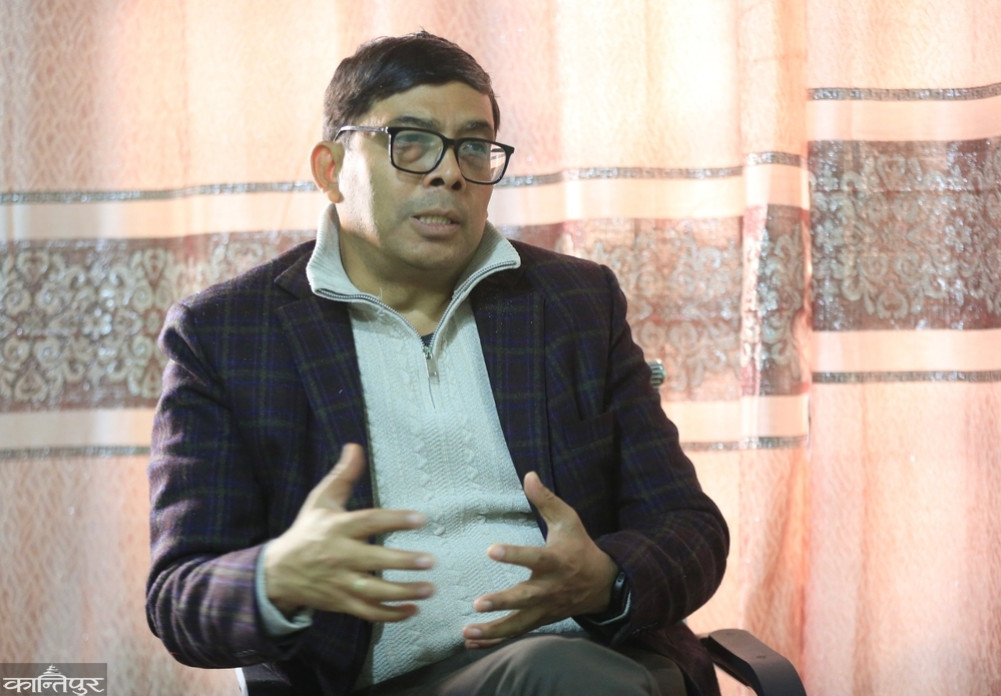
”The Gen-G movement took place. It has caused huge loss of life and property. However, it has provided a good opportunity to improve the shortcomings in governance capacity and good governance.”
We use Google Cloud Translation Services. Google requires we provide the following disclaimer relating to use of this service:
This service may contain translations powered by Google. Google disclaims all warranties related to the translations, expressed or implied, including any warranties of accuracy, reliability, and any implied warranties of merchantability, fitness for a particular purpose, and noninfringement.
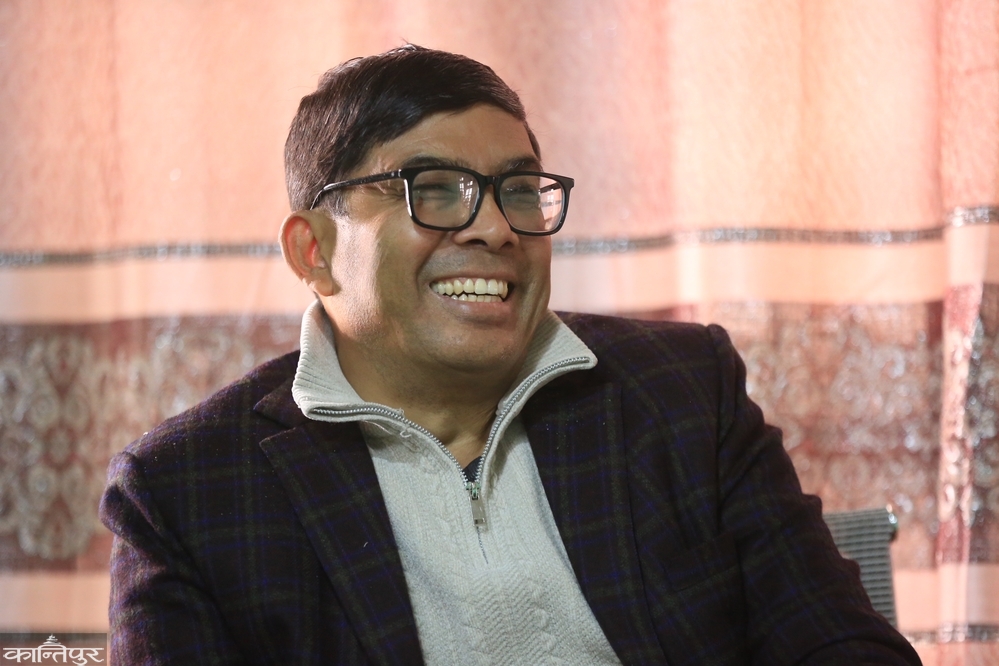
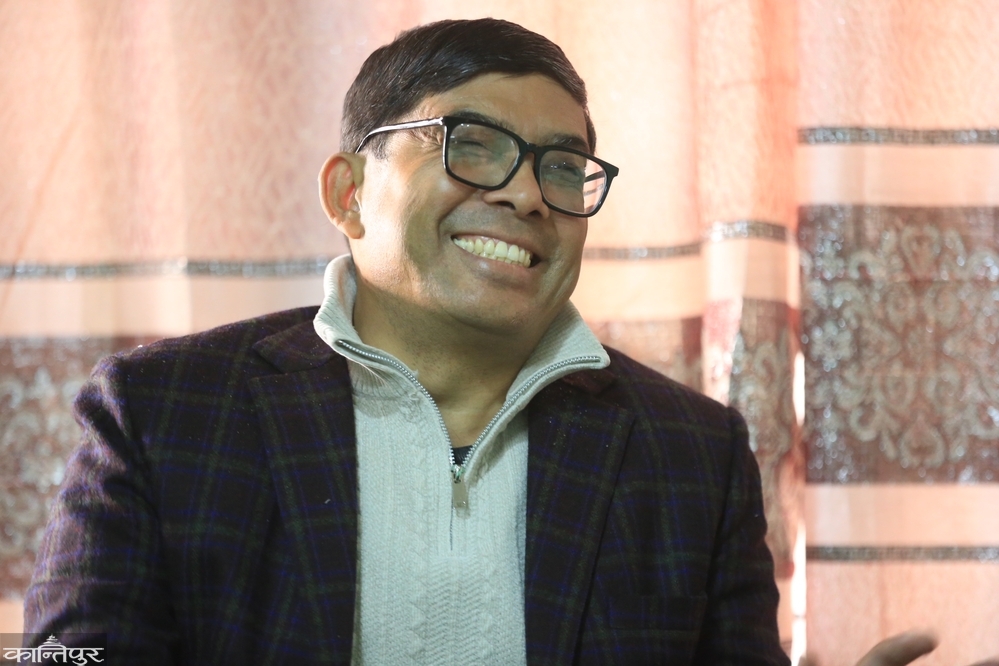
The government last week appointed Dr. Prakash Kumar Shrestha as the vice-chairman of the National Planning Commission, which had been vacant for three months after the formation of the new government. Shrestha was a member of the commission during the outgoing government. Shrestha, a former executive director of the Nepal Rastra Bank, was the vice-chairman of the Provincial Planning Commission of the Lumbini Provincial Government from 2074 to 2076.
During the same period, Shrestha led the formulation of Lumbini's first five-year plan. He worked as an economic advisor to the then Deputy Prime Minister and Finance Minister Bishnu Prasad Poudel in 2077 BS.
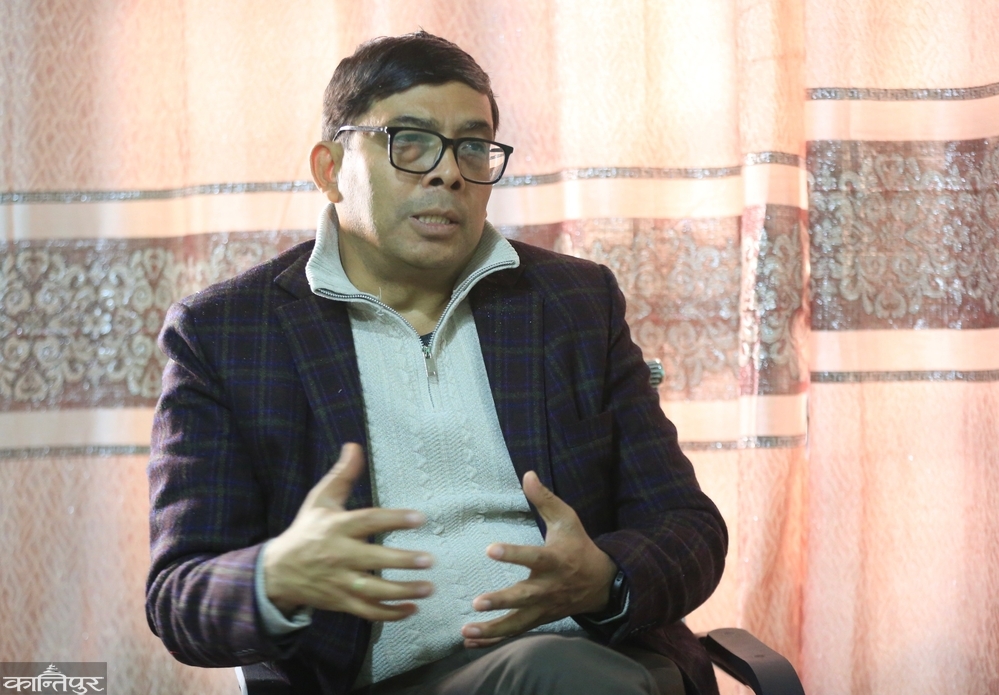
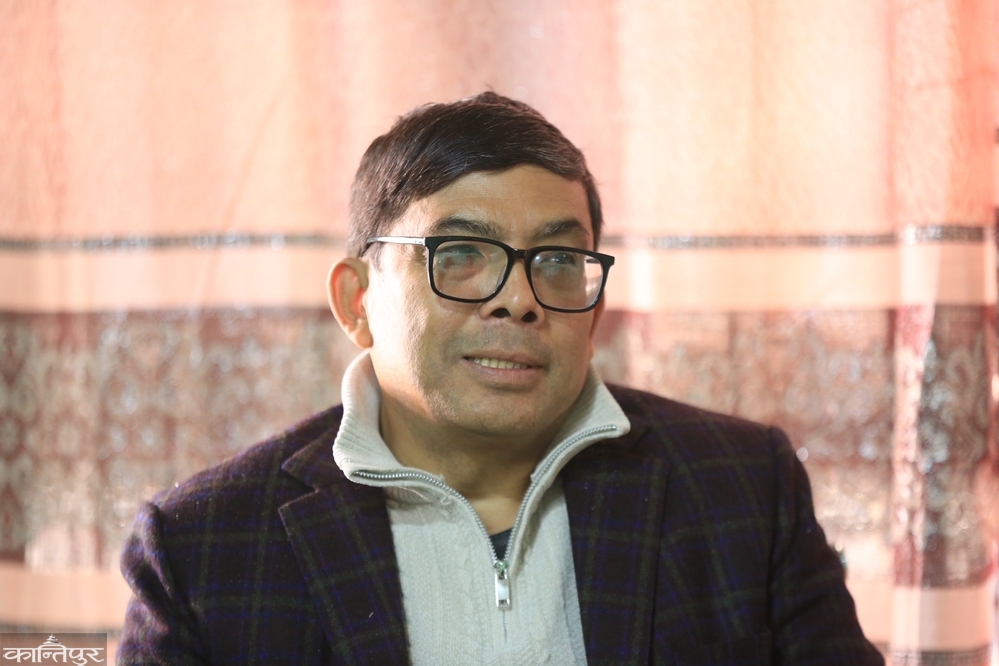
Shrestha worked in the Research Department for a long time when he was the Executive Director of the National Bank. Vice-Chairman Shrestha spoke to Kantipur's Yagya Banjade and Seema Tamang about the current state of the economy, measures to improve revenue collection and capital expenditure, and the work to be done by the commission to make the economy dynamic:
For the last three years, the amount of money that can be lent (excess liquidity) has accumulated in the financial system. Even with interest rates at their lowest levels, the flow of credit seems to have stalled. There has been no improvement in the long-standing sluggishness of the economy. After the protests of 23-24 Bhadra, the country's political and economic activities seem to have deteriorated further. In such a situation, you have taken over the leadership of the Planning Commission. What are your plans to speed up the economy?
There has been a situation of excess liquidity lately. Credit flow has not increased. Interest rates have decreased significantly. The economy was under pressure due to the strict policies taken due to COVID-19 and external pressures. When the economy started to improve from that situation, the Gen-G movement took place. It seems that the movement was triggered by growing frustration in an environment where adequate good governance, economic relaxation, and job creation were not possible.
However, since the current interim government was formed with an electoral 'mandate', there is not enough time available to carry out long-term plans and works. In the current environment, I have been given the responsibility of the Vice Chairman of the National Planning Commission. The effectiveness of the regular work of the commission, some reforms that can be done during the interim period, increasing the implementation of the Sixteenth Plan, and preparatory work for the budget for the upcoming fiscal year are currently on the agenda.
 There is a need to increase capital expenditure to make the sluggish economy dynamic. The government's capital expenditure has been weak for some years. There are various administrative and legal complications. The Planning Commission is expected to play an effective role in increasing capital expenditure.
He said that the Gen-G movement, which took place at a time when signs of improvement were starting to appear in the economy that had been sluggish for a long time, had created an obstacle to the pace of improvement. In your analysis, how would you analyze the economy before and after the protests in the last week of Bhadra?
A study conducted by a team of the National Planning Commission under the direction of the government says that about 84.5 billion rupees worth of physical infrastructure was damaged. However, the current state of the economy is mixed. Despite the very strong external situation and low inflation, credit flow has not been able to increase. There has not been much improvement in revenue collection.
Capital expenditure is low. In the post-Covid years, a large number of youth have gone abroad for foreign employment and studies. Due to this, there is a lack of effective demand for domestic production in the economy. The private sector has not been able to increase investment. Various vicious cycles in the Nepali economy persist.
The economy has reached a sluggish state due to lack of investment. Investment from both the government and the private sector is weak. Although capital expenditure needs to be increased, it has not been implemented. Despite the availability of credit, investment in the private sector has not expanded, due to which the overall effective demand has become weak.
Youth migration, weakness in domestic production and exports, and increasing food imports indicate a decline in production capacity. The situation where demand does not increase despite the availability of liquidity has become like a 'liquidity trap'. In such a situation, even though the government has to increase spending, the spending imbalance between the federal, provincial, and local levels has had a contractionary effect on the economy.
The condition of all four elements of effective demand (consumption spending, investment, government spending, and net exports) is weak. Despite the increase in exports, the trade deficit has widened further as imports have increased sharply. Import dependence on agricultural and other goods remains. The Planning Commission can facilitate policy, but the responsibility for actual spending lies with the government and the ministry. Recently, employees have become discouraged due to allegations of corruption and fear of lawsuits. Many employees are now discouraged, fearing that if I do something, I will be involved in similar lawsuits.
Capital expenditure is now decreasing because it is not working and is trying to avoid it as much as possible. The decrease in capital expenditure means that the government's demand has decreased.
The main task of this interim government is to hold elections on 21 Falgun. Based on this, your term is only three months. What work do you think you can do during this period?
Yes, time is very short. There is not enough time to do big and new work. However, the Planning Commission has to do some regular work related to capital expenditure and budget preparation. By effectively handling it and helping to increase capital expenditure and completing the budget preparation work for the upcoming fiscal year on time, it will be easy for the government that comes after the election. There is a need to do the work that is happening and being done where we are now in an effective manner.
 There is also a need to improve the functioning of the Planning Commission to make it effective. I have thought of taking initiatives for this too. Even if some of the regular work that the Commission has to do can be done quickly, the Planning Commission will have a great contribution. Regular work means giving multi-year resource consent. There are various stages in preparing the budget for the upcoming fiscal year. The Planning Commission has to do some work in those stages. The deadlines for most of them have already passed.
Some of the deadlines given by the Financial Procedures and Financial Responsibility Act and the Rules for starting the budget cycle have already passed. Work had to be done on priority. In mid-Mansir, a notice for planning has been issued by the provincial and local levels for supplementary and special grants. The relevant details should be processed after they are received.
Therefore, rather than adding new work or new roles, the National Planning Commission should focus on effectively fulfilling the responsibilities and liabilities prescribed by law within the prescribed time frame. Completing the legally prescribed tasks on time is the main need and priority of the commission in the current context. The government that comes after the elections has the right to reduce/increase.
A huge loss of human and property occurred in the protests of 23 and 24 Bhadra. A government study also said that 84.45 billion rupees were damaged in physical infrastructure. The morale of the private sector has declined. The confidence of the society has decreased. What is your role in lifting the country out of this situation?
The Gen-G movement took place due to an environment where adequate good governance, economic slack, and employment creation were not possible. This has caused a huge loss of human and financial resources. However, it has provided a good opportunity to improve the shortcomings in governance capacity and good governance. Of course, another setback has hit the economy, which has not yet fully recovered from the effects of Covid.
The weak private sector has been further affected. There are shortcomings in the government sector as well, from project selection, budget allocation to implementation. Recent developments have shown the need to improve the government's capacity to maintain peace and security. The current government has started some reform efforts to promote private investment. The Planning Commission will provide all possible support to the government's efforts.
 Now the government should focus on maintaining peace and security rather than building large infrastructure and roads. The private sector's wealth has been lost. The government should work towards 'guaranteeing' that such a situation will not arise in the future. The government's concept is to maintain security, which should be more focused on. There is a need to motivate employees to increase work performance. Their monthly salary scale is low. They should be 'motivated' to provide effective service to the people. No matter what is said from above, it is the government employees who ultimately provide service and work.
The report has shown that the damage caused during the 24 Bhadra exhibition will cost about 36 billion rupees to reconstruct. It may not be possible to cover it with internal resources. What could be the government's plans to manage resources for that?
If the budget is allocated by prioritizing, there will be no shortage of budget for reconstruction. Work should be performed in a cost-effective and economical manner. More important than reconstruction, the government will have to provide public services effectively. If the liquidity in the economy can be mobilized correctly, then resources can be managed. As of this 20th of December, the three-tier government has 275 billion rupees in bank savings. Since the reconstruction work will take time, this interim government may not be able to start.
Although it is said that about 36 billion rupees are required for reconstruction, this amount is not very large compared to the size of Nepal's total development budget. The assessment is relatively reliable as it was conducted by a committee formed under the leadership of the Secretary of the National Planning Commission and a technical team, collecting data on the spot through an online system. However, there may be some additions and subtractions in the assessment shown in the report.
The main problem at present is the weak and disorganized allocation of the budget rather than the lack of resources. The development budget has been scattered due to many projects. Many plans are stuck and some infrastructure has been built without need and demand, due to electoral pressure or emotional reasons. Examples such as schools without students and airports that are not operational raise questions about the appropriateness of the expenditure.
 If the budget is allocated by a multidisciplinary (economists, engineers, environmentalists, etc.) technical team, after conducting a professional and technical evaluation of the plans and focusing on necessary and return-generating projects, good returns can be obtained from the current capital expenditure. If the budget is spent effectively by prioritizing, balancing and efficiently allocating it rather than scattering the budget, it is not difficult to manage the reconstruction expenditure of 36 billion.
Nepal is said to be upgraded to a developing country in 2026. After the Gen-G movement, it has also been said that the upgrade will not be possible next year. The private sector is also asking for an extension of the upgrade deadline. What is the government's role in this matter?
The issue of upgrading in developing countries is related to the provisions of the United Nations. It may not be just because of our wishes. Of course, there are some advantages and disadvantages after upgrading. Political instability has certainly affected its preparations to some extent. Since it is a least developed country, the facilities received will still be available for some time after upgrading. However, based on the latest developments, a letter can be sent to the United Nations for an extension of the deadline. The final decision on this is made by the United Nations General Assembly.
You were a member of this same commission when the budget for the current fiscal year was being prepared. The government had brought a budget of 1961 billion on your recommendation. However, the current government has scrapped projects worth 1.25 trillion, saying they were unnecessary. Did you allow the budget to be allocated to unnecessary projects at that time?
At that time, the Planning Commission had stopped projects costing less than 30 million from being placed in the project bank. But the ministries had placed them in their own way in the budget system. Later, in the Appropriation Act, it was provided that projects that received budget could be implemented only after completing the project bank process.
The Appropriation Act has paved the way for entering the project bank, but minimum preparation is required to enter the project bank. The current government has decided to cancel projects that cannot be implemented in the new environment. In fact, many improvements need to be made in project selection, preparation, and budget allocation. For this, it is very important to develop the capacity of the Planning Commission and other ministries. Since there are many projects in Nepal, the budget is allocated less.
What impact will canceling projects worth about 1.25 trillion have on the increase in capital expenditure that has not improved and on the country's economic development?
There are various complications in our low capital expenditure. A capital budget of 407 billion has been allocated in the budget for the current fiscal year. Even though about 1 trillion has been stopped, 307 billion is still available. Proper preparation of the project, land management, efficiency of construction entrepreneurs, etc. also determine the capital expenditure. Projects that have been contracted for years and have not been completed through the budget have become sick. If such projects were to be completed, the capital expenditure would have increased due to payment.
In the recently stopped projects, projects that have been implemented, contracted or have progressed in the process have not been stopped. It seems that mainly new (fresh) proposed projects have been stopped. I have yet to see and understand the detailed details. Time and resources are required to evaluate new projects in detail. Due to the lack of coordination between the center, provinces and local levels in areas such as drinking water, double-triple projects have been built in the same place, which shows a serious 'misallocation' of resources.
 Even when the provinces or local levels can do the work that the center should do, there has been an increasing tendency to bring in separate projects from all levels. For example, in my village, there are separate drinking water projects built by the union, provinces and local levels. There is also a lack of preparation and capacity in large projects such as new cities. Although 54 new cities have been announced, there is neither sufficient budget nor technical and institutional capacity. Due to the blocking of land in such new cities, citizens are unable to sell their land, and the management of Guthi land has become more complicated. Public inconvenience has increased due to lack of timely decisions and implementation.
Overall, announcing many projects without properly assessing limited resources and capacity has caused problems in budget allocation and implementation. The tendency to not take risks after a small obstacle, the situation where political interference creates additional obstacles, and employees are afraid to work due to fear of action, etc., have led to weak project implementation. Capital expenditure and project implementation have been affected by the failure to maintain a balance between encouraging good work and discouraging bad work. Now, it is seen that there is a need for improvement from a holistic perspective by coordinating with all the stakeholders.
It is said that some of the projects that have been scrapped by the government have already started after DPRs have been completed. How will those projects be constructed now?
The list of scrapped projects needs to be looked at in detail. The projects that have been implemented should not have been scrapped. Projects that are not in the project bank and are not prepared in advance must have been canceled. If for some reason, a plan that has been implemented has been canceled, I have been informed that it will be canceled based on its necessity and feasibility.
However, now DPR itself has become like a formal profession. Although DPR is mandatory in the name of the project bank, the quality of many DPRs is poor. In some cases, weaknesses such as details of a different location or district are included in the DPR of a bridge, errors such as copy-paste, and ignoring land ownership and legal issues have been seen.
It is also clear that projects cannot be completed without allocating a budget. In some projects, budgets have been continuously allocated for decades and multi-year approvals have been obtained, but the projects have not been completed. Due to weak DPRs, lack of preparation, and various problems during implementation, it has been seen that the projects cannot be completed despite having a budget.
When many projects are canceled at once, it directly affects the financial system. Banks and financial institutions have to spend a lot of money for bank guarantees. Can you tell me about this?
The cancellation of projects that have not been implemented and cannot be implemented will not have a direct impact on the financial system. The main thing is the overall capital expenditure. The cancellation of sick projects that are in operation but have not been completed on time will have some impact on financial institutions. Many projects have become sick due to not implementing projects on time even when the budget is available. We have more development projects than financial resources and implementation capacity.
In the first five months of this year, the government has spent only 8.3 percent on capital expenditure. Therefore, there is no expected improvement in capital expenditure. Why has revenue collection and capital expenditure not improved despite the government that comes to power? What should be done to improve this?
For this, comprehensive legal and administrative reforms are needed. Government employees are also in equal need of motivation. It is necessary to develop the capacity and change the thinking of government machinery and construction entrepreneurs. In addition, the capacity and change in thinking of regulatory and judicial bodies are also needed. It seems that everyone should focus on achieving economic development and prosperity.
If the economy is not dynamic, revenue will not increase. Revenue is linked to the activities of the economy. In recent times, overall revenue has not increased. However, revenue from imports, excise duties, and value-added tax (VAT) has increased. Excise duty revenue has increased by 12 percent as of Kartik. Revenue from income tax has decreased by 8.6 percent. The amount collected from interest tax has decreased due to the decrease in interest rates. Although income is low, it has both positive and negative sides. Non-tax revenue from 'dividends' is low. Because Nepal Telecom's profit is decreasing, the profit of the Agricultural Development Bank is also low. Government banks and many institutions are not in a position to pay dividends.
 The main reason for the failure to make capital expenditure is not only the government mechanism, but also the weak work culture and professional immaturity of construction entrepreneurs. Even though the budget and contract have been approved in many contracts, construction entrepreneurs do not start work on time, are unable to manage resources and manpower, and do not complete construction.
सरकारले कारबाही प्रक्रिया अघि बढाउँदा निर्माण व्यवसायीले औपचारिक रूपमा काम सुरु गरेजस्तो देखाउने तर यथार्थमा काम नगर्ने प्रवृत्ति पनि छ, जसले ढिलासुस्तीलाई प्रोत्साहन गरेको छ । यसअघि ठेक्का लिएर ‘मोबिलाइजेसन’ रकम अन्यत्र प्रयोग गर्ने अभ्यास थियो, जुन कोभिडपछिका झट्काले त्यस्ता निर्माण व्यवसायीलाई समस्यामा पारेको देखिन्छ ।
समग्रमा निर्माण क्षेत्रमै आवश्यक व्यावसायिक (प्रोफेसनलिजम) नहुँदा, ठेक्का लागे पनि काम नहुने, असारसम्म खर्च नहुने र ‘असार विकास’ जस्ता विकृति दोहोरिने अवस्था बनेको छ । यसले पुँजीगत खर्च मात्र होइन, राजस्व परिचालन र आर्थिक सुधारमा पनि प्रतिकूल असर पारेको छ ।
अहिले पनि वित्तीय प्रणालीमा साढे ११ खर्बभन्दा बढी अधिक तरलता छ । ब्याजदर न्यून छ, ब्याजदर अझै घटाएर पनि कर्जा प्रवाह बढाउन सक्ने अवस्था छैन । यस अवस्थालाई तपाईंले पनि ‘तरलताको पासो’ भन्दै आउनुभएको छ । यसबारे थप प्रस्ट्याइदिनुस् न ?
उच्च तरलता र न्यून ब्याजदरको स्थितिलाई ‘तरलता पासो’ भन्ने गरिन्छ । यस्तो अवस्थामा मौद्रिक नीति प्रभावकारी हुन सक्दैन । यस अवस्थामा वित्त नीति सक्रिय हुनुपर्दछ । अहिले ७ सय ६१ वटा सरकारका वित्त नीति रहेका छन् । तीनै तहको सरकारले सही आयोजना छनोट गरी प्रभावकारी कार्यान्वयन गरी पुँजीगत खर्च बढाउनुपर्दछ । आयोजना छनोट, बजेट विनियोजन र आयोजना कार्यान्वयनमा आमूल परिवर्तन ल्याउनुपर्छ । खरिद कानुनले कठिनाइ पारेको गुनासा पनि आइरहेका छन् ।
अर्थतन्त्र ‘तरलता पासो’ मा रहेका बेला मौद्रिक नीतिको भूमिका निष्क्रिय हुन्छ भन्ने छ । यस्तो अवस्थामा अर्थतन्त्र चलायमान बनाउन वित्तीय नीति सक्रिय हुनुपर्छ भन्ने अर्थशास्त्रीय सिद्धान्त छ । यस्तो अवस्थामा वित्त नीतिको भूमिका कस्तो हुनुपर्छ । त्यसरी काम गर्न यो सरकारले सक्छ कि सक्दैन ?
अर्थतन्त्रको विद्यमान समस्या समाधान गर्न वित्त नीति बढी सक्रिय हुनुपर्दछ । यसका लागि संघीय मात्र नभएर प्रदेश र स्थानीय गरी तीनै तहका सरकारहरू सक्रिय हुनुपर्दछ । कतिपय कानुनी सुधार पनि आवश्यक छ जुन यो सरकारले गर्न नसक्ला । अन्य प्रशासनिक सुधार गरेर पनि सरकारले सुधारको थालनी गर्न सक्छ र गर्नुपर्दछ । त्यतिबेला मौद्रिक नीतिले भने प्रभावकारी रूपमा तरलता व्यवस्थापन गर्नुपर्ने हुन्छ ।
मुलुक ‘एफएटीएफ’ को ‘ग्रे’ सूचीमा छ । त्यसबाट बाहिर निस्कन सरकारले पर्याप्त रूपमा काम गरेको छैन भन्ने आरोप छ । यस्तो अवस्थामा समयमै ‘ग्रे’ सूचीबाट बाहिर निस्कनका लागि सरकारले कसरी काम गर्नुपर्ला ?
एफएटीएफले सम्पत्ति शुद्धीकरण निवारणको सन्दर्भमा भएका कमीकमजोरीबारे मूल्याकंन गरी प्रतिवेदन दिइसकेको अवस्थामा नेपालले सो प्रतिवेदनले सुझाएका गर्नुपर्ने काममा केन्द्रित हुनुपर्ने हुन्छ । यो विषय योजना आयोगसँग सिधा जोडिएको विषय भने होइन ।