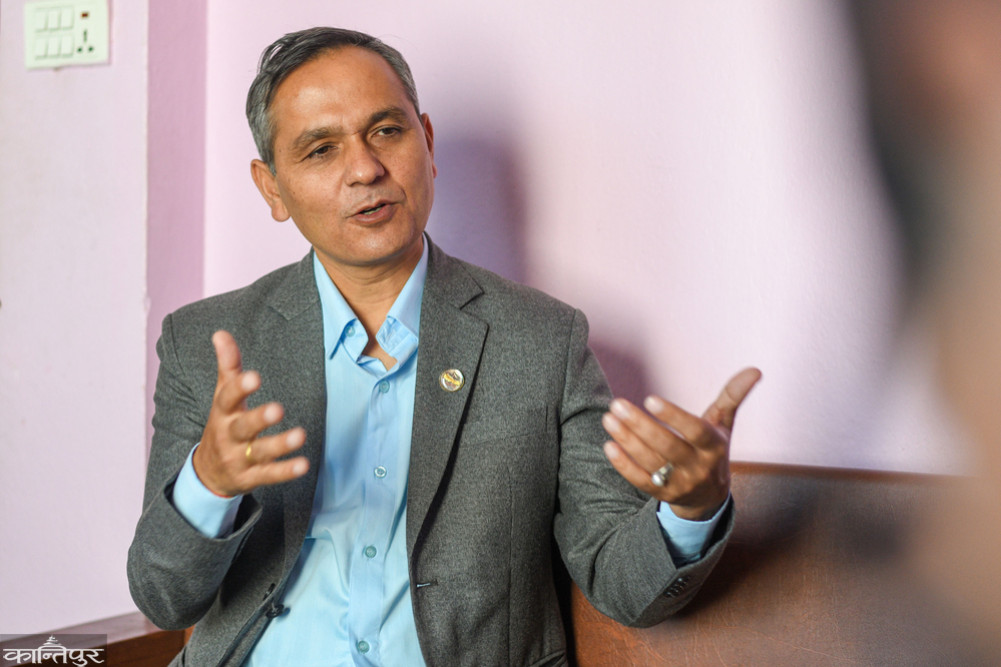
”Parties may try to decide whether the atmosphere is in their favor or try to prolong the election, but the government is not in favor of that.”
We use Google Cloud Translation Services. Google requires we provide the following disclaimer relating to use of this service:
This service may contain translations powered by Google. Google disclaims all warranties related to the translations, expressed or implied, including any warranties of accuracy, reliability, and any implied warranties of merchantability, fitness for a particular purpose, and noninfringement.
Om Prakash Aryal is a well-known name for his legal battles against human rights and corruption. He has fought legal battles in the areas of human rights, including the Giribandhu T-State land dispute, Lokman Singh Karki's disqualification, the Human Rights Commission law, the appointment of constitutional bodies including the Authority through ordinances, and other public concerns and issues of human rights.
In the electoral government formed after the Gen-G movement, he became the Home Minister. Durga Dulal and Jaisingh Mahara spoke to him for Kantipur about the government's functioning, including security arrangements and preparations for the elections scheduled for 21 Falgun: The current civilian government was formed in a unique situation after the Gen-G movement. However, dissatisfaction has started to be expressed that the government's functioning was not effective during this period. What is your self-assessment? The main task of the government immediately after its formation was to normalize the then situation. We have succeeded in that to a large extent. When the government was formed, the situation was unusual. There was a situation of insecurity. There was a national security challenge. More than an internal security challenge, it was a national security challenge. We have now kept that under control. There could have been many possibilities of immediate conflict recurrence, immediate violence outbreak. We have also succeeded in normalizing the situation by eliminating that.
Only after the situation normalizes and there is no immediate conflict recurrence, the matter of implementing the law comes up. Work has been done to address the families of the deceased of the Gen-G movement, declare them martyrs, honor the martyrs, treat the injured, address the demands of the Gen-G rebellion, guarantee security to the displaced parties, and reassure the international community. They have all congratulated, met, and extended a helping hand. In this way, we have succeeded in bringing the situation back to normal.
The Gen-G scattered in various groups are also complaining that their demands have not been met. The fear that someone will protest again and there will be insecurity persists in the society. What is your plan to free the country from fear?
Since there are many 'stakeholders', we have to walk in a coordinated balance. In such a situation, everyone should be reassured. Except for the wrong elements, everyone should think that something is happening for us too. The wrong elements cannot expect the state to do what is in their best interest, they should come within the ambit of the law. But those who are legitimate stakeholders and stakeholders should be reassured. We should continue to fulfill our aspirations and demands. Otherwise, there may be an imbalance. When everyone walks together, everyone gets a part. No one gets a full share.
This happens when there are many 'stakeholders'. The maximum benefit is to give everyone. The maximum security is to give everyone. We are restoring peace and security from a situation where everything has been destroyed. Now is the moment to restore the system. There has never been a Ram Rajya as we sought, and there will never be one. However, we have maintained a fair balance to protect our current system and move forward. Although we are not completely satisfied with it, there is an increasing trend of partial satisfaction.
Yesterday, you were on the streets to protect human rights and raise your voice against corruption. Now, due to a situation, you are in the responsibility of the Ministry of Home Affairs. It is your responsibility to ensure peace and security by ending corruption and maintaining good governance and holding elections. How do you reconcile the experience of the streets with the responsibility of the Ministry of Home Affairs?
 In the past, you were on the 'demand side'. You have to demand from the streets. However, my view was always based on a coordinated balance. Because, one must also look at it from the perspective of the other side, others are also on the 'demand side'. Every issue works in a situation. When looking at that situation in relative terms, one would know in one's heart how much to achieve.
When viewed from the government's perspective, people's demands and aspirations are very high. One has to balance how much the situation allows for immediate addressing and how much is achieved gradually. While in government, I have felt a greater sense of power. When on the streets, there was more talk of the rights of individuals or communities, groups or classes. That seemed to be everything. But when in government, one has to take into account the security of the country, national security, security of the system, and security of citizens and communities. Only then will there be balance.
Now, I have expanded the field of equitable balance. I have expanded its dimensions. This is a maturity. While on the streets, I worked hard for justice for a class, community, or individual. But there is another side. We also have to protect the system. There is order within this system. There is a political system. It may have protected the nation. It may have protected the society. It may have prevented it from falling into chaos. Therefore, even when it is dynamic, it should be gradually strengthened from within the system. Rather than taking a huge leap all of a sudden, it should be strengthened and maintained. I realized the need to walk in this balance after I came to the Ministry of Home Affairs.
The government has a ‘mandate’ to hold elections on 21 Falgun. You are in charge of the ministry coordinating with the Election Commission to create an electoral environment. What work did you do for the elections?
The Election Commission is a constitutional commission. The Election Commission will hold them. The government will coordinate. After I was appointed Home Minister, I had my first meeting with the Election Commission the very next day. I had talked to the Acting Chief Commissioner about how to hold elections. I had talked about creating an electoral environment. The Gen-G rebelled, but their names were not in the voter list. The election had already been announced. There was a provision in the Act that names could not be added to the voter list after the election date was announced. In other words, the names of those who rebelled were not allowed to be added to the voter list. There was a discussion that the voter list should be opened, and it was agreed to open it by bringing an ordinance. From that day on, the draft of the ordinance was prepared. The ordinance was brought.
The starting point of good governance is the implementation of the law. Since good governance needs to be maintained, security personnel who were deployed against the standards have been returned
Second, Nepalis living abroad are currently deprived of voting rights. Those outside the country do not have the right to vote. It costs a lot for them to come to Nepal. There is no provision for voting abroad. It has been eight to nine years since the Supreme Court issued an order in this regard, but the decision has not been implemented. It was said that we should start implementing it. We brought an ordinance regarding the voter list. To give voting rights to Nepalis living abroad, we had to study many laws, how many Nepalis are there in which country, and how is voting possible there? We had to study the issue. We also made them study. The Ministry of Home Affairs has already drafted a law for voting abroad. It has now been sent to the Election Commission and the Ministry of Law. After receiving suggestions, we will finalize the draft and take it to the cabinet and issue it as an ordinance. And in how many places, how is it possible? The government will prepare a framework for its implementation.
The Ministry of Finance has already allocated a budget to provide the ‘logistics’ related to the election. The Election Commission has already said how much will be required. Necessary work is being done to provide the resources required by our security forces. ‘Free’ and ‘fair elections’ is our ‘mandate’. For that, we are trying to rehabilitate police posts. There has also been support from the public level in that. Work is being done to provide resources from clothes to resources. The government is seriously trying to return the looted weapons. Escaped prisoners are also a big challenge for peace and security. We are also trying to get them back. This is our top priority. We are also assuring the party and other ‘stakeholders’ in this regard. UML has been raising questions about the election. Other parties and civil society are also questioning the issue of peace and security, right?
 Everyone is satisfied that the peace and security situation is improving. It can be even stronger than this. We are moving forward with suggestions from all the stakeholders on what needs to be done for that. Now, to strengthen peace and security, we are also improving ourselves and creating a comfortable environment by reducing conflict.
Regarding the elections, discussions have been held with the parties by the President, the Commission and the Prime Minister. But the parties do not seem to be convinced yet. What further plans does the government have?
The parties have been targeted by the rebellion. They have suffered personal losses. The homes and residences of many top party leaders have been damaged. It is a reality that they are unsafe. But we guarantee security. Nevertheless, it is doubtful whether we will be attacked again. Now we will continue to strengthen the police administration. We will make every effort. We will not remain silent even when any information comes like before. Now we will move on to 'detection' and 'prevention'. We identify any potential insecurity at the beginning. Then we prevent the possibility of insecurity.
There may have been a huge loss of human property in the past, but the government works in a way that will not happen again. It focuses a lot on the process of receiving early warnings of damage to not only personal but also national property, heritage and heritage. As soon as a warning of any issue is received, the government and security agencies sit down and mobilize all the mechanisms we have. Citizens have also fully supported the government.
The government will take precautions before any incident occurs and work to prevent damage. Work is also being done at the citizen level for this. The government will take forward the work of 'detection' and 'prevention' together. Earlier, the work of controlling an incident after it occurred and preventing further damage. But now the government will work to prevent the incident from happening. The government does not believe in taking action after the incident. We believe that it should not go that way.
Prime Minister Sushila Karki called the existing political parties for consultation. But second-tier leaders were present. Are second-tier leaders invited? Are there discussions with top-tier leaders or not?
This was done from the Prime Minister's level. It seems that the answer should come from him as well. This discussion was held to normalize the situation and create an environment for elections. The Prime Minister has called the parties for discussions because he does not want to 'bypass' any party, but rather to take them along and successfully fulfill the responsibilities assigned to him. The situation has not yet completely returned to normal.
The top leaders did not come to the discussion called by the Prime Minister, although the government understands that the second-tier leaders came as their representatives. The top leaders' own homes are deserted. They have become the target of the rebels. It is impossible to say when the situation will arise where the rebels and the top leaders of the political parties will meet. But it seems that there are no permanent enemies in politics. It is also not good to act like permanent enemies. It only perpetuates negativity and discord in society. We should believe in strengthening rather than 'fighting to the finish'. We should move forward by correcting our shortcomings. Everyone has their shortcomings, and they can only be improved by improving them.
When the rebellion was at its peak, the top leaders and their residences were targeted. That is why the top leaders may still feel unsafe. Now the situation has moved towards normal. Once the situation is normal, there may be a situation where both sides can meet amicably and discuss with everyone. This is politics. The Prime Minister has taken the lead in this. He must have also thought of something.
The government decided to recall the security personnel of former prime ministers who had more security personnel than the norm. Doesn't such a decision increase insecurity when there are doubts about the safety of the top leader?
This is not a matter of much objection. We have implemented the law. We have followed the established procedure. That procedure was not even made after I became the Home Minister. Providing more facilities than the procedure provides is illegal. The facilities provided by the procedure have not been removed from anyone. We cannot do anything outside the norm. That is why we have only implemented the established procedure. जेन–जी आन्दोलनको प्रमुख एजेन्डामध्ये एउटा सुशासन पनि थियो । हामी सरकारमा गएपछि सुशासन कायम राख्नुपर्ने भएकाले त्यस्तो निर्णय लिइएको हो । सुशासनको प्रस्थान बिन्दु नै कानुन कार्यान्वयन हो । कानुन कार्यान्वयन नगर्ने भन्ने हुँदैन । कानुनले सबैलाई समान भनेको छ ।
जहाँबाट राजदूत फिर्ता बोलाइएको छ, त्यहाँ परराष्ट्र मन्त्रालयकै कर्मचारीहरूले काम गर्न सक्नुहुन्छ भन्ने सरकारको बुझाइ छ
कानुनको संरक्षण पनि हुनुपर्यो अनि दुरुपयोग पनि हुनु भएन भनेर सरकारले यस्तो निर्णय लिएको हो । हामीले यही सुनिश्चितताका लागि जस–जसले मापदण्डभन्दा बढी सुरक्षा निकाय लिएर राज्यलाई भार पार्नु भएको थियो, त्यो फिर्ता बोलाएका हौं । प्राविधिक रूपमा हेर्दा, यो भ्रष्टाचारको परिभाषाभित्र पनि पर्ने देखियो । सुरक्षाकर्मी भनेको राज्यको स्रोतसाधन हो । यसलाई कानुनले दिएको भन्दा बढी कसैले पनि प्रयोग गरेर दुरुपयोग गरी भ्रष्टाचार गर्न मिल्दैन । राज्यको स्रोतसाधन मापदण्डविपरीत लिन कसैले पनि मिल्दैन । जसलाई अझै पनि सुरक्षा चुनौती छ भन्ने महसुस भएको छ, उहाँले फेरि निवेदन दिएर थप सुरक्षाकर्मी लिन सकिन्छ । त्यसरी निवेदन आयो भने सरकारले सुरक्षा चुनौती विश्लेषण गरेर सुरक्षाकर्मी उपलब्ध गराउँछ ।
सरकारको मुख्य ‘म्यान्डेट’ निर्वाचन हो । त्यसका लागि हाम्रा राजदूतहरूले अन्तर्राष्ट्रिय समुदायसँग समन्वय गर्न सक्छन् । तर यसैबीच सरकारले विभिन्न देशका राजदूतलाई बिना कुनै मापदण्ड छानी–छानी फिर्ता बोलायो । किन ? यो मन्त्रिपरिषद्ले गरेको निर्णय हो । सबै देशका राजदूतहरूलाई फिर्ता बोलाइएको छैन । कुन देशमा कस्ता राजदूत राख्ने र कसरी काम गर्ने सरकारको अधिकार पनि हो । जहाँबाट फिर्ता बोलाइएको छ, त्यहाँ परराष्ट्र मन्त्रालयकै कर्मचारीहरूले काम गर्न सक्नुहुन्छ भन्ने सरकारको बुझाइ भएपछि फिर्ता बोलाइएको हो ।
राजदूतजस्तो पदमा नियुक्ति गर्दा नै बेठिक ढंगले भएको र धेरै प्रकारका गुनासोहरू आएका छन् भने सरकारले पुनर्विचार गर्नुपर्छ । देशकै समग्र छविमा असर पर्छ भने सरकारले क्षति कम गर्न राजदूत फिर्ता बोलाउनुपर्छ । औचित्य स्थापित भएर नै सरकारले निर्णय लिएको हो । यसमा दलको वा राजनीतिक आस्थाको कुनै आधार नै छैन । जस्तो एमालेबाट सिफारिस भएकी पूर्वमन्त्री एवं सांसद भएकी शिवमाया तुम्बाहाम्फे, सुम्निमा तुलाधर, नेपाली कांग्रेसको कोटामा नियुक्त भएका भनिएका कपिल श्रेष्ठ, शंकर शर्मा, चित्रलेखा यादवसहित कायम नै छन् ।
राजदूत फिर्ता बोलाइएका देशमा रहेका दूतावासमा कार्यरत अब्बल कर्मचारीले राजदूत नहुँदा पनि काम गर्न सक्ने देखिएकाले सरकारले यस्तो निर्णय लिएको हो । जति कर्मचारीले काम गर्न सक्थे, त्यति पनि नगर्ने र कर्मचारीहरूले गर्न खोज्दा पनि गर्न नदिने र देशलाई विवादमा पार्ने गतिविधि गर्ने गुनासो आएकाहरूलाई फिर्ता गर्न उचित हुन्छ भन्ने भएपछि सरकारले यो निर्णय लिएको हो । परराष्ट्र मन्त्रालयले पनि यो कुरा बुझेको हुन्छ । अनि प्रधानमन्त्री कार्की स्वयम् आफैंले परराष्ट्र मन्त्रालयको जिम्मेवारी सम्हालेका कारण उहाँले पनि बुझेर र गुनासोकै आधारमा यो निर्णय लिइएको हो । यो प्रधानमन्त्रीकै विषय भएकाले उहाँकै नेतृत्वमा भएको हो ।
जेन–जी आन्दोलनका क्रममा भ्रष्टाचार छानबिनका लागि अलग्गै आयोग बनाउनुपर्ने माग उठेको थियो । त्यस्तै, संविधानमा संशोधनको माग पनि उठेको थियो । यी कामका लागि आयोग गठन गर्ने विषयमा सरकारले केही गरिरहेको छ ?
 भ्रष्टाचार नियन्त्रणमा त सरकारले प्राथमिकता दिएरै काम गरेको छ । विगतमा सार्वजनिक रूपमा चर्चामा आएका फाइलहरू जसरी रोकिएका थिए, अब तीमाथि अनुसन्धान सुरु भएको छ । अब कुनै पनि फाइल केही बहानामा रोकिँदैन । राजनीतिक कारणले वा हस्तक्षेप गरेर अनुसन्धान रोक्ने वा कसैलाई उन्मुक्ति दिने गरी अनुसन्धान गर्नु भनेर भन्ने काम हुँदैन । हामीले मातहतका निकायहरूलाई स्वतन्त्र रूपमा काम गर्न वातावरण निर्माण गरेका छौं । सरकारले कुनै हस्तक्षेप गर्दैन । काम गर्ने वातावरण भएपछि यी संस्थाहरू आफैं क्रियाशील हुन्छन् नै । केहीमा परिणाम देखिन थालेको छ, केहीमा काम भइरहेको छ ।
२३ र २४ भदौमा भएको घटनामध्ये केही नियमित फौजदारी कसुरअन्तर्गत कारबाहीको दायरामा ल्याउनुपर्ने थिए । २३ भदौनिहत्थामाथि गोली प्रहार गर्ने र २४ भदौ विध्वंस मच्चाउनेमाथि किन फौजदारी अनुसन्धान भएन ? किन जाँचबुझ आयोगतर्फ पन्छाउने काम भयो ?
त्यस्तो छैन । कहाँबाट कारबाही होस् भन्ने पीडितको अधिकारको कुरा हो । यसका लागि पूर्वन्यायाधीश गौरीबहादुर कार्कीको नेतृत्वमा आयोग गठन भएको छ । पीडित आयोगमा जान वा प्रहरी कार्यालय जाहेरी लिएर जान स्वतन्त्र छ । कतिपय घटनामा प्रहरी आफैंले अनुसन्धान गर्न सक्छ । ऐनले जे प्रक्रिया भनेको छ, त्यहीअनुसार अघि बढ्नुपर्छ । ऐनले जुन निकायमा उजुर गर्ने भनेको छ, त्यहीं गर्ने हो ।
यदि उक्त निकायले उजुरी लिएन भने त्यसभन्दा माथिल्लो निकायमा जान पाउने व्यवस्था पनि छ । जस्तो, प्रहरीले लिएन भने सरकारी वकिल कार्यालय जान पाइन्छ । अदालतसम्म जान पाइन्छ । यो गृह मन्त्रालयसम्म आइपुग्नुपर्ने विषय होइन । गृह मन्त्रालयले काम गर्नका लागि आवश्यक वातावरण बनाउँछ । घटनाको स्वतन्त्रतापूर्वक अनुसन्धान र अभियोजन गर्ने वातावरण बनाउँछ । अहिले यो वातावरण बनाउने काम गृह मन्त्रालले गरिरहेको छ ।
एउटा पक्षले २४ भदौको घटनामा कारबाही गर्न हुँदैन भन्ने, तत्कालीन राज्यपक्षले २३ भदौको बल प्रयोग र हिंसात्मक घटनाको अनुसन्धान गर्न हुँदैन भन्ने चेपुवामा परेपछि सरकारले नियमित फौजदारी अनुसन्धानको काम जाँचबुझ आयोगलाई देखाएर पन्छिन खोजेको हो ?
मैले अघि पनि भनें । यसमा सरकारले हस्तक्षेप नगर्ने मात्र हो । गृह मन्त्रालयले अनुसन्धानमा हस्तक्षेप गरेको छैन । दुवै दिनको घटनामा पीडित भएकाहरूले उनीहरूले जहाँबाट न्याय महसुस गर्न सक्छन्, त्यहीं जान पाउँछन् । सरकारले निकायहरू बनाउने हो । स्थिति सामान्यीकरण गर्ने हो । त्यो गरेको छ । यी निकायहरूबाट पीडित वा पीडक दुवैलाई चित्त बुझेन भने अदालत जान सक्छन् । यो बाटो सधैं खुल्ला छ ।
कानुन कार्यान्वयनका लागि आवश्यक व्यवस्था सरकारले गरिदिएको छ । त्यसको पूर्वाधार र संयन्त्र निर्माण पनि भएको छ । अब त्यसको उपयोग गर्ने काम त नागरिकको पनि हो । यसमा राज्य र नागरिक दुवैको सहकार्य चाहिन्छ । यसमा अदालतले पनि व्याख्या गर्ला । नत्र राज्यका निकाय र संयन्त्रहरू बनेका छन् र ती स्वतन्त्र छन् भने भरोसा गर्नुपर्छ । सरकारले २३ र २४ भदौका दुवै दिनका घटनाहरूका छानबिनका लागि जाँचबुझ आयोग बनाएको छ । अनि प्रहरीले पनि आफ्नो अनुसन्धान जारी नै राखेको छ । प्रदर्शनका नाममा भएका घटनाको अनुसन्धान गर्न प्रहरी स्वतन्त्र छ ।
तपाईंले जाँचबुझ आयोगको कुरा गर्नुभयो । यो आयोगलाई त कतिपय दल र विशेषतः एमालेका अध्यक्ष केपी शर्मा ओलीले त स्वीकार नगर्ने र बयानमा पनि नजाने भनेर चुनौती दिनुभएको छ । आयोगले बयानमा बोलाउँदा जानुभएन भने प्रहरीले पक्राउ गर्छ कि गर्दैन ?
यसबारे जतिखेर विषय आउँछ, त्यही समयमा नै टिप्पणी गर्न उपयुक्त होला । अहिले भर्खर आयोगले काम थालेको छ । आयोगको क्षेत्राधिकारभित्र प्रवेश गरेर मेरो कुनै पनि टिप्पणी छैन । तत्कालीन समयमा आयोगले नै के गर्ने भन्ने निर्णय लिने हो । आयोगका पदाधिकारीबारे पनि मैले टिप्पणी गर्न मिल्दैन । विधिको शासन सबैले मान्नुपर्छ । असन्तुष्टि राख्न पाइन्छ । त्यसमा स्वमूल्यांकन आफैंले गर्नु उपयुक्त हुन्छ । यसमा सरकारले हस्तक्षेप हैन, स्वयम् व्यक्तिले नै आफूले आफूलाई स्वमूल्यांकन गर्नुपर्छ ।
तपाईं अहिले सरकारमा हुनुहुन्छ । विद्यमान राजनीतिक दलभन्दा फरक राजनीतिक दल बनाउने कसरतमा भएको भन्ने चर्चा पनि छ । कुनै राजनीतिक दलमा आबद्ध हुने योजना छ कि छैन ?
म अहिले कुनै पार्टीमा छैन । सरकार पनि गैरदलीय हो । ‘फ्री एन्ड फेयर इलेक्सन’ का लागि नै गैरदलीय सरकार बनाइएको हो । स्वतन्त्र र निष्पक्ष निर्वाचनका लागि भन्दै सरकारमा सहभागी हुने अनि कुनै दलसँग आबद्ध हुने कुरा आफैंमा पक्षधरता हो । यसरी कुनै एउटा दलमा लागेपछि त्यसको पक्षधरता हुन सक्छ ।
त्यसैले चुनावका लागि बनेको सरकारका मन्त्रीहरूले दलीय पक्षधरता देखाउनु राम्रो हुँदैन । त्यसैले त्यो प्रक्रियाबाट म आफूलाई अलग गराउँछु । अरू कसैको छ भन्ने विषयमा मलाई सोध्नमिल्दैन । म जता भए पनि एउटा कित्ता रोज्नुपर्ने भएकाले सुशीला कार्की नेतृत्वको निर्वाचन गराउने अन्तरिम सरकारको गृहमन्त्री मात्र रहन्छु । प्रधानमन्त्रीले जे भन्नुहुन्छ, त्यही ‘फ्रेमवर्क’भित्र रहेर मैले काम गर्ने हो । त्यसभन्दा बाहिर जाने मलाई छुट छैन । उहाँलाई स्वतन्त्र र निष्पक्ष निर्वाचन गराउने जिम्मेवारी तोकिएको छ । हामी त्यसैका लागि प्रधानमन्त्रीको सारथि भएका हौं । त्यो भूमिका इमानदार भएर निभाउनुपर्छ भन्ने मेरो मान्यता हो ।
२१ फागुनमा तोकिएको निर्वाचन सर्ने आशंका पनि व्यक्त हुने गरेका छन् ? त्यस्तो सम्भावना छ ?
२१ फागुनमा निर्वाचन हुन्छ । यसमा केही पनि तलमाथि हुँदैन । निर्वाचन सर्छ कि भनेर आशंका राख्न जरुरी छैन । यसमा दलहरू पनि तयार हुनुपर्छ । दलहरूका पनि नभनिएका कुरा हुन सक्छ । भन्दा शान्तिसुरक्षा भनिएला, तर अरू नै लुकेका स्वार्थका कारण हुन सक्लान् । आफ्नो पक्षमा माहोल कति छ भनेर पनि दलहरूले निर्णय गर्न खोज्लान् वा निर्वाचन लम्ब्याउन खोज्लान् तर सरकार त्यसको पक्षमा छैन ।
शान्तिसुरक्षा हामी दिन्छौं । सरकारले भड्काउने कुरा केही पनि गर्दैन । कानुन कार्यान्वयन गर्दै स्थिति सामान्यीकरणतिर सरकार लागेको छ र हुन्छ पनि । हामी अगाडि बढेर निर्वाचन गर्ने नै हो । दलहरूले यही प्रक्रियामा गएर आफ्नो लोकप्रियता देखाउन सक्छ र अवस्था फरक भएको छ भने सफलता हासिल पनि गर्न सक्छन् । हामीले त ‘फ्री एन्ड फियर इलेक्सन’ को वातावरण बनाउने हो । आफू कति लोकप्रिय छु भनेर परीक्षा दिने त दलहरूकै काम हो । यहीबीचमा पनि समय छ, लोकप्रियता हासिल गर्न सकिन्छ । सरकारले निष्पक्ष रूपमा र भयरहित वातावरणमा निर्वाचन सम्पन्न गराउन हरसम्भव कोसिस गर्छ ।
संसद् विघटनको विवाद सर्वोच्च अदालत पुगेको छ । १२ कात्तिकदेखि सुनुवाइ पनि हुँदै छ । अदालतले संसद् पुनःस्थापना गरिदियो भने सरकारले के गर्छ ?
अदालत पुगेका विषयमा हामीले टिप्पणी गर्नु उपयुक्त हुँदैन । सरकारले अदालतले सुनाउने सबै निर्णय मान्दछ र कार्यान्वयन पनि गर्दछ । अदालतको पनि आफ्नो क्षेत्राधिकार छ । यसले यी सबै परिस्थिति र संविधान सबैको मूल्यांकन गर्छ । सरकारले आफ्नो प्रतिरक्षा गर्छ, त्यसबाहेक केही गर्दैन ।
जेन–जीले देशमा परिर्वतन गराए । तर उनीहरू नै विभाजित भएर सडकमा आइरहेका छन् । त्यसमा हुने घुसपैठले कतै शान्तिसुरक्षा त बिथोलिँदैन ? अनि निर्वाचन नै अन्योलमा त पर्दैन ? भन्ने आशंका पनि छन् नि ?
सरकारले भयरहित निर्वाचनका लागि सबै वातावरण बनाउँछ । यसमा सडक वा सरकारका कारण कुनै असर पर्न दिने काम हुँदैन । शान्तिसुरक्षाको कुनै मुद्दा आउन दिँदैन । हामीले शान्तिपूर्ण र अहिंसात्मक रूपमा वार्तामा बसेर सबैका कुरा सुन्छौं । सडक प्रदर्शन भनेको वार्ताका लागि दबाब हो । सरकारसँग जोसुकैले पनि वार्ता गर्न पाउँछ ।
कतिपय माग सरकारले तत्कालै पूरा गर्छ, कतिपय दीर्घकालीन हुन्छ र त्यसका लागि निर्वाचनबाट बहुमत लिएर आउनुपर्ने हुन्छ । निर्वाचनमा भाग लिई जनताबाट अनुमोदित भएर संविधान नै संशोधन पनि गर्न सकिन्छ । निर्वाचनमार्फत आफैंले अग्रसरता लिई सरकार बनाएर पूरा गर्नुपर्ने माग छन् भने यो अन्तरिम सरकारले पूरा गर्न सक्दैन । त्यो सबैले स्वीकार गर्नुपर्छ ।