Increasing the tax rate by 10/15 percent would not reduce the use of electric vehicles. The government would get revenue. There should be a provision that large industries cannot use or sell the limited concession land elsewhere.
We use Google Cloud Translation Services. Google requires we provide the following disclaimer relating to use of this service:
This service may contain translations powered by Google. Google disclaims all warranties related to the translations, expressed or implied, including any warranties of accuracy, reliability, and any implied warranties of merchantability, fitness for a particular purpose, and noninfringement.
The government with the two largest parties in the Federal Parliament, the Congress and the UML, has brought an average budget for the financial year 2082/83 slightly higher than the ceiling given by the National Planning Commission. There are no new programs in terms of productivity growth, job creation, development of digital economy, leap in infrastructure development.
However, after the provisions including opening the way for Nepalis to invest abroad, giving legal recognition to 'sweat shares' in companies and lending business for the first time, all the three umbrella organizations of the private sector have welcomed the budget.
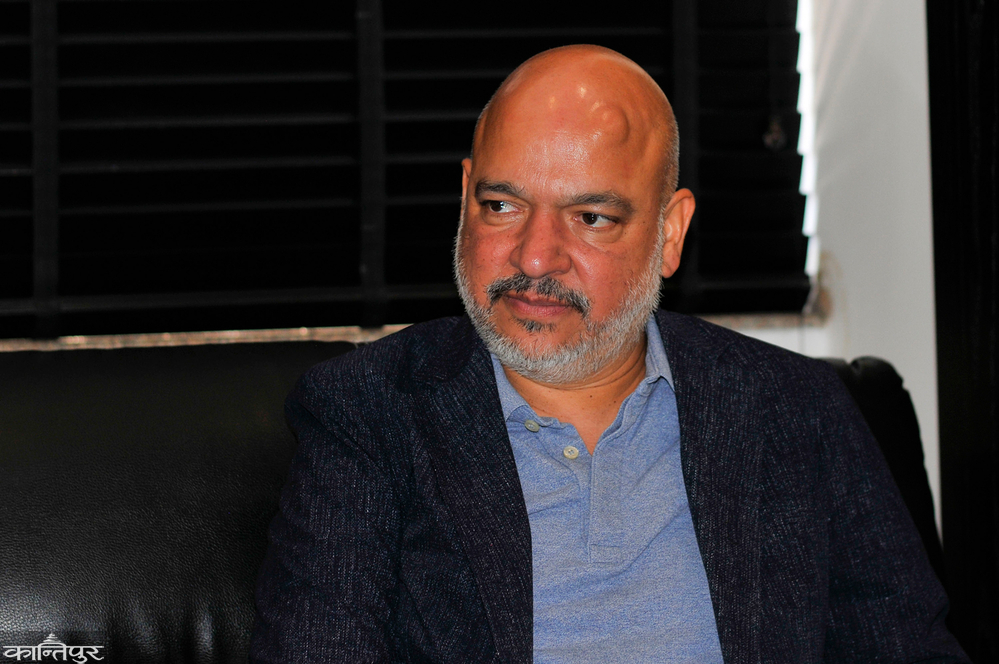
In this regard, a conversation between the former president of the Federation of Nepalese Industry and Commerce Shekhar Golcha Krishna Acharya and Yagya Banjade of Kantipur about the upcoming budget arrangement and implementation challenges: Deputy Prime Minister and Finance Minister Bishnu Paudel has submitted a budget of 19 trillion 64 billion 11 crores for the next financial year. How have you evaluated the budget, especially from the perspective of the private sector? Looking at the size of the budget and the target of revenue collection, the next year's budget is realistic. Because previous budgets were too ambitious. The next year's revenue collection target is achievable. The budget is neither disappointing nor ambitious. However, the budget brought by the two-thirds government could have been somewhat ambitious. It seems that the budget tries to solve the existing problems of the economy.
The private sector has been making various demands to create an investment-friendly environment in the country. What demands of the private sector were included in the budget and which ones were not included? The
budget addressed the information technology sector. This is a very positive part. There is a lot of potential in the information technology sector in Nepal. In order to make more use of that potential, the state should encourage investors to expand investment through appropriate policy arrangements and necessary infrastructure construction. In fact, even the state has yet to assess the situation and potential of this sector. In the budget of the last two/three years, the information technology sector has started to come up. However, in the next year's budget, it seems that they are trying to address this area well.
The private sector has long been urging the government to open the way for foreign investment. Now that topic has been addressed. Now we are doing business in cooperation with foreign companies. Now, if we cannot have our own outlets abroad, we will have to lose those businesses. As such we must always depend on foreigners. To prevent this situation from happening, the budget has been created to create an environment for Nepalis to invest abroad. It is said that it will be handed over to the Investment Board for approval of investment abroad. However, more policy arrangements are yet to be made regarding foreign investment.
We have very high foreign currency (exchange) reserves. There is more liquidity in the financial system. However, we have not been able to monetize these reserves. Opening up the way for Nepali to invest abroad will help to utilize and monetize the foreign exchange reserves even if it is to some extent.
If returns can be brought in Nepal, then the government should allow the import of some goods and services which are consumed more abroad than in Nepal. By doing this, the foreign exchange reserves are utilized and the state also gets more revenue. The provision introduced by the government through the budget should be implemented soon. Even now, some Nepalis are investing abroad. Now if it is made legal, the return will also come from the legal way. Through the
budget, the government has also recognized the 'sweat share' for the first time. This is another important decision. If I have done some good work at home and want to do that work abroad, I now get to keep my expertise in the form of sweat equity (shares) without having to invest abroad. So I see it as opening a new path too. This decision of the government seems to benefit the state.
The government has recognized hotels and restaurants as industries. Recognition of the tourism sector as an industry is very positive. Hotels and restaurants also get various facilities like electricity at low price, tax exemption on import of raw materials after being recognized as an industry. It seems that the speed of development of this area will increase. Even now we are talking about bringing in only 10/12 lakh tourists. However, we have the potential to easily attract 5 million tourists. This requires good tourism infrastructure along with quality hotels.
Nepali praised the arrangement of being able to invest abroad. However, it is said that only up to 25 percent of the export amount can be invested. Do you think this limit is enough or should be expanded?
This is the beginning. Therefore, how much money can be invested is the second aspect. The key is to 'break the ice' by opening the way for legal investment abroad. The reduction or increase of the investment limit is done gradually. This arrangement should be implemented quickly and completely. The budget also covers the demands of the private sector, including relaxation of land limits for
industries, expansion and implementation of Special Economic Zones (SEZ). How did you see it? In the
budget, it is said that rent concession will be given for three years for industries operating within SEZ. It's not that big of a decision. It is not because the rents are high that the industries have not gone to SEZ. Due to the lack of many other facilities like electricity access, water supply, some facilities to be given to the workers etc., the industrialists did not go to SEZ. If those problems are addressed, rent is not the only problem. However, it seems that the government is trying to develop and expand SEZ through the budget. This in itself is very positive. Limitation of land was a big problem for the
industry. The government has addressed and canceled the restrictions. It encourages investment expansion in the industry. However, how are further policy directions made? The development and expansion of the industrial sector depends on that. As in the past, many old programs including integrated farming have been repeated in the next year's budget to increase production and productivity in agriculture.
In order to protect the environment, reduce imports and increase electricity consumption, the government has given a large tax discount for electric vehicles. Despite the huge impact on revenue, Nepal's image in the global market has been boosted by the government's open-heartedness in giving tax exemptions to electric vehicles. However, the government could have made a modest increase in the tax rate on electric vehicles. Increasing the tax rate to 10/15 percent would not necessarily reduce the use of electric vehicles. Instead, the state would get more revenue.
You said the government should have increased the customs duty on electric vehicles. Why?
is purely from the revenue collection side. Expected revenue has not been collected in recent years. Electric vehicles and clean energy are the future of Nepal. However, there was an opportunity to raise taxes without reducing current consumption. But it seems that the government does not want to get involved in something traditional and controversial regarding the tax on electric vehicles. Electric vehicles now have 70 to 80 percent tax exemption. It is very good for consumers. How long can this discount be given? This is the main thing. Everyone has welcomed the arrangement that does not impose land restrictions on
industry. However, it is said that the land taken in the name of limitation is not being used for the purpose for which it was purchased, and the industrialists invest the money in the land and sell it later, isn't it?
Not all businessmen are clean, not all work is transparent. Some may have made mistakes but do not generalize based on that. The current delimitation of land was not sufficient for large industries, so the government did a good job by providing delimitation exemptions. However, the government should make certain policy arrangements to ensure that industrialists who have taken the facility of limitation cannot sell that land or use the machinery.
Do you mean to say that under the demarcation system, the industry that needs land should be left open, strictly regulated, and if the business fails at any time during the operation of the industry, there should also be a system to sell it?
Globally, the average life time of any industry is only 21/22 years. What to do with that land after 22 years? In such a situation, the industrialist should be given the facility to raise investment by selling the land. Because one industry doesn't mean business will stay relevant forever. In such a situation, if the industrialist is not given the facility of land sale, there is a risk of 'holding' large capital on the land. Rather, policy arrangements can be made in terms of how to sell the land, so that the money can be used in the productive sector.
You said that the demands of the private sector have also been addressed in the upcoming budget. Now the confidence of the private sector has increased?
Private sector enthusiasm will not increase until market demand increases. In the past, there was confidence in the private sector because the market demand was high despite the current policy regime. Compared to the past, the demand for goods and services has shrunk considerably. The main reason for this is the lack of access to credit. Cooperatives and microfinance provided access to credit to the lower sections of the society. In recent years, when problems arise in this sector, a large number of citizens have been left out of access to credit.
The youth group leaving the country is increasing day by day. This is also the reason for the decrease in market demand. Cooperative problems and youth migration have a negative relationship with market demand. Cooperative problems and increase in youth migration reduce market demand. In the
budget, provision has been made for the protection of savings up to 5 lakh rupees in cooperatives, recovery of savings of victims through the sale of property of owners of troubled cooperatives, suspension of their passports, legal action, etc. Similarly, the establishment of a cyclical fund for the return of victims' savings and the provision of seed capital by the government to the fund, the full operation of the National Cooperative Authority, and effective regulation are covered. In the past, seeing cooperatives only as self-regulating organizations has caused problems. Even if we want to create an environment for
investments, we will have to find new areas for domestic consumption. Even the operating industries are utilizing only 30 to 40 percent capacity. Therefore, if we can expand access to credit to the lower class by solving the problems of the cooperative sector, the market demand will increase. As demand increases, confidence in the private sector is boosted. The search for new areas for investment begins.
Bank interest rates are at their lowest in nearly four years. More than 6 billion loanable amount is accumulated in the bank. However, loan demand has not increased. Why did this happen? Can the budget loosen the knot in investment expansion?
Due to the sluggish economy, banks are under pressure to recover loans. Bad loans have increased while non-banking assets are also increasing. Banks have not been able to get new borrowers. A section who have been taking loans from banks for a long time with honesty. That category does not need loans now. The category that seeks loans does not have the history and work experience that the bank can trust. Now banks don't give loans just by looking at the mortgage. They look at many aspects including the professional background of the loan, business feasibility. Banks therefore lack new customers that they can trust, while old borrowers are already saddled with substantial debt. Norms including working capital have prevented them from extending more loans. That's why a large amount of money is currently stored in the bank.
The Budget has announced the setting up of an Asset Management Company (AMC) to manage the increasing bad loans of banks. This is a very big and important decision. Banks are also in a difficult position due to the increase in non-banking assets (NBA). With the introduction of bad loan management through the establishment of AMCs, banks are able to focus their attention on 'core banking' activities.
There is nothing new about the capital market in the budget. NEPSE has not increased in recent months. After the implementation of the budget system, will the stock investors be excited?
The stock market needs a lot of improvement. Regulatory bodies have not been able to effectively regulate and expand information and financial information. Therefore, only a limited section is benefiting from the stock market. The stock market is under their control. Therefore, it should be able to operate effectively through the stability of the stock market.
What needs to be improved to make the stock market accessible to everyone by providing stability?
Education and regulation in the stock market has not reached. The duty of the Securities Board and NEPSE should be financial education and high risk assessment. What is the market problem? A lot of improvements are needed in this area to protect the assets of the investors. At present, nearly 68 lakh demat accounts have been opened in Nepal. Many of them do not understand the stock market very well. This is why small investors have always suffered losses. The Securities Board and NEPSE have a major role to play in solving this problem.
In the new budget, the government has said that NEPSE will be restructured. Is the restructuring of NEPSE enough to solve the problems of the capital market that you have shown, or is a new stock exchange necessary for private sector investment?
I do not comment on the new stock exchange.
Out of the 63 items included in the current fiscal year's budget, only about 13 percent have been fully implemented. There is zero progress on 27 points. How confident are you that the provisions of the upcoming budget will be fully implemented?
is very problematic on the implementation side. There are many reasons for this. Some have said that the problem has arisen due to the lack of ability of private sector construction workers to work. I don't agree with that. There is a problem with our public procurement process, selection of builders, etc. So we could not choose good projects and builders and that was the problem.
Only a few months ago, the government amended many laws through an ordinance. At that time, I publicly said, 'I am dreaming.' Because until today, the government was serious about solving the problems of the private sector and promoting investment, and had never amended so many laws at once through an ordinance. However, the regulation of the three is yet to come. Without regulations, implementation is delayed. There is a doubt that the regulations will also come in accordance with the purpose for which the Act has come. The personnel administration has been causing difficulties in some or the other.
We don't have a culture where we can see and respect what others have earned. We have not been able to develop a culture that respects the industry if it earns money by doing business within the rules of the country. The bureaucratic view of the private sector has not yet improved, it is archaic. Therefore, the private sector has been saying, the state takes the policy of cutting trees that give good fruit without protection, which is not good.
The private sector did not try to find new areas of investment. Therefore, most investments are concentrated in limited areas. What is your opinion on this?
Finding a new place is very risky. This requires constant effort and dealing with multiple policy rules multiple times in multiple locations. Not all private sectors have this power. There is political instability. This is a big problem. When it comes to new areas of investment, 5/6 of my businesses are all new (started for the first time in Nepal). For example, we have started motorcycle assembling, biotech, vehicle loan disbursement through hire purchase company etc. in Nepal. Two years ago many animals died in Nepal due to lumpy skin disease. Now we have developed a vaccine for that disease. The vaccine is certified by an international lab and is very effective and of high quality. This is why preparations are being made for vaccine export.
Now the country is on the 'grey-list' of asset laundering. Has/has it become difficult for the private sector to work because of this? According to the government, can Nepal come out of this list 2 years ago?
FATF's main focus is on human trafficking, narcotics, counter-terrorism and arms. If you work well in these areas, you can get out of the 'grey-list' before the specified time. However, our preparation is not that good. We have given a lot of responsibility to the Money Laundering Investigation Department. But the department has been doing a lot of controlling and threatening some industrialists. It seems that the department is not working effectively to solve the main problem because it is confused about such things. From the very beginning, we made cooperatives a means of laundering black money. We could not regulate cooperatives effectively. The result is now visible.
During the constitution of Nepal, cooperatives were considered as the third pillar of the economy. At that time, we said that if we consider cooperatives as the third pillar, then we should have effective regulation and supervision, do not leave them free, otherwise problems will arise. But the government did not listen. As a result, the problem of co-operatives has become more complex. Although late, the law has been amended to solve the problems of the cooperative sector, and a regulatory authority has been established. Criteria are set for savings and loans. It is necessary for the government to be more sensitive to remove it from the gray list before the scheduled time.
Monetary policy plays a very important role in achieving the objectives and goals set by the budget. What should be the next monetary policy to make the economy run and solve the problems of the private sector?
In recent years, some topics seem to 'overlap' in finance policy and monetary policy. For example, in the next year's budget, Finance Minister Poudel has addressed many issues including debt restructuring and rescheduling, cheap credit, which should have come through monetary policy. Similarly, although the job of calculating inflation is done by Rashtra Bank, currently the government is setting its annual target through the financial policy. This is not right. Rashtra Bank should be allowed to work autonomously by the government.
However, it seems that the upcoming monetary policy should bring a special policy to maintain financial stability, more liquidity in the financial system and monetize foreign exchange reserves without increasing interest rates.
There does not seem to have been effective coordination between fiscal policy and monetary policy in the past. What should be the policy of the National Bank to prevent this situation from happening again?
The main policy or structure of the country is the financial policy. Various goals and objectives including economic growth, job creation, production growth are set in it. Monetary policy should come in such a way as to help in achieving those goals and objectives. The budget has set a target of 6 percent economic growth and 5.5 percent inflation for the coming year as well. Monetary policy should provide necessary money supply and policy implementation to achieve this goal.
At present, the National Bank has implemented guidelines on working capital loans. This guidance, which should be issued a few years in advance and implemented in a phased manner, is tight in the current context. Now it seems that some guidelines should be relaxed in order to increase credit expansion in the market and to use the excess liquidity of banks in the productive sector.
Similarly, the National Bank should provide positive support in the policy formulation necessary for the implementation of the provisions regarding the right of Nepalis to invest abroad brought by the budget. Currently, the interest rate is very low. If interest rates remain low, it will cause distortions. Therefore, the interest rate of loans will increase slightly, the interest rate of deposits will be slightly higher than the inflation rate, and accordingly, the National Bank should use the necessary monetary tools to maintain the interest rate of loans.
Bad loans have increased due to non-recovery of loans from banks and financial institutions. Unofficially hears that there are more bad loans than banks publish. In fact, it is necessary for the National Bank to conduct a special study and research regarding the amount of bad loans of the banks.
Is your demand that the guidelines on working capital loans should be relaxed or postponed? I am not saying that
guidance should be postponed. The guidance has also done a good job on credit utilization. However, more credit expansion is needed in the productive sector. For that, some of the guidelines should be relaxed for a certain period. Which leads to more credit expansion and economic activity can become sustainable.
What do you recommend to employees and leaders to implement the budget? There must be political will to make
work. It is not just by insulting the staff administration. Politicians should also be able to give guidance to reduce this. Effective implementation of the budget requires the integrated efforts of many agencies. If there is no effective implementation, no matter how good the budget is, it will not give results.

