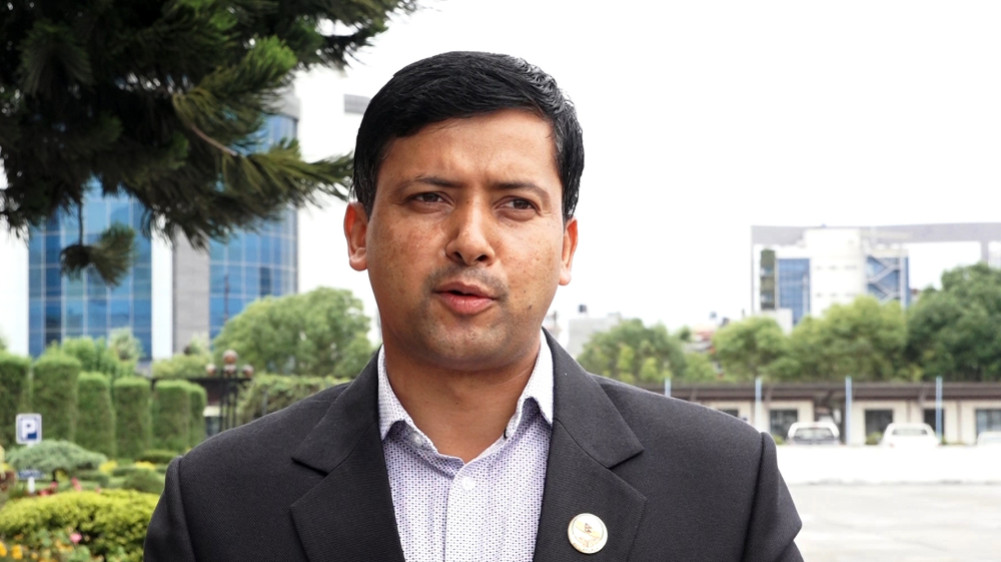
'The role of the minister is great in passing the bill. The bill does not belong to MPs, it belongs to the government. The concerned departmental minister should take the initiative'
We use Google Cloud Translation Services. Google requires we provide the following disclaimer relating to use of this service:
This service may contain translations powered by Google. Google disclaims all warranties related to the translations, expressed or implied, including any warranties of accuracy, reliability, and any implied warranties of merchantability, fitness for a particular purpose, and noninfringement.
The 61-day winter session of the Federal Parliament ended on Tuesday with 27 meetings after 25 days. In this winter session, which is considered as a bill session, 11 bills have been passed by the House of Representatives and 10 bills by both houses including the National Assembly. Out of the 10 bills passed by both houses, 9 have been approved by the President and have become laws.
While there are complaints about the delay in law making, the ruling party about parliament session, law making and government work CPN-UML chief whip Kantipur's conversation with Mahesh Bertaula :
How was this convention in law making?
Bill It was desired that the bill under consideration in the Parliament and the Parliamentary Committee should reach a maximum conclusion from the session. It was expected that the Federal Civil Bill, especially school education, would be concluded and accordingly we have proceeded with the work. However, the session ended on Tuesday.
We passed 11 bills from the House of Representatives. There are Water Resources and Martyr Dashrath Chand University Bills, which have reached the stage of passage and have been submitted to the Parliament. If the session had been held, it would have been passed. Customs and some Nepal Act Bills were passed by the committee but the report is yet to be tabled in the Parliament. We have worked to bring this important work to a conclusion.
80 percent of the work on the Federal Civil Bill has also been completed. We have also progressed steadily in the school education bill. Meanwhile, two important bills are concluded by the committee and passed in the budget session.
In other bills related to the implementation of federalism, we will advance two bills related to police, civil aviation authority. On the whole, laws have been made amid many obstacles during the two-month session. Along with the main opposition, the opposition also obstructed the parliament in general matters, and more important work was missed. Recently, some bills could not be passed due to four-five days of obstruction.
Why was not careful to pass the bill to implement federalism?
Every law is related to federalism and the implementation of the constitution. The Federal Civil and School Education Bill has moved forward. 80 percent of the Civil Bill has been completed. In the school education bill, there are subjects of teachers, staff, curriculum, examination system, and the role of local government. There are many stakeholders in this bill. Why didn't we pass it today? It can be passed, but it may take some time in terms of making quality laws.
How was the government's support in law making?
The House of Representatives has passed 11 bills. The role of the minister in passing the bill is huge. The bill does not belong to MPs, it belongs to the government. The concerned departmental minister should take the initiative. The ministers took the lead in the committee to ensure that the bills related to their ministries reach their conclusion quickly and also discussed the content of the bill. The more active the government is, the more attentive the ministers are, the more support there is in law making. After the formation of the present government, we have asked the ministers to play their role effectively in their bills.
If the role of ministers was effective, would only 11 bills have been passed? If the house had not been closed for four to five days between
s, four more bills would have been passed and laws would have been made. We will pass them at the beginning of the next session. We are working to pass the school education and federal civil service bills in the budget session itself. Bills that are not passed in this session will be passed on the first day of the budget session.
Questions are being raised about the accountability of the government, the opposition alleges that the government did not become accountable with the arrogance of two-thirds. what do you say This
is an apolitical and unparliamentary allegation by the opposition. The government is always in parliament. The government is formed on the basis of the majority, it only depends on whether it is in the general majority or in the strong one. The government formed by Congress and UML is strong but we are not proud of it. Every minister has given an explanation in the Parliament between two months. The Prime Minister held a question-and-answer program with MPs twice.
The MP has replied during the protest that the Prime Minister should have addressed the Parliament. He informed the Parliament even when he went on a visit to the United Nations. Meanwhile, the government has registered 13 bills. Parliament has given business and played a role in bringing it to a conclusion. At least the people say that the parliamentarians are not walking away with only allowances. However, it was seen that all the MPs of the RPP and most of the MPs of the RPP walked the talk at zero and special times. We have not done this.
There is also an objection that the Parliament is indifferent to law-making, what should be done to improve it?
Overall, looking at how much work we have done in the five conventions, there is no need to question whether we can do as much work as we need to do. That is to accept. The government should give business to the parliament on the basis of need. The business given by the government is sufficient. Departmental ministers had to hold discussions to finalize the bill of their ministry. Not only by attending the discussion committee, but also by having informal discussions with the interested parties. There is no practice of lobbying ministers to pass
ministry bills. There is a compulsion to hold meetings only when the minister has time. That is, successive ministers should demonstrate their role, competence and ability in the bill. Committee meetings had to be held regularly.
committee chairmen and parliamentarians are obliged to run to their constituencies and other responsibilities as soon as the parliament session is over, so they should consider parliamentary affairs as their first responsibility. If we can move forward in this way, the work of creating laws and giving warnings, questions and suggestions to the government through the parliament will also move forward sharply. People's issues and issues of national concern are also raised vividly. People's problems are also solved.