Where is federalism in Nepal? Where are you allowed to stay? The word federalism does not work, federalism means common at the center and self-governance in the provinces.
We use Google Cloud Translation Services. Google requires we provide the following disclaimer relating to use of this service:
This service may contain translations powered by Google. Google disclaims all warranties related to the translations, expressed or implied, including any warranties of accuracy, reliability, and any implied warranties of merchantability, fitness for a particular purpose, and noninfringement.
The interim constitution was promulgated on January 1, 2063. Expressing displeasure with that, a group led by Upendra Yadav burned a copy of the constitution in Kathmandu's maitighar the next day. He was arrested. It was then that the first Madhesh movement began. Which bent the then government, led Madhesh to a new psychology.
Made more aware of rights. Constituent Assembly elections were held twice in the course of time. The constitution was also made from there. On the other hand, Madheshi-centric parties, including the then Madheshi Janadhikhar Forum led by Yadav, sometimes became agitators, sometimes ruling.
sometimes united, sometimes divided. Meanwhile, how many demands and feelings of the first Madhesh movement have been addressed, how many are left? What was the feeling then, what is the understanding now? Rajesh Mishra of Kantipur and Kishore Dahal had a conversation with Yadav, a leader established in national politics from the Madhesh movement: The first Madhesh uprising in 2063 has completed 18 years. How do you remember that time?
Since then Madhesh became a part of Nepal. The policy adopted by the state towards the Madhesi people was discriminatory. Don't give citizenship, don't let them become citizens. Ignore his language. His culture will not be recognized by the state as its own. Participation in state bodies shall be nominal. To invest little in the development of Madhesh. Underrepresentation in services and opportunities provided by the state. Madhesh was seen only as a place to raise revenue and source of income. Rather than in political terms, Madhesh was treated like an internal colonial policy. The people there were affected by colonial exploitation, oppression, discrimination and inequality. The Madhesh rebellion took place to get rid of such a policy taken by the state.
The interim constitution did not address the people's movements, armed uprisings and the aspirations of the people of Madheshi, tribal tribes, Tharu, backward classes, Dalits and other minority groups. The constitution did not address the oppressed communities who were hoping for equal rights and justice. On the morning of January 2, 2063, we protested by burning it. The state repressed. As a result, the movement turned into the Madhesh Rebellion.
What did Madhesh and the country get from the first Madhesh rebellion and the subsequent Madhesh movements?
Due to the Madhesh movement, epoch-making changes have taken place in the country. 33 percent of women's positions have been secured in the bodies from the bottom to the top. The participation of Dalits, backward classes and tribals has increased. Quota system has been implemented in government agencies. The country has gone to a federal democratic republic. All these are achievements of the Madhesh movement. The 22 and 8 points we have are the result of the agreement. The Interim Constitution and the 7-Party Manifesto did not include republicanism, federalism or inclusiveness. No other movement or change in the past had achieved the same results as the Madhesh movement.
So, why are you still dissatisfied with the constitution?
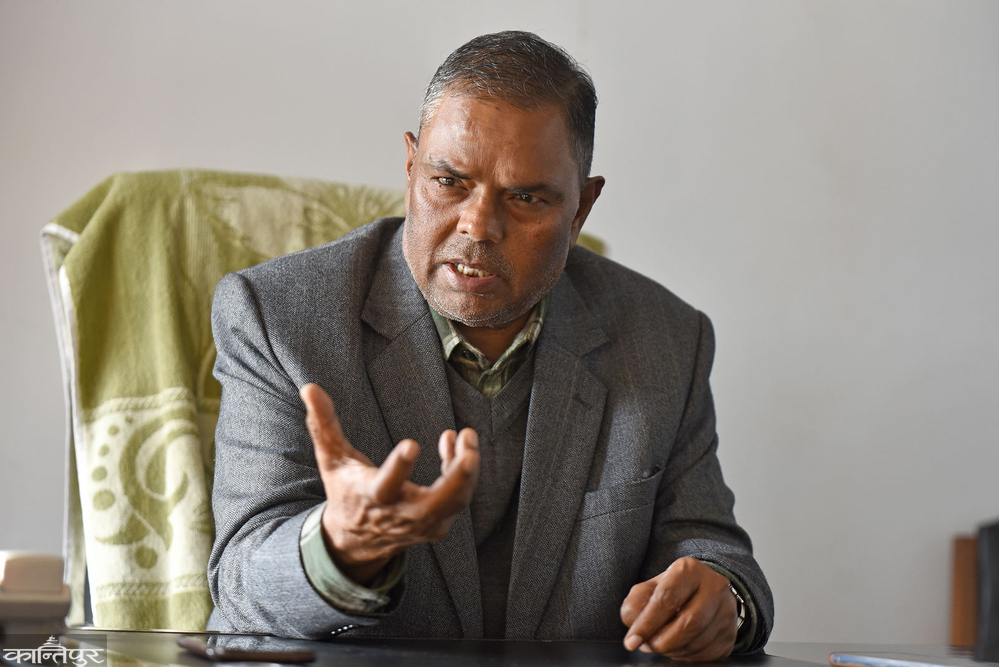
The state did not implement the agreements made during the agitation accordingly. In the agreement, it is said that the Federal Democratic Republic of Nepal, Madhesh Autonomous Province and the provinces will be empowered. Representation of all communities in proportion to population was among the topics. The interim constitution was amended to address some of those issues. The state accepted it. Oppressed communities had significant representation in the first Constituent Assembly. It was ended without making the constitution in a conspiratorial manner. That big The
was the plot. At that time, Congress, UML and Maoists refused to accept what was passed by the first Constituent Assembly in the Second Constituent Assembly. We burned the interim constitution they made. It was written that a high-level state restructuring commission will be formed and the state will be restructured based on the recommendations given by it. That was the constitutional arrangement. According to that arrangement, the commission was also formed. He also suggested. The commission's report should have been implemented by the government.
should have been submitted to the Constituent Assembly. However, both were not done. There was no honesty in them. He did not follow the constitution he made himself. The agreement was not followed. The country is full of diversity, but the thought of continuing the supremacy and domination of the same caste and language that has been practiced since the expansion of the Gorkha state remained among the leaders. The Congress and the Communists tried to continue the trend of Rana, Raja, Panchayat or democracy era of being the ruler and the ruled, imposing the same language and culture.
Therefore everything accepted by the interim constitution, agreed upon in the movement, suggested by the State Restructuring Commission was kicked out. A constitution was promulgated by force. Curfew in Madhesh. People were being killed. The constitution was promulgated by killing the people of their own country. The constitution was not discussed in the assembly. He made the scribes who suited his interests to write, and passed it at once from the Constituent Assembly. No constitution is made in this way anywhere in the world. Every article, sub-article is discussed. However, here it was announced that it had been forcibly passed with a whip.
All people have equal rights in the services and opportunities provided by the state. However, single caste dominance still persists. Look at the faces of employees all over the state or centre. Look at the bureaucracy inside the lion palace. How many representatives of Madhesh, tribes or Dalits do you find? Don't the people of other castes and costumes feel neglected in the dominance, dominance and dominance of one caste? Do not feel discrimination and injustice? I am a man from Madhesh. Madhesi's son. I can't even read in my language. Have to study in another language? My language is Maithili, Period, Bhojpuri, Hindi. I can't apply in my language.
I am still deprived of that right. He had to fight hard for citizenship. The land son of this country should fight to say that he is a citizen of his own country. We call this kind of thinking racist. Racist and communal thinking. It must end. That remains to be done. That was also the main goal of the Madhesh movement.
Did Madhesh see the federal system as the formula to end the differences with them?
definitely is. In a multi-lingual, multi-ethnic, religiously diverse country, a unitary governance system cannot address everyone. May not include everyone. In such a country, federalism can be addressed at the provincial and central levels. Each province has its own characteristics. He goes through his practices accordingly. They enjoy self-governance and autonomy. They get to feel included.
Self-development, self-rule. Can guarantee self-governance. That is why he fought for federalism. Look at India, in such a diverse country, all communities are bound by one formula. The people of any province they go to call the constitution mine. He felt a sense of belonging to the constitution. However, except for one community in Nepal, no one, Madhesi, tribal, Dalit, Muslim, says that this constitution belongs to me and my rights are protected in it.
It has been seven years since the practice of federalism and provincial structure. Why didn't that formula work here as you said?
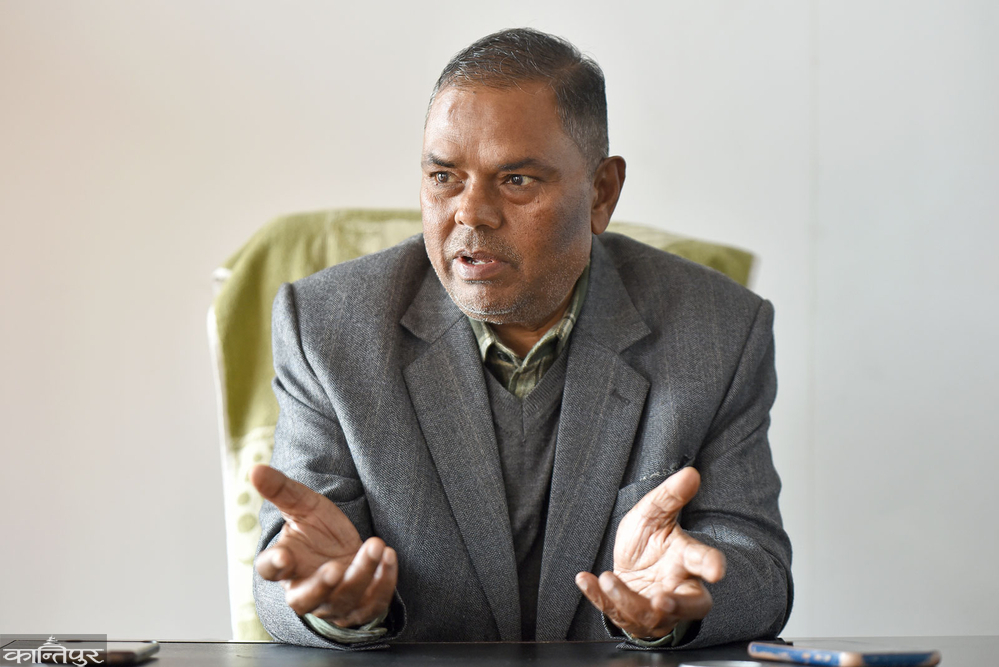
Where is federalism in Nepal? Where are you allowed to stay? The word federalism does not work. Federalism means common at the center and self-government in the provinces. Called 'Self Ruled' and 'Share Ruled'. There is no self-government here. There is a government in the province. However, the police, administration, staff and law are nothing. The province was shown but the power was kept in Kathmandu. A situation was created that neither the provinces could work, nor the center could rule.
That's what we said when we made the constitution. We said that the provincial affairs should be given to the provinces and the central affairs should be kept at the center. The restructuring of the state is also wrong. It was written in the interim constitution that Madhesh will be an autonomous province and will be empowered, but when the constitution was made, Madhesh was divided into five parts. Communities were fragmented. Impractical, unscientific seven provinces were created. The State Restructuring Commission said - let's restructure the state based on strength and identity. That is the practice all over the world. That was not done. The province was created in name only. Yesterday's district development committee was more empowered than the current state.
Is it possible to reform the regional structure or are you trying to cancel it?
should be improved. The country should go to federalism both in terms of numbers and rights. Empowered provinces should be created. The concept of autonomous province should be brought forward. The suggestions and arguments given by the State Restructuring Commission are almost practical. You have to take it and move forward. The province should be empowered. Is there a province dependent on the center? Such a system was created that there is no such province anywhere in the world. It is the province to show but the center to govern. This situation leads the country to an unfortunate event.
Your party ran the government in Madhesh province for the full 5 years of the first term and for one year even after the second election. What service could you give to the people?
What to deliver to the public? There is no such right and environment. Employees do not own. Work from the staff center, and also take leave from there. What can a government do that has no authority over its staff, police, machinery and resources? What about just putting a flag on the car? This is the case not only in Madhesh province, but also in other provinces. However, comparatively, during our government, more work has been done than in other provinces. Federalism should be reformed. Empowerment should be given by sharing at the center, regional autonomy and self-governance. That's why let's correct from where the mistake has been made.
You are talking about further reforming federalism. However, one class federalism became a cumbersome structure, it does not work. Are you saying that it should be canceled?
If you listen like that, then one class says that democracy is not needed. He says that he doesn't even need a republic. He has opened a party for that. Will democracy end? Will the republic end? And again lead to a family rule? It is a change brought about by the bloodshed and sacrifice of the people. It didn't come like that. No one came with a donation. It is a federal democratic republic established by the people through people's movement, people's struggle, armed rebellion and Madhesh people's rebellion. The old autocratic system was thrown away. Some people think that Rana rule was better than now. Then Rana will go to the government? So instead of democracy, it is more democracy. Now Nepal needs an inclusive democracy.
The Madhesh government led by your party was accused of corruption. Whoever sought federalism, he could not do well, right?
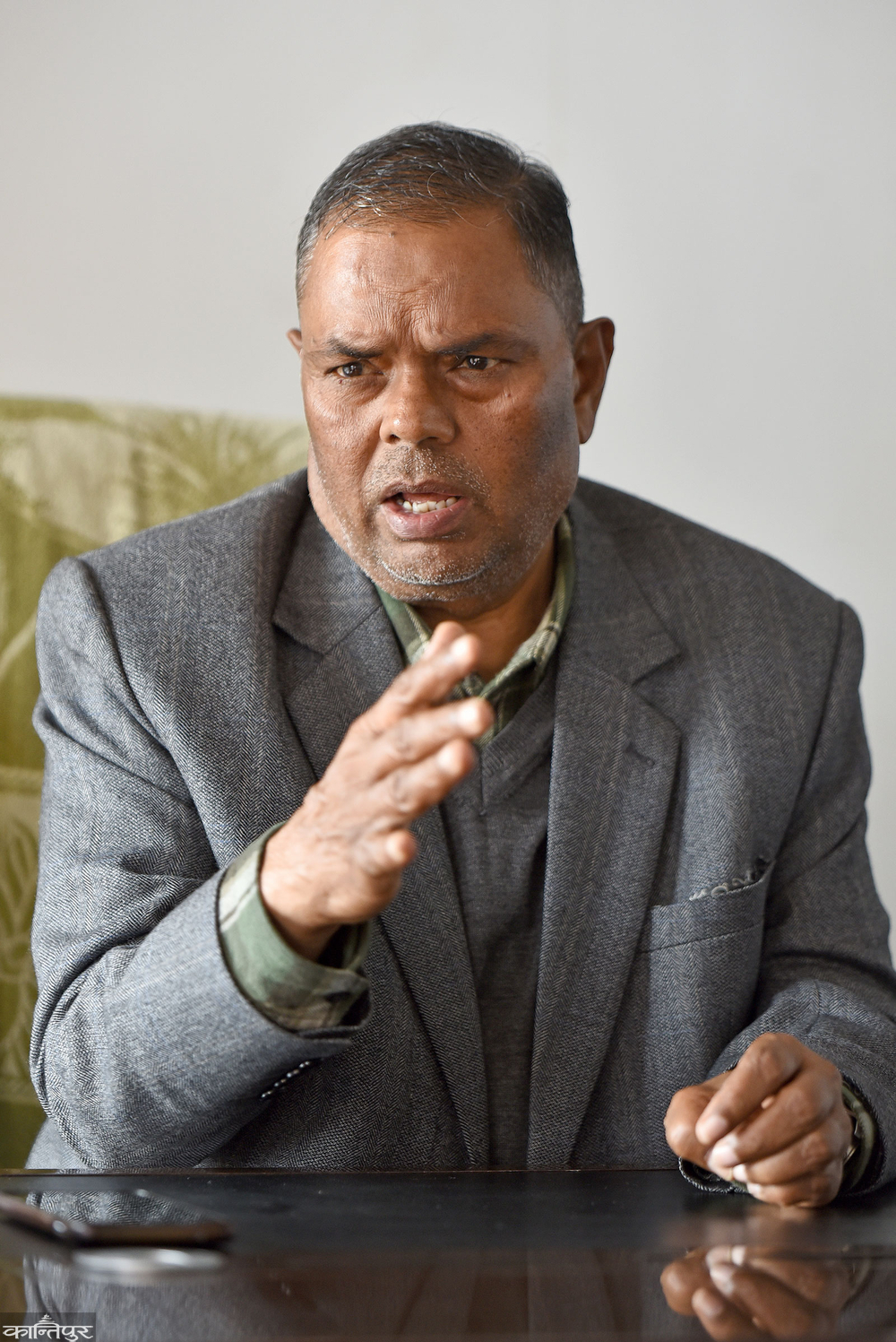
There is a law for corruption no matter who does it. Institutions have been set up by spending from the state fund for its investigation and action. So no one protects corruption anywhere. That is a different case. What do you say about the corruption happening at the center? Corruption everywhere is wrong. A criminal is a criminal everywhere. Let's put it in that group. You cannot blame the system by showing corruption. Due to the dishonesty of the rulers, the common people have not been able to experience the federal republic.
not only in terms of rights, but also could not speed up development. That is not the fault of federalism. It is the fault of those who ruled from Kathmandu yesterday. Whoever has been ruling in the past or since the multi-party system for 35 years is responsible. We have also participated in some ministries. However, it was the Congress and the Communists who made the budget and made the policy. They have failed to govern.
By repeatedly going to the government yourself, you have weakened your moral power to pressure compliance. Have you evaluated yourself from this angle or not?
It is the state's obligation to fulfill the agreement it has entered into. But after withdrawing from it and losing morality, what is left? What about going to the government? We have taken such commitments made many times positively. If we didn't think like that, the world would say - they wanted to do it, but you didn't allow it, you didn't help. That is not the case now. Now those days are gone. Now it is time to review all the old issues and move forward in a new way.
What is the new way? The achievements of the
movement, its defense, the realization of the rest of the rights, the frauds and how the country was dragged into the quagmire should be analyzed. How can the country be taken out of the swamp, how to try? That should be the basic direction of future politics.
Do these things happen through dialogue and agreement or through agitation or rebellion?
We believe in democracy. We do not believe in murderous revolutions or power grabs. In a democracy, there is an effort to communicate, make suggestions, and increase pressure. If it doesn't happen, what is the alternative but rebellion?
Now who is the ruling party or the opposition?
Now we are not in the government but we are helping from outside. We are in opposition in Madhesh province. But for the federal government, we are supporting from outside. The Congress-Communist alliance said that this time we will do something, support us. We evaluate the work and take decisions. Our assessment of the 6 months of this government is disappointing. The government is in confusion and the country is in a quagmire. The economy has not improved. The educational sector is also destroyed. International relations have not improved either. Corruption has not been controlled. There are no areas of improvement. The government is not in a position to state the 6 works done in 6 months. After evaluating this, we will bring our program in the coming days.
The government brought various ordinances a few days ago. What is your reaction to this?
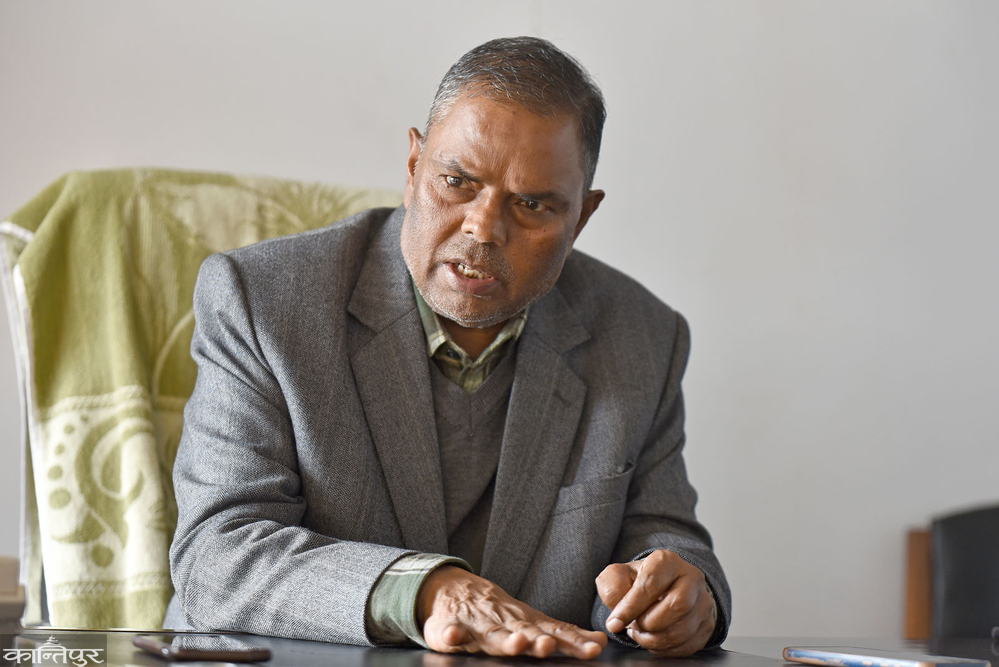
That's wrong. At this time, the parliament should be running. It is not right to pass an ordinance without convening the Parliament. On the other hand, the bill is being discussed in the committee of the parliament, but an ordinance has been introduced on the same issue. This is against the spirit and spirit of the parliamentary system. The bill pending in Parliament should be withdrawn first. Bringing an Ordinance and later withdrawing a pending Bill also strikes at the parliamentary values, spirit and spirit.
Constitution amendment is also subject to consensus of the ruling coalition. What are they trying to do? What is your analysis?
is a work to deceive all people. If the constitution is to be amended first. Today, the Prime Minister said that the constitution will be amended in 2087. Will the current government last until 2087? How was that date determined? Is there ego or something else? The constitution must be revised, amended and rewritten. If the current constitution is not rewritten, it will not serve the country.
The constitution will be amended, but the content of the amendment that both you and the ruling coalition want will be different, right?
Let's bring your own proposals and discuss. I was also the Law Minister for a short time. At that time, before we went to the government, it was signed to 'amend the constitution'. KP Sharma Oli, Pushpa Kamal Dahal and I signed it. Therefore, on behalf of the Law Minister, I took the proposal to the Council of Ministers to form a commission of constitutional experts to amend the Constitution.
I proposed that we should have experts, not leaders, in such a constitution review commission and amend the constitution based on their recommendations regarding the errors and amendments in the constitution. But I resigned when I was told that the constitution would not be amended even though I signed the constitution. Even today, I am in favor of forming a commission of constitutional experts.
Let's amend the constitution based on that. Rather than this and its agenda, it is the Federal Democratic Republic of Nepal. What should be its constitution, where are the obstacles in this constitution to implement it. This constitution could not address the plurality and diversity of Nepal. He could not address the voice of the people. Let's amend the constitution according to the suggestions given by the experts.
Congress-UML is insisting on the issue that the current electoral system does not provide political stability, it needs to be changed?
I say - Congress and communists did not give stability to the country. Since the constitution of 2047, the government has changed like every year. They are also the cause of instability. They cannot blame others.
We have been saying since the beginning, the country cannot move forward with this election system, government structure and justice system. So these three aspects should be changed. The distorted 'Westminster system' that has been replicated cannot provide political stability. A system in which MPs are bought and sold, and elections are expensive, cannot provide political stability.
Therefore, there will be a president with executive powers who will be directly elected by the people, he will form his government. To be a proportional inclusive parliament. He will do parliamentary work, MLA work. Parliament and government will be separated. For that, a full proportional election system should be adopted. It also has many models. Our proposal is that where parties and candidates do not have to spend, let's adopt the same system. On the other hand, the local level should be made into a state of non-party competition. It should be made a development agency. Let's not get partisan there.
Unless there is an independent judiciary, there can be no democracy, the people cannot get justice. The current judiciary is not independent. The judiciary cannot be independent if the party has made it a recruitment center for its workers and relatives. Constitutional bodies should also remain independent. As long as the Election Commission is independent, it can conduct free elections. Workers, relatives, those who give more money are given political appointments in constitutional bodies. In that way, the constitutional body cannot become independent by selling the posts of the constitutional body for money. It should be improved.
You made the assumption that you should go for full proportionality. But this Congress-UML government is preparing to reduce the number of proportional seats and increase them directly. How do you feel about such a proposal?
They are moving forward from caste pride. The power is always in their hands, they are ready to remove others from it. Yesterday he was talking about multi-party system. Now you are thinking how to go to two parties. Later you will think how to go to a party.
Do you see a two-party system possible as it is being said now? I don't see
possible. But there is a desire to run an arbitrary state. This has also been seen in the past. Otherwise, why was the parliament dissolved twice? Where was it going? The Supreme Court declared it unconstitutional. Madhesi, tribes or Dalits have tried to organize and raise their voices. A two-party rule is sought to end it and strengthen the mono-caste state, eliminating multi-partyism and leading to an authoritarian state. The next place to go is a party.
Madhesh-centric parties have a long history of break-ups. You are still in a state of disarray. How does this situation strengthen the movement?
Our party is socialist. Madhesh is our important issue. Our base is Madhesh. I request everyone, let's think with a cool mind without bias. Let's find out the shortcomings and mistakes of the past. Let's fix that. Now let's move forward unitedly with the commitment that those mistakes will not be repeated. We are ready for that. We have been advocating for unity since the convention itself. The central committee formed the working group. But meeting people is not only unity. Now there is a need for unity among all the oppressed such as Madhesi and tribal tribes. Who should take this country out of the swamp.
Now, efforts are being made to block the front between the Madhesh-centric parties. What is your understanding of that?
Whatever effort is being made, I call it a positive start. It has three things. First, let's make parties with the same ideas, principles and policies as one party. Let's not fight for leadership. Instead, let's take turns. It will be decided by democratic method. Second, if we can't form a single party, let's form a front between them. Thirdly, let's cooperate with like-minded people on national issues even if they don't have ideas, principles and policies. Let's keep these three topics open. There can be unification among some, let's form one party. If unification is not possible, let's form a front. If we can't stick to the front, let's cooperate.
Madhesh-centered parties were divided in recent days. Now how can they come together?
What about yesterday? Maoists killed Congress-UML by hanging them from trees. The Congress and UML governments at that time also set a price on the head of the Maoists. Head pricers and head cutters can be in one place. Madhesh-centric parties are not sabotaged by general disputes and greed. Why can't he "realize" and get along? I will again link to the Madhesh movement. We formed the United Democratic Madhesi Front. It is also the responsibility of the constituents to address the issues of Madhesh. It is also the responsibility of the members of the Front at that time to fulfill their agreements. No one should shirk that responsibility. It goes on and on and on.
Prachanda is trying to wake up Samajwadi Morcha again. It is understood that you are also ready to be called. What is your preparation?
Samajwadi Morcha was the process of building an alternative power. Apart from the Congress and the UML, a progressive third force had to be developed. The front was formed to speed up the country and take the country towards economic development, good governance and prosperity with rights and justice for the oppressed people. The manifesto of the
front also has those topics. But Prachanda was going to use it to go to the government, to threaten there by saying, 'Here is my front' and to take away the share of the government alone. But he did the work of betraying, interfering and splitting the party that was in the front. Then the front collapsed. He burned the front. If he feels that he will build a front again, how will he explain the betrayal, compromise and betrayal he gave. Why should others believe him? The crisis of faith had to be eliminated first. In the beginning, you had to trust your allies. And there is no front.
So, is there a possibility that you will be included in Samajwadi Morcha right away?
More important than whether or not we are included is the building of trust. There is no collaboration without trust.

