I do not consider it necessary to remain in office if my commitment is weak. I am moving forward like that. There are also comments about me that I have listened to the people rather than the workers. But it does nothing to me.
We use Google Cloud Translation Services. Google requires we provide the following disclaimer relating to use of this service:
This service may contain translations powered by Google. Google disclaims all warranties related to the translations, expressed or implied, including any warranties of accuracy, reliability, and any implied warranties of merchantability, fitness for a particular purpose, and noninfringement.
There are widespread complaints that the education sector has become weak due to party politics. The practice of giving preference to merit over merit in educational institutions including universities has been continuing for years. The ministers who change after the change of government talk about reforming the education sector. But on the day he left the ministry, he can't say anything about the reforms during his tenure.
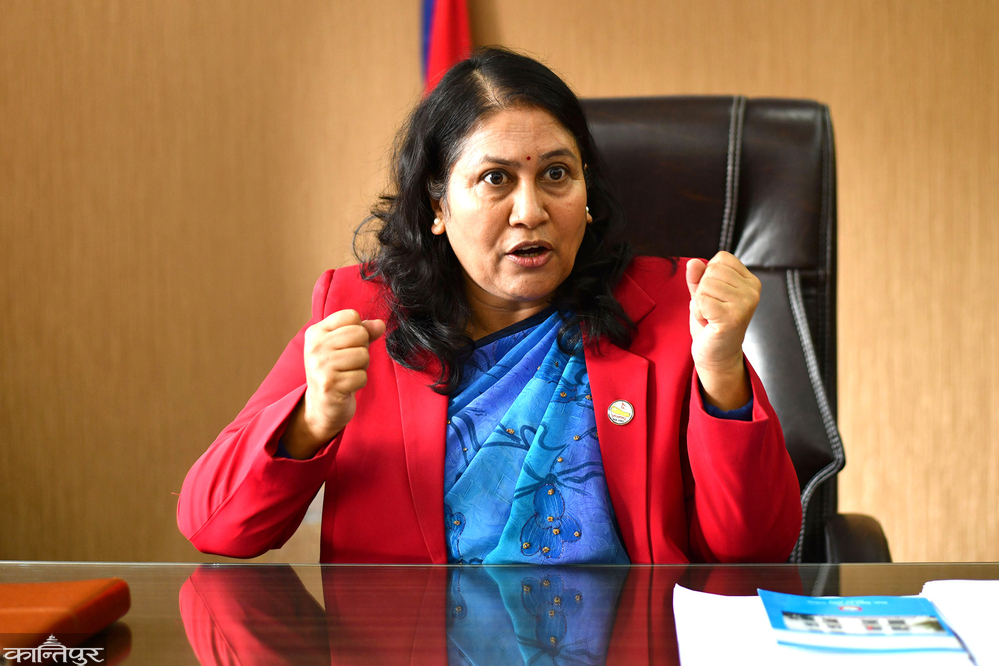
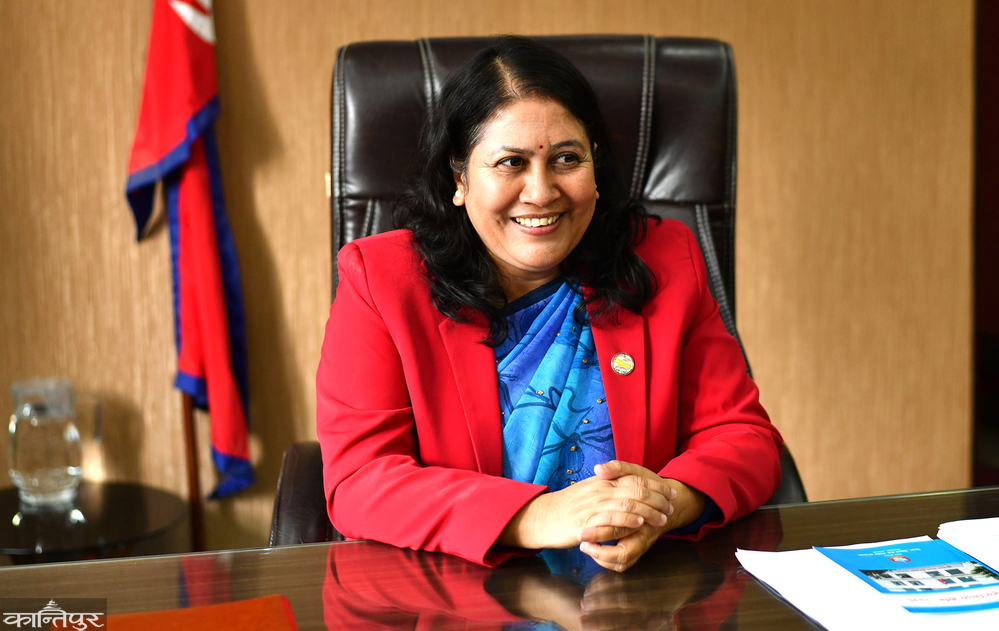
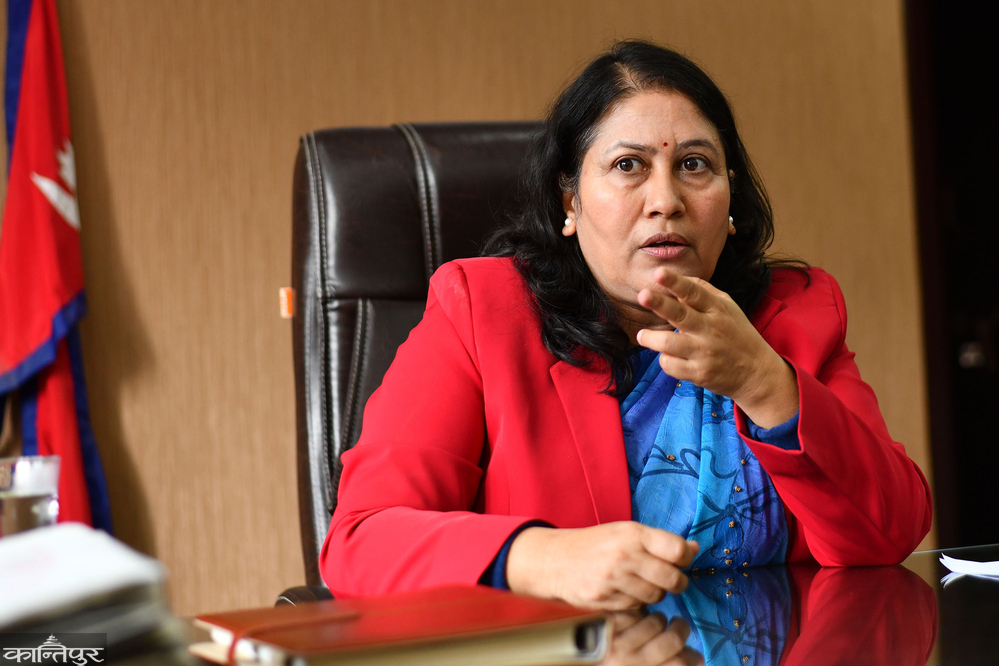
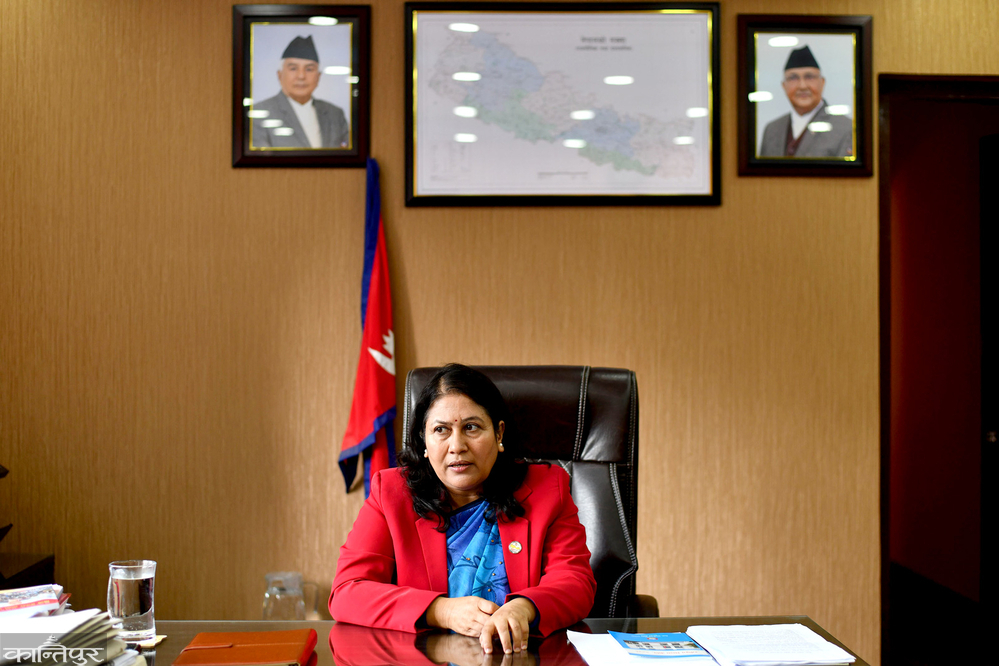
Vidya Bhattarai, who came to politics after practicing professionally in the education sector, has been holding the leadership of the Ministry of Education for 6 months. What is she doing to improve the condition of the education sector? In this context, Durga Khanal and Sudeep Kaini of Kantipur had a conversation with Bhattarai: He came into politics from the professional background of a deputy professor and is now holding the Ministry of Education. How does it feel about 6 months? I worked as an assistant professor for four years. But I joined many places in the education sector. Around 2063/064 teachers were not getting salary. The psychology in which the teachers used to live is still the same today. I taught for 14 years in all the three campuses in Kathmandu, Pokhara, private, community and private. I was a part-time teacher for a long time. The question of part-time teachers was as complicated then as it is today. University has not yet entered a different place than what I experienced.
Universities have a different kind of problem. No one is taking responsibility for that. Trying to control when there is no problem, autonomous when there is a problem. While in the profession, I could have denied some things. I could have ignored it. Today I am going to accept all of them and organize them.
Where did you start the starting point for improvement?
I came in charge of the Ministry in such a situation. When the budget came. I was not able to execute my visions. CTEVT was in 'chronic' condition. The files started coming to the ministry in a rush. After 10th class, it is said to be admitted to CTEVT. There it is not decided where the students will go after completing class 12. In CTEVT, no other work could be done except to share the relationship. There is a tradition of giving relationships based on access. I tried to improve it a bit.
CTEVT restructuring curriculum is also being made up-to-date. According to the recommendations of the task force comprising experts, CTEVT will now be extended to the state level. From the outside, there is talk of good governance, but when the minister is in favor of good governance, there is a situation where there is a strike. I fought against it. There was also a vacancy in the post of Vice President. Now the appointment is over. We have kept the structures inactive. Be it a university or any other institution, their job is only to give relationships. Relationships are also given to those who have access, not by studying what is needed.
is also widespread in CTEVT. Now the activities related to technical and vocational education should be taken in an integrated model. Under the National Examination Board, a working group is being formed to prepare the examination standards. It will restructure both the examination board and the examination system. This year the curriculum of social education is being revised. Curriculum is designed to connect students with society, community and culture. The assessment method should also be linked to practical exercises.
The gap from early childhood development to higher education should be bridged. There is a lack of relationship and cooperation at the local level of secondary education, technical and higher education at the provincial level. Due to this, there is a comment that education has deteriorated. Now we have to identify it with the structure of the state and the form of government. Not with a party structure. If we do not pay attention to this matter, there may be more problems.
He talked about many structures of education being inactive. Is it because of politics or not working style? Outside of the
, it was seen that education is very necessary but it is not prioritized. The main problem is that big parties do not take the leadership of the Ministry of Education, they are not chosen. First, it was not chosen because there were no resources. When the government was formed, the big parties chose the Ministry of Home Affairs and Finance after giving education to the smaller parties. Even now communication is a priority, health is said to be essential but education is not. Whereas Article 31 of the Constitution explains that education is a fundamental right. The government has still not been able to make education a priority.
Even if the big political parties do not give priority to taking over the education ministry, they are the ones who do political activities in the structure of education, aren't they?
Education was made a place to produce activists. The problem was that the state did not make as much effort as it should have contributed. Education in us has started from a welfare point of view. Education was taken as an aspect of holiness on the basis of investment, religion. Another came from the view that society should be modernized. Yesterday, it seems that the influence of the rulers was more while creating the curriculum. In recent times, it has developed as a worker training ground.
Now, when I was a public representative, I opened so many colleges and schools. Is there really a need or not? State verification or not? The structure of the government had to do the work of testing the demands of the people. We couldn't do that. While meeting the demands of the community, we were unable to institutionalize and strengthen it. What are you doing to avoid becoming a breeding ground for
workers? How have you taken the politics in schools and universities?
Where are the discussions in society today? Who does the media prioritize? My question is there. Your writings will all focus on political parties and political leaders, and beyond that, can you go to a teacher, a professor? And where is he going to take the case? I have also been accused. You have also written.
It is easy for the friends of RSVP, their workers are not established like that. They used to say yesterday that we will not protest, we will not come to the streets. Finally, when the chairman was caught, he protested. That's it.
I appointed the vice president of CTEVT through open competition. If someone comes after competing, then you have to accept it. He is a professor, a doctor. He has experience. If he performs well, it's fine. I taught for 14 years. Passed the open examination. Am I the wife of Rabindra (Rabindra Adhikari) or the leader of Akhil and became the vice-professor only? It is also a matter of ability.
Similarly, if a person has reached the position by competing, we are keeping it in the shadow by talking about political power. That too must end now. A person's personality should be explained. As soon as he is politically affiliated somewhere, we call him completely of that party. How much did he contribute there? It is not accounted for.
What the previous government did when appointing vice-chancellors of Pokhara, Sanskrit and Agricultural University is still happening now. The process has been started through open advertisement. In the case of Pokhara, we have made a more progressive procedure than the previous government. All standards and procedures have been followed. But it is said that people from all parties were recruited. And what to do?
criticism should always be in the analysis. What is wrong and right? We put everything in one pot. Politics dominates every field. Because the state has not matured even today. The parties are still effective today. We should work on strengthening the state structure while reducing the influence of the party. As many educational structures as we have built, those that are not necessary should be discarded. However, we are also keeping the structure of yesterday. We have not been able to advance the
new structure either. Now why keep education development coordination unit? Why do you need three national examination boards? Let's form a board and give the 10th exam in the state now. It should also be decentralized according to federalism. But we have not done that. We have kept those institutions because of party benefits, this should not happen anymore.
Another thing, there is a common culture in big parties that 'the state is a place to get benefits'. The first benefit is for the party itself. It is widely established that the second benefit is for oneself. I am fighting against it. I have received help from outside to fight against it but not from within. It must be said very clearly, there is no such 'support' within the party. What is established in the big parties is that the resources in the state should be obtained by the workers of the party which becomes the government. It is thought that the first entitled to receive its benefits is the worker. This thinking is wrong.
The people should get the first benefit. I was committed to this even yesterday. I am still today. If my commitment is weakened, I do not consider it necessary to remain in this position. I'm moving forward like that. There are comments about me that I have listened to the common people rather than the workers. But it does nothing to me. Because I am a professional, honest person. Minister is also a place of service. I am committed that the state will provide facilities to the citizens and I will work accordingly.
So, have you been able to accommodate the 'perfect competition system'?
We should adopt the concept of 'Meritocracy'. Meritocracy, but not to explain it according to oneself. How about imagining a meritocracy without politics as you said today? Because politics itself is not established. There is an effect. But the method we create to deal with that effect is the rules and we have to stick to them. Like – Tribhuvan University made a procedure called meritocracy, I supported the procedure 100 percent. I also suggested adding 8 points. Didn't seem to add much. I did not respond.
During the appointment of the dean, seniority was a number. According to the procedure, it was said that the names of three people would be taken based on that. Meritocracy means among three people. I haven't made a single call. I'm not saying keep a man. However, it was alleged that the Minister of Education had asked to share. Who did I tell? Who has the Prime Minister said? It was not explained with an example based on yesterday's practice. Let's search instead.
Now the posts of appointment in Janak Shiksha, University Grants Commission are also becoming vacant. I told everyone. through open competition. Come to the competition. We have not been able to give the concept that we should go to the competition. It should be installed first. And I think the second thing is what kind of competition. We need to make the process of selecting leaders competitive and transparent regardless of political appointments. That changes a lot of things. I am on the same campaign.
When you say meritocracy, how did it happen that the applicant, the professor himself raised questions about the procedure? In the procedure, it is said that the division was done by giving more points in the test, isn't it?
Pokhara University has only 20 marks for Tazbiz. All the procedures are done as per previous practice. The fact that the partition has taken place is sometimes announced, sometimes unannounced. Not not. But I am struggling with the fact that it should not be divided. Even when there is a share, it is a matter of completing the process. Just like yesterday, there was a situation where a person was picked up and brought.
When a leader said that this is a man, no one could argue. Now we have started with the selection committee process. I said let's go through the process without doing the part. In the case of the Vice Chancellor, the role of the Minister of Education is not special. You should also understand that. Also had to look at the law. The Minister of Education is the Vice-Chancellor, he will only make recommendations. Basically, the prime minister has a role in that.
What concrete initiatives have you taken to bring schools and universities out of party politics?
I am trying to get education out of partisanship. I discussed with the head of the education department of the party. I sat with the Chief Minister, General Secretaries. Talks have also been held with the student body. No one is different but no one's behavior is changed. Changing that behavior is an important challenge for today. Not by finding an independent person at once.
We have reached a place where not only teachers, but also professors and staff are told which party they belong to. For that, laws should be made and bound in time. School Education Act, Technical Education Act, Higher Education Act have not been made. The Act had to be quickly discussed and passed by Parliament. A kind of study committee had to be formed for that. Parliament's focus should be on law making. The government's focus should be on the implementation of the Act. Now, unlike ours, the law is not made in time. Without that, these pores remain.
Two-thirds of the government is made up of two major parties. But the school education bill has been stuck in discussion in the parliamentary committee for 6 months?
As soon as I became a minister, the revisionist was discussed. 152 amendments have taken time to discuss with MPs. Not stuck. The discussion is over, now the parliamentary committee is going to the province to get suggestions. Weekly discussion has also started. Now, after returning from the province, the committee has planned to enter the monthly discussion again. Proceed accordingly.
What has happened within the ruling coalition and between the parliamentarians in terms of finalizing and passing the education bill?
has become a task force between the chief whip and the whip. That task force distinguishes between what are easily resolved issues and what needs to be negotiated. There is a parliamentary department within the party. That's working too. It is now everyone's priority. There is a commitment that we will submit the School Education Act and the Civil Act in the upcoming parliament session.
In the
bill, the right to secondary education, management of private schools and teachers are a bit complicated and controversial. How can it be resolved?
Although the previous government submitted the bill, the Ministry of Education has fully adopted it. Now, if we make an opinion, it will be considered as ignoring the Parliament. Experts have also given their opinion in the discussion. The suggestion is also being written down. The ministry is also doing the work of distinguishing the similar things and the different things in the draft.
3/4 topics are a bit tricky. There are also different opinions about where the teacher will stay. The constitution says that the authority up to the secondary level remains with the municipality. But the constitution does not say where the teacher will live. There is nothing else except that the teacher should be accountable to the school after the
is seen by the school. If the municipality feels that it is a local government, it should also define how to deal with every aspect of the society. The local level is not only the ruler. You should also establish a relationship with the teacher. This Act should also define what a teacher is. To this day, the teacher is also a political activist, rights activist, and social activist. A teacher should be a teacher now. The teacher is not only in control. Dignified and respectful behavior should also be done.
What is your opinion regarding private schools?
The Compulsory and Free Education Act has made it clear about institutional schools (private) schools as well. Now institutional schools should be run from welfare concept. Now the concept of Guthi has also been taken forward. There should be a clear view of the parties. The constitution says that education should be provided by the government. It is placed under the responsibility of the state. I am committed to it. Fundamental rights should be promoted so that every person is not deprived. The state should be ready to invest.
For that, I have submitted a blueprint with plans for the Compulsory and Free Education Act. I have also appealed to donor agencies to cooperate in this. If committed, free and compulsory education can be implemented. Let's not think that the private sector is quadrupled. I am an advocate that there should be no private sector in education. Private school administrators say they are afraid of me.
I follow the constitution. Personally, I say no need to fear. I have come to the minister's chair to implement what the constitution says. The government of all three levels should write the percentage of investment in education in the law itself. Willingness to invest should be shown.
talked about making education serviceable. What could be its modality?
The current law says that the education fund will be created at the municipal level. Some municipalities have started. The source of income taken from parents should be made transparent. Scholarship should be given. There is a common understanding that the rich in the private, the poor in the community. First of all, this distinction must be changed. Model schools where all students can study in one place are also being developed. That is the model of inclusive education. The modality of building funds in the municipality and spending those funds in schools may be suitable. There is also the matter of
guthi. The condition of the schools run in some villages is pathetic. One should consider whether to go to Guthi or not. The court has also asked to go to Guthi. Legally, there is not much room to go back. The key is investment. It is said that parents who can afford are investing, those who can't have the state. It may be appropriate if a method is made to operate from the municipality by synthesizing the investments of both those who can and those who cannot.
Prime Minister has asked to work so that 70 percent pass in SEE. Now only 50 percent pass. How is this possible?
It is related to how to develop the habit of reading and writing from a young age. The current test method can also be reconsidered. Currently, work is being done on how to move forward with coordination between tests and overall assessment methods, exams and curriculum. There is also a question as to why 70 percent of students pass the supplement, why not pass earlier. It also includes training teachers. The approach to SEE should also be changed.
Trivi's Land Search Committee has submitted its report. When will the report be made public and how will it be implemented?
Territorial University, the Prime Minister's Office and the Ministry of Education have held discussions. The members of the inquiry committee have said that the report is not complete. But my point is that we should make public what has been received so far. The rest can be searched again. The Prime Minister has also said that he will study one more time. We will reach its conclusion through discussion.

