BRI is not just a government-to-government relationship. Currently, we do not use government-to-government loans, if someone else says to take a loan for a project, the way should be opened. It is not a matter of not taking loans from this or that country.
We use Google Cloud Translation Services. Google requires we provide the following disclaimer relating to use of this service:
This service may contain translations powered by Google. Google disclaims all warranties related to the translations, expressed or implied, including any warranties of accuracy, reliability, and any implied warranties of merchantability, fitness for a particular purpose, and noninfringement.
During Prime Minister KP Sharma Oli's four-day official visit to China, Nepal has signed the 'Belt and Road Initiative' (BRI) on Wednesday, keeping the way open to take concessional loans.
After China rejected Nepal's proposal to receive only subsidies, BRI was not signed despite an important meeting and discussion on Tuesday. But after a series of informal two-day talks between high officials of Nepal and China in Beijing, the 'Framework for Belt and Road Cooperation' has finally been signed.
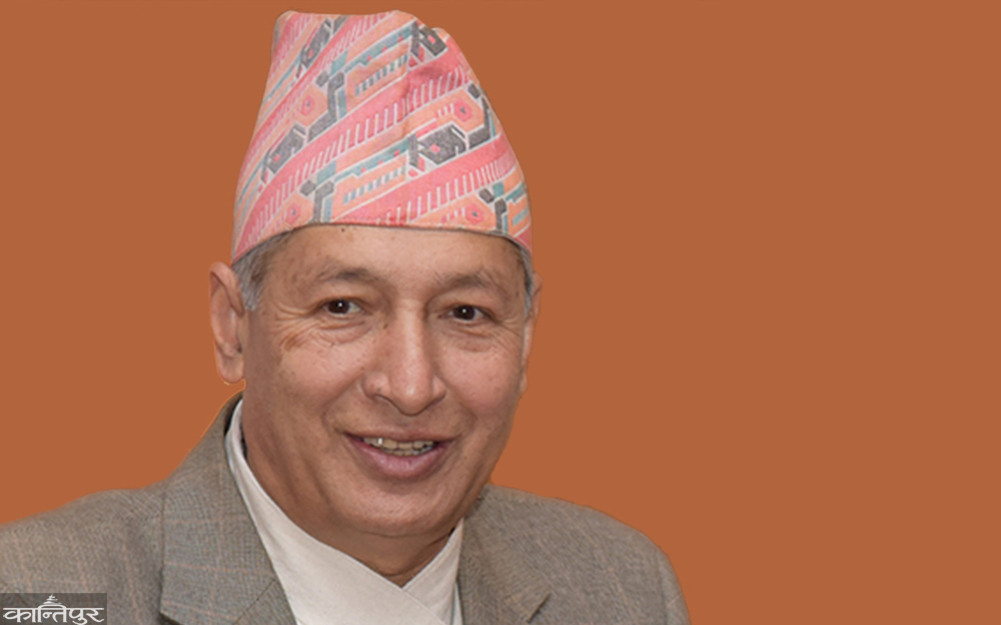
Prime Minister's visit to China and the signing of the agreement on BRI Kantipur's brief conversation with Prime Minister's Economic and Development Advisor Yuvraj Khatiwada :
You participated in making the agenda of the Prime Minister's visit to China, reaching agreement between the parties and the visit, how was the visit overall? Most of our agenda on the
China visit has been agreement, understanding and agreement. The Prime Minister's visit was a success. The situation of agreeing and understanding but not implementing some issues of bilateral relations has come to an end. There have been achievements especially in trade, investment, technology transfer, information technology, social development and connectivity. In
connectivity, we have included communication, transmission line, transport within the BRI framework. A little more emphasis is placed on promoting public relations. People-to-people relationships mean that the prosperity of one country can be transferred to another country. It means that it can be expanded through tourism, technology and entrepreneurship. The Prime Minister's visit has opened the door for that.
The prime minister's visit was an important event on Tuesday. From the Chinese Prime Minister to the President, meetings and various agreements were signed. The main agreement, the document related to the BRI framework, was signed only on Wednesday. Political leaders from Nepal and China were not present at the signing ceremony. Why did this happen? A draft related to the
framework was being exchanged. We gave the draft prepared by us to the Chinese side only the day before the Prime Minister's departure. That draft was just our type. They asked for two days to study it. So it was signed the next day. This is just a technical matter.
Before the Prime Minister's visit, it was said that we will not take loans from China, we will only take grants. That was the draft you mentioned. The Chinese side did not agree to that and finally, it has become public that an agreement was reached when Nepal was ready to put the 'ad financing modality'. In particular, how was it called 'ad financing modality'? What does it mean?
First of all, the negotiation is word-by-word. After we signed the MoU (Understanding) on BRI in 2017, China wanted to go ahead with its implementation plan. But we said whether to call it cooperation or not. They agreed. Some words are upside down. Thus it takes time to agree on some words. We have said that it would be better not to put some words in terms of our security sensitivity, geographical location.
It would be better if our current psychology grants were organized, we can't take loans, so we have to have grants. They also have to. They have many neighbors. They say that not all grants can be given, loans are also projects. But on the whole, the word 'Aid', meaning aid, is used to say that we do not take loans now. Help is a soft language.
BRI is not just a government-to-government relationship. It is also a business-to-business and government-to-government relationship. Currently, we do not use government-to-government loans, if someone else says to take a loan for a project, the way should be opened. It is not a matter of not taking loans from this or that country. But the government's priority is not to take loans now.
After the agreement on the BRI Framework, we asked former Finance Secretary Rameshwar Khanal, who was involved in the formulation of Nepal's foreign aid policy, about what is 'aid financing modality'. He has said that the way to take concessional loans has been kept open. That means the BRI deal still has a way to borrow, right?
The door of concessional loans has been kept open but for whom it should be seen. We have said in the agreement that we give priority to grants and technical assistance in the case of projects at the political level. We have placed our priority in the agreement. But is it okay to close the door by saying that we will not borrow from any country? That doesn't happen. But now our priority is subsidy, we have said to give subsidy. What if we have to borrow in the future?
It was not possible to write that our country does not take loans from any country. It depends on our priority to develop with our own ability, not to take loans and ask for grants. Therefore, even if it is written that we have taken a loan, we do not take it. The door to concessional loans is still open. The door to the future should not be closed. Whatever the meaning. There is language in the agreement that the government's purpose is not to loan, but to grant.
Nepal and China signed various projects on Tuesday. 10 projects have also been mentioned in the BRI framework. Do these projects behave differently?
is no different. BRI has a five-year plan section from 2025 to 2029. BRI became a large area. But all the projects will be under BRI. But the behavior will vary from project to project. In the contract, we have agreed to finalize the investment modality as a project.
After the meeting between the Prime Minister of Nepal and the Chinese President, 500 million RMB (about 9 billion rupees) assistance has been announced. How to get that budget? Where is it used?
For that we have to prepare a project. They provide the budget for it. It is a budgetary support, a subsidy. The project to be made with that grant will also be under BRI.