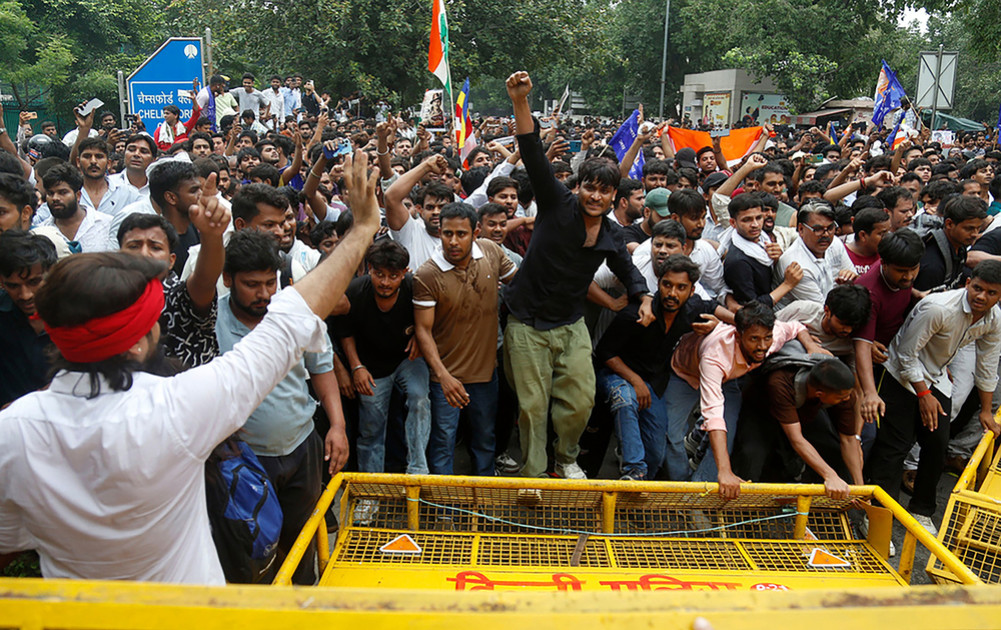
The 'Chalo Sansad' march called by the Cockroach Janata Party (CJP) was attended by 50,000 students, parents, civil society representatives and the general public on Monday. Around 5,000 security personnel had to be deployed to stop the march, and several were injured in the clashes.
We use Google Cloud Translation Services. Google requires we provide the following disclaimer relating to use of this service:
This service may contain translations powered by Google. Google disclaims all warranties related to the translations, expressed or implied, including any warranties of accuracy, reliability, and any implied warranties of merchantability, fitness for a particular purpose, and noninfringement.
A large number of people had gathered at Jantar Mantar, a place known for protests and sit-ins in New Delhi, since Monday morning. Students, parents and civil society representatives had arrived since the morning for the 'Chalo Sansad' march called by the Cockroach Janata Party (CJP), which was announced just a few months ago.
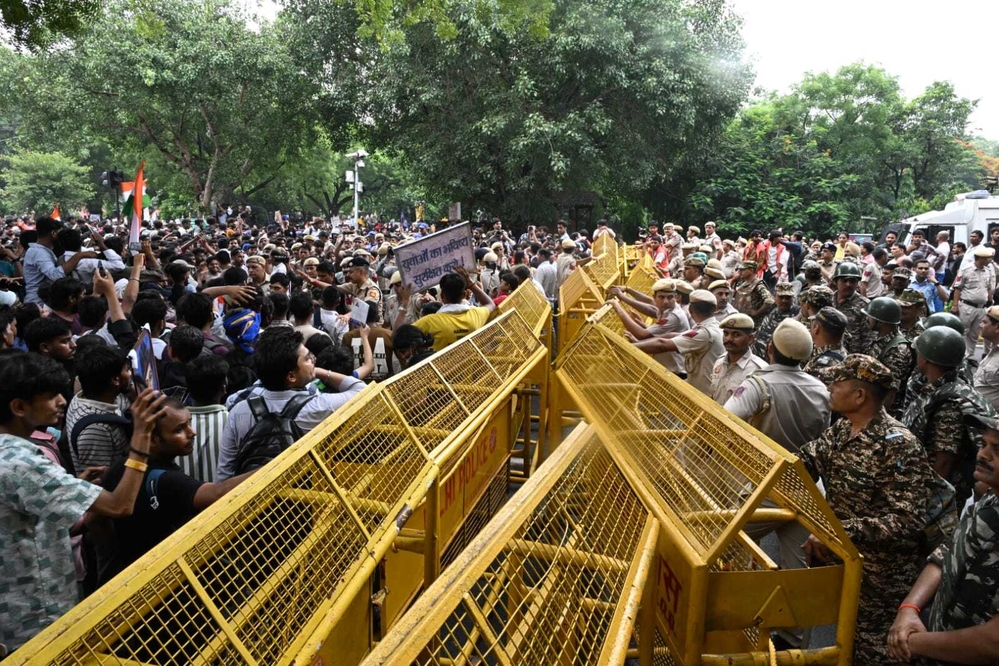
On the other hand, security personnel from the Delhi Police, Rapid Action Force (RAF) and Central Reserve Police Force (CRPF) were also deployed on the streets in large numbers. According to media reports, about 5,000 security personnel were deployed on the streets of Delhi to control the march. Some metro stations in Delhi were also closed. Delhi Police said that about 8,000 people participated in the protest. However, the Indian media organization Hindustan Times, according to the data provided by its correspondents, claimed that about 50,000 people participated in Sunday's protest.
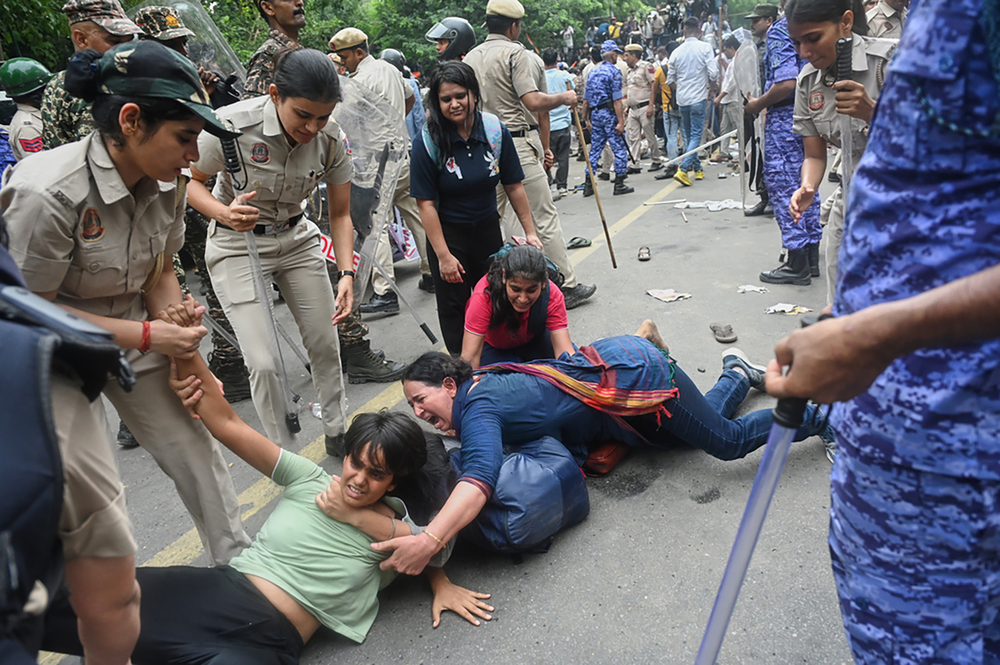
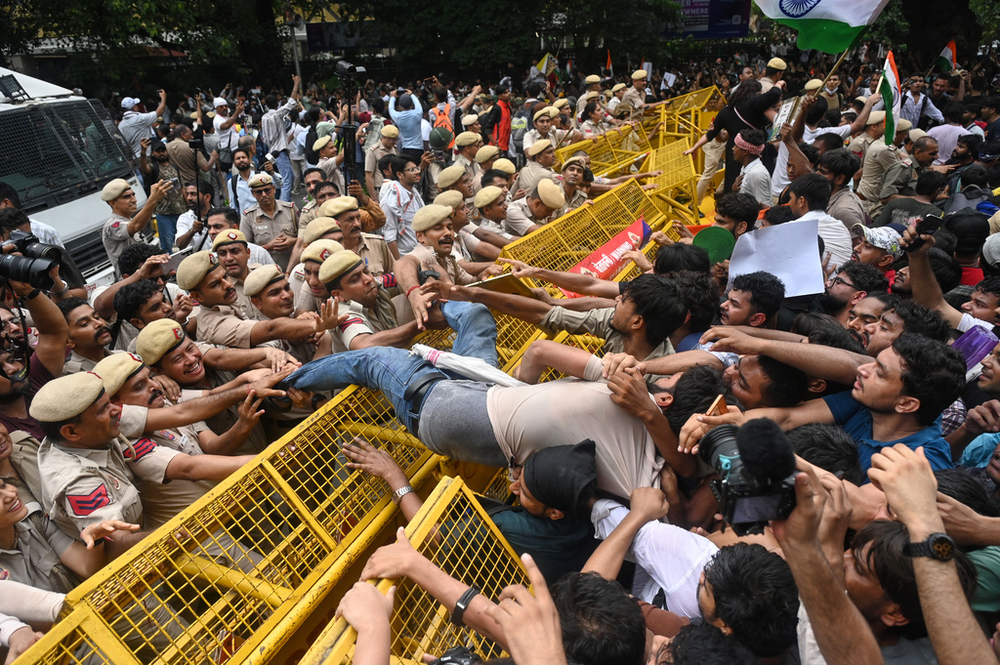
After Delhi Police forcibly took educationist and environmental activist Sonam Wangchuk, who was on an indefinite hunger strike, to the hospital on Saturday, the CJP had called for a march to the Parliament House. Wangchuk had also called for participation in the 'Chalo Sansad' march from Safdarjung Hospital. The march began under the leadership of the CJP. But security personnel made arrests and lathi-charged to disperse the march participants. Videos and photos posted by the CJP on social media show several protesters injured. However, the police have claimed that no force was used.
Opposition Congress leader Rahul Gandhi has accused Narendra Modi of being the most insensitive Prime Minister in India's history towards the youth. 'He is so anti-youth that he cannot even demand the resignation of the failed Education Minister Dharmendra Pradhan.' 152 question papers were leaked. 75 million students were affected. But not a single culprit has been punished. Who has been punished? The youth who studied hard?,' Gandhi wrote in X. He said that the government responded by using lathi and arrests when students raised legitimate questions for reform of the education system. 'The criminals who leaked the question papers are roaming freely, but students who raise legitimate demands are dragged and beaten. This government has not only failed the youth, it has also turned on them,' Gandhi said.
Educationist and environmental activist Sonam Wangchuk announced that she will continue her hunger strike from the hospital, alleging that Monday's protest was suppressed. Wangchuk was forcibly taken to the hospital by the Delhi police on Saturday, the 21st day of her indefinite hunger strike. Three students, including Wangchuk, Neha, Amin and Manish, were on a hunger strike to death demanding reforms in the education system and the resignation of Union Education Minister Dharmendra Pradhan. Their main demand is for Education Minister Pradhan to resign over the irregularities in the National Entrance Test (NEET) conducted for admission to MBBS, BDS and other undergraduate medical and health-related courses, including the leak of the question paper. They broke the fast after special requests from opposition leaders and rights activists. CJP founder Abhijit Deepke also sat on a hunger strike to death after Wangchuk was taken away on Saturday. Deepke also broke his fast on Monday at the request of the parents of a NEET examinee.
Meanwhile, the government has been widely criticized for widespread repression of the peaceful protest of young students. The CJP has said that Monday is a black day in the democratic history of India. The CJP said, 'We raised the tricolor, they raised sticks.' We raised the book, they used tear gas . We showed the constitution, they used dictatorship .’ Although the administration claimed that no force was used on the protesters, videos of the police themselves throwing stones at the protesters have been made public on social media .
Wangchuk has also said that he will continue his hunger strike from the hospital, saying that the protest was suppressed. He issued a message from the hospital, saying, ‘I have decided to continue my hunger strike after seeing the widespread suppression of the peaceful protest of the youth. My hunger strike will continue until the youth leaders are allowed to meet the MPs in the Parliament building or I am not allowed to meet them in the hospital.’
CJP founder Abhijit Deepak has said that the government is trying to break the morale of the people . He said, ‘Looking at the current situation, it seems that that objective has been achieved to a large extent . I did not return from America to retreat . Some people think that change can be brought about in a day, but it doesn't happen.' He also said that there were no protests like those in Nepal and Bangladesh. Claiming that the police had demolished the stage at Jantar Mantar, he said that the protest would continue.
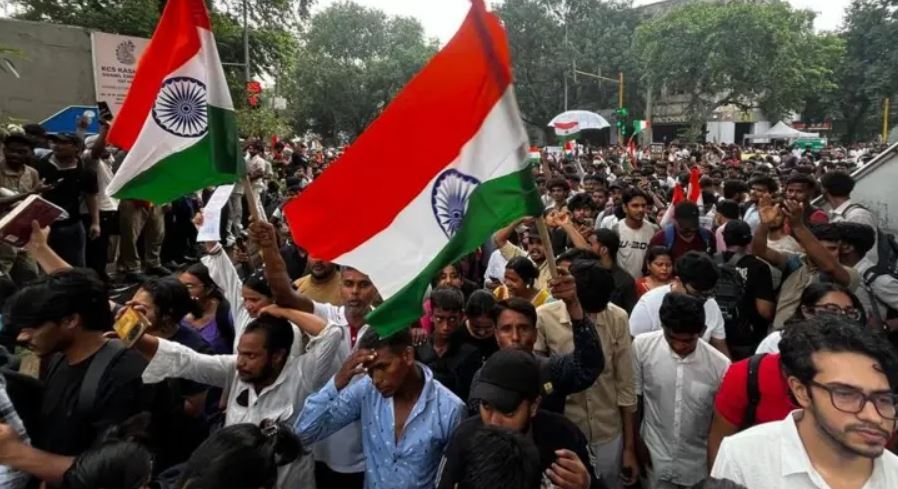
Youth from various states outside Delhi had come to participate in Monday's 'Chalo Sansad' march. Some had the Constitution of India in their hands, some had Mahatma Gandhi in their hands and some had a picture of Bhimrao Ambedkar in their hands. Those who came to the protest on Monday were saying, 'Our fight is not only for the resignation of Education Minister Dharmendra Pradhan, but also for the accountability of the elected government.'
To thwart the march, the Delhi Police had put up barricades on all the roads leading to Jantar Mantar. In some places, the barricades were welded together. Banners informing that Section 163 of the Indian Civil Protection Code had been invoked were put up at various places to prevent the crowd. Not only that, hundreds of jammers were deployed to block internet services in the area around Jantar Mantar. According to Indian media outlets, Delhi Police had issued instructions to 15 district police offices on Sunday morning to immediately stop local leaders and activists from leaving their homes on Monday morning for Jantar Mantar. However, despite such instructions, a large number of people were present on Monday's march.
000
CJP has taken to the streets demanding reforms in the Indian education system. CJP was formed by 30-year-old Abhijit Deepke, who returned from Boston University after completing his higher education. About 2.28 million candidates participated in the NEET exam held on May 3. Many of them had prepared for months, some for years. But a few days later, the exam was canceled after allegations of question paper leaks surfaced. Discontent with the government is growing across India, saying that the careers of lakhs of students who dream of studying medicine have been set back. About 20 students have died due to mental stress after the cancellation of the exam.
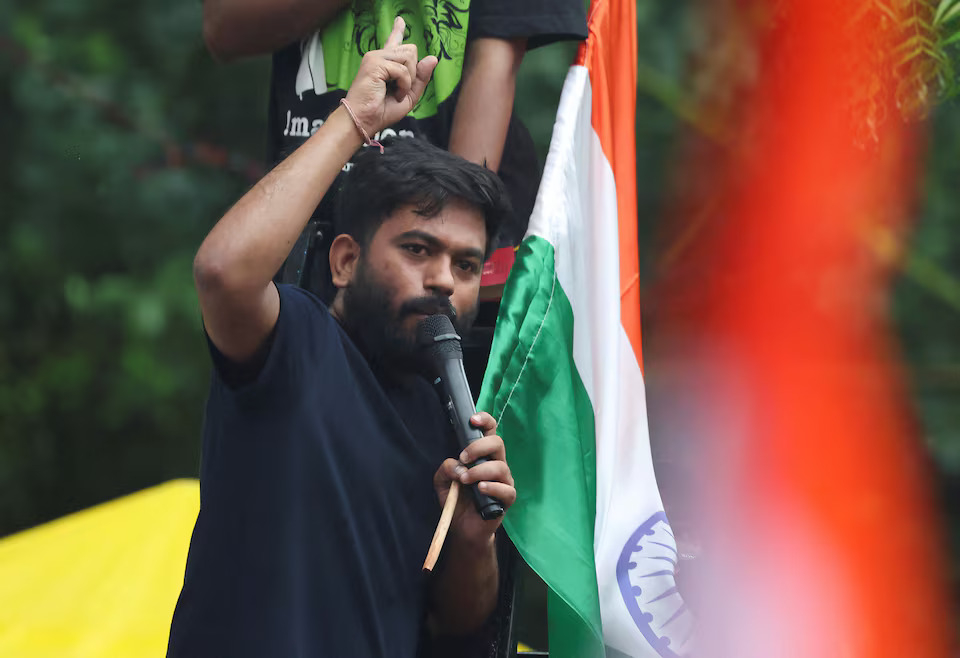
A student from Delhi who came to the protest told Wire Hindi that lakhs of students like him have been affected by the problem of question paper leak. Nihal Singh, a student from Rohini, said that it has caused major mental problems for the students. He said, ‘I have given the NEET exam three times.’ The first time I gave the exam last year (2025). I could not get admission in the medical college of my choice because I did not get some marks. Then this year I gave both the exams on May 3 and May 21. The exam on May 3 was very good. Now there was great hope that the one-year effort would be successful. But in the meantime, the news came that the question paper had been leaked. The situation became very difficult when I had to give the exam again. Taking the same exam twice in such a short interval is a mental trauma in itself.'
000
Indian Congress President and Leader of Opposition in the Rajya Sabha Mallikarjun Kharge accused Prime Minister Narendra Modi of ruining the lives of students. 'Narendra Modi only keeps blaming others. But he himself has not done anything for the country,' he said in an interview with reporters. 'On the one hand, the people he chose are stealing gifts from the trust formed by Modi. On the other hand, lakhs of students are suffering, their lives are being ruined. All this is because of Modi and his government.'
Similarly, Aam Aadmi Party leader and former Delhi Chief Minister Atishi said that instead of listening to the legitimate demands of the youth, the government has suppressed them. At a press conference on Monday, she said, 'The youth of the country have said this - stop question paper leaks and dismiss the responsible person. But the Modi government, far from listening to their voices, rained batons and tear gas shells on the youth who were peacefully protesting. If the government wanted, it could have talked to the students. But it chose the path of repression, this arrogance will end soon.'
Azad Samajwadi Party (Kashiram) President Chandrashekhar Azad also says that the government should listen to the problems of the youth. 'The government should listen to the problems of the youth and the sooner their demands are addressed, the better. This is not just a matter for one minister. If the dissatisfaction of the youth is expressed, you will not be able to win a single seat in Parliament. Understand that 51 percent of the country's population is youth,' local media organizations quoted him as saying. The Samajwadi Party also said that lathi-charge on the students was highly condemnable and undemocratic.
Leaders of various opposition parties also reached the march on Monday. Azad Samajwadi Party (Kashiram) chief Chandrashekhar Azad, Trinamool Congress MP Mahua Moitra and other leaders also participated in the march. Similarly, former Delhi Chief Minister Atishi and Aam Aadmi Party leaders Manish Sisodia, Sanjay Singh and other leaders also participated in the march. Artists including Prakash Raj, Sabana Azmi, Vishal Dadlani, Sonakshi Sinha, Swara Bhaskar have also expressed support for the student movement.
Formal dialogue with the government begins
The central government on Monday formally responded to the demands of the youth protesting in the Indian capital Delhi for the first time. Union Health and Family Welfare Minister JP Nadda informed that there was a cordial conversation with the CJP representative.
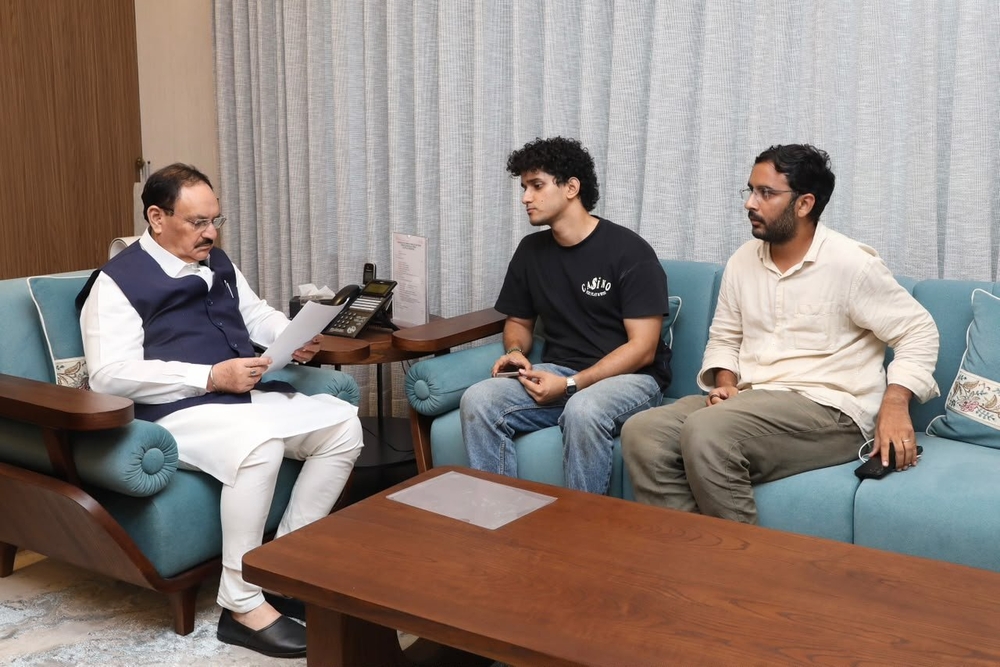
Releasing a photo of the meeting with CJP spokespersons Saurabh Das and Ashutosh Ranka, Minister Nadda wrote on social media, ‘This morning, for the first time, a proposal for talks with the government came from the protesters. Our talks have been going on since 11:50 am. The meeting took place in a cordial atmosphere. First, there was a detailed verbal discussion with the delegation, after which they gave me a written demand at 4 pm.’ Minister Nadda also said that he has requested the administration to help end the protest and restore normalcy.
CJP spokesperson Das said that he and Ranka have been at Nadda’s residence since 12 pm, saying, ‘The demands of the protesters, including the demand for Dharmendra Pradhan’s immediate resignation or dismissal, have been placed before him. The minister has assured to discuss these demands at the appropriate level. But no concrete commitment has been made so far. Peaceful protesters will not retreat until their demands are met.'
Earlier, he had also informed Minister Nadda about their demands. They have demanded immediate release of Wangchuk, resignation of Education Minister Pradhan and compensation of Rs 1 crore to the families of all NEET candidates who committed suicide.
Uproar in the Indian Parliament
The area around Jantar Mantar was tense throughout the day on Monday due to the protests, and the situation inside the nearby Parliament building remained the same. On the first day of the monsoon session that began on Monday, the meetings of both the Lok Sabha and Rajya Sabha were repeatedly adjourned. Opposition MPs continued their protests over the leak of NEET question papers, theft of Ram temple offerings and the Jantar Mantar protests. In the Lok Sabha, opposition MPs even raised slogans. They demanded that the issues of NEET irregularities and theft of donations from the Ram Janmabhoomi Tirtha Kshetra Trust be discussed.
Similarly, in the Rajya Sabha, Leader of the Opposition Mallikarjun Kharge accused the government of using force against the students' protest at Jantar Mantar. As soon as the Parliament session began, Kharge said, 'This is an issue related to the future of lakhs of students. Today, thousands of students have gathered at Jantar Mantar, but they have been lathicharged. The government is suppressing the students. The government is trying to suppress their voices.' While addressing the nation before the start of the monsoon session, Indian Prime Minister Narendra Modi had urged the opposition parties to actively participate in the Parliament session. 'I believe that where there are facts, there is no need for uproar. If your arguments and facts are strong, there is no need to raise your voice. I expect that there will be discussions in Parliament based on facts and arguments. Every voice should get an opportunity to be heard. This is the role of Parliament.'