Officials have relocated thousands of citizens to safe locations, and rescue teams have been kept on standby.
We use Google Cloud Translation Services. Google requires we provide the following disclaimer relating to use of this service:
This service may contain translations powered by Google. Google disclaims all warranties related to the translations, expressed or implied, including any warranties of accuracy, reliability, and any implied warranties of merchantability, fitness for a particular purpose, and noninfringement.
In China, where at least 50 people have died due to severe storms and floods over the past week, heightened alert has been issued as the powerful Typhoon Bavi moves toward the eastern coast. Authorities have relocated thousands of citizens to safe locations and have kept rescue teams on standby.
Typhoon Bavi, which is moving at a maximum sustained speed of 162 kilometers per hour, is expected to pass through the northern part of Taiwan on Friday and then make landfall near the border area of Fujian and Zhejiang provinces in China on Saturday night. Previously, it brought intense winds and rain as a super typhoon to U.S. territories in the Pacific region, including Saipan.
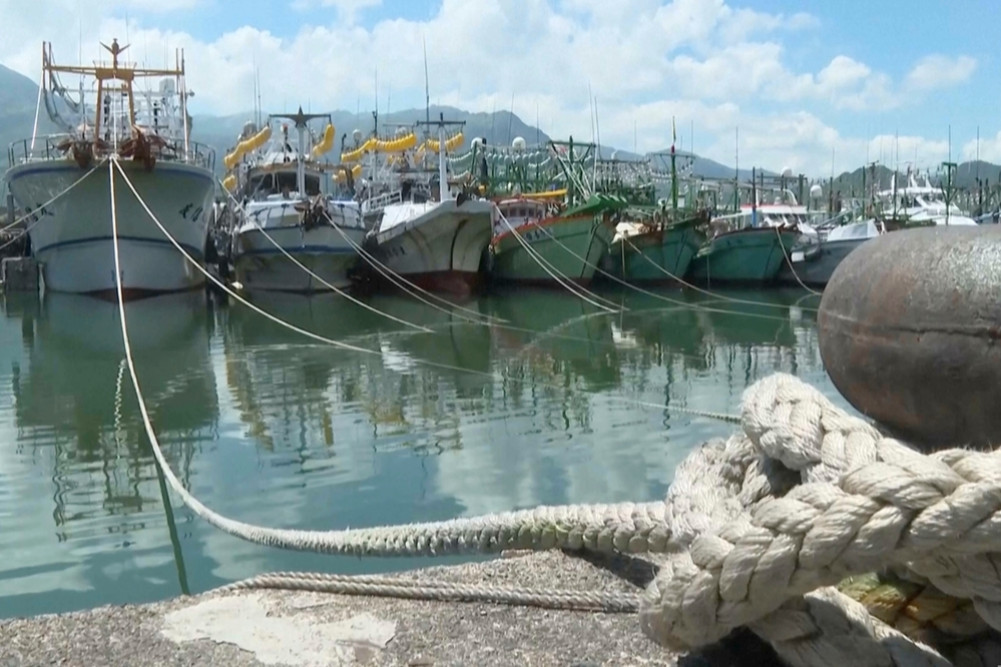
With heavy rainfall forecast in Taiwan, schools in the capital Taipei have been closed. Fishing boats along the northern coast have been moored in harbors, and many flights to destinations including Japan and Hong Kong have been canceled until Saturday.
In China’s Zhejiang province, more than 17,000 citizens have been relocated to safe places. Around 170,000 rescue workers have been kept on standby for potential disasters, according to the state news agency Xinhua. Fujian province has suspended some waterway services due to strong winds and rough sea conditions and has ordered all fishing boats to return to port.
Previously, authorities confirmed that at least 39 people died in Guangxi due to flooding caused by the tropical storm Mekkhala in southern China. Excessive rainfall caused reservoirs to burst, and after part of a dam in Hangzhou collapsed, flooding spread over a large area. Many people were trapped for days on upper floors of buildings, and power services were also disrupted.
Similarly, in central China’s Hubei province, 11 more people died on Monday night due to a severe storm.
Meanwhile, in western China’s Gansu province, 21 forest workers died in a landslide on Tuesday. Although the incident was not directly related to the typhoon, it was reported that rescue operations were affected by adverse weather conditions.