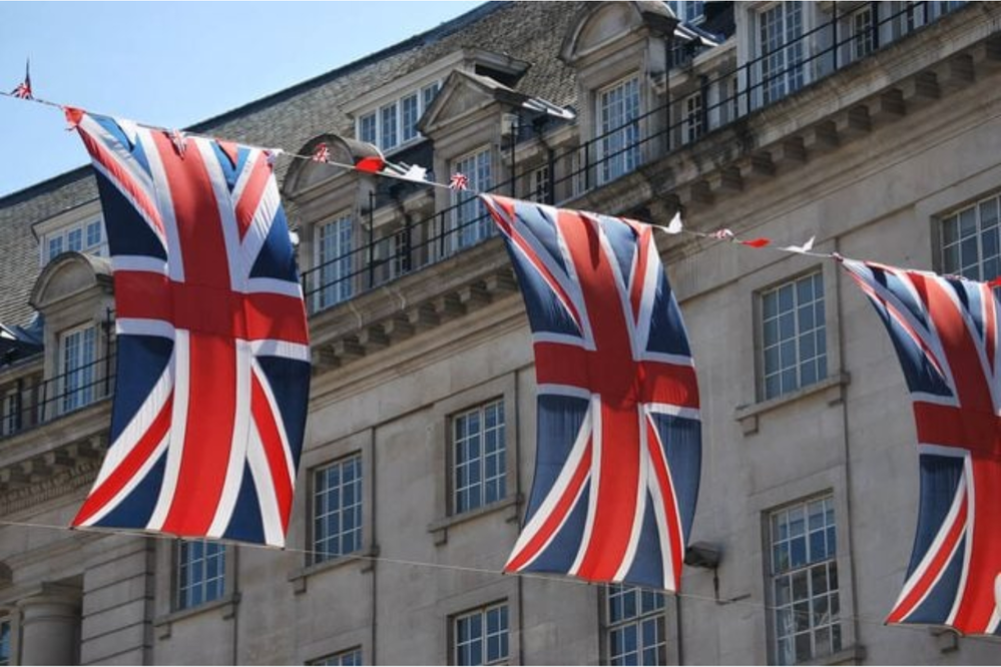
A recent poll found that 57 percent of Britons said the decision to leave the EU was wrong, while about 30 percent said it was right.
We use Google Cloud Translation Services. Google requires we provide the following disclaimer relating to use of this service:
This service may contain translations powered by Google. Google disclaims all warranties related to the translations, expressed or implied, including any warranties of accuracy, reliability, and any implied warranties of merchantability, fitness for a particular purpose, and noninfringement.
Britain voted to leave the European Union (EU) in a referendum on June 23, 2016. 51.9 percent of British voters voted to leave the EU. Britain, which has been in political turmoil for 10 years since the decision to leave the EU (Brexit), is now looking for its seventh prime minister.
The assumption that Brexit would save the British economy, which had been in decline since the 2008 recession, has proven wrong. Britain's economic growth rate is currently very slow. Despite the Conservative Party's continued dominance in the past decade, the British people, who faced economic and political instability, stood by the Labour Party two years ago in the hope of stability. However, less than two years after the Labour Party won a historic majority, Prime Minister Keir Starmer resigned from office on Monday due to the government's unpopularity and internal strife.
With the political instability in Britain, one of the world's oldest democracies, the birthplace of parliamentary democracy and a once powerful nation, a large part of the British public is beginning to conclude that the decision to leave the EU was a mistake. A recent survey by the YouGov polling organization found that the majority of respondents said that the UK's decision to leave the EU was a mistake. Nearly 57 percent of those surveyed said that the UK's decision was a mistake. Nearly 30 percent said that the decision to leave the EU was the right one.
Similarly, 55 percent of Britons said that they support the campaign to rejoin the EU. Similarly, 43 percent said that they should not rejoin. 59 percent of Britons are in favor of maintaining close ties without joining the EU. 'Brexit has proven to be a loss for the country,' a pro-EU activist told France 24 on Monday. 'It's not just an economic loss. It's taken away the freedom to move around freely. Families were divided.’ Another campaigner said that Brexit had divided Britain and nothing was good.
Since 2016, the UK’s trade with the EU has been declining. Looking at the figures from 2019 to 2025, exports have fallen by 14 percent and imports by 10 percent. The last 10 years have been turbulent not only for Britain but also for Europe and the world. The impact of Covid-19, the Ukraine war and more recently the West Asia conflict was felt in Europe. While other European countries were collectively facing these situations, the UK had to face them alone. In 2016, Brexit supporters were advocating a free trade agreement with the US. However, by 2026, the US had increased trade barriers.
Similarly, customs duties have been used as a weapon. Brexit supporters predicted that the EU would weaken. Despite this, EU member states are collectively facing every challenge. Emerging economies like China prioritize the EU over the UK.
UK trade with the EU has been declining since 2016. Looking at the figures from 2019 to 2025, exports have fallen by 14 percent and imports by 10 percent. Imports and exports have declined in almost all sectors. The only progress has been in the services sector, where exports from the UK have increased by 57 percent in a decade. These include auditing, legal assistance and consultancy services.
The Channel Tunnel (sea tunnel) connecting to France is considered important for the UK economy. In 2016, 1.64 million trucks travelled through this channel. However, only 1.1 million trucks have used the tunnel this year. This shows that UK trade is declining. Investment in the UK is also decreasing. The Office for Budgetary Responsibility has stated that Britain's productivity and foreign trade have been affected after Brexit. “The new government has a lot to do to convince people that the situation is not out of control,” said David Hennig, London-based director of the European Centre for Political Economy. “The high demands placed on the government by an ageing population, limited economic growth and the constant noise on social media are creating instability.”
In 2010, the British people brought the Conservative Party to power. Using the situation created by the 2008 economic recession as an excuse, the government cut funding in various areas, including education, child welfare, housing allowance, social assistance for people with disabilities. Per-pupil spending on schools fell by 9 percent between 2010 and 2019. Similarly, by 2020, public welfare budgets had been cut by almost 10 percent. The impact of spending cuts on public infrastructure over the past decade has left hospitals, schools and roads in many parts of the UK in a state of disrepair.
After the Arab Spring in 2011, large numbers of people moved from West Asia and Africa to Europe. The UK also saw a surge in asylum seekers. The influx of new arrivals added to an already fragile system. There were growing shortages of jobs, healthcare and housing. The link between anti-immigration sentiment and economic decline has long been studied by intellectuals. To this day, anti-immigration sentiment is often cited as a key factor in the victory of far-right parties.
The issue also played a major role in the 2016 Brexit referendum. Nigel Farage, the leader of Reform UK, promised greater control over Britain’s borders and greater legal and economic independence from the EU. But last year, a London-based think tank called UK in a Changing Europe found that the UK economy would have been 6 to 8 percent bigger if it had remained in the EU. Many economists have drawn similar conclusions after analysing UK government data.
Britain is still the world's sixth-largest economy. It is one of the five permanent members of the United Nations Security Council. The nuclear-armed country has a cultural influence around the world. Despite this, there has been growing discontent within the country due to high prices and limited job opportunities. "The reason the country's economy is so unstable today is Brexit," said Scott Lucas, professor of international politics at University College Dublin in Ireland.
Boris Johnson's government was embroiled in various cases during the Covid period. Johnson's government was heavily criticized for partying in the Prime Minister's Office during the lockdown. This further damaged public trust in public institutions, which was already weak. After Russia invaded Ukraine in February 2022, fuel prices rose across Europe. This caused a huge problem in the UK. Because it imports heating systems and cooking gas in large quantities.
Rishi Sunak became Prime Minister on July 5, 2022, the situation did not change much. The Russia-Ukraine war further worsened the situation in Europe and the UK. By the end of 2022, inflation had reached a 40-year high of 11%. According to government figures, three in 10 children in the UK, or 4.3 million children, were living in poverty in 2022-23.
This gap between the people and the government gave the Labour Party a majority in the 2024 election. Keir Smarter became prime minister. During his government, immigration rates fell, long waits for hospital services were reduced, and there was some economic growth. However, nothing was done as quickly as people had hoped. On the other hand, various issues also dragged the government into controversy.
The economic and social situation for Britain became more uncomfortable after the Iran war. The rise in crude oil prices globally also affected Britain. Like his predecessors, the Smarter government was also hesitant about economic limits. It was easy for Smarter to achieve economic progress while keeping his election promise not to raise taxes in times of crisis. The future Prime Minister of the United Kingdom will also have to face these challenges.