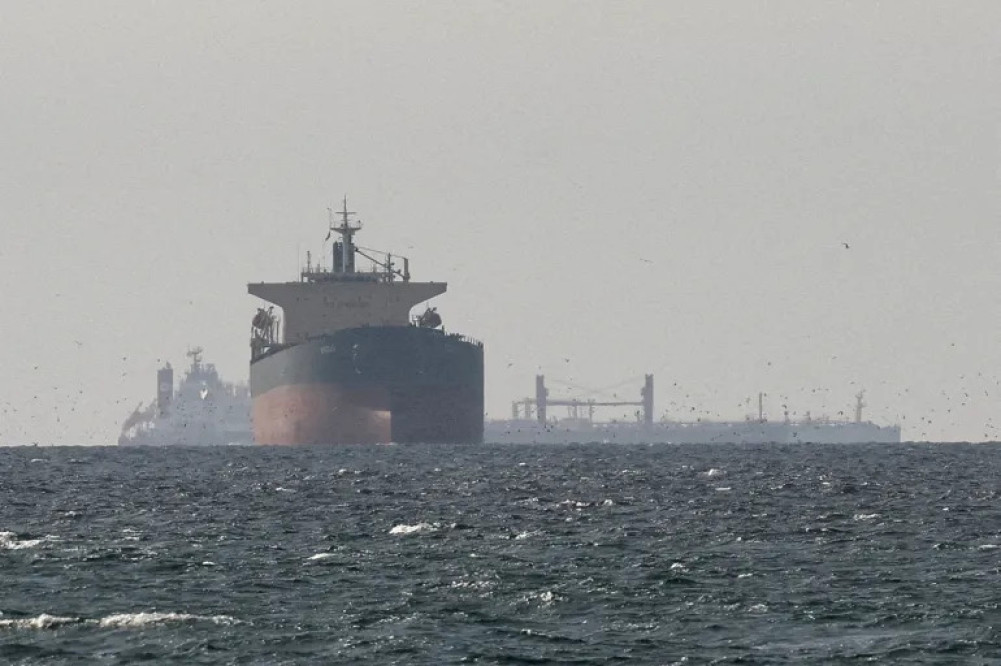
The price of Brent crude fell 3.9 percent to trade around $84 per barrel.
We use Google Cloud Translation Services. Google requires we provide the following disclaimer relating to use of this service:
This service may contain translations powered by Google. Google disclaims all warranties related to the translations, expressed or implied, including any warranties of accuracy, reliability, and any implied warranties of merchantability, fitness for a particular purpose, and noninfringement.
Kathmandu — Crude oil prices have fallen as US President Donald Trump claimed that a peace deal has been reached with Iran. President Trump had announced that he would lift the US-imposed military blockade on Iranian ports.
He said that the Strait of Hormuz would reopen with the formal signing of the peace deal in Geneva next Friday.
On Monday, with the peace talks concluded, the price of Brent crude, the global benchmark for crude oil, fell 3.9 percent to around $84 per barrel. Similarly, the price of US crude also fell 4.8 percent to around $81 per barrel.
However, experts say that it will take some time for the price to fall to around $70 per barrel, which was before the US and Israel launched an attack on Iran in late February. They say that many challenges still remain to restore crude oil supplies to their previous levels.
Major tasks remain to be done in the coming days, including removing explosives planted in the Strait of Hormuz, fully opening it to shipping, restarting West Asian oil production, replenishing emergency petroleum reserves, and repairing energy infrastructure damaged by the war.
That is why oil analysts have predicted that crude prices will remain at high levels for some time to come.
Most of the oil fields in West Asia have been closed due to the war, and it could take weeks for them to reopen and increase production, they say.
'Until ships start moving in and out regularly and safely, the market will continue to doubt that the Strait of Hormuz is truly open,' Rapidan Energy President Bob McNally said on ABC's 'This Week' program on Sunday. 'If the supply disruptions are prolonged and emergency reserves are depleted, there is a risk that oil prices will rise further.'
Joe McMonagle, president of the Saudi Arabia-based think tank Global Center for Energy Analysis, also said that market concerns would only be alleviated once the waterways are open and ships can start operating.
"If the waterways are open, that's great, but until I see ships moving freely through the waterways without any obstacles, I won't be completely convinced," he said.