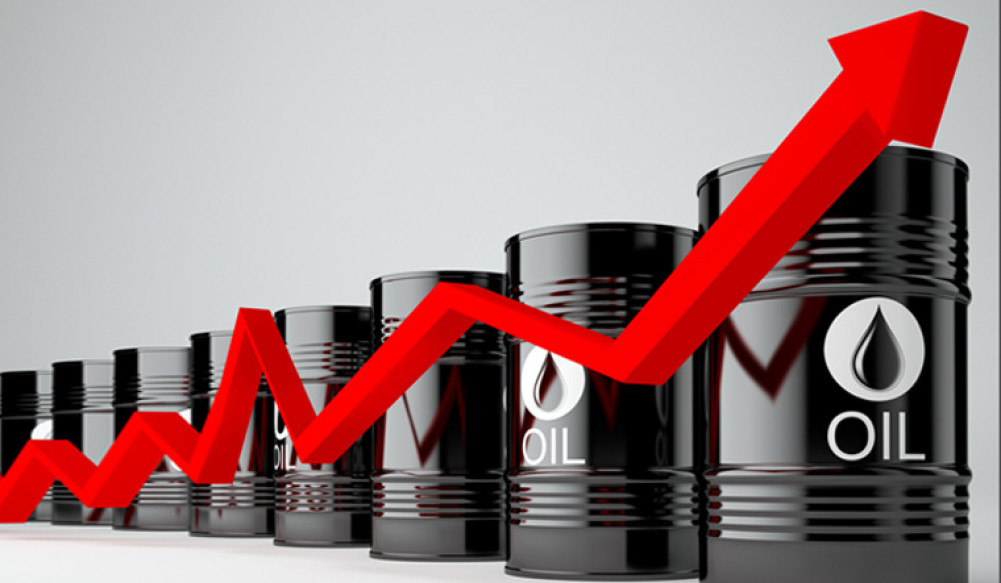
Brent crude oil prices rose seven percent to a high of $126.41
We use Google Cloud Translation Services. Google requires we provide the following disclaimer relating to use of this service:
This service may contain translations powered by Google. Google disclaims all warranties related to the translations, expressed or implied, including any warranties of accuracy, reliability, and any implied warranties of merchantability, fitness for a particular purpose, and noninfringement.
The ongoing war in the Middle East is having a profound impact on the global economy, diplomacy and security situation. Oil prices have reached their highest point in four years, while relations between the US, Europe and Russia have also become more complicated. Meanwhile, military activity, diplomatic talks and economic repercussions have intensified in parallel.
The most obvious impact has been in the energy market. The price of Brent crude oil rose 7 percent to a high of $126.41.
West Texas Intermediate also rose 3.4 percent to a high of $110.31. Which is the highest in the past four years. The market has risen on fears of a supply imbalance as US sanctions on Iran are tightened.
On the military side, the US Central Command (Centcom) said it had successfully turned back the 42nd commercial vessel that had attempted to violate the sanctions. It also claimed that 41 tankers carrying 69 million barrels of oil worth about $6 billion were prevented from entering the market.
Meanwhile, relations between the US and Germany have been strained. US President Donald Trump has said he is considering reducing the 35,000 to 50,000 US troops stationed there after Germany did not join the war against Iran. The dispute has escalated after German Chancellor Friedrich Merz refused to join the war, insisting on a diplomatic solution.
On the other hand, Russia has warned the US not to go to war. Russian President Vladimir Putin has urged Trump not to attack Iran again in a telephone conversation.
He welcomed the decision to extend the ceasefire, but warned that there would be “serious and harmful consequences” if military action resumed. Trump described the talks as positive and said that Russia’s cooperation was necessary to end the conflict with Iran.
The economic cost of the war is also rising. US Defense Secretary Pete Hegseth said that the 60-day conflict has cost an estimated $25 billion so far. However, he rejected concerns about the high volume of weapons used.
The US appears to be preparing to maintain strategic pressure on Iran for a long time. According to reports, the Trump administration is planning a long-term blockade of ports to force Tehran to abandon its nuclear program. In addition, a strategy has been adopted to pressure Iran to stop uranium enrichment for a long time and accept tough sanctions.
Trump has also sent a strong message on his social media. He warned that Iran must make a decision soon on the nuclear deal.
The impact of the war has also been felt in other areas. Iranian football officials who were traveling to attend the FIFA Congress in Canada have left the country before the event, expressing dissatisfaction with the treatment they received at Toronto airport.
Energy companies have benefited from rising prices. French company Total Energy said its first-quarter profit rose 51 percent to $5.8 billion.
The company said it benefited from increased production and higher prices in Brazil and Libya. In addition, the Sathorn refinery in Saudi Arabia, which was closed after an airstrike, has resumed operations. Officials say it will produce 230,000 barrels of crude oil per day.
The regional security situation remains volatile. More than 20 people have been killed in the past two days as Israeli attacks on Lebanon continue.
President Joseph Aoun has called for a full implementation of the ceasefire before permanent talks. Israel, meanwhile, continues its military campaign in southern Lebanon against the Iran-backed Hezbollah group.