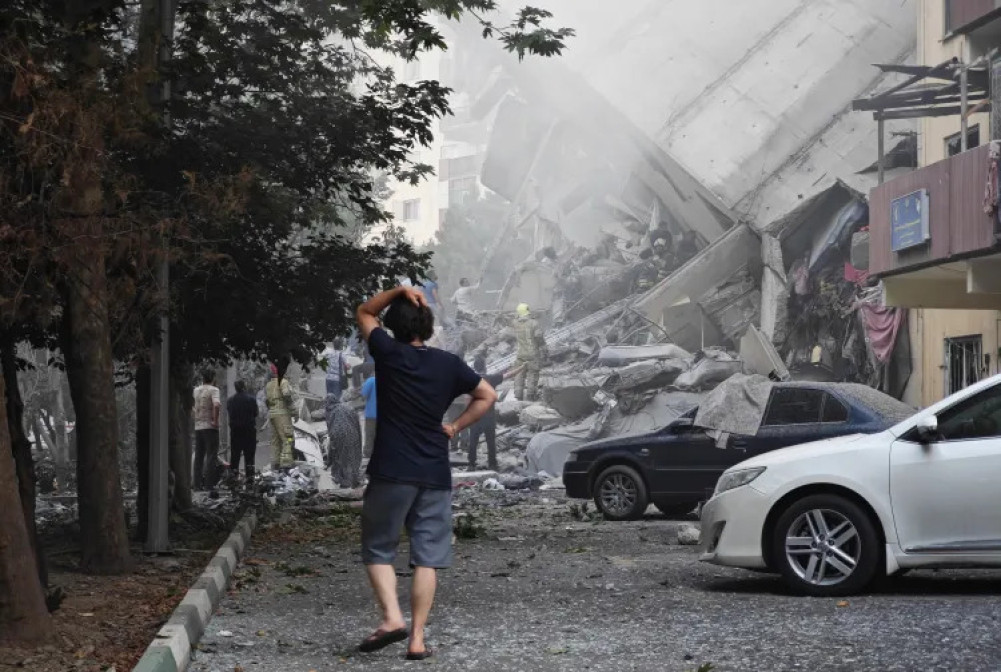
Israeli Prime Minister Netanyahu had hoped that an attack on Iran would spark protests and bring down the Islamic regime. This assessment proved to be wrong.
We use Google Cloud Translation Services. Google requires we provide the following disclaimer relating to use of this service:
This service may contain translations powered by Google. Google disclaims all warranties related to the translations, expressed or implied, including any warranties of accuracy, reliability, and any implied warranties of merchantability, fitness for a particular purpose, and noninfringement.
A large number of civilians were killed in the nationwide protests against price hikes in Iran since December 28, 2025. The exact number of deaths could not be released because the internet was shut down and the protesters were repressed. At the time, Iran accused Israel and the United States of instigating the protests in its country.
Al Jazeera's investigative news showed that Israeli officials and Israel supporters were involved in the coordinated spread of the hashtag 'Free the Persian People'. Social media played a major role in provoking the protests in Iran in the early days.
On the other hand, the Iranian government's repression of the protesters was high. On January 8 and 9, local hospitals were filled with protesters. According to information given to the US Time.com by two senior officials from Iran's Health Ministry, nearly 30,000 protesters were killed on the 8th and 9th alone.
The British-run Persian-language website Iran International reported that more than 36,000 people had been killed during the protests. The US sent its warship Abraham Lincoln to the Arabian Sea during the bloodshed in Iran. On January 13, US President Donald Trump told the Iranian protesters, “Iranian nationalists, keep protesting. Get your institutions together. Help is on the way.”
Iran and Israel were preparing for possible intervention and attacks in the protests.
According to an analytical report published in the New York Times,
Israeli intelligence agency Mossad chief David Barnia had meanwhile approached Prime Minister Benjamin Netanyahu with his plan. He concluded that airstrikes by the US and Israel would inflame the protests in Iran, weaken the Islamic regime, and possibly even collapse. Netanyahu adopted this plan for regime change and began preparing for war. During a visit to Washington in mid-January, Mossad chief Barnia told Trump administration officials about the plan. Some Trump administration officials were skeptical that such a plan would be viable. However, Trump seemed very optimistic. The New York Times has quoted these conversations from conversations with various (current and former) US and Israeli officials. However, their names have been kept confidential.
While Barnia was telling this plan, indirect talks between the US and Iran were also underway under the leadership of Oman. Representatives from both sides said that the talks were positive.
But Trump was secretly preparing for war in collaboration with Israel. In the second week of February, Trump also ordered the second warship, the USS Gerald Ford, to head to West Asia.
On February 27, another round of talks were held in Geneva under the mediation of Oman, which Iranian and American officials claimed were very fruitful.
However, the next day, the US-Israeli bombers attacked Tehran. The Supreme Leader's residence and the headquarters of the Revolutionary Guards Corps (IRGC) were targeted.
Supreme Leader Ayatollah Khamenei, IRGC commander Mohammad Pakpour, and Defense Minister Aziz Nasserzadeh were killed in the attack. Because they were all gathered at the Supreme Leader's residence at the time.
Trump, informing the protesters that Ayatollah Khamenei had been killed, told them, 'You take over the government. This is yours. But, since the bombing is going on, take shelter somewhere safe for a few days.'
By this time, it seemed like America had won. However, despite three weeks of fighting, the protesters have not been able to take to the streets. During this period, the US-Israeli coalition has killed 70 people, including the commander of the paramilitary Basij force, Gholamreza Soleimani, Security Secretary Ali Larijani, and IRGC spokesman Ali Mohammad Naini.
Although Khamenei's son Mojtaba Khamenei was declared the new Supreme Leader, he has not gathered the courage to go public. However, despite all these circumstances, Iran's power has not been shaken. IRGC soldiers are sitting on the streets carrying rifles.
'The belief that the attacks by Israel and the US would help to bring about a wider upsurge of the movement. That was the fundamental mistake of the war that spread to West Asia,' the New York Times reported. 'Instead of collapsing, the Iranian government escalated the war even further.' The military infrastructure, cities and ships in the Persian Gulf in West Asia were attacked and counterattacked.’
Iran’s blockade of the Strait of Hormuz has prevented 20 percent of the world’s gas and oil from leaving West Asia. On the other hand, Iran has caused major damage to the oil and gas infrastructure of Qatar, Saudi Arabia, the UAE and Kuwait.
This has led to a global shortage of crude oil and gas and an increase in prices. Air travel has been badly affected. In the United States, the price hike has hit the backs of ordinary people. More than 1,000 people have been killed in Israel’s attack on Hezbollah in Lebanon. Despite this, Hezbollah has not stopped counterattacking. The death toll in Iran has reached around 1,500.
Netanyahu is still advocating for the US-Israeli airstrikes to be supported by ground troops
. ‘You can’t make a revolution from the sky,’ Netanyahu said at a press conference last Thursday. ‘It requires land, too.’ I have no choice but to tell you about all these possibilities now.’
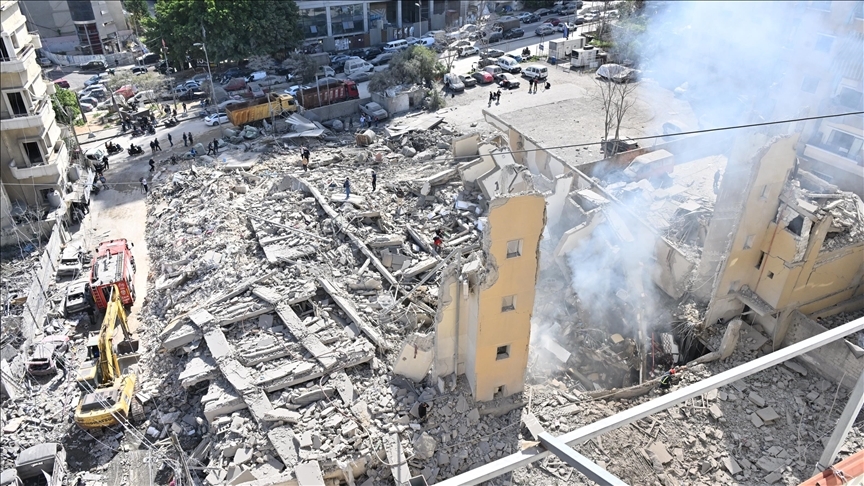
He added, ‘It would be premature to say that the Iranian people will take advantage of the environment that the US-Israeli forces have created to take to the streets.’ But I hope so. We are working with that end in mind. But we will be dependent on the Iranian people.’ Behind the scenes, Netanyahu expressed concern, according to the New York Times. At a security meeting after the war began, he said that Trump could decide to end the war any day. He believed that the Mossad operation was not effective. But it is not clear what Trump wants. He claimed that talks with Iran were fruitful on Monday and said he would not attack Iranian military infrastructure for five days. Iran has denied his claim that talks are underway with influential figures in the Iranian regime.
According to former US officials, Netanyahu entered the war by convincing Trump to overthrow the Iranian regime. However, US security officials already had doubts that Israel would succeed in bringing about a storm of movement in Iran.
Many of the Mossad's plans remain secret. However, its support for Iranian Kurdish militia groups in northern Iraq is like an open secret. US officials have said that the CIA and Mossad have provided weapons and other support to Kurdish forces in recent years.
However, US officials do not seem to be very interested in Israel's plan to mobilize the Kurds as a front group in Iran. On March 7, Trump told Kurdish leaders not to send militias to Iran. “I don’t want to see Kurds killed or injured,” he said.
How many people have been killed in the ongoing Iran war?
Iran: 1,500 dead, 18,551 wounded
Lebanon: 1,001 dead, 2,583 wounded
Iraq: 61 dead, dozens injured
Israel: 18 dead, 4,697 wounded
US military: 13 dead, 200 wounded
Palestine: 4 dead
Syria: 4 dead
Kuwait: 6 dead, at least 24 wounded
Bahrain: 2 dead, at least 24 wounded Injured
UAE: 8 dead, 160 injured
Oman: 3 dead, 15 injured
Saudi Arabia: 2 dead, 20 injured
Jordan: 28 injured
Qatar: 16 injured
Note: This content has been prepared with the assistance of various news agencies.