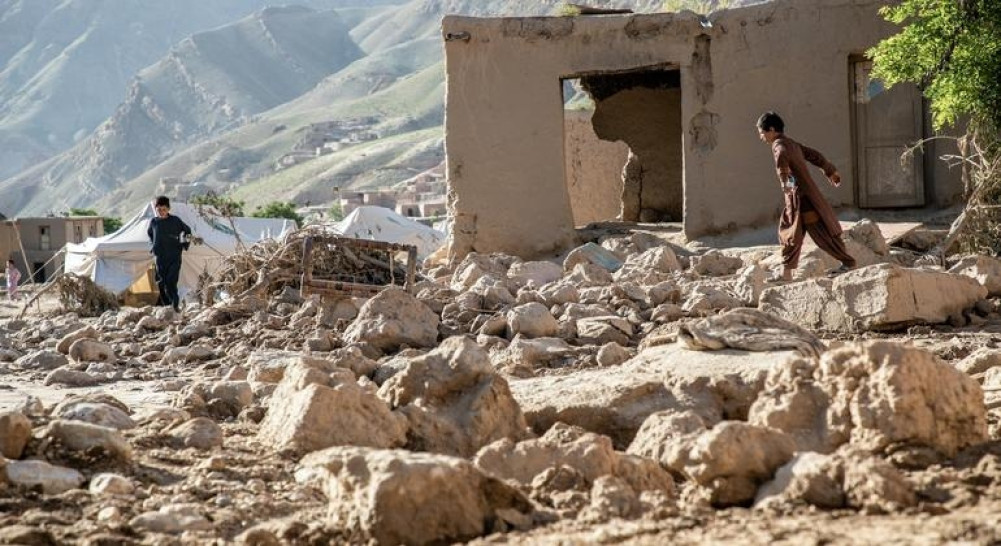
It is estimated that around 21 million people will need some form of humanitarian assistance by 2026.
We use Google Cloud Translation Services. Google requires we provide the following disclaimer relating to use of this service:
This service may contain translations powered by Google. Google disclaims all warranties related to the translations, expressed or implied, including any warranties of accuracy, reliability, and any implied warranties of merchantability, fitness for a particular purpose, and noninfringement.
The United Nations Office for the Coordination of Humanitarian Affairs (OCHA) has appealed for humanitarian assistance worth US$1.71 billion for Afghanistan in 2026.
According to OCHA, Afghanistan will remain one of the countries facing the world’s most serious humanitarian crises next year. In 2026, an estimated 21.9 million people are expected to require some form of humanitarian assistance, down slightly from this year, but the situation remains alarming. Similarly, an estimated 17.4 million people are expected to be severely food insecure, with 4.7 million people in emergency (IPC Phase 4). The United Nations and its humanitarian partners plan to provide priority assistance to an estimated 17.5 million people in need, representing about 80 percent of the total. According to OCHA, the assistance program will focus on life-saving and protection-related services, including food assistance, shelter, health care, nutrition, safe drinking water, sanitation and multipurpose cash assistance. The humanitarian situation in Afghanistan, despite the absence of conflict, is grave due to structural weaknesses, increasing food insecurity, droughts due to climate change, frequent earthquakes and floods, outbreaks of various diseases and security risks, especially for women and girls, according to OCHA.
Similarly, the large number of citizens returning from across the border has further complicated the problem. In 2025 alone, more than 2.6 million Afghans returned home from Iran and Pakistan, OCHA noted, putting additional pressure on local communities, basic services and employment opportunities.