The Israeli army said that one of the Nepali citizens seen in it was Bipin Joshi. His friends said that the vest, kattu and slippers worn by Bipin before he was taken hostage by Kibbutz Alumim matched the young man seen in the video.
We use Google Cloud Translation Services. Google requires we provide the following disclaimer relating to use of this service:
This service may contain translations powered by Google. Google disclaims all warranties related to the translations, expressed or implied, including any warranties of accuracy, reliability, and any implied warranties of merchantability, fitness for a particular purpose, and noninfringement.
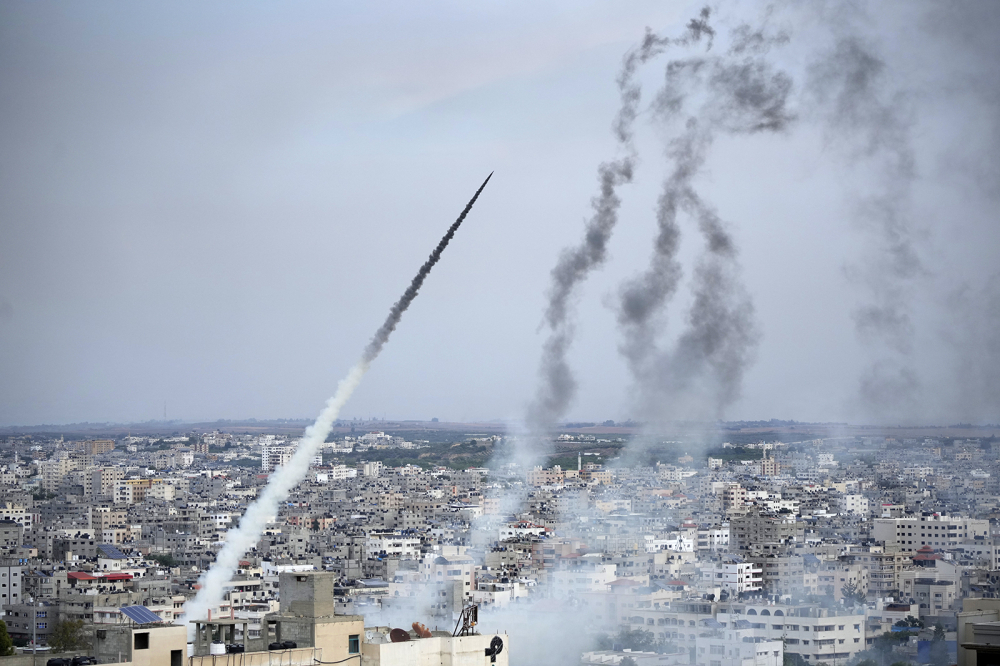
Morning of October 7, 2023. In the southern Israeli cities of Serot, Nahal Oz, Kfar Aza and Be'eri, people were commemorating the 50th anniversary of the Yom Kippur War. Around 6:30 AM, not only did the sun shine in the sky, but hundreds of rockets were fired from the Gaza Strip into the sky.
Within a few minutes, hundreds of Palestinian rebels broke through the border and entered the Israeli military outposts of the Gaza Strip. He not only had weapons with him, but also a planned 'human-hostage strategy'.
Along with armed attacks, Hamas kidnapped people from dozens of villages, concert venues and military posts. On that Saturday, 251 Israelis and foreigners were taken to the Gaza Strip. In one day, 1200 people were killed in Israel, including 10 Nepali students. Bipin Joshi from Kanchanpur, who was with them, was kidnapped by Hamas fighters and taken to an unknown location.
Since then, the war in Gaza has become not only a military conflict, but also a political game of human hostages. Musa Abu Marzouk, a member of Hamas's political bureau, told Al-Jazeera, "Our aim is not just to fight." It is also to exchange prisoners . Thousands of Israeli prisoners are in our prisons, we will use hostages to return our prisoners.'
That statement appeared to be within Hamas' political standards of using hostages as a message of war and pressure. According to The Israeli Information Center for the Human Rights in the Occupied Territories, by 2024 there were 9,619 Palestinian prisoners.
While being taken to Gaza, Hamas fighters released a video of some of the hostages . There was no one who was not shocked by the sight of the old, bloody man being dragged into the crowd, the girl screaming in fear.
Publishing a footage of the Al-Shifa hospital in northern Gaza, the Israeli army said that one of the Nepali citizens seen in it is Bipin Joshi . His friends told Kantipur that the vest, kattu and slippers worn by Bipin before he was taken hostage by Kibbutz Alumim matched the young man seen in the video.
In the CCTV footage released by the Israeli army IDF, at 10:53 a.m. on October 20, three armed men are seen dragging a young man into the hospital. The head of that young man who is barefoot and in a kattu is covered with a cloth . The IDF has claimed that the person is a Nepalese hostage, Vipin.
Bipin's DNA was not matched with those killed in the attack by Hamas in and around the agricultural firm where Bipin was working. The mobile he was carrying was 'active' in the Gaza Strip for a while.
The race for mediation
has become a symbol of the October 7 national trauma in Israel . Prime Minister Benjamin Netanyahu immediately announced, 'We are at war, and our first priority will be to return every hostage.'
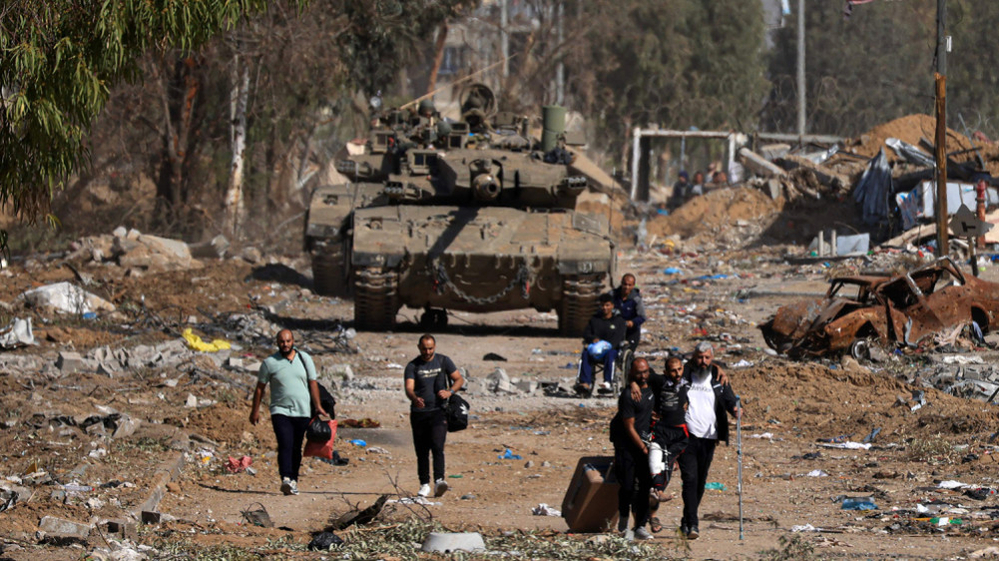
Israel immediately began airstrikes on the Gaza Strip . Then intensified air and ground attacks . Hospitals also became the target of attacks. The death toll in the Gaza Strip is increasing every day .
The security of hostages in war, the format and terms of negotiations were not immediately possible . However, the families of the hostages in Israel immediately formed the 'Hostage and Hostage Family Forum' . It gained international support and increased the pressure to put the humanitarian aspect in the center of the negotiations. By the time
reached October 10, Qatar and Egypt had already initiated contact with Hamas. Qatar took the role of becoming a bridge of indirect negotiations between the political leadership of Hamas in Doha, Qatar and Israel. In terms of the land connection with the Gaza Strip, Egypt also started to take initiatives for mediation.
Foreign Minister of Qatar Mohammad bin Abdul Rahman Al-Thani said, 'We are becoming a reliable channel for the release of hostages. But for this, both sides have to restore trust.'
But at that time Israel was in full war mode . Airstrikes on Gaza intensified, making humanitarian contact difficult.
In late October, the Red Cross gained limited humanitarian access into Gaza. On October 20, Hamas released two American citizens (mother and daughter) as the first hostages. The
was released by Hamas for humanitarian reasons. That was the Qatari arbitration trial . This was done to understand how Israel would react. It was also a signal to the world that the door to negotiations is not completely closed.
This created the atmosphere for the first ceasefire on 22 November . Seven weeks later, a temporary ceasefire agreement was reached between the two sides for seven days under the joint mediation of Qatar, Egypt and the United States. It agreed to exchange hostages and prisoners. According to Hamas releases at least 10-15 hostages every day, Israel releases about 3 times the number of Palestinian prisoners per day and Humanitarian aid would be allowed to enter Gaza during the ceasefire period.
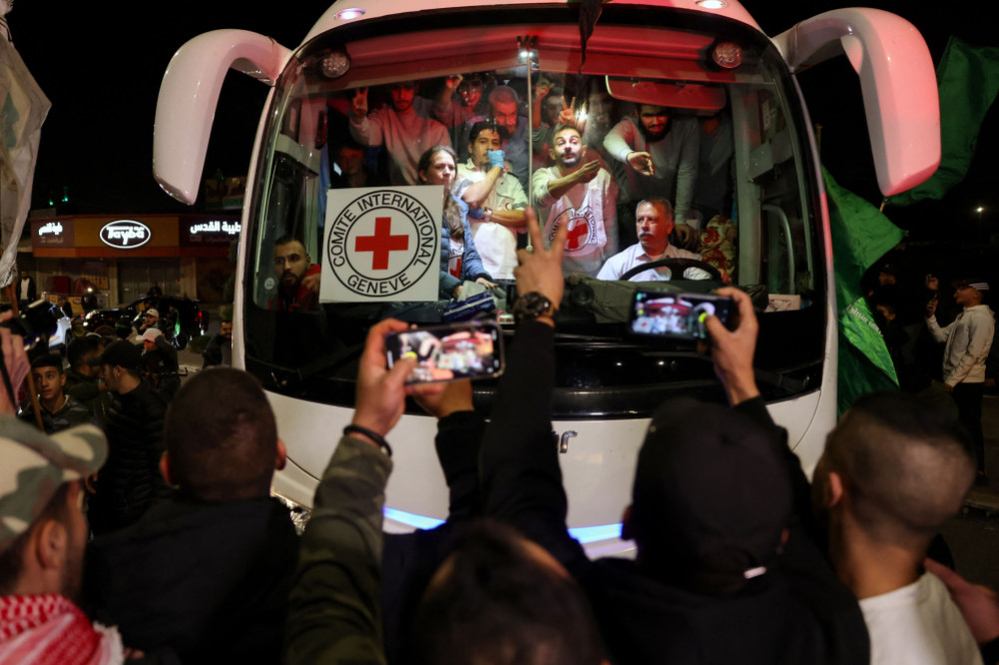
The execution of the first phase from 24 to 30 November, most of the hostages released were women, children and the elderly . Among them were 81 Israelis, 23 Thais, one Filipino. In return, Israel released 240 Palestinian prisoners. Before the cease-fire, Hamas released four hostages on humanitarian grounds, while 8 hostages were rescued by the Israeli army.
The ceasefire eases pressure on the Israeli government from hostage families as Hamas attempts to soften its militant image.
The mother of freed hostage Mia Shem, 21, told the BBC, "Our child is back, but thousands of families are still in the dark."
In the first temporary ceasefire, Thai workers who worked with Bipin were freed . But, Vipin did not fall. The government was criticized for the lack of diplomatic initiatives with Qatar and Egypt to release Bipin. At that time, Mahanand, Bipin's father, said, "We are dying to see our son return safely." A minister said, 'This is an agreement to strengthen Hamas.'
Arkathari said, 'Our citizens returned, this is the true victory.'
Hamas issued a statement claiming, 'We will continue to resist . If Israel frees our prisoners, we can also return the rest of the hostages.'
The bridge of trust between Hamas and Israel has collapsed again. Both parties started accusing each other of breach of contract.
Hamas said, 'Israel did not provide aid as agreed.'
Israel said, 'Hamas gave false facts about more hostages .'
Its result was war again . After December 1, the war started again .
For the residents of the Gaza Strip, who are saving their lives from the blockade of electricity, fuel, water and food, this war has turned terrible again . Iman al-Wahidi, who was displaced from Gaza City, said that she spends every second in fear. His 17-year-old son was killed in an Israeli airstrike. 'When evening comes, fear comes with it . "My three children and I are very afraid of air raids," she told the BBC. "We sleep holding each other all night." Every second we watch the news to see what happened . The war has returned to us again .'
The deepening hostage crisis
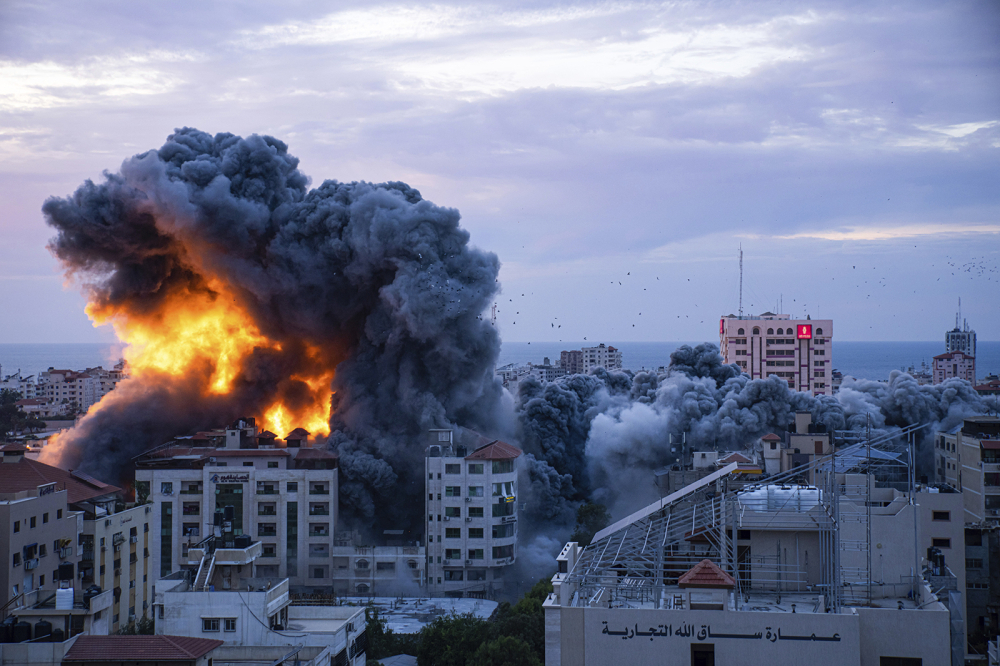
After the seven-day ceasefire in November 2023, the Gaza Strip is once again covered in blood . One hundred and thirty-seven hostages were still imprisoned in the Gaza Strip. Including soldiers, Israeli citizens and foreign workers.
Israel was increasing its attacks and Hamas was giving statements that the hostages would be killed. The exact condition of the hostages was not known . Some were confirmed to have been killed. The life/death of some was unknown .
was not an immediate negotiating position. Time began to pass in the international diplomatic race. The proposals of Qatar, Egypt and the United States, which appeared as mediators, were not finalized.
In January 2024, in Cairo, the capital of Egypt, the roundtable conference between the Israeli representative and the political officer of Hamas, with the mediation of Qatar, did not pass . It contained a certified list of the hostage situation, a proposal for a new hostage exchange, and an agenda on long-term peace prospects. Hamas put conditions on it, "a complete ceasefire, the withdrawal of Israeli forces from Gaza and the release of all Palestinian prisoners."
Israel replied, 'There will be no permanent ceasefire until all hostages are returned .' The talks broke down within three days.
This caused the families of the hostages inside Israel to be disappointed . Thousands of people took to the streets in Tel Aviv, Jerusalem and Haifa against the Netanyahu administration. Their slogan was, "Bring the hostages home". Rachel Goldin, the mother of one of the hostages, said, "Our child is no longer just a hostage, but a symbol of the government's policy failure."
Another father's statement was, 'Netanyahu promised to bring our son back, but he is choosing war, not negotiation.'
29-year-old Hagar told BBC while standing in Tel Aviv's Hostage Square, 'No place feels like home anymore. None of us will feel safe until all the hostages are returned . When we see everyone back home again, we can breathe again . Only then can we recover.'
By February 2024, the death toll in the Gaza Strip had exceeded 30,000. Most of them were women and children. As the death toll continued to rise, the pressure on the international community increased.
Although Qatar was successful in the first phase, in 2024, Israeli and American dissatisfaction with it grew . Israel accused the Doha-based Hamas leaders of "losing the impartiality of the arbitration" when they issued harsh statements from public forums.
US Secretary of State Anthony Blinken, who arrived in Cairo in April 2024, said, "Qatar's role is still important". Qatar should increase the pressure . Being a messenger is not enough.'
Qatar's answer to that was, 'We are opening the way to peace . But if the war continues, a humanitarian agreement is impossible .'
On the other hand, Egypt was not able to send humanitarian aid from its border. In Gaza, there was also a conflict within Hamas. If Hamas military commanders take a policy of 'total resistance', the Politburo says a limited deal is possible said . Usama Hamdan, a senior Hamas official based in Qatar, said in an interview with Al Jazeera, "The hostages are our bargaining chip." Until the blockade of Gaza is lifted, we will not go to a full agreement .'
It seemed that the hostage crisis had become more of a political weapon than a humanitarian one.
In March 2024, the US put forward a three-phase cease-fire proposal . It included a temporary ceasefire and the release of all women and children hostages, humanitarian aid and international inspection, long-term political dialogue and the future governance structure of Gaza. Hamas has signaled that it will accept the first and second phases . But in the third phase, Israeli influence on the governance of Gaza is unacceptable. The offer was then stopped .
The unknown situation of the hostages
The lack of information about the situation of the hostages in Gaza is increasing . Several families asked for direct information from Redcro . The International Committee of the Red Cross (ICRC) began to tell them that they were not allowed to enter Gaza.
In November, the story of the rescued hostages began to present a more sinister picture. A freed woman told Israel's Channel 12, "We were kept in the dark all the time, sometimes not allowed to eat for hours." The next moment we were afraid to live or die.'
These stories drew the attention of the United Nations and the international community. 10 June 2024 The UN Security Council passed Resolution 2735 . It clearly stated, "Hamas must immediately return all hostages, conditionally and safely". Israel must ensure civilian safety in Gaza.'
This resolution was passed at the initiative of the US, but Hamas rejected it as biased. Israel, on the other hand, explained it in its favor as "welcome diplomatic pressure".
But practically no hostages were released, nor did Israel shrink from attacking Gaza . On the other hand, Tel Aviv's Hostage Square began to turn into a demonstration site. Every Friday families would gather there with photos of the hostages, candle lights and posters.
When all efforts failed, the voice of internal power crisis and leadership change began to rise in Israel . He started questioning Netanyahu's government, 'Why didn't we bring back the hostages even after a year?'
Israeli analyst Gideon Levi wrote in the Haaretz daily, "Hostages are no longer just a humanitarian concern." They are a political test of Netanyahu's existence.'
Hamas's clear stance was, 'Until the blockade of Gaza is lifted and the prisoners are freed, the release of any hostages is not the end of the war .'
New proposals, renegotiations and future
No hostages escape from the Gaza Strip throughout 2024 . The Israeli army announced that there are still 97 hostages in the Gaza Strip. Some of them died Although the information was with the Israeli authorities, the family was not officially informed .
On December 2, US President Donald Trump warned of a solution before he was sworn in, saying, "If the prisoners in Gaza are not freed before he takes office, he will face serious consequences."
Trump repeated this demand at the end of December and again at the beginning of January. The effect of which was the second ceasefire with the exchange of hostages and prisoners. Hostage and prisoner exchange began on 19 January 2025 . From 19 January to 21 February, hostages were exchanged 7 times . It was the longest since the war. In which Hamas freed 33 alive and 8 dead hostages . In return, Israel released two thousand Palestinian prisoners .
This time too, Vipin didn't stop . Nepal's direct lobbying from the level of Ambassador, Minister, Prime Minister and President to Qatari Emir Sheikh Tamim did not work . Vipin's father, Mahanand Joshi, told Kantipur, "Vipin is not being released when the Thai citizen who was taken hostage with Bipin is released. We don't understand why this is happening. We are waiting for Bipin. There would have been more initiative on the part of everyone.'
From March 18, the bombing started again in Gaza Strip In May, a three-stage proposal was made in the efforts of Egypt, Qatar and the United States. In which the first phase included a temporary ceasefire and the release of 300 Palestinian prisoners in return for 50 hostages, the gradual withdrawal of Israeli forces from Gaza in the second phase and the international conference for a permanent ceasefire and reconstruction in the third phase.
Qatar initially agreed to this. But Netanyahu's cabinet was divided. Although Israeli Defense Minister Galant and opposition leaders asked to accept this proposal, Netanyahu and his charioteer did not accept it, saying, 'Hamas is still powerful . In such a case, a permanent ceasefire is a surrender .'
After this, the talks again stopped in a state of incomplete progress.
United Nations Secretary-General Antonio Guterres issued a statement in June 2025 and said, 'The hostages and ordinary citizens in Gaza are victims of political games . Hostages should not be used as a currency of war.'
But Netanyahu reiterated in a public speech, 'We cannot compromise on our security . The release of the hostages is in the hands of our enemy (Hamas), not us.'
After that, criticism of Netanyahu intensified within Israel.
The former chiefs of the Israeli Defense Forces (IDF) and the families of the hostages demanded Netanyahu's resignation.
Hostage Square in Tel Aviv up to 1 million supporters of the families of the hostages began to gather. Supporters who stand with the hostage families demand, "There should be a detailed agreement to return all the hostages home, the war should end."
Bipin's sister Pushpa was one of those who addressed the crowd gathered at Hostage Square. Pushpa, who could not contain herself in the midst of thousands of supporters, cried last August and said, "How can a person live in a dark hell-like cell for more than 680 days?" Can't even imagine . For two years, my family has missed my only son and I have missed my soul, my only brother.
In these two years, at least 66 thousand 288 people have died in Gaza. Meanwhile, in September, American President Trump brought a 20-point peace plan. The first step is the release of all hostages within 72 hours of the agreement, the second step is the disarmament of Hamas and the third step is the formation of a new government in the Gaza Strip and the complete withdrawal of Israel from there.
After giving an ultimatum until last Sunday, Hamas said that it was ready to release the hostages and that further negotiations were necessary. On Monday, indirect negotiations started in the Egyptian tourist city of Sharm al-Sheikh, with the mediation of Egypt, Qatar and the United States. American special envoy Steve Witkoff and President Trump's son-in-law Jared Kushner arrived in Egypt on Wednesday morning to make it decisive. The Qatari Prime Minister also reached Egypt .
Wednesday's decisive talks reached an agreement to implement the first phase of Trump's peace plan. After announcing the first notice of the agreement, Trump wrote on his "Truth Social" on Thursday morning, "This means that all prisoners will be released soon." Israel will withdraw its forces to the agreement line .'
The long-awaited ceasefire between Israel and Hamas has brought the most relief from the Middle East to Kanchanpur in the far west of Nepal.
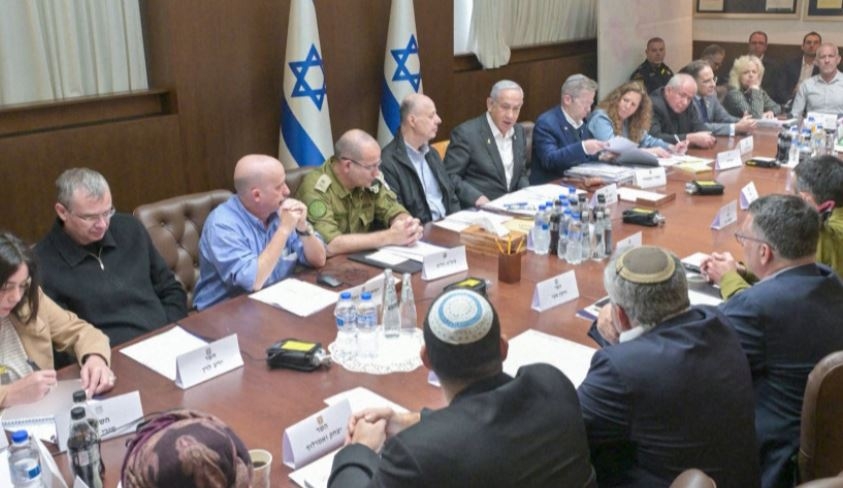
On Thursday morning, Bipin's father Mahanand said that the ceasefire between Israel and Hamas opened the way for him to meet with Bipin . We didn't have the strength to wait for Bipin any longer. This ceasefire will bring peace . There is hope that Bipin will escape safely," he said to Kantipur, "We are very optimistic. The distance between us is getting shorter.'
Two years of Israel-Hamas war.
2023
October 7: Hamas launched a surprise attack on Israel from the Gaza Strip. 12 people died including 10 Nepali students. 251 under the control of Hamas.
October 8: Israel declares formal war against Hamas. Aerial bombardment begins in the Gaza Strip.
27 October : Israel begins ground attack on northern Gaza Strip.
24–30 November : First ceasefire implementation . 110 hostages released by Hamas. In return, Israel released 240 Palestinian prisoners.
2024
The bodies of 41 hostages were recovered by Israeli forces on various dates. The three hostages were shot and killed by Israeli forces when they did not recognize them.
2025
19 January-25 February : Second Armistice . Handing over the bodies of 33 survivors and 8 hostages. In return, two thousand Palestinian prisoners were released .
October 9: Agreement on the first phase of Trump's 20-point peace plan. A ceasefire between Israel and Hamas. The remaining 48 hostages in Israel will be freed from Monday . In return for freeing 20 living hostages, Israel will release 2,000 Palestinians.

