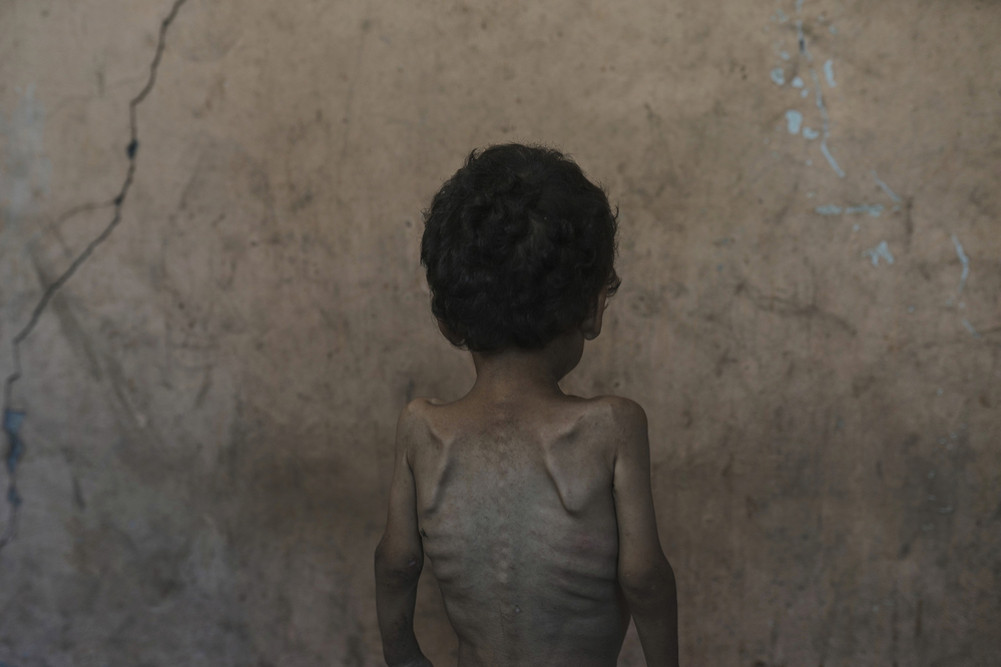
Israel says there is no limit to how many aid trucks can enter Gaza, but UN agencies and aid groups say even the latest humanitarian measures are not enough to deal with the growing famine.
We use Google Cloud Translation Services. Google requires we provide the following disclaimer relating to use of this service:
This service may contain translations powered by Google. Google disclaims all warranties related to the translations, expressed or implied, including any warranties of accuracy, reliability, and any implied warranties of merchantability, fitness for a particular purpose, and noninfringement.
"The worst of the famine is currently happening in the Gaza Strip," the leading international authority on the food crisis said in a new warning on Tuesday, predicting "massive deaths" if urgent action is not taken.
The warning, which has yet to formally declare a famine, has sparked outrage over images of emaciated children in Gaza and reports that dozens have died of starvation after nearly 22 months of war.
International pressure forced Israel over the weekend to announce measures including a daily humanitarian pause and air aid in fighting in parts of Gaza.
The UN and Palestinians on the ground say nothing has changed, and frustrated mobs continue to surround and clear delivery trucks before they reach their destination .
The Integrated Food Security Phase Classification, or IPC, says Gaza has been on the brink of famine for two years, but recent developments have "dramatically worsened" the situation. This includes an 'increasingly tight blockade' of Israel .
Formal famine declarations require that kind of data and are rare - largely negated by the lack of access to and mobility within Gaza.
The IPC has only declared famine a handful of times - in Somalia in 2011, in South Sudan in 2017 and 2020, and in parts of Sudan's West Darfur region last year.
But independent experts say they don't need a formal announcement to know what they're seeing in Gaza.
'Just as a family doctor can often diagnose a patient he is familiar with based on symptoms without sending samples to the lab and waiting for results, so we can interpret the symptoms of Gaza . This is famine', said the author of 'Mass Starvation: The History and Future of Famine' and the executive director of the World Peace Foundation.
How is famine declared?
An area is classified as a famine if all three of the following conditions are confirmed:
At least 20 percent of households are severely food insecure, or are basically starving . At least 30 percent of children (aged six months to five years) are severely malnourished or stunted, meaning they are too thin for their height . And at least two people per 10,000, or four children under the age of five, are dying daily from starvation or the interaction of malnutrition and disease.
The report, based on information available up to July 25, says the crisis has reached an 'alarming and deadly stage'. It said the figures indicated famine levels for food consumption in most of Gaza — the lowest levels since the start of the war — and acute malnutrition in Gaza City. The report states that nearly 17 out of every 100 children under the age of five in Gaza City are acutely malnourished.
Growing evidence shows 'mass starvation' . Essential health and other services have been destroyed. According to the World Food Programme, one in three people in Gaza go without food for days at a time. Hospitals report a sharp rise in hunger-related deaths among children under five. Gaza, with a population of more than two million, is squeezed into increasingly small areas of the devastated area .
The latest IPC analysis in May warned that Gaza would likely face famine if Israel failed to lift its blockade and halt its military campaign. Its new warning calls for immediate and large-scale action and warns: 'Failure to act now will result in widespread death across much of the Strip.'
What do aid sanctions look like?
Israel has limited aid to varying degrees throughout the war. In March, it blocked the entry of all goods, including fuel, food and medicine, to pressure Hamas to release hostages.
Israel eased those sanctions in May but also pushed ahead with a new US-backed aid delivery system plagued by chaos and violence. Traditional, UN-led aid providers say Israeli military sanctions and incidents of looting have hampered deliveries, and criminals and hungry mobs have attacked vehicles carrying aid as they enter.
Israel says there is no limit to how many aid trucks can enter Gaza, but UN agencies and aid groups say even the latest humanitarian measures are not enough to deal with growing hunger. In a statement on Monday, Doctors Without Borders called the new aerial aid ineffective and dangerous, saying it would deliver less aid than trucks.
Israeli Prime Minister Benjamin Netanyahu has said that no one is starving in Gaza and that Israel has supplied enough aid throughout the war. He said, 'Otherwise, there would be no Gazans.' The Israeli military on Monday criticized the 'false claims of deliberate starvation in Gaza'.
Israel's closest ally now seems to disagree. 'Those kids look so hungry', US President Donald Trump said on Monday, commenting on the pictures of Gaza in recent days.