The argument of the court that the incident is not remembered after a hundred days, the claim that the statement made after a long time cannot be trusted
We use Google Cloud Translation Services. Google requires we provide the following disclaimer relating to use of this service:
This service may contain translations powered by Google. Google disclaims all warranties related to the translations, expressed or implied, including any warranties of accuracy, reliability, and any implied warranties of merchantability, fitness for a particular purpose, and noninfringement.
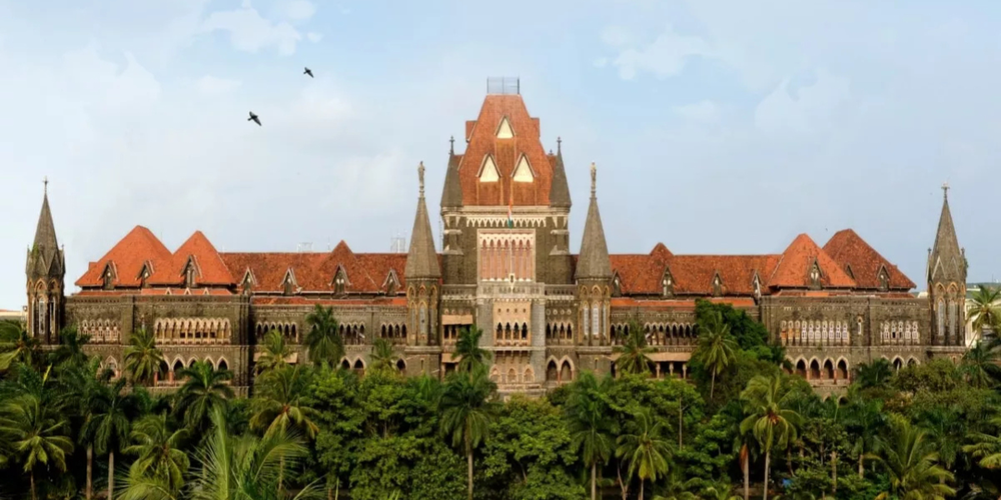
After 19 years, the Bombay High Court has given its verdict in the case of seven explosions on a local train in Mumbai on July 11, 2006. The court found 12 people innocent and acquitted them. Earlier, a special court sentenced five people to death and others to life imprisonment.
The High Court acquitted them as the prosecution could not prove the charges against them. Hundreds of people lost their lives in the local train accident in Mumbai.
The special bench of Judges Anil Kilor and Shyam Chandak in the High Court has said that the prosecution is unable to prove guilt against the accused in this case. The court has claimed that this prosecution is also weak as there are several deficiencies in the evidence and witness statements.
The court argued that it is difficult for taxi drivers and passengers on the train who were there at the time of the incident to remember the accused one hundred days after the incident. The court claims that the statement given after such a long time cannot be trusted.
In addition, the court has dismissed evidence such as bombs, guns, and maps. As the prosecution could not prove what type of bomb was used in the explosion, the court rejected the evidence and argued that it cannot be considered related to the incident.
In that incident, 189 people were killed and 824 people were injured. These blasts were carried out by a bomb planted in the first class compartment of a suburban train.
What is Mumbai Bomb Blast?
On the evening of 11 July 2006, Mumbai's local train was packed with passengers. At that time, bombs filled with RDX exploded in seven places one after the other.
These blasts took place in Khar-Santacruz, Bandra-Khar, Jogeshwari, Mahim, Mira Road-Bhayander, Matunga-Mahim and Borivali . These explosions, which occurred in a period of only 11 minutes, caused a terrible situation in the entire city. Initially seven different complaints were registered and later the matter was handed over to the ATS (Anti-Terrorism Squad).
ATS filed a petition under the Unlawful Activities Prevention Act. On May 12, 2015, a special court under the Maharashtra Control of Organization Crimes Act sentenced five persons to death and life imprisonment to others.
But one Wahid Sheikh was also acquitted. Now the High Court has acquitted the remaining 12 people by proving them innocent.