The move to stop aid going to Gaza shows the ugly face of Israel, the international community must put pressure on the Israeli government to prevent our people from starving: Hamas
We use Google Cloud Translation Services. Google requires we provide the following disclaimer relating to use of this service:
This service may contain translations powered by Google. Google disclaims all warranties related to the translations, expressed or implied, including any warranties of accuracy, reliability, and any implied warranties of merchantability, fitness for a particular purpose, and noninfringement.
Israel has blocked the entry of all humanitarian aid into Gaza. Israel says it is suspending humanitarian aid as the first phase of a ceasefire with the Palestinian group Hamas ends.
Israeli Prime Minister Benjamin Netanyahu's office said Hamas rejected a proposal by US President Donald Trump's special envoy Steve Wittkoff to extend the ceasefire. "Since the first phase of the ceasefire agreement has ended and Hamas has rejected Witkoff's offer for continued negotiations, Prime Minister Netanyahu has decided to stop all goods and supplies from entering Gaza," the Israeli Prime Minister's Office said in a statement. The statement stated that Israel would not allow a cease-fire without the release of Israeli hostages.
Hamas spokesman Sami Abu Zuhari said Israel had committed a "cheap scam" and a "coup" in the ceasefire agreement. He asked mediators to resume aid supplies to Israel, the BBC reported. The Palestinian group Hamas wants to move forward with a second round of negotiations for the release of the remaining hostages and the handover of bodies, along with the release of Palestinian prisoners and the withdrawal of Israeli forces from Gaza. However, Hamas says that the agreement on the second phase of the ceasefire cannot be reached without the guarantees of mediators from the US, Qatar and Egypt.
'Netanyahu's decision to stop aid going to Gaza shows the ugly face of Israel. "The international community must put pressure on the Israeli government to prevent our people from starving," a Hamas spokesman said. Netanyahu's office said on Saturday night that it had agreed to a US proposal for a four-week ceasefire during the Muslim Ramadan and Jewish Passover holidays. However, the office reserved the right to return to war with Israel if the negotiations ended at the end of this period.
American special envoy Wittkoff has not made his proposal public. However, Israel says that the second phase of the ceasefire will begin with the release of all remaining hostages and the handover of the bodies of half of the dead. Earlier, Witkoff proposed a six-week ceasefire extension after the Israeli Prime Minister's Office said more time was needed to bridge differences between Israel and Hamas over the terms of ending the war. The office said that if Hamas changes its position within six weeks, Israel will immediately start negotiations.
The first phase of the cease-fire between Israel and Hamas, which came into effect on January 19, ended on Saturday. 33 Israeli and 5 Thai prisoners were freed as a result of the accord, which temporarily ended the 15-month war. For that, Israel has released 1900 Palestinians. Hamas is believed to still hold 24 hostages alive. One of them is a Nepali youth. Bipin Joshi from Kanchanpur, who came to Israel to study agriculture under the 'Learn and Earn' program, was taken hostage by Hamas. According to the Israeli Prime Minister's Office, 39 people under the control of Hamas have died.
Hamas attacked Israel on October 7, 2023, killing 1,200 people. 251 people were taken hostage by Hamas. After that, a war broke out between Hamas and Israel. The Ministry of Health, run by Hamas, has claimed the lives of 48,364 Palestinians in the 15-month war since then.
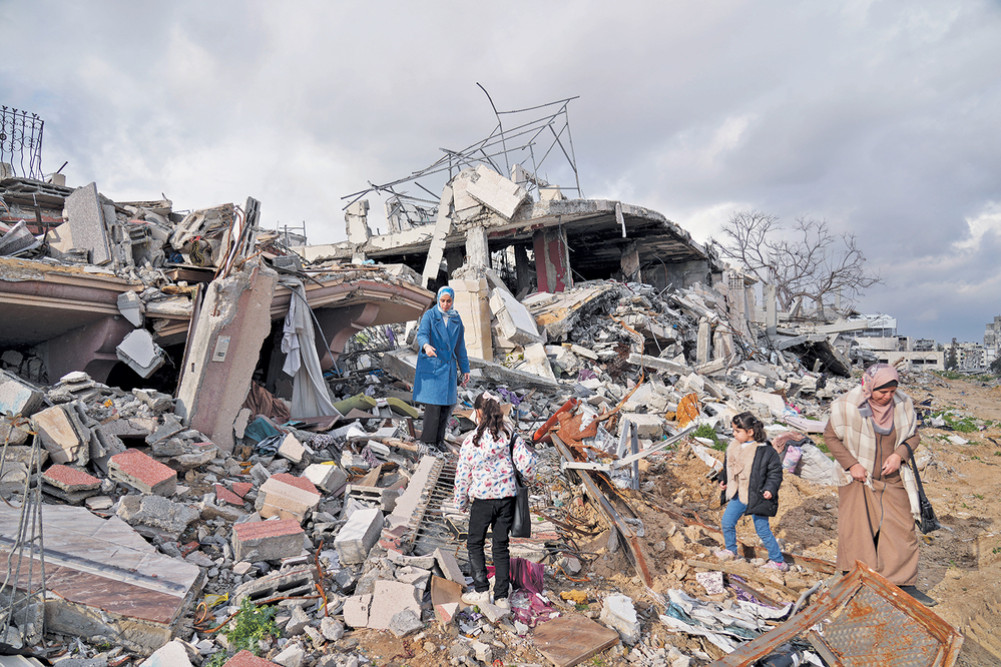
More than half of those killed are women and children. At least 100,000 were injured in the Israeli attack, and more than 60 percent of the structures in the Gaza Strip were destroyed. About 1400 people have lost their lives on the Israeli side. The second phase of the ceasefire agreement includes the release of all remaining hostages and the withdrawal of Israeli forces from Gaza. Mediators have said that negotiations have started for that. The third phase of the ceasefire includes a plan to rebuild Gaza.