The indigenous Maori of New Zealand suffered from the colonialism and barbaric atrocities inflicted by immigrant Europeans in the eighteenth century. A large number of Maori were killed during the war between the two sides. However, after the Treaty of Waitangi between Britain and Maori chiefs, New Zealand was established as a country.
We use Google Cloud Translation Services. Google requires we provide the following disclaimer relating to use of this service:
This service may contain translations powered by Google. Google disclaims all warranties related to the translations, expressed or implied, including any warranties of accuracy, reliability, and any implied warranties of merchantability, fitness for a particular purpose, and noninfringement.
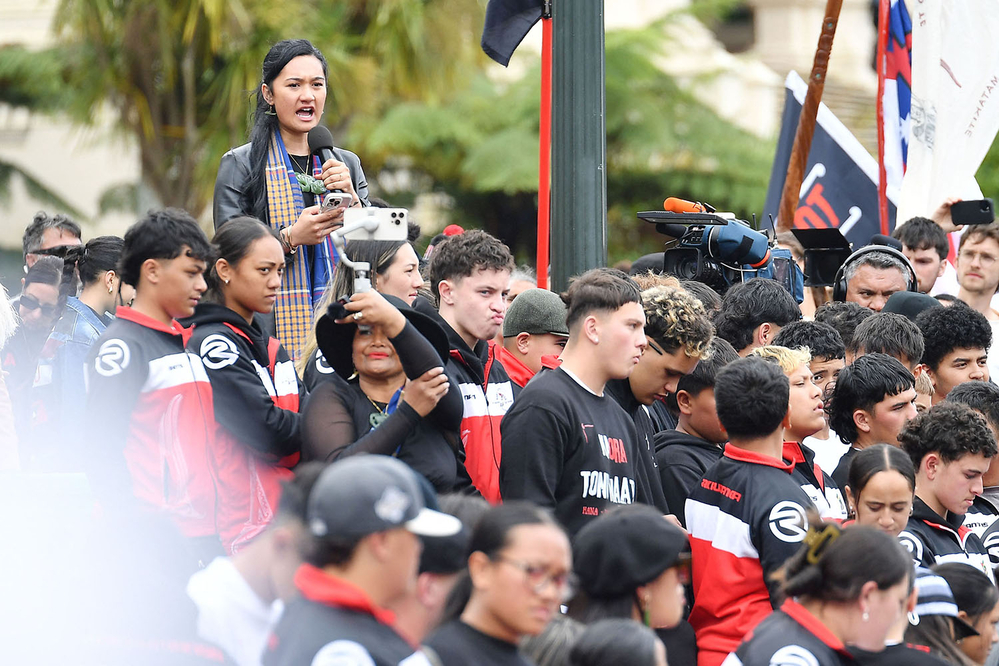
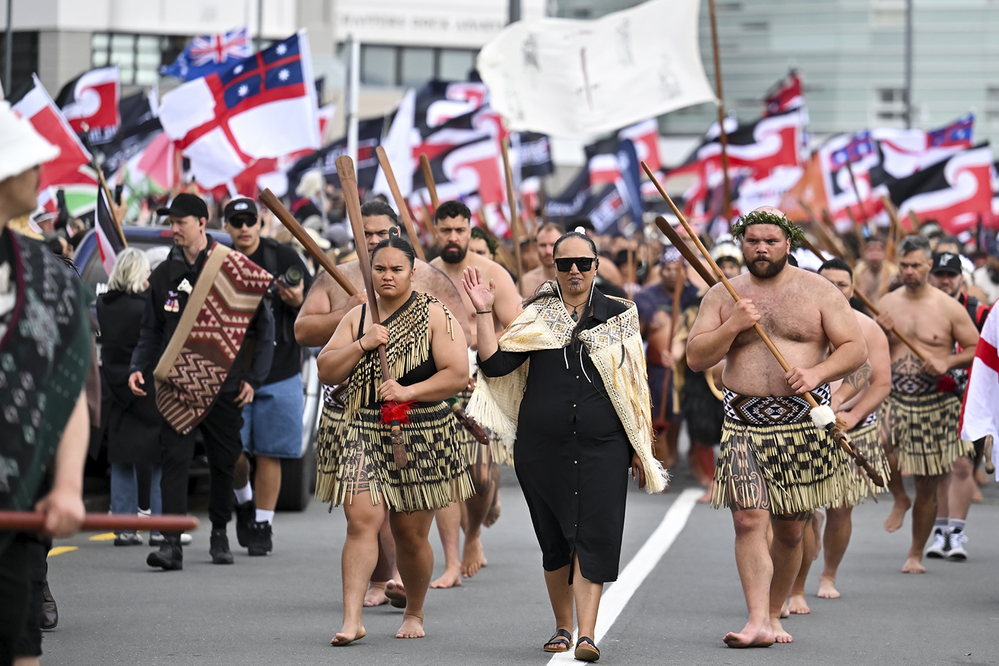
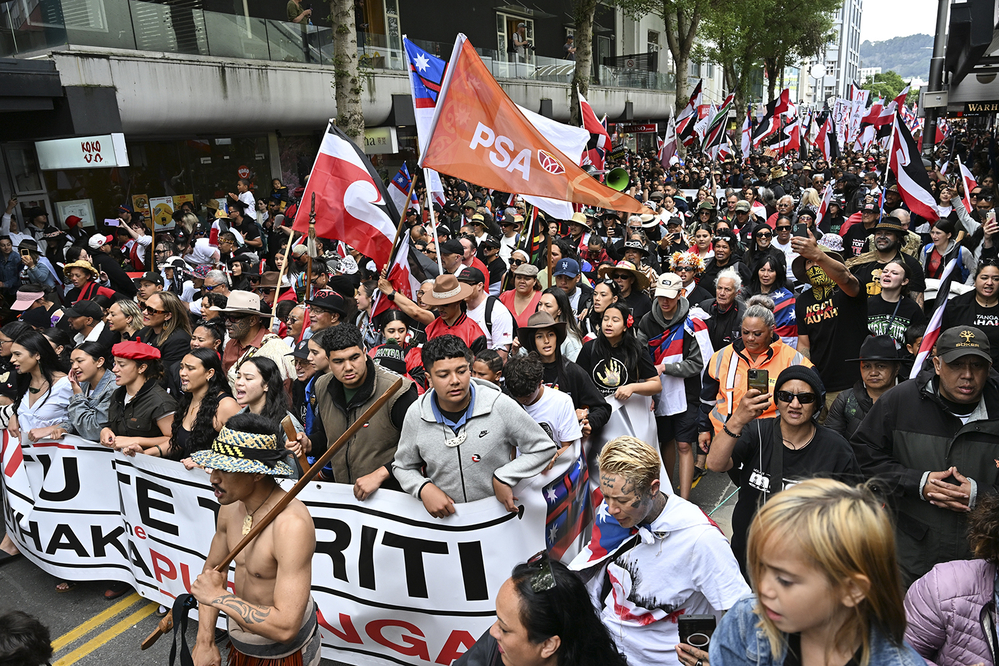
About 50,000 people protested outside New Zealand's parliament building on Tuesday against a proposed bill to reinterpret the 1840 treaty between colonial Britain and the Maori tribe. On the last day of the nine-day hikoi (peaceful protest rally), indigenous Maori demonstrated in front of Parliament House.
Most of the participants in the biggest hikoi in the history of New Zealand wore the colors of the Maori flag and circled different areas of the capital, Wellington. The protest rally, which started from the northern region of the country 9 days ago, reached the capital through various cities. Some of them had walked hundreds of kilometers barefoot to reach the capital.
The protests against the proposed bill are said to be the largest protests New Zealand has ever seen. Earlier in 2004, Maori held a massive demonstration for rights to own the sea and coastline. But according to the local media, there were twice as many participants in Tuesday's demonstration than at that time. Maori also protested for land rights in 1975.
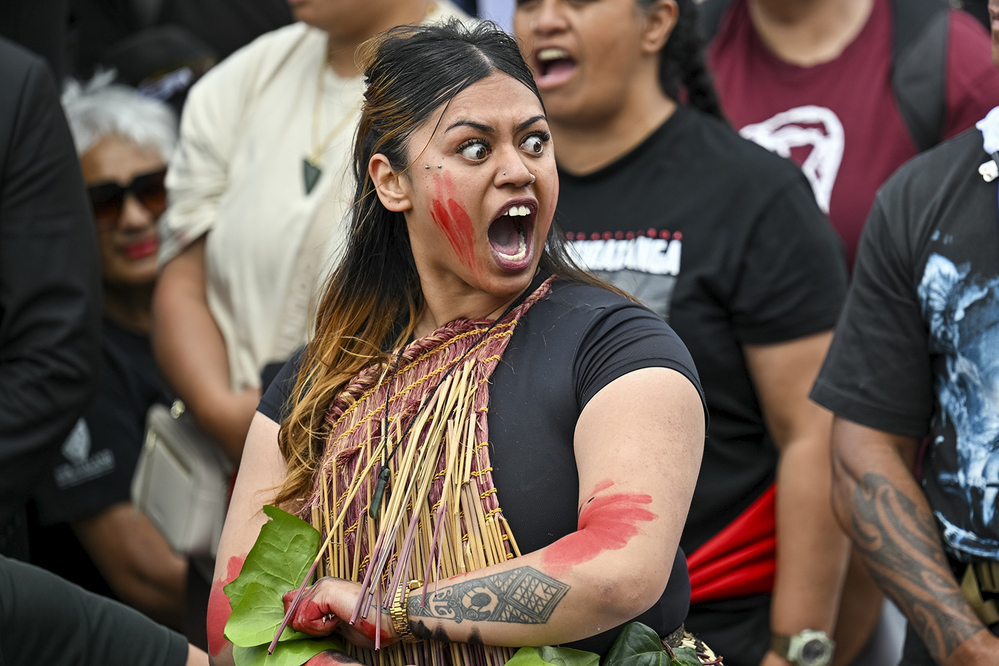 Tuesday's protest has succeeded in bringing together activists and supporters opposing the 'Treaty Principles Bill' submitted to Parliament. The bill was put forward by the ruling party, the ACT New Zealand Party, which has been saying that New Zealanders should be treated equally. The new Bill states that the principles of the 1840 Treaty of Waitangi should be reinterpreted and legally defined by New Zealand. 184 years ago, Te Tiriti o Waitangi (Treaty of Waitangi) was signed between the British King and Maori chiefs. The treaty committed to the protection of Maori indigenous land rights and cultural autonomy.
New Zealand currently has a coalition government of the National Party led by Prime Minister Christopher Luxon, New Zealand First led by Deputy Prime Minister Winston Peters and the ACT Party led by David Seymour. The National Party has 49 seats in the 123-member parliament. ACT has 11 seats and New Zealand First has 8 seats. Likewise, opposition parties Labor have 34 seats and the Greens 15. The Maori party 'Te Pati Maori' has 6 members in the Parliament.
 National and New Zealand First, partners in the centre-right coalition government, are in favor of equal rights for all and the scrapping of race-based policies. Although they are in favor of the bill, both parties have said that they will not support it for its legal implementation. Critics, including former Conservative prime minister Jenny Shapley, say the new bill will divide New Zealand. About 18 percent of New Zealand's population of 5.3 million are Maori. But compared to others, they have not been able to reach the policy making level of the state and they are facing problems such as health and education. That's why critics say that reversing policies that have been in place for decades with the aim of empowering them will lead to division in the society.
But ACT leader David Seymour claims that over time the treaty's core values and beliefs have led to racial division rather than unity in New Zealand. The treaty principle bill that we have put forward says that everyone should have the same basic rights and dignity. "Whether they are descendants like me who came here a thousand years ago or just got off the plane at Auckland International Airport this morning as New Zealand citizens," Seymour, who is of Maori descent, told the BBC. Last Thursday, the parliament decided to vote on the bill for the first time. But in the process Maori Party MP Hana-Rawhiti Meipi-Clarke tore up a copy of the bill and performed the traditional haka dance. After that, other MPs supported him. Then Speaker Gerry Brownlee adjourned the Parliament meeting for some time.
 However, the bill was passed in the first phase on Thursday. But the Justice Committee admitted that the bill was controversial and said that it would be further debated. In order for this bill to be implemented, the support of the majority of voters who will vote in the referendum will be required. After the opposition to the bill intensified, MPs including Prime Minister Christopher Luxon discussed the bill inside the Parliament building. The BBC mentioned that Luxon said that even though the bill is part of the coalition, it will not be passed into law. Our situation as a national party has not changed. We will not support the bill beyond the second stage. So it won't become law," Luxon told the New Zealand Herald.
New Zealand is considered a world leader in providing rights to indigenous peoples. But some fear that such rights will be at risk under Luxon's centre-right government. "They want to take away our rights," Stan Lingman, who is of Maori and Swedish descent, told the BBC. "Hikoi is for all New Zealanders." We will fight against this bill.'
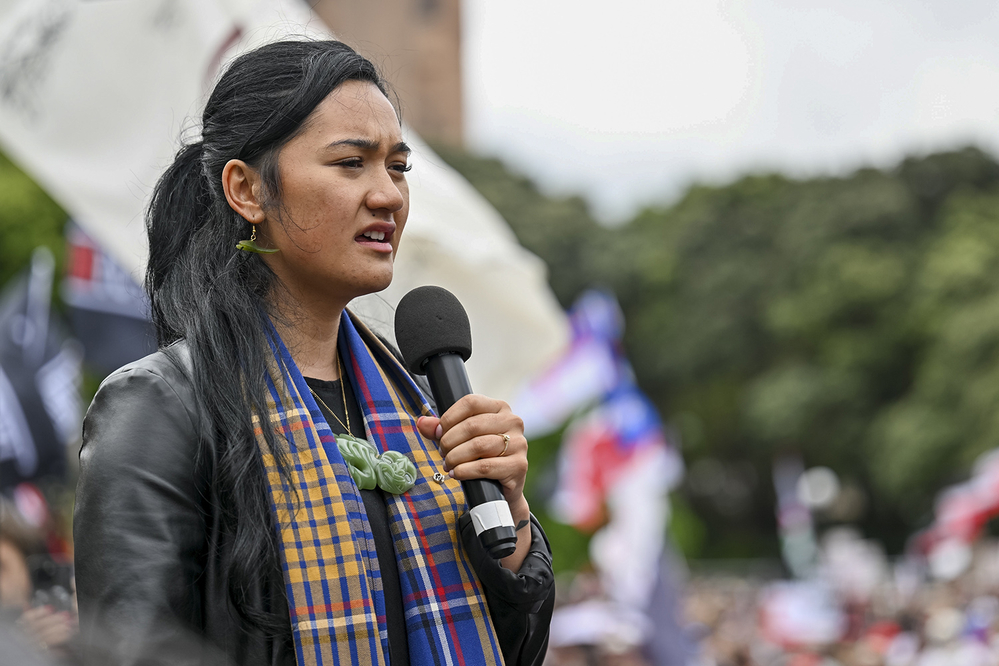 Hana's dance in the parliament has been going viral in the international media and social media for a few days now. Most of the people who reacted to the video praised Hana's protest style. Haka is the cultural identity of the Maori community. Often sung to reflect a sense of historical narrative, cultural pride and identity, or to taunt an enemy, the same rhythm and wording of the haka conveys different meanings depending on the context. Due to the rhythmic movements of the hands and feet, the aggressive facial expressions and the heroic rhythm of the song, it has recently become a universal introduction to Maori.
The New Zealand national baseball team performs the traditional Haka dance during World Baseball Classic and Babe Ruth League World Series games. But the dance was not well known internationally until Hana introduced it to Parliament last year. New Zealand's youngest MP, Hana, performed the Haka dance on December 22, 2023, before giving her speech in Parliament. Born in 2002, Hana was elected as an MP in the elections held on October 14, 2023. He was only 20 years and 7 months old when he was elected as an MP. She made headlines after becoming the youngest MP in New Zealand's 170-year history. On top of that, after she performed the traditional Haka dance in the Parliament, she became famous all over the world.
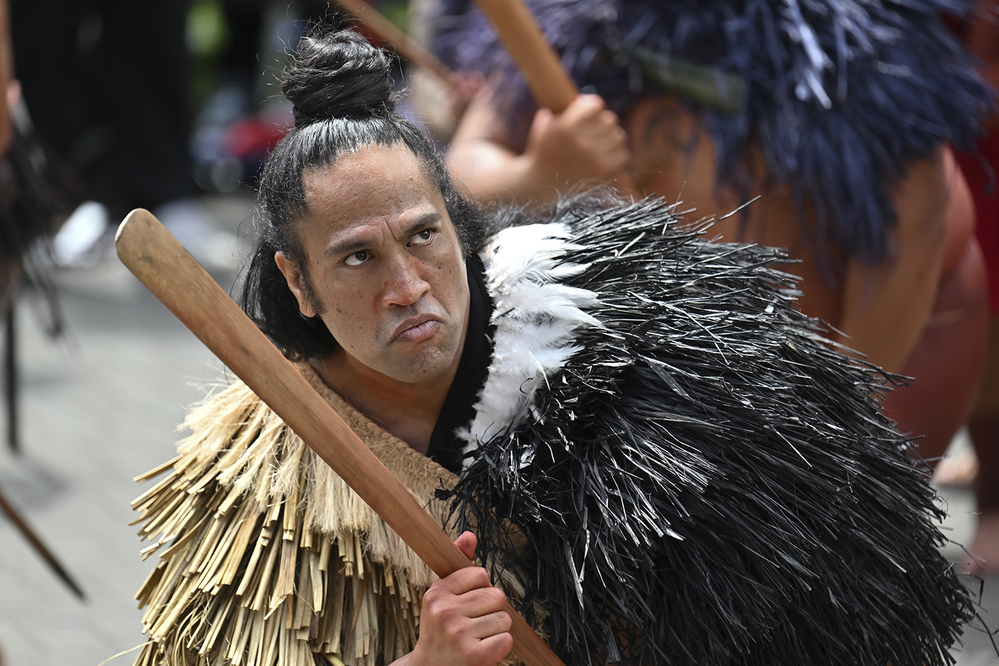 Despite being a minority, Maori have become more politically aware in recent times. Because of this, they have become more organized than before. In 2004 they launched the Maori Party. A breakaway party was born when the Maori community united in opposition to the government's controversial Maritime Lands Act. The party had also put forward a plan to change the representation of its community in parliament and government. In the early years the Maori Party achieved significant electoral success. In the 2005 general election, the Maori Party established itself as a political force by winning 4 seats in the New Zealand Parliament. In 2008, the party was a partner in Prime Minister John Key's government.
The partnership also gave the Māori party the power to influence policy decisions and advocate for Māori interests within government. However, a large number of members within the Maori party opposed it, saying that they were greedy for power when their decision was not implemented. As a result, Māori won only two seats in the 2014 election. Learning from this defeat, leaders of the Maori party vigorously engaged in organization building and community awareness. In the 2023 election, the Maori Party managed to win 6 seats. Hana was elected as an MP from this party last year. The Haka, which is about a thousand years old, has been passed down by Maori. Because of this, Hana has managed to spread the historical oppression of Maori to the world community through haka.
 New Zealand's indigenous Maori suffered from the colonialism and barbaric atrocities committed by immigrant Europeans in the 18th century. The Maori are believed to be descendants of the Polynesians. His ancestors were skilled sailors. They crossed the Pacific Ocean to New Zealand about a thousand years ago. After arriving in New Zealand, they were separated from the world with a separate identity, but they were encroached upon after the immigration of the British and other Europeans. A large number of Maori were killed during the war between the two sides. However, after the Treaty of Waitangi between Britain and Maori chiefs, New Zealand was established as a country.
However, the Treaty of Waitangi was not implemented and Maori did not get back the land that was taken from them. From time to time, Maori have protested that they have not received rights according to the treaty. Remembering that, Hana's chant includes the phrase '12 lakh hectares of land has been usurped'.
Maori demand that the Treaty of Waitangi of 1840 should be implemented, the land taken away according to the treaty should be returned, the condition of their community living as second-class citizens should end, and the Maori language and culture should be given national importance. Most Māori also suffer from health challenges including heart disease, diabetes and mental illness. Thus, Maori demand that their community be mainstreamed to eliminate inequalities in everything from education to health.
(with help from agencies)