By 2025, NASA and private companies have sent more than 50 missions to Mars. These include orbiters, landers, and rovers.
We use Google Cloud Translation Services. Google requires we provide the following disclaimer relating to use of this service:
This service may contain translations powered by Google. Google disclaims all warranties related to the translations, expressed or implied, including any warranties of accuracy, reliability, and any implied warranties of merchantability, fitness for a particular purpose, and noninfringement.
American billionaire Jeff Bezos' space company Blue Origin sent a spacecraft named 'New Glenn' to Mars on Thursday.
In this mission, named 'NG-2' in collaboration with the US space agency NASA, New Glenn plans to deliver two satellites named Blue and Gold to Mars orbit. The spacecraft will remain in space for some time and will fly there only after the Earth-Mars alignment is established. Blue Origin is scheduled to reach Mars orbit in 2027.
This mission, operated under NASA's ESCAPE program, will study the Martian atmosphere and its interaction with the solar wind. The 322-foot-tall New Glenn rocket has seven BE-4 engines. The launch was canceled several times due to weather and was finally launched from Cape Canaveral, Florida.
According to NASA Science, the ESCAPE satellites will orbit Mars and send important information for possible future human missions. This is a very important moment for Blue Origin. Because the company had not previously worked on a NASA-level scientific space mission.
NASA spent about $55 million on this mission. Of that, Blue Origin was paid $18 million for the New Glenn flight fee. The biggest success of this mission was the landing of New Glenn's reusable rocket (first-stage booster). The 17-story-tall booster successfully landed on the ship named 'Jacqueline' in honor of Jeff Bezos' mother. Blue Origin CEO Dave Limp has called it a major success.
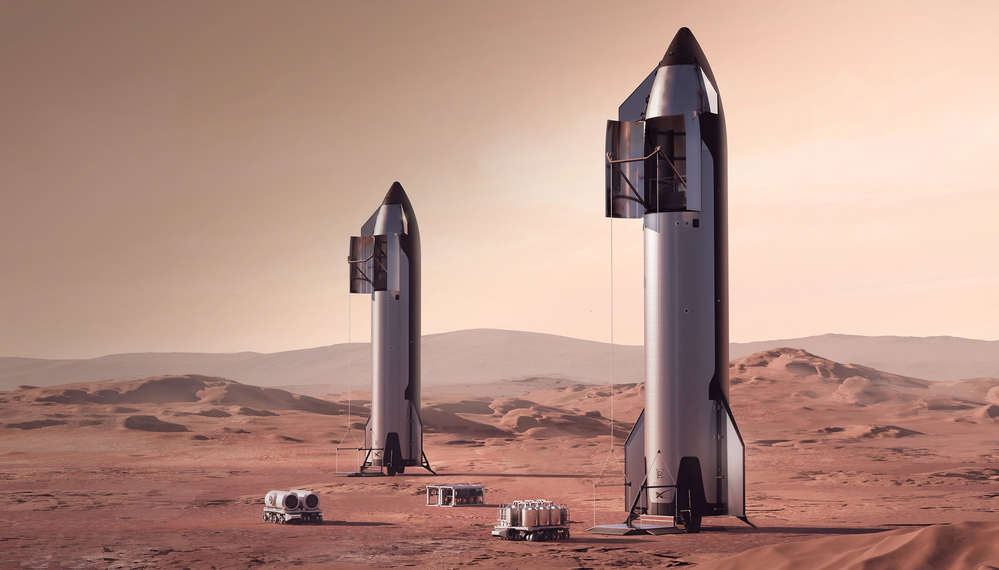
While Bezos' Blue Origin has been in the news this week, another billionaire Elon Musk's company, Space X, has been dominant in ambitious missions to Mars. Musk envisions establishing a long-term human settlement on Mars and interplanetary travel using the Starship rocket built by SpaceX. SpaceX has built more than one Starship and has even tested it. Musk has said that preparations are underway for a human launch.
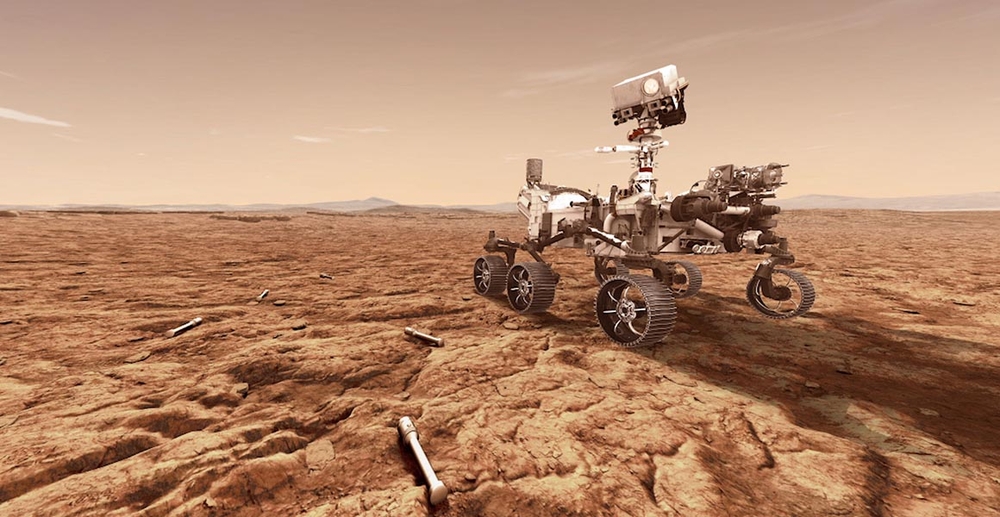
By 2025, NASA and private companies had sent more than 50 missions to Mars. They include orbiters, landers, and rovers. There are currently more than 20 active satellites and robotic explorers, such as the Perseverance Rover, Curiosity, and InSight.
High-capacity telescopes such as NASA's Mars Reconnaissance Orbiter, ES's Mars Express, and India's Mangalyaan have been built to observe Mars. Some of these telescopes are on Earth and some are in space.
They are sending various information, photos, and videos that will help scientists on Earth understand the terrain, climate, and potential for life on Mars. Some have collected samples of resources like sand and rocks there, which are brought back to Earth by another spacecraft and studied.
NASA, ESA, SpaceX, Blue Origin, and other agencies have collectively spent more than $100 billion to explore Mars. Billions of dollars were poured into building Blue Origin's New Glenn alone. Its successful launch is being analyzed as paving the way for future commercial payloads (those that send their goods into space for a fee) and human flights.
The United States, China, India, the European Union, and the United Arab Emirates are mainly engaged in the exploration, research, and future human colonization of Mars. The United States has emphasized research on the surface, atmosphere, and signs of ancient life on Mars.
The United States is also understood to be preparing for a human mission to Mars in the 2030s. On the day of his inauguration, President Donald Trump announced that American astronauts would plant the national flag on Mars as soon as possible, with Elon Musk by his side.
China has sent an orbiter, lander and a rover to Mars under the Taiwen-1 mission. India has also been trying to explore and research Mars since 2013. India, which sent Mangalyaan at that time, aims to launch Mangalyaan-2 by 2030. While Mangalyaan-1 has an orbiter mission, India is preparing to send a lander in 2. The United Arab Emirates sent the Hope Probe in 2021. (With the help of the agency)

