We use Google Cloud Translation Services. Google requires we provide the following disclaimer relating to use of this service:
This service may contain translations powered by Google. Google disclaims all warranties related to the translations, expressed or implied, including any warranties of accuracy, reliability, and any implied warranties of merchantability, fitness for a particular purpose, and noninfringement.
An AI robot is being used to inspect the physical condition of the walls of 'The Great Wall' in Hebei Province, China. Many may not know, the Great Wall of China starts from the coast of Hebei and ends in the Gobi Desert of Gansu Province. Smart four-legged robots (cyberdogs) are currently busy checking the condition of the wall at the "Shanghai Pass", the starting point of the Great Wall in the coastal city of Qinhuangdao in northern China's Hebei Province.
These robots with modern technologies like smart sensors, high-definition cameras and lidar are detecting cracks in the walls as well as finding the place where the bricks are stuck. Upon encountering such problems, the information is immediately sent to the relevant agency. "Robots have been able to do an excellent job in inspecting such complex and difficult places that are difficult for humans," said Liu Liang, head of the research group of the Department of Geology and Mineral Resources of Hebei Province. "This will improve the effective and quality protection of the Great Wall."
The use of a sharp-eyed robot that can detect individual cracks in the walls above the Bohai Sea represents China's efforts in cutting-edge technology . The Great Wall, originally built for military defense, is a series of interconnected walls. Local residents say that some of its walls are more than 2,000 years old. The walls of the Great Wall are spread over 15 provinces of China. Of these, Hebei is considered to be the best preserved. Chinhuangdao also has 'iconic' sections of the Great Wall .
The 'Great Wall of China Museum' has recently been opened in the city of Chinhuangdao. Spread over an area of 7 hectares classified as a national museum, this museum has more than 11,000 cultural items for viewing. According to data from the Municipal Culture, Tourism, Radio and Television Bureau of Qinhuangdao, millions of tourists come here annually to visit areas such as Beidaihe, Old Dragon Head, and Qinhuangdao Wildlife Reserve.

Qinhuangdao City and Hebei Province are actively trying to solve the challenges of protecting the Great Wall, a UNESCO World Heritage Site, through the use of technology. Since 2017, drones have been regularly used to inspect the location of the Great Wall in this province. "Drones help to monitor walls that are difficult for people to access, such as mountain deals," Zhang Peng, who is involved in this exercise, told Xinhua, "Based on information collected from drones, protection measures are determined."
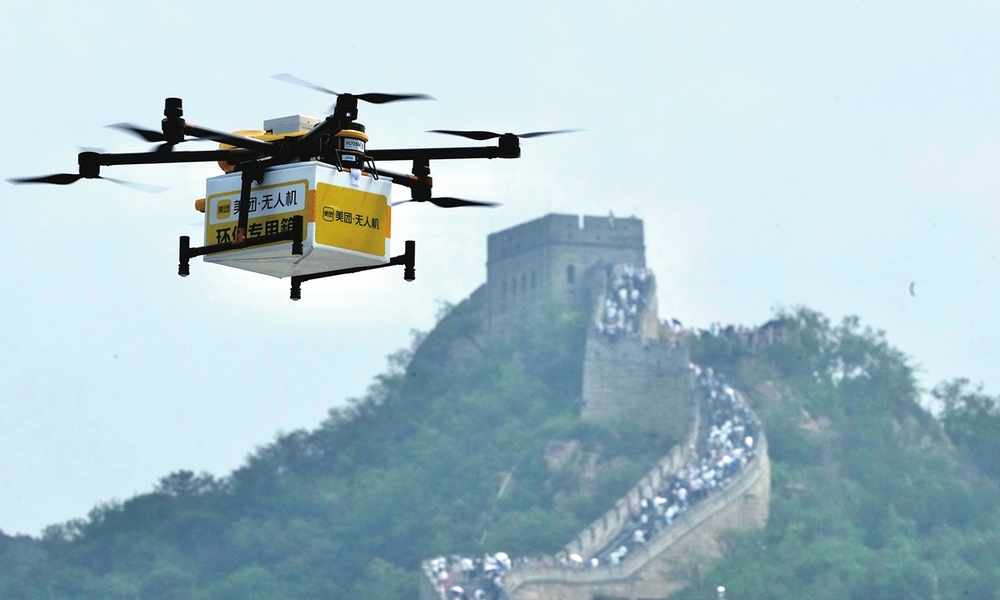
Special technology has been used not only in the protection of the Great Wall but also in spreading information about this cultural heritage in Chinhuangdao. For that purpose, technology such as virtual reality and digital modeling has been adopted. Tourists visiting the Great Wall of Hebei can enjoy a panoramic view of its cultural heritage. Various efforts are also being made in the field of education. For example, according to Dong Yaohui, head of the Great Wall Research Institute at Hebei GEO University, special educational programs are being developed for children using artificial intelligence tools such as Dipsic. Xinhua reports that, like other Chinese cities leading in
technology, smart fire safety products have also been developed in Chinhuangdao. Local Gulf Security Technology has developed an automatic smoke detector for the special industrial zone of Chinhuangdao. There are 11 smart fire safety companies in this city and they have an annual income of 20 million yuan. It is estimated that Chinahuangdao has more than 40 percent share in China's smart fire safety market.