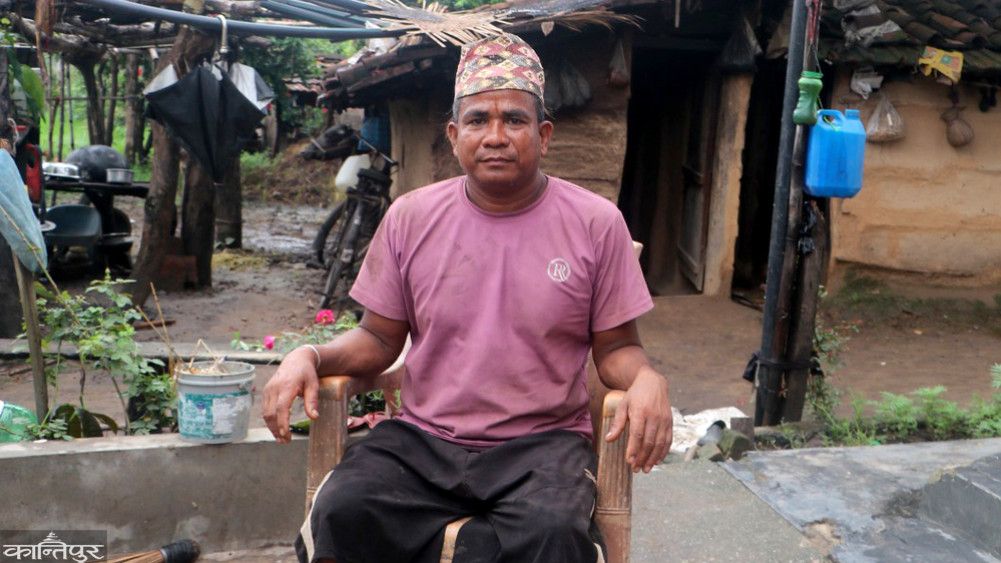
A new era of employment, education, and self-reliance has begun for the Tharu community after the government declared Kamaiya free.
We use Google Cloud Translation Services. Google requires we provide the following disclaimer relating to use of this service:
This service may contain translations powered by Google. Google disclaims all warranties related to the translations, expressed or implied, including any warranties of accuracy, reliability, and any implied warranties of merchantability, fitness for a particular purpose, and noninfringement.
Ramdas Chaudhary of Bedkot-5 Dharampur was born in a house where the father lived as a slave. When his grandfather could not repay the loan taken, his family was forced to live as slaves for three generations. Ramdas found himself in the life of a slave from the moment he regained consciousness. He used to graze cows and goats as a child and work in the fields as an adult.
When the government announced the liberation of the slave laborers on 27th August 2000, he was very happy. At first, he was worried about where to go and how to support his family. But the government arranged for him to live and also provided him with skill-based training. After that, his life took a new turn.
He got five kathas of land for his residence in Dharampur. He also received financial assistance to build a house. Then he took training in hairdressing. After the training, he ran a salon in Lalpur, Bedkot. He ran his family through that profession. Now his son has also adopted the same profession. His son works as a hairdresser in Lalpur, while Ramdas himself works in Dharampur.
'I was a Kamaiya since I was born. After liberation, I felt like I was freed from slavery,' Chaudhary said, recalling the moment of Kamaiya liberation, 'It was difficult for some time at first. But after getting a house and land, our happy days began.'
He has now built a solid house. He has educated his children up to higher education. They are also involved in their respective professions and jobs.
He was also married while he was a Kamaiya. His wife Laiya Chaudhary also lived with him as a Kamaiya. Since he got married at a young age, in the early days they used to herd cows and goats.
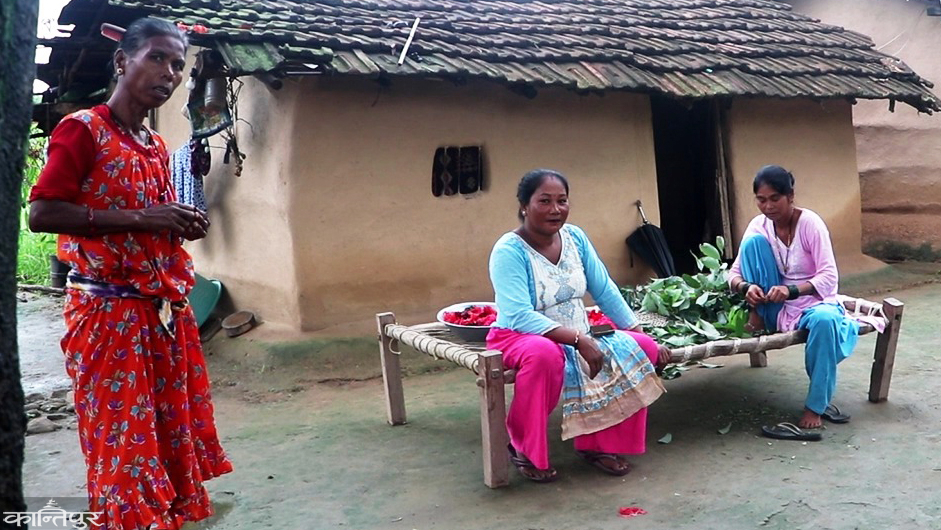
Meghanath Dagoura of Dharampur is now a house construction mechanic. After Kamaiya liberation, he learned the work of a mechanic after receiving training from an NGO. He is now raising a family through this profession.
'Now we work if we like, if we don't like, we stay at home,' Dagoura said, 'It was very sad to be a Kamaiya. Even eating and living were not of one's own accord. One had to work whenever the master said.'
According to him, he felt free only after the liberation of Kamaiya.
Subarnaram Chaudhary from Hasulia, Kailali is currently working in the villages around Mahendranagar. After reaching Mahendranagar to work as a laborer after Kamaiya liberation, he learned the work of a mason. Now he has become a successful house construction contractor.
His father Shriram Chaudhary was also a Kamaiya from a young age. Born in the same house where his father lived as a Kamaiya, Subarna has also experienced that pain firsthand. After Kamaiya liberation, the family's life began to change after he received two kathas for residence in Hasulia and eight kathas of land in the lower area for farming.
After reaching Mahendranagar in search of work from Hasulia, he started working as a laborer in house construction. While working, he became a mason and also received training. Now he is a contractor himself. In this profession, he has bought a house in Dhangadhi and built a house. They are also keeping their sons in Dhangadhi for education.
'Our life changed after the Kamaiya liberation. We started working after learning skills, and things have been going well now,' said Suvarna, 'Now there are more Tharu community workers in house construction and other jobs. Many of them are doing good work after receiving various training.'
According to her, most of the masons working in the house construction sector are from the Tharu community and many of them are from families of freed Kamaiyas.
Sukni Chaudhary of Dharampur also says that her life has changed after the Kamaiya liberation. 'We only got hope after the announcement of liberation,' she said, 'Our life changed from there.'
Having worked as a Kamaiya since childhood, those days in the past now seem like a dream to her. But she has not yet forgotten the humiliation, suffering and abuse she received from her employer.
After the Kamaiya liberation, the government provided land according to the location, as well as provided accommodation and skill-based training, and many freed Kamaiyas joined employment. But the situation is not the same for everyone. Some have been displaced again after being given land on the banks of rivers or forests. The situation of some families has returned to the same as before after river erosion washed away the land.