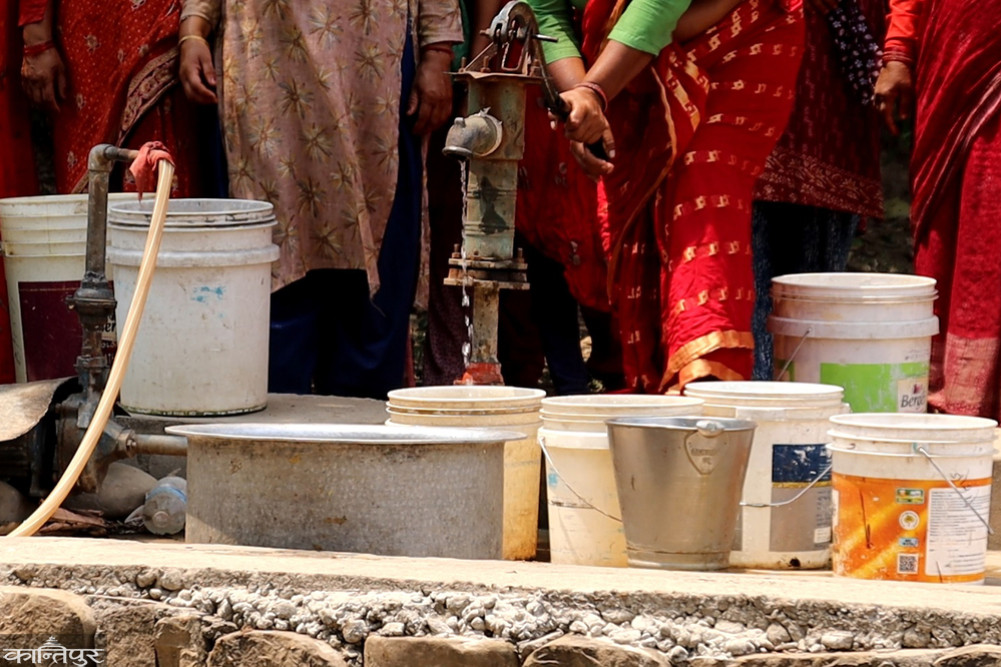
Currently, only a few hand taps are providing water in Baitada Tole. These are located in a low-lying area. According to locals, there is a river nearby, but it has dried up due to a long-standing drought.
We use Google Cloud Translation Services. Google requires we provide the following disclaimer relating to use of this service:
This service may contain translations powered by Google. Google disclaims all warranties related to the translations, expressed or implied, including any warranties of accuracy, reliability, and any implied warranties of merchantability, fitness for a particular purpose, and noninfringement.
4 am. The sky is not yet completely clear. Most of the houses in the village are still asleep. But in Baitada, Vedkot Municipality-4, Kanchanpur, a bigger concern than sleep is water.
A line of jugs and buckets begins to form around a hand-held tap. Women, the elderly and children stand in the line. Some are waiting for their turn with their eyes closed, while others are holding empty pots and pans and pushing them towards the tap. The handle of the tap is turned repeatedly, but it takes a long time to fill the buckets and jugs. The drops of water are like a relief here.
This scene raises a tough question, is there a water crisis in a district of the Terai like Kanchanpur?
Extreme heat, prolonged drought and declining groundwater levels have turned the daily life of Baitada and the surrounding areas upside down. Hand taps, which had been the trust of the locals for decades, dried up one after another. Those who had never worried about water are now struggling for hours for a jug of water.
Water used to come easily from the hand taps in every house. But now, no matter how much you turn the handle of the same tap, water does not come out.
This time, the temperature in Kanchanpur reached almost 43 degrees Celsius. The ground became hot, the air became hot, and people's lives also became hot due to the water crisis.
Local resident Bhanubhakta Awasthi says, 'Earlier, there was no worry about water, now it has become difficult to run the house. There is no water to drink at home. There is no water to feed the cattle, we are suffering the most as the hand taps have dried up.' According to him, water shortage has now become the biggest problem in the village.
For 60-year-old Jamuna Awasthi, the water shortage has changed her daily routine. Earlier, water was easily available from the tap in front of her house. Now, she has to get up early in the morning and wander around in search of water. 'There are problems with everything from cooking to washing dishes and cleaning,' she says.
According to 37-year-old Hemanti Bam, who lives in the same area, the burden of water shortage has fallen more on women's shoulders. Since women are mostly responsible for managing water at home, they are also suffering more. Waking up early in the morning, standing in line, waiting in line, filling water and carrying it home. This is the cycle that starts a woman's day.
58-year-old Meena Devi Awasthi shows another side of the crisis, the suffering of livestock. 'Not only people, but also cattle have to run to water them.' "Days are spent just trying to get water," she says.
The scene in Baitada village itself speaks volumes about the depth of the crisis. Locals line up from 4 am. Some families are spending their days on half a bucket of water.
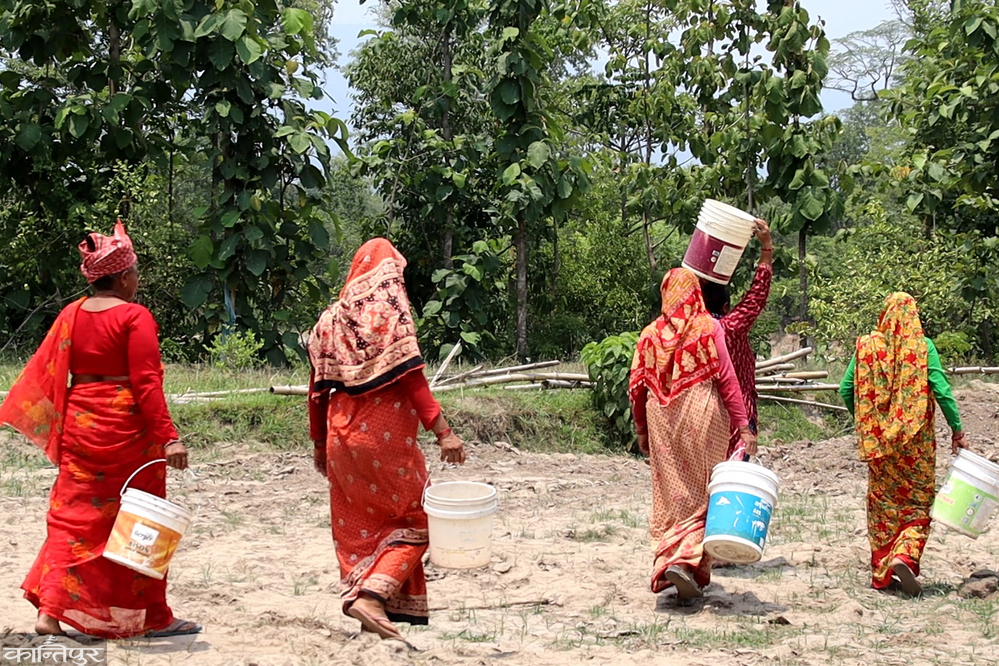
Only a few hand-held taps are currently supplying water in Baitada village. That too because they are located in a low-lying area. Most of the other taps at higher elevations have completely dried up. According to locals, although there was a river nearby, the river has completely dried up due to a long-term drought. These few hand-held taps have now become the support of hundreds of local residents.
Now that the previously easily available source is limited, all time, labor and opportunities have to be spent on water. Daily wage earners have been affected as they spend hours searching for water. Locals say that children's education and women's workload have also been affected.
The main reason for the problem is that there has been no rain for many days, the temperature is constantly rising, and groundwater is not being recharged. As the water level drops, hand taps have stopped drawing water. This crisis is not just a temporary weather problem, but also a serious sign of climate change. Unusual heat, irregular rains, and drying up water sources are creating a new kind of crisis in rural areas.
Meanwhile, locals have expressed serious dissatisfaction with the water supply project that has been incomplete for years. A plan was started about eight years ago to build a water supply tank in a forest area near Ward No. 4. At that time, funds were also collected from local citizens. It was hoped that now clean drinking water would reach every household.
But even after eight years, that hope remains unfulfilled. The construction of the water collection tank has been completed. The structure is standing . But the pipeline has not been expanded . Locals ask, 'What can we do with just a tank ? When will the tap be connected ? When will the water come ?'
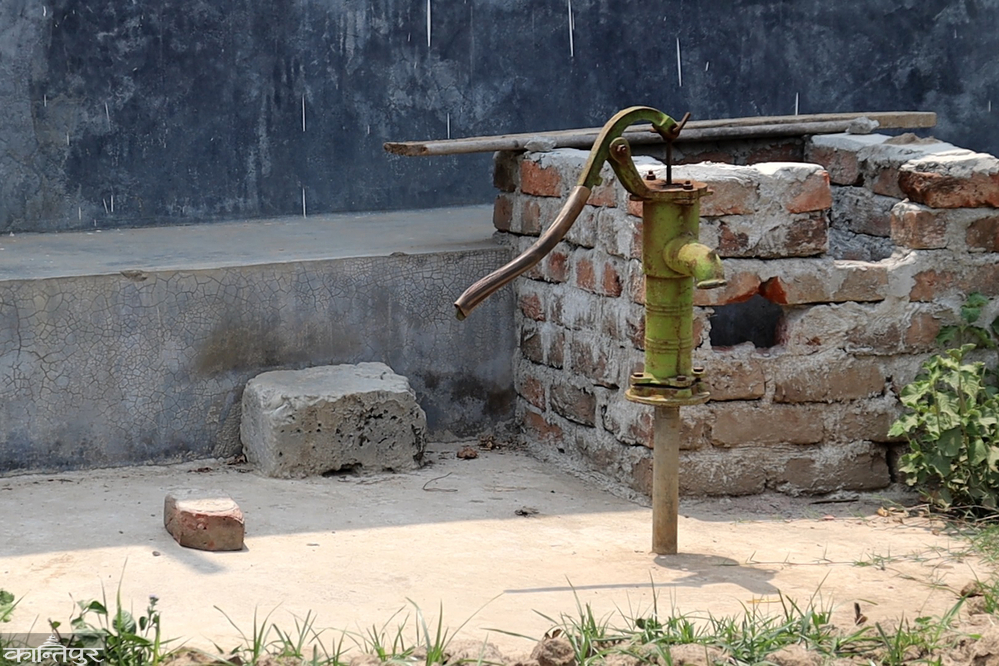
Lal Bahadur Dhanuk, Chairman of the Vedkot Drinking Water Consumer and Sanitation Committee, considers the lack of budget to be the main reason . According to him, the consumer committee has completed most of the work to be done on its part . Now it is difficult to complete the project unless support is received from the concerned bodies . 'We are discussing with the Drinking Water Office . We are trying to find a solution as soon as possible . If necessary, we will take further initiatives by submitting a memorandum to the people's representatives, ministers and concerned bodies,' he said .
Water is more important than assurances for the locals . They do not want to see the progress of the project, but water flowing from the tap . This crisis in Baitada is not the pain of just one village in Kanchanpur . This is the combined result of changing climate, weak infrastructure and slow implementation of government plans. Today, a village is thirsty, tomorrow a similar crisis may be repeated in other settlements in the district.
When a basic need like drinking water is in crisis, immediate relief measures alone are not enough. Long-term water resource conservation, rainwater harvesting, groundwater recharge and the construction of an effective distribution system have become indispensable. If a solution is not found in time, the current thirst of Baitada may become a common crisis for the entire Kanchanpur tomorrow.