There is a plan to expand the commercial cultivation of sandalwood in collaboration with local farmers in the 4 hilly districts of Dadeldhura, Baitadi, Doti and Bajhang.
We use Google Cloud Translation Services. Google requires we provide the following disclaimer relating to use of this service:
This service may contain translations powered by Google. Google disclaims all warranties related to the translations, expressed or implied, including any warranties of accuracy, reliability, and any implied warranties of merchantability, fitness for a particular purpose, and noninfringement.
The nursery and commercial cultivation of Raktchandan and Shrikhand, which was started in Kanchanpur in West Terai 10 years ago, has also started expanding in the hilly districts of Far West.
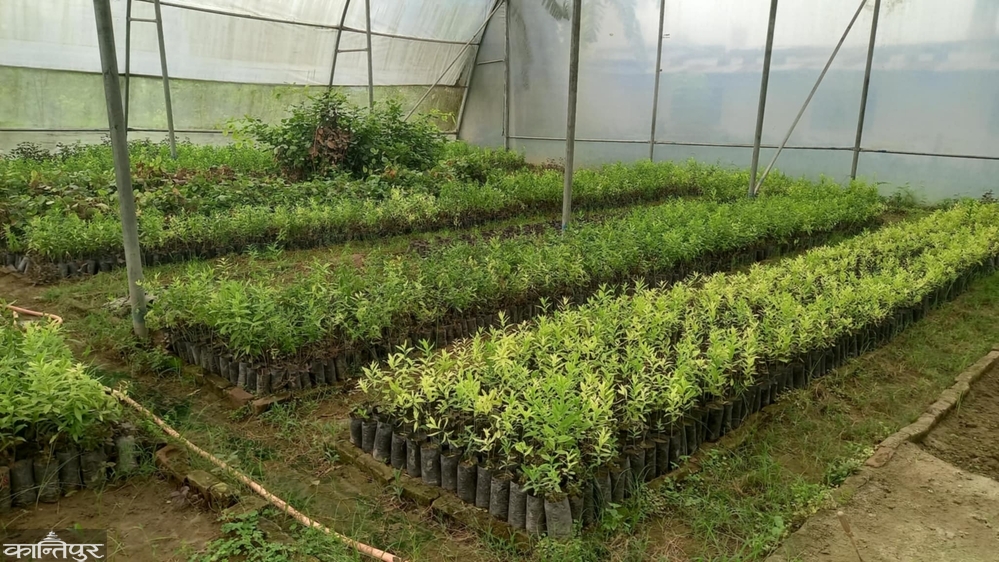
Nepal Chandan Pvt Ltd, which was established on the initiative of local businessmen, has now started commercial farming with a nursery that produces blood sandalwood plants. Vijayraj Pant, who has established himself as a sandalwood expert, established Nepal Chandan Pvt Ltd in Bhimdatta Municipality-1 Bhasi in Kanchanpur in 2073 and started this business by leasing 8 acres of land as a trial phase.
1 hundred and 3 blood sandalwood trees are growing in the first farm . He also took permission from the forest department to cut those trees within 9 years. But he said that he had to wait for another 9 years as the sandalwood expert advised that only the trees that have passed the period of 18 years will produce wood for inner churros. "Because of the low land, the water stagnates and the surrounding settlements started to expand, the plants could not grow as expected," Pant said, "3 years ago, we have leased another 1 bigha of land and started nursery and commercial farming in the second phase." "Plants planted in the second phase have not seen problems like before, because the land is at a higher place, there is no problem in growing the plants," he said.
Businessman Pant has imported Srikhand and Raktakandan and Agarwood seeds from Bangalore in the southern Indian state of Karnataka and Tirupati in Andhra Pradesh . He has spent a long time in the southern states of India and acquired the necessary information and technical knowledge regarding plant production nurseries and commercial production. His goal is to grow the plants in his own nursery and plant them on lease for at least 15 years, and after reaching 18 years, cut them and start a sandalwood-based industry .
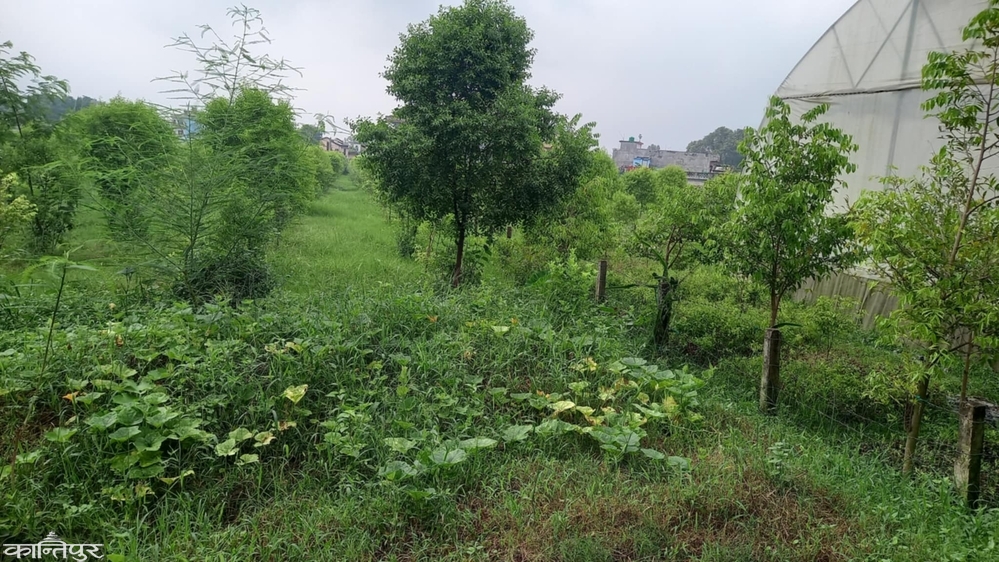
'But it has been difficult to get land on lease for the period of 20 years of continuous planting till the adult,' says Pant, pointing out the problems that have arisen in business operations, 'Even though we have tried a lot to share or lease land from the government and private sector, we have not been successful.' "The new modality is the plan to expand commercial cultivation of sandalwood in collaboration with local farmers in the 4 hilly districts of Dadeldhura, Baitadi, Doti and Bajhang from this year," he said. There is a plan to make, make plants available for free, transport and deliver plants and get all the technical support from planting to harvesting. "In this scheme, there will be an agreement between the farmers and Nepal Sandalwood Pvt Ltd to share the profit of sandalwood produced by mutual agreement," said Pant.
He says that if the local level, various organizations and government agencies also participate in this modality, it will be easier to expand the commercial cultivation of sandalwood in the hilly districts.
The challenge is to expand the plan as the banks will not invest for a long period of time until the blood sandalwood grows and is harvested. But Pant claims that if the farmers are aware of cultivating rakchandan even in terms of 5/10 plants in the vacant land of the farm, it will be very profitable from the economic point of view. "I have taken only 18 lakhs from the bank so far, I have paid everything to the bank within 2 years," Pant said, "Currently, expenses have been incurred from the income from the sale of plants, purchase of seeds, nursery management, wages of workers." "It seems that 20,000 more plants will be sold by August," he said. At Pant's farm in Kanchanpur, retail sales are 200 per plant and wholesale is 150 per plant. "An adult Shrikhand or raktchandan tree produces 20 to 25 kg of root wood and roots, at least 1 lakh in terms of current market value," Pant said, "If a farmer plants 100 trees on his land, he can earn 1 crore within 15 to 18 years."
According to Pant, Kulayan Natural Herbal Pvt. The oil produced by processing sandalwood from there is exported to America, France and Germany. Other businessmen have also been exporting processed sandalwood.
Pyuthan is the place to get the most amount of sandalwood in Nepal. Similarly, Shrikhand and Raktakhandan are found in different areas of the country, including the Juhu Community Forest of Bajhang. Pant said that Shrikhand and Raktakhandan can be produced in the plains of the Terai to the hills at a temperature of 5 to 45 degrees Celsius.
Plantable plants should be at least 8 months old and 35 cm high
and
.

