We use Google Cloud Translation Services. Google requires we provide the following disclaimer relating to use of this service:
This service may contain translations powered by Google. Google disclaims all warranties related to the translations, expressed or implied, including any warranties of accuracy, reliability, and any implied warranties of merchantability, fitness for a particular purpose, and noninfringement.
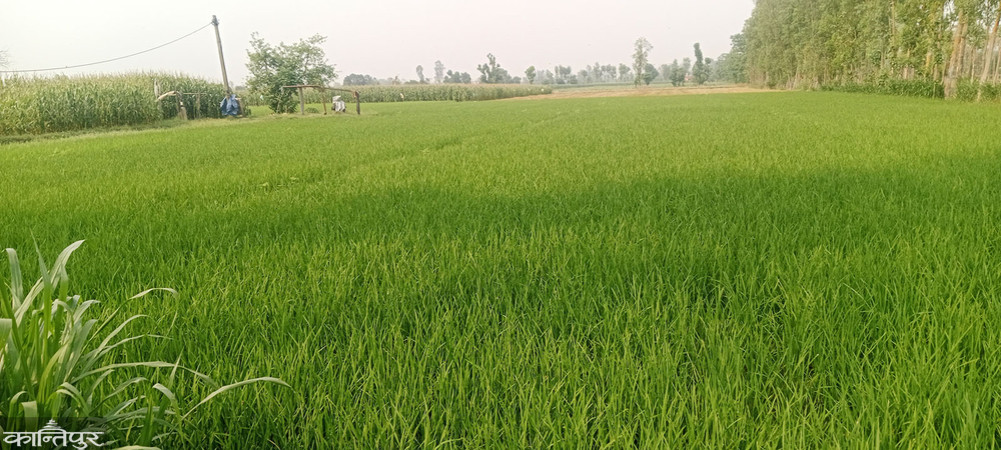
The land of Ishwar Budha of Punarwas Municipality-9 is in a deep area. Paddy and wheat cannot be planted as there is flooding in the dry season and wetlands in the winter as well. But this time he has planted paddy. He started cultivation of chaite paddy in about one bigha. Farming can now be done on that land where not a single crop can be grown. But if there is a lot of rain at the beginning of the rainy season, flooding may occur again.
"In the beginning, if it rains too much, the rice will not be brought in, the field will be flooded and rot," said the old man, "I have planted a little to see how it will turn out this time, if it is good, I will grow more next year." Planted in the second week of March. Now the paddy is sown well. Budha says that the situation can be satisfied now. Along with him, other farmers of the village have also planted chait paddy. Budha says that 5 katthas have been planted in one and a half bigha. Budha is also the president of the charity farmers group. More than half of the farmers in his group are involved in chaite paddy.
Tank Bahadur Tamang of Rehabilitation City-2 Rambasti has also planted chaite paddy in about one bigha . He has been doing chaite paddy farming regularly for four/five years. Tamang said, "The yield of dry rice is better than that of rain," said Tamang. A decade ago in Kanchanpur, chaite paddy was cultivated in an area of more than 400 hectares. Farmers stopped being attracted to it due to problems in importing and lack of market. Recently, farmers have been attracted towards this after the provincial government introduced various incentive programs from the local level.
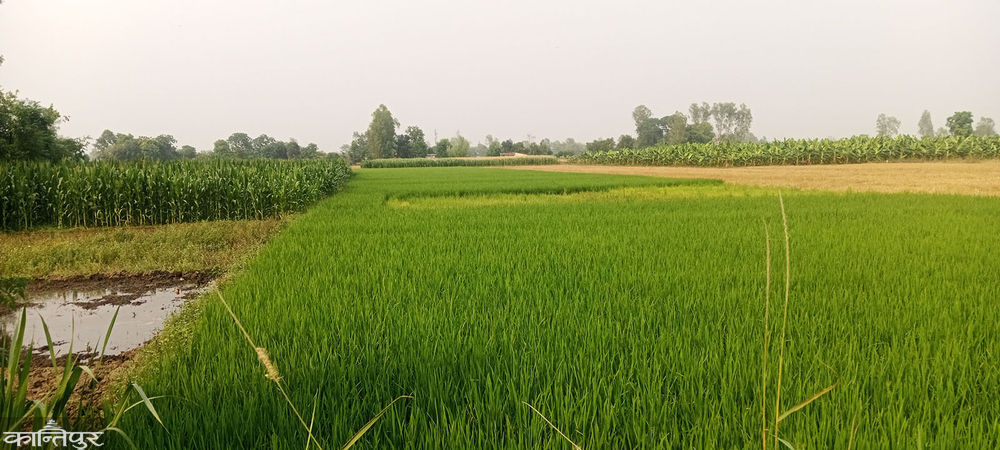
Currently, chaite rice is being cultivated in one and a half hundred hectares across the district, according to Dharma Saund, assistant crop development officer of Krishi Gyan Kendra Kanchanpur. According to him, Chaite paddy is being produced in huge quantities in Bhimdatta, Beldandi and Belauri areas along with Punarwas Municipality of the district.
Agricultural Knowledge Center has been supporting the farmers for seeds, fertilizers, irrigation and plowing equipment under the Chaite paddy promotion program. Saund says that subsidy programs are being conducted with the participation of farmers.
Lately, after the farmers are attracted towards Chaite rice again, if they can be supported in storage and marketing, Chaite rice production can be further increased . The productivity of chait paddy is now around 4 metric tons per hectare . According to Krishi Gyan Kendra, Barkhe paddy is cultivated on 48 thousand hectares in Kanchanpur.