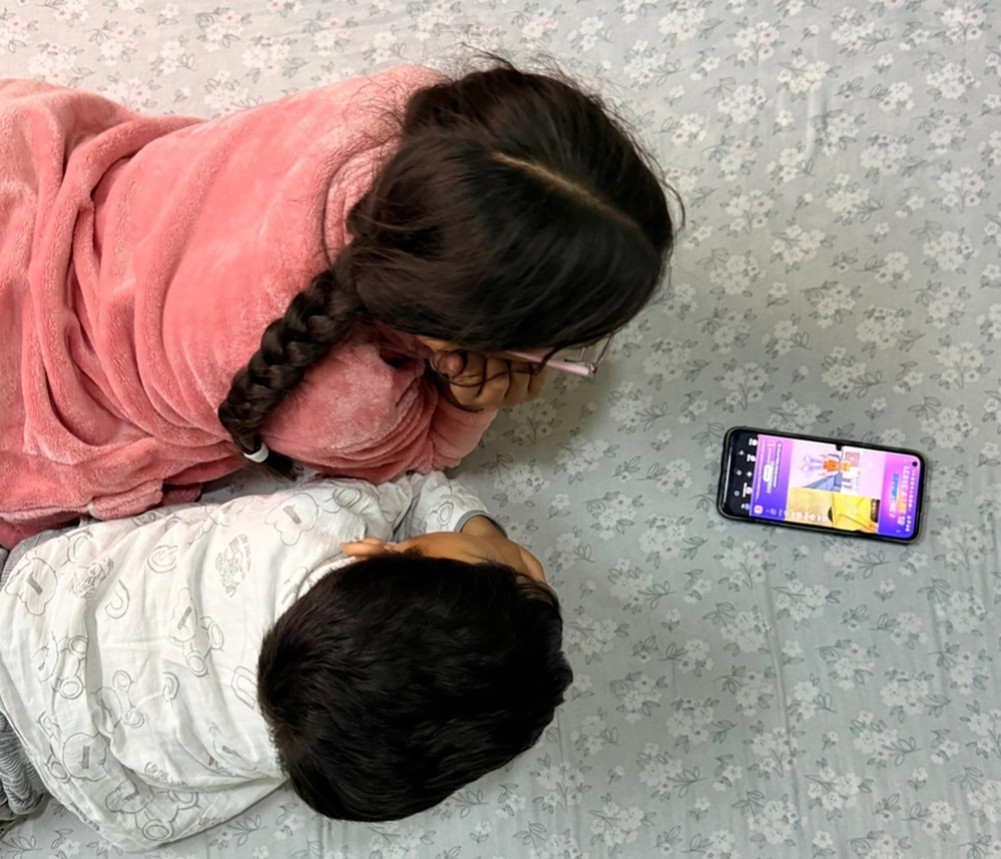
Criticizing the rapid pace of technology and our habits is not about being anti-tech. Rather, the question is – are we using technology for our convenience, or are technology’s algorithms controlling our interests, thoughts, patience, consciousness, and social values?
We use Google Cloud Translation Services. Google requires we provide the following disclaimer relating to use of this service:
This service may contain translations powered by Google. Google disclaims all warranties related to the translations, expressed or implied, including any warranties of accuracy, reliability, and any implied warranties of merchantability, fitness for a particular purpose, and noninfringement.
If you look at any busy public place, tea shop or household, you will see an interesting scene. People sitting together are not talking to each other, but are immersed in the bright screen in their own hands. This is a mirror of the transformation that has come to society's modern routine. How did the habit of looking at mobile phones from the moment we wake up in the morning to before going to bed at night develop, and where is it taking our consciousness, politics and social values?
Traditionally, routine in society used to provide people with a sense of mental security and social trust. Waking up in the morning and talking to neighbors, chatting with family while eating, or gathering in the courtyard in the evening were part of our social life. Such established routines provided people with a kind of existential security. This gave them the impression that the world was predictable and safe. But when digital technology entered the daily routine of society, old and vibrant relationships were transferred to the virtual world. Now the virtual world has become so 'normal' that it has started to determine our psychological stability. This normalization is the greatest success of technology and perhaps the biggest question mark.
With the rapid increase in access to the internet and smartphones, the crisis of digital addiction and mental health has become acute in society. A study conducted on school-going adolescents in urban areas of Nepal, recently published in the ‘BMJ Open Journal’, has revealed a frightening reality. According to the report, 51.1 percent of adolescents have been found to be addicted to the internet, of which 23.7 percent have moderate and 2.4 percent have severe conditions. Surprisingly, 83 percent of adolescents have their own smartphones and 66.5 percent of them spend more than 2 hours on the internet daily. Their main choices are entertainment (47.9 percent) and YouTube (46.5 percent).
The impact has extended not only to adolescents, but also to the early brains of children. According to a study conducted on children aged 5 to 9 in Pokhara and other areas of Nepal, published in the ‘Journal of Chitwan Medical College’, about 47.4 to 55.2 percent of children spend more than 2 hours on screens daily. Parents are increasingly giving their children mobile phones to entertain or feed them. As a result, 54 percent of Nepal's internet users suffer from depression, 56.7 percent from anxiety, and 45.3 percent from insomnia.
With this speed of time, a serious crisis has emerged in our attention and thinking skills. Today, the flood of short videos and 'reels' on social media is slowly wearing away our patience. Even those who were able to read an entire book or listen to a long dialogue in the past are now unable to watch even a few minutes of video patiently. The time it takes to brew tea or wait for a bus is not usually long, but the wait has become unbearable. We have started looking for instant gratification in everything, which is making our cognitive depth superficial.
Its most frightening and subtle form was recently seen in the examination halls of Madhesh Province, where students were caught with smartphones instead of books. This phenomenon is not just a distortion of the exam, but rather a product of the screen-culture that seeks ‘easy and instant’ results against the long and difficult processes of acquiring knowledge. When the young brain loses the patience to read, understand and memorize for months, then it is also falling into the suicidal refuge of artificial intelligence in the exam hall.
The same trend is also seen in the Parliament building, the highest place for making policies in the country. Our representatives have started depending on AI tools to prepare speeches, draft bills and policy debates. Reading speeches written by AI or summarizing complex government documents has started to be considered ‘efficiency’. Undoubtedly, AI makes work faster and more systematic, but when policymakers start writing laws in the language of AI, keeping their own ground reality, the mirror of society and human conscience in mind, then politics and governance are removed from the public consciousness. Because, AI can give words, but it cannot give the feeling of understanding the suffering and consciousness of society.
Today's challenge is not a lack of information, but rather the blurring of the line between truth and falsehood. A single misleading or distorted video can change the perception of a large section of society in an instant. Lacking both the patience and discretion to check what is true, people are more likely to believe 'viral' headlines on social media than official media. False information that stirs up emotions spreads quickly and creates an environment of distrust, fear and anger in society. A new economic dimension has been added to the change in digital habits - monetization. Facebook, YouTube and TikTok are no longer just places of entertainment, they have also become a means of self-employment and financial self-reliance for thousands of youth. This has directly connected hidden talents in rural and remote areas to the market. However, the other side of this is equally worrying. When 'views' and 'likes' become the only means of money and prestige, the social quality, academic value and dignity of the content presented are overshadowed. The trend of creating provocative, superficial and misleading content has developed and is happening in the race to earn more money.
Policy efforts have begun around the world to prevent digital addiction and its psychological impact on children. In this context, the UK has brought technology companies under the legal umbrella through its historic ‘Online Safety Act’. This policy has made social media companies legally responsible for preventing harmful content and addictive features from being shown to children through their algorithms. There is a strict provision for fines of a large part of the company’s earnings and even disciplinary action against executives if the rules are violated. Developing countries like Nepal also need to create a strong and autonomous digital safety policy like the UK’s to protect society from the mental stress, distorted examination system and fake news epidemic created by this rapid acceleration of technology.
Criticizing the rapid pace of technology and our habits is certainly not anti-technology. The main question is, are we using technology for our convenience or are technology algorithms controlling our interests, thoughts, patience, consciousness and social values? Technology should always be a helper to humans, not a controller. When mere digital images, AI language, and lifestyle branding replace real social discourse, then democracy, parliament, and society become weak. The personal awareness we show now, our critical approach to information, and the digital security policies that the state creates will determine the true nature of the mental and social lives of generations to come.