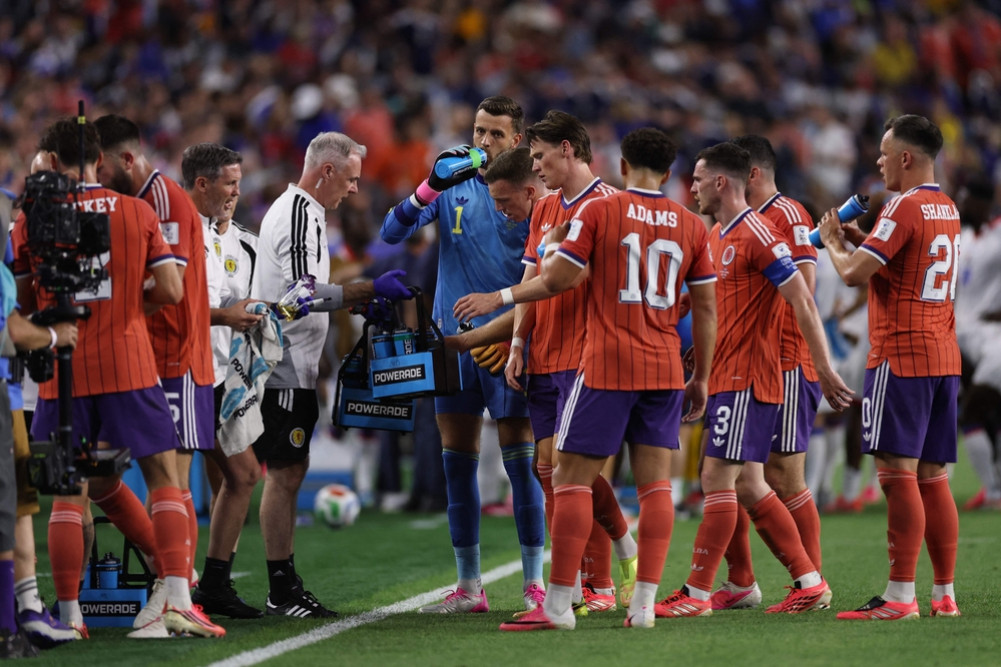
Three-minute hydration breaks in all 104 World Cup matches to avoid the scorching heat in Mexico, Canada, and the United States
We use Google Cloud Translation Services. Google requires we provide the following disclaimer relating to use of this service:
This service may contain translations powered by Google. Google disclaims all warranties related to the translations, expressed or implied, including any warranties of accuracy, reliability, and any implied warranties of merchantability, fitness for a particular purpose, and noninfringement.
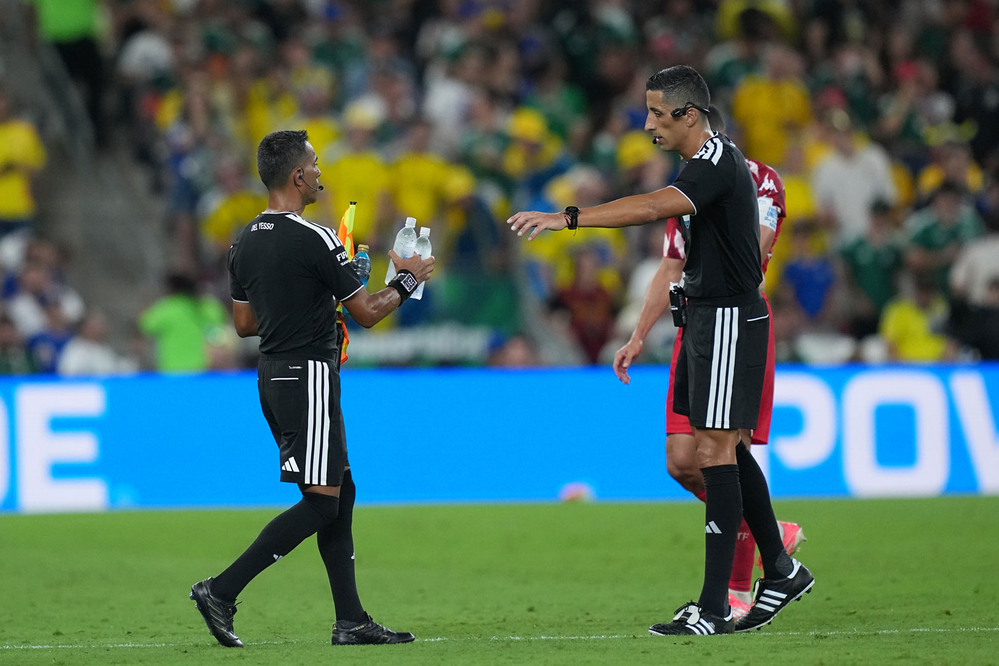
Now, we have all become accustomed to one scene from the 2026 World Cup. The referee will stop the game 22 minutes into each half. The purpose of this is to hydrate the players. Three-minute breaks have been made mandatory in all 104 matches of this World Cup. This rule has been introduced to avoid the scorching heat currently prevailing in Mexico, Canada and the United States.
But not everyone is happy with this rule. Many allege that this rule was introduced to please American broadcasters, because they were allowed to play advertisements during these two breaks. Now, ‘hydration breaks’ have been made mandatory even in games where the stadium has a roof or the weather itself is under control. One of the co-organizers, the US coach Mauricio Pochettino, is also not happy with this rule.
He says, ‘I don’t like it. This rule is only necessary when the situation is really out of control. I think the situation is in our favor right now, so this rule is not necessary.’ So, who has this rule benefited and who has it harmed? How much does this rule affect the game itself?

Rule that ruins the rhythm
‘Hydration break? For me, this is a rule that only ruins the rhythm of the game,’ some have said. For example, in Saturday’s match at the New York Stadium in New Jersey, Brazil was trailing by one goal and that’s when this rule was implemented. At that time, Morocco was leading 1-0. The game had restarted, and less than 6 minutes had passed, Brazil managed to equalize.
Of course, Vinicius Junior’s goal for Brazil was excellent in itself. For this, he moved the ball forward in an attractive way and hit the top corner of the post. But Brazilian coach Carlo Ancelotti himself admitted that after the game was stopped, he was able to give the necessary instructions to his players. This is why Brazil’s game changed. Morocco played well in that game.
The five-time champion team was able to take advantage of the situation. After the game, he said, ‘The coach can give the necessary instructions to his players during such a break, saying that improvement is needed here. During this break, the strategy can also be changed and it can be taken full advantage of.’ If the function of this rule is to keep the players ‘hydrated’, can the coach give instructions at this time or not?
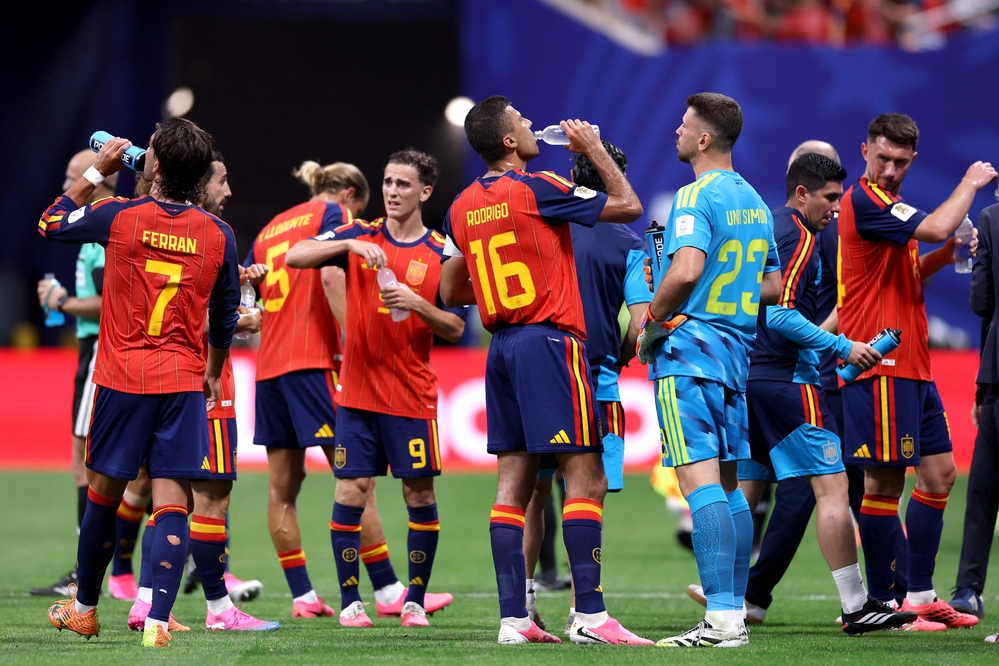
Emma Hayes, the coach of the US women's team, said, this rule has worked to ruin the rhythm of the game. The team that is not playing well in the game can benefit from this rule. So I think it ruins the pace of the game. When a team is playing well, this rule is not right for them. But a team that is playing badly may like this rule.’
She added, ‘Sometimes the coach does not even have time to give instructions to the players. The players drink something and try to calm themselves down. Sometimes this rule does not work. But the coach has the opportunity to take advantage of it. It's not good. It might make sense in some very hot places, but it doesn't work in other places.'
It's not just Brazil, but also co-host Canada, who have taken advantage of this rule to score an equaliser. Substitute Kelly Larin equalised in Friday's match against Bosnia and Herzegovina. Scotland's only goal against Haiti came after a similar break. And the first goal in Australia's 2-0 win over Turkey also came after a break.
Juan Mata, who won the World Cup with Spain in 2010, says that if he were a player, he wouldn't have liked the three-minute break. "It's not good for a player in any situation. When the team is losing, you want to score. When a team is winning, they play with more control over the ball, but this break spoils the rhythm.'
If this rule is for advertising, then perhaps there is another way. It is not only for the players, but also for the spectators. These spectators are paying thousands of dollars to watch the game, but the game that is progressing with pleasure is stopped in the middle. In the match held on Sunday in Houston, Curacao was holding Germany to a 1-1 draw, and it was a promising situation for the debuting team.
However, the smallest country to play in the World Cup due to both population and area was defeated badly 7-1 since the start of the game. Taking advantage of the break from the draw, Germany managed to take control of the game. The Czech Republic was also dominating against South Korea until the break. But when the break rule was implemented, this team was unable to accelerate the game in the same way since the start of the game.
In the next match on Sunday, the Netherlands was leading 2-1 against Japan. But after the second half break, the game finally ended in a 2-2 draw. So far, there have been very few games in the World Cup, so this rule cannot be said to be bad. As the tournament progresses, both its good and bad sides will come to the fore.

Former Arsenal and England forward Ian Wright has a slightly different view. He says, ‘From an American perspective, it is necessary to show advertising. What the organizers must also feel is that this rule is for the players, it only benefits us.’ He also believes that this rule will bring positive changes in football.
Spanish coach Luis de La said, ‘For me, the biggest issue in football is the health of the players. This rule is needed for the well-being of the players. In the week since we came to America, we have seen extreme heat. It is not good for any player to play in such conditions continuously. In hot conditions, players need enough water. "I need a break for a few seconds."