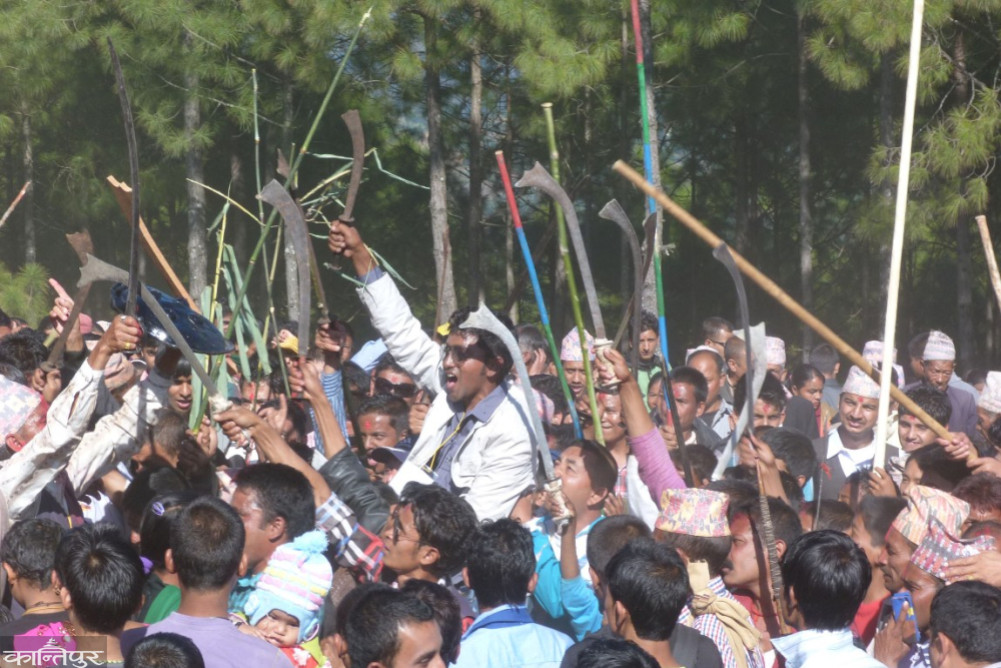
Disappearing in the younger generation, Sarai dance of the mountains is also falling into the Terai along with the migration
We use Google Cloud Translation Services. Google requires we provide the following disclaimer relating to use of this service:
This service may contain translations powered by Google. Google disclaims all warranties related to the translations, expressed or implied, including any warranties of accuracy, reliability, and any implied warranties of merchantability, fitness for a particular purpose, and noninfringement.
Sarai Nach, where weapons are danced and danced in various Kotghars and Shaktipeeths of Devi in the hilly districts of Lumbini Province, Gulmi, Arghakhanchi, Pyuthan and Palpa, has started.
Sarai dance is of special importance along with Dasain in the historic Kotghar, Durga and Kalika temples of this region.
Sarai dance is performed in these districts from the day after Dasain Tika to the full moon. Sarai is danced using household weapons such as sticks, spears, swords, and shields to give the impression of war. It is believed that after the victory of Satya in the battle with Rakshasa, the priest of Satya started dancing Sarai with display of weapons in kots and temples as a victory festival.
Sarai dance has a special importance and the history of victory festival, said Yama Bahadur Thapa, chairman of Chandrakot Temple Management Committee of Gulmi.
There is a tradition of celebrating Dasain by dancing Sarai on the Kojagrat Purnima day of Dasain from the time when the 22nd and 24th kings lived in Chandrakot temple. 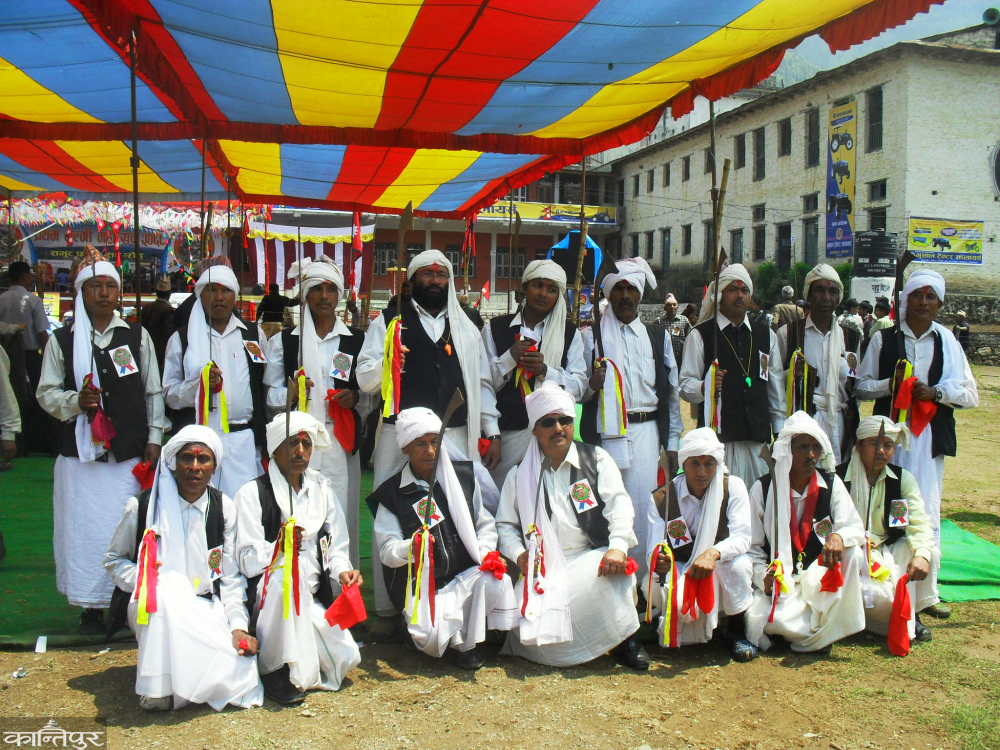
'There is a legend that the dance started to be shown to the king during the Dasain farewell because the first kings liked war,' he said It's scary when you don't dance.
The importance of Sarai dance is connected with the naming of places like Musikot, Ismakot, Dhurkot, Purkot, Chandrakot, Mankot, Chhatrakot, Arjaikot. Sarai is danced differently depending on the place.
In the temples and monasteries of Tamghas, dancing is done to the rhythm of Panchebaza, and after sacrificing animals, after sacrificing animals, they take their heads in their hands and dance to the tune of 'Vakhyai Ha', and on the day of Ghatasthapana, they throw away the jamara and Dasain tikkas kept at home in rivers and ponds. "Today's youth have no knowledge of Sarai's bhakha and words," said 71-year-old Nurdev Paiyani of Ismarjasthal, "Old people can't, young people don't, now the history of Sarai is disappearing."
Sarai Nach is the famous Sarai Nach of this region which is held in Kots, Argha and Bhandarthum in the eastern region of Arghakhanchi along with Gulmi. On the full moon day, a big fair of Sarai dancing takes place in Argha and Bhandarthum.
In the same way, people who have migrated from Gulmi, Arghakhanchi and other districts also dance Sarai in Butwal right after Dasain Tika. In Butwal, Chhetri society has been performing Sarai dance every year. Similarly, to explain the importance of Sarai dance and to preserve its history, Pauwa Hotel in Butwal also performs Sarai dance every year. 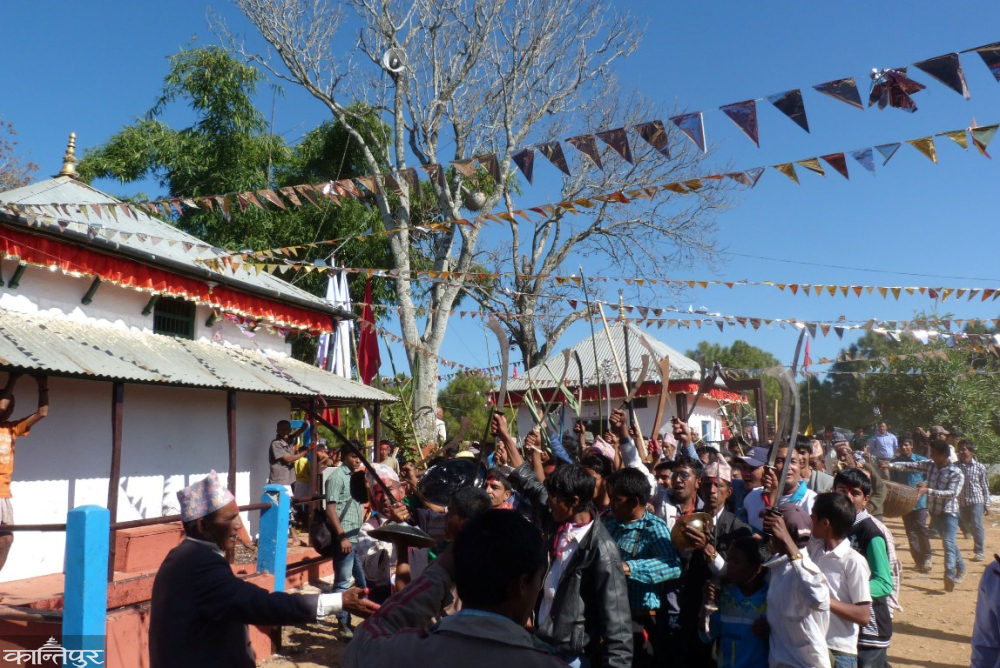
Bishnuprasad Bhandari, culture preservation campaigner, said that this dance, which was celebrated earlier in the hilly districts, has now started in the Terai districts as well. "Sarai dance, which has a history in the hill districts, has now come down to the Terai as well," he said , there were Bhuretakure kings in Gulmi, Arghakhanchi and Pyuthan. That district was considered as a historical and cultural state. Even at that time, it was customary to show Sarai dances to the kings on Shaktipeeths, Kots and temples during Vijayadashami.
Legend has it that after the victory of the gods and goddesses over the giants and demons, dancing started with the weapons used in the war. On the day of Saptami, alam (image of God) is taken out in the temple or kot after the flowers are brought inside. Alam decorated with different colored flags is placed outside the temple as a symbol of God, and daily puja is performed.
This ritual may have started especially for the protection of valuable statues and weapons. Sarai dance is also an entertaining dance performed in some parts of western Nepal especially during Dasain.
It is danced in various kots and shaktipiths like Gulmi, Arghakhanchi, Palpa, Kapilvastu, Rupandehi, Pyuthan, Dang. This dance is danced from Ekadashi to Purnima. This dance is mostly danced in hilly settlements. Sarai dance is performed by connecting Khukuri sword and Khuda Nachai, which are offered to the temple along with Panchebaja.
Where is Sarai Naach danced
Arghakhanchi and Dhungechourkot on Triodashi day, Uluk Chhatra and Arghatos Kot on Dasain day, Baigaon and Kamlechowrkot on Dwadashi day, Gulmi's Unayachourkot on Chaturdashi day, Bhandarthum, Dhurkot, Chandrakot, Ishmakot, Musikot, Arjai, Amarpur, In Naigaon, Dhagithum and Jogithumkot Sarai dance is performed on the full moon day. Similarly, in Dalle of Pyuthan Bijuwar, there is a tradition of Sarai dancing on the Panchami day after Tihar.
is played in areas such as Bijjikot, Okharkot, Bhinikot and Vijuwar until Dalle Sarai Tihar in Pyuthan. In Palpa, it is played in Muzungkot, Khyaha, Gokhunga Rainadevi, Kusumkhola, Baldengadhi area, Rambhadevi, Mathagadi. Rajendra Prasad Acharya, a Sanskrit scholar of this region, said that Baglung and Parvat, Syangja are now disappearing.