The report calls the Gen-G rebellion a collective expression of long-suppressed public anger, discontent, and aspirations for change.
We use Google Cloud Translation Services. Google requires we provide the following disclaimer relating to use of this service:
This service may contain translations powered by Google. Google disclaims all warranties related to the translations, expressed or implied, including any warranties of accuracy, reliability, and any implied warranties of merchantability, fitness for a particular purpose, and noninfringement.
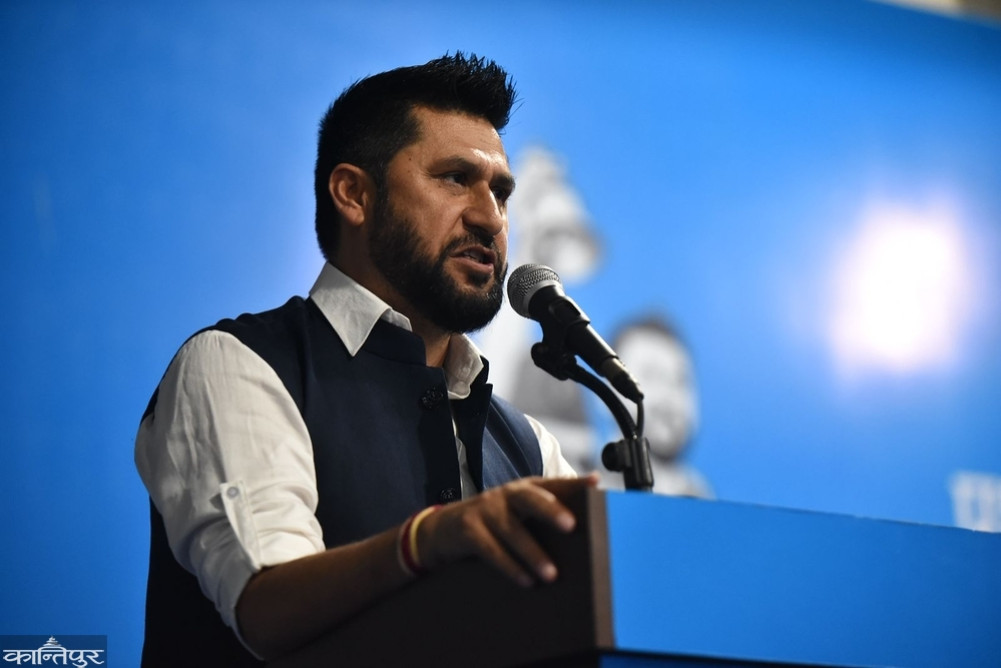
The political report presented by Rashtriya Swayamsevak Sangh (RSS) President Ravi Lamichhane at the general convention also mentions the Gen-G rebellion. The report calls this rebellion not just a general dissatisfaction but a people's explosion in the murky waters of inequality, corruption, impunity and distrust that have been simmering for years. The
report calls the Gen-G rebellion a collective expression of long-suppressed public anger, dissatisfaction and aspirations for change. It is written, 'A trigger point that immediately exploded the long-standing dissatisfaction was the ban imposed by the Oli government on social media. After the killing of youths in the protest on the 23rd, the people's anger manifested itself in destruction never seen in history.' The
report states that the political structure has long failed to build stability, good governance and public trust, 'Decades of governance-systemic weaknesses, corruption, inequality and lack of opportunities demanded an organized response sooner or later. However, no one expected such a large-scale destruction.’ The report also mentions that corruption has become a structural problem, not an individual one. It says, ‘Lack of opportunities, imbalance between education and labor, unemployment, and emigration had already developed a psychology among the youth that they had no future in the country. On the one hand, there was a conflict between political instability and power-centered culture, and on the other, the information age and expansion of consciousness. The digital generation, which has started comparing itself with the world, wanted transparent governance, accountable leadership, equal access to opportunities, a corruption-free state structure, policy stability, and result-oriented development. But KP Oli’s government had nothing to do with this reality.’
It is mentioned that the government of two-thirds did not care about the people’s discontent and worked to lower the people’s consciousness. It says, ‘The people’s anger accumulated over decades due to the lack of stable policies and accountable leadership, governance incompetence, corruption, and impunity has increased exponentially due to the misrule of the Oli government.’