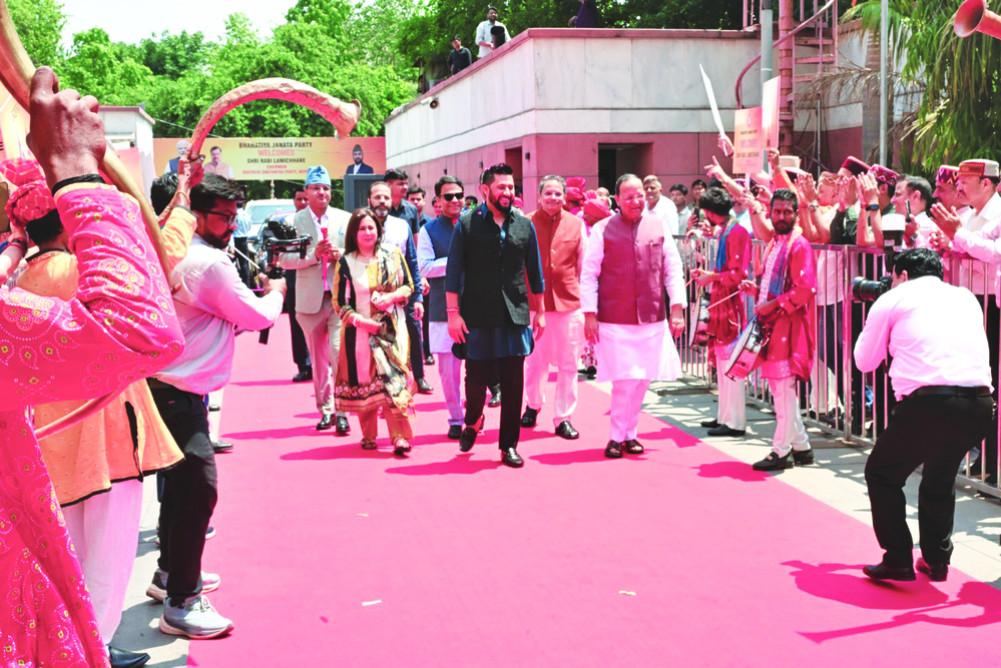
According to experts in Nepal affairs in Delhi, through Lamichhane's visit, India has sent a message to Prime Minister Shah that it has various options and channels for dialogue with Nepali leaders.
We use Google Cloud Translation Services. Google requires we provide the following disclaimer relating to use of this service:
This service may contain translations powered by Google. Google disclaims all warranties related to the translations, expressed or implied, including any warranties of accuracy, reliability, and any implied warranties of merchantability, fitness for a particular purpose, and noninfringement.
The high-level honor given to Rashtriya Swatantra Party (RSWP) President Ravi Lamichhane in Delhi has stirred up diplomatic and political circles in Kathmandu. Lamichhane returned home on Friday after completing a five-day visit to India.
But judging by the signals coming from Delhi, it does not seem that the Indian government will stop its contact and cooperation with the new RSWP-led government. Meanwhile, Foreign Minister Shishir Khanal left for Delhi on Friday for an official visit at the invitation of his counterpart S Jaishankar. It is expected that some agreements and understandings will be reached between the two sides during Khanal's visit. However, discussions on these issues are still ongoing between high-ranking officials of both sides.
According to information given to Kantipur by diplomatic sources in Kathmandu and Delhi, Delhi is also eager to welcome Finance Minister Swarnim Wagle within June.
In this way, Delhi wants to connect not only with the Rashtriya Swayamsevak Sangh (RSS) but also with the Shah government, which is stuck in the 'protocol' of not meeting foreign ambassadors. A Nepali diplomat who has worked at the Nepali Embassy in Delhi says that it is Delhi's tradition to be ready for contact and cooperation whenever a new political leadership comes to Kathmandu.
Whether it is the rise of the Maoists after the Constituent Assembly elections or later, when the CPN-UML and CPN (Maoist Centre) merged to form the Nepal Communist Party in 2018, India was the first country to react and announce cooperation. After the joint front of the UML and the Maoist Centre won the elections in 2018, the then Indian External Affairs Minister Sushma Swaraj came to Kathmandu to advance dialogue and cooperation with the newly formed KP Oli government.
This time, after decades, a powerful government was formed in Kathmandu, New Delhi welcomed Lamichhane and accorded him the respect and treatment of any visiting prime minister. But the reasons behind this honor and grand welcome given to Lamichhane have given rise to many interpretations and speculations regarding the internal dynamics of the RSP, the relationship between Prime Minister Shah and Lamichhane, the Prime Minister's self-proclaimed restriction on maintaining diplomatic etiquette, his statements in Parliament on the border dispute, and Shah's refusal to meet Indian Foreign Secretary Vikram Misri. There is also an analysis that this was done to increase pressure on Shah, so that he would be forced to look south (India) for various partnerships.
 Amidst these widespread speculations and rumors, Lamichhane visited Delhi instead of Shah and received an unforgettable and rare welcome in New Delhi, which is rare for any Nepali leader.
Indians always want to play inside Nepal’s party politics. And, it should be understood that Delhi always looks after its own interests and interests. So Ravi should also be careful while dealing with Indians: Former Nepali ambassador to India Deep Kumar Upadhyay When Lamichhane was about to enter the premises of the Bharatiya Janata Party (BJP) headquarters on Pandit Deendayal Upadhyay Marg on Tuesday, he was given a grand welcome with a ‘shower of flowers’ and was welcomed by BJP national president Nitin Naveen and other senior BJP leaders. They then took Lamichhane, his wife Nikita Poudel Lamichhane and two Rashtriya Swayamsevak Sangh (RSS) MPs Bipin Acharya and Deepak Bohra on a tour of the headquarters.
It was a very rare moment when the BJP welcomed foreign leaders in such a grand manner at its headquarters, an Indian journalist who was closely following Lamichhane’s visit to Delhi told The Post. The honour accorded to him by the government is also a rare occurrence.
‘He is only the chairman of the ruling party, not the Prime Minister of Nepal. But the high honour accorded to him by the government, breaking all traditional frameworks and diplomatic protocols, is rare and quite surprising. It shows that the BJP and the Indian government want to work together with this new powerful government at a time when there is a strong government in Kathmandu and chart a new course for bilateral relations.’
They discussed promoting party-to-party relations between the Rashtriya Swayamsevak Sangh (RSS) and the BJP and decided to open up more areas of cooperation between the two parties.
On Tuesday evening, BJP’s foreign affairs chief Vijay Chauthaiwale hosted a dinner for Lamichhane and the visiting RSS delegation, where influential BJP leaders and some former diplomats were present.
Another surprise was Lamichhane's meeting with Home Minister Amit Shah and External Affairs Minister S Jaishankar. The meeting between Indian Home Minister Shah and Lamichhane, who rarely meets foreign leaders, is considered very meaningful. 'It is a big exception for the Home Minister (Shah) to meet a foreign leader (Lamichhane),' Suhasini Haider, diplomatic editor of Indian news organization 'The Hindu', wrote on social media X.
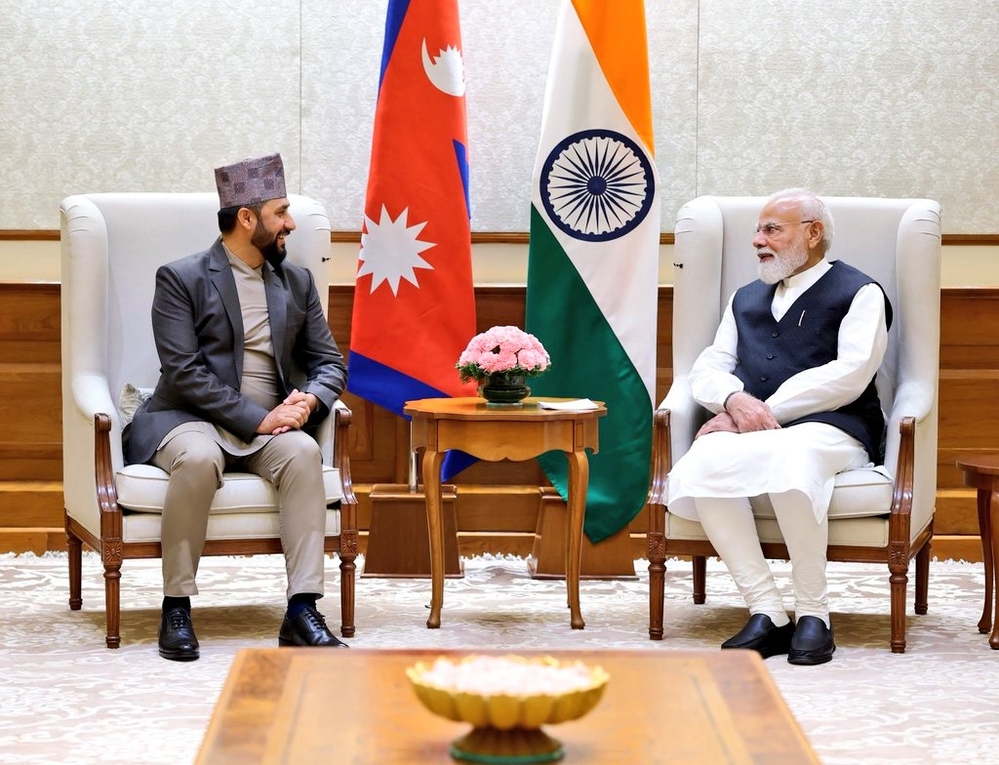
Lamichhane, a team including the RSP delegation and Surendra Thapa, acting ambassador of the Nepali Embassy in Delhi, held talks with Indian Prime Minister Narendra Modi for more than an hour on Wednesday. The meeting discussed the new roadmap for Nepal-India relations, the development diplomacy put forward by the RSP, India's partnership and cooperation in Nepal's priorities, and high-level visits and exchanges to be held in the coming days. Lamichhane also extended an invitation to Modi to visit Nepal. Modi replied that he would come to Nepal at an appropriate time.
Haider had written in X before the meeting with Modi, ‘The Prime Minister is expected to meet (Lamichhane) today.’ She further commented, ‘Interestingly, after Nepali Prime Minister Balendra Shah’s strong statement and refusal to meet Foreign Secretary Misri, Delhi has rolled out the red carpet for his party chief.’
The recent developments between Kathmandu and Delhi indicate that bilateral relations are entering a phase of uncertainty. Among these developments, the lack of a meeting between Prime Minister Shah and Indian Ambassador to Nepal Naveen Srivastava and Shah’s refusal to meet Indian Foreign Secretary Vikram Misri citing ‘protocol’ reasons have added to the uncertainty in bilateral relations. On top of that, the Nepal-India border dispute that has surfaced and Prime Minister Shah’s statement that he encroached on Indian land given in the House of Representatives last Sunday have further complicated the situation.
Meanwhile, the government's approach to the British embassy to seek documents, maps and other evidence from the British Indian period to resolve the long-standing dispute over Kalapani, Limpiyadhura and Lipulekh appears to have pushed Nepal-India relations into further uncertainty.
The welcome and meeting Lamichhane received from the BJP and the Indian government is rare for high-level South Asian leaders. In two days, Lamichhane met top Indian officials such as Modi, Shah, Jaishankar, Doval and BJP national president Nitin Naveen.
The meeting and atmosphere with Modi resembled a formal government delegation meeting. Modi was accompanied by Jaishankar, National Security Advisor Ajit Doval, Foreign Secretary Misri and other officials. Lamichhane, his wife Nikita, two Rashtriya Swayamsevak Sangh (RSS) MPs Acharya and Bohra and acting Nepali ambassador Thapa were present from Nepal. Lamichhane and Modi stood and talked after the meeting. In that scene, they seemed to have known each other for years.
“We should not think only about the rare reception he received in Delhi because many other leaders also had the opportunity to meet Modi,” said Deep Kumar Upadhyay, former Nepali ambassador to India.
Upadhyay commented that the government made a mistake by not taking ownership of Ravi’s visit. “The government has already made a mistake by not taking ownership of the visit. But, a minister should have been taken along to formalize the visit,” Upadhyay said. “The government should declare Ravi as a special envoy, only then will the understanding with the Indian leadership take shape.” If the government does not take ownership, the agreements made in Delhi have no meaning.'
Talking to journalists a few days ago, government spokesperson Sasmit Pokharel expressed ignorance about Lamichhane's visit to India and commented that the visit was purely personal. There has been no official response from the government even after the visit.
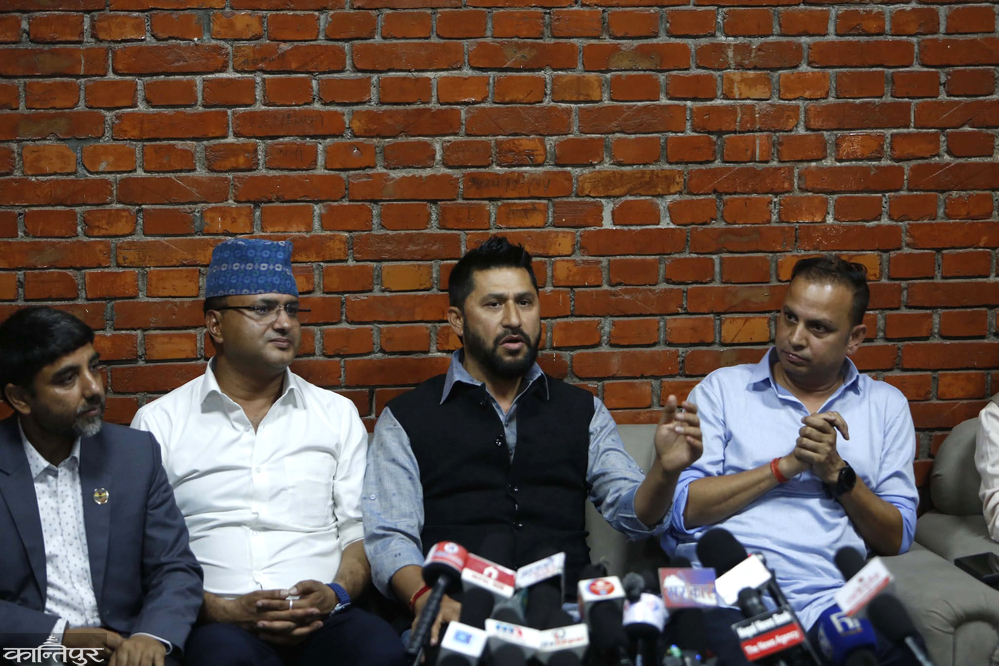 The priorities of the Nepal government were discussed in the meeting between Lamichhane and Modi. Modi had made it clear that India is ready to support Nepal once it sets its priorities. In this context, Foreign Minister Khanal left for Delhi on Friday after doing some initial homework on Nepal's part.
Former Nepali Ambassador Upadhyay is well aware of how Delhi manipulates Nepal's internal politics. Which is not a new issue for Kathmandu either. 'Indians always want to play within Nepal's party politics. And, Delhi should always look after its own interests and interests,’ said former ambassador Upadhyay, ‘so Ravi should also be careful when dealing with Indians.’
But according to Indian analysts who are closely monitoring Nepal’s political developments, Lamichhane’s visit has given a clear message to Prime Minister Shah about how close the bilateral relations are and that it has many options and channels to communicate with Nepali leaders.
‘The fact that the Rashtriya Swayamsevak Sangh (RSS) has said that it does not have old burdens has also helped open new dimensions of the relationship.’ Lamichhane’s visit is also a message to Prime Minister Shah, who ignored the Indian invitation. It is also a message to the Gen-G generation that India is with them.’