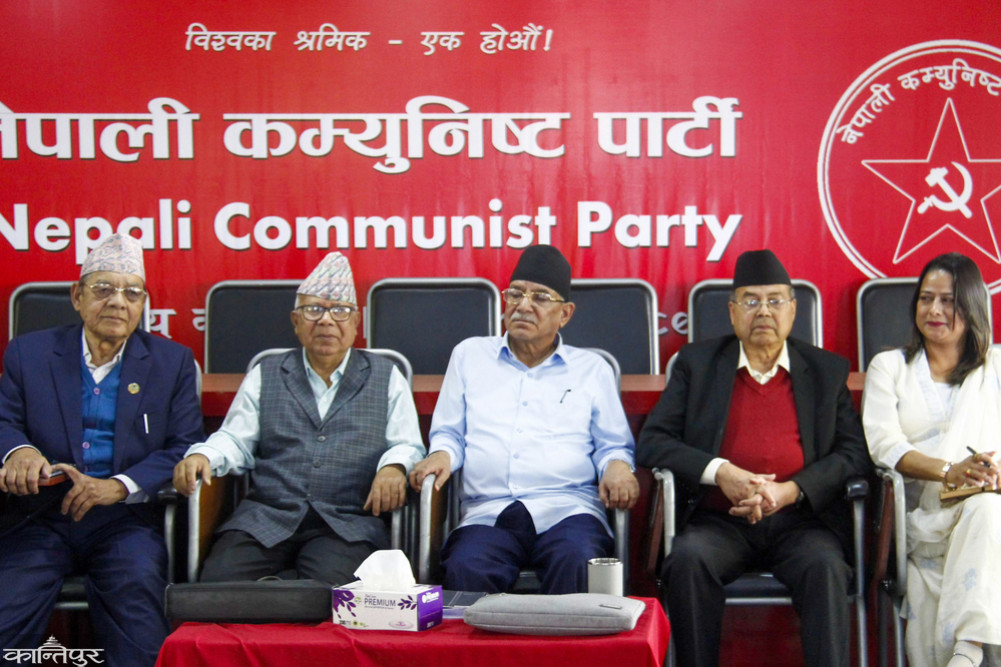
The NCP also claims that the statement made from the rostrum of Parliament that Nepal has occupied Indian land is against the spirit of the Constitution.
We use Google Cloud Translation Services. Google requires we provide the following disclaimer relating to use of this service:
This service may contain translations powered by Google. Google disclaims all warranties related to the translations, expressed or implied, including any warranties of accuracy, reliability, and any implied warranties of merchantability, fitness for a particular purpose, and noninfringement.
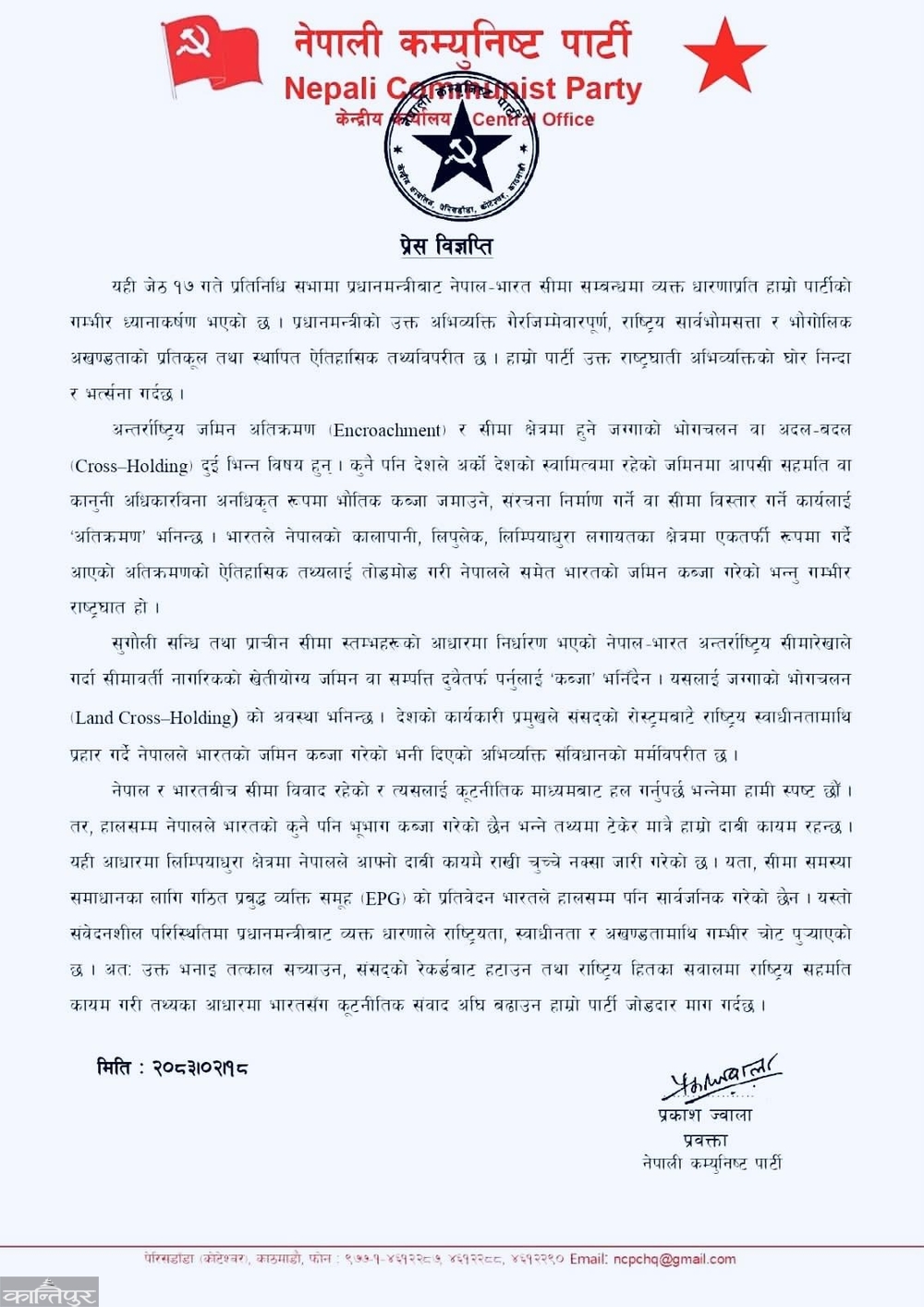
The Nepal Communist Party (NCP) has condemned the Prime Minister's statement on the Nepal-India border in the House of Representatives, calling it irresponsible, contrary to national sovereignty and geographical integrity, and contrary to established historical facts.
On Sunday, party spokesperson Prakash Jwala issued a press release stating that encroachment on the international border and cross-holding of land in the border area are two different issues.
'It is a serious treason to say that Nepal has also occupied Indian land by violating the historical fact of India's unilateral encroachment in Nepal's Kalapani, Lipulekh, Limpiyadhura and other areas,' the statement said.
The party has argued that the land of bordering citizens falling on both sides cannot be called occupation due to the border line determined on the basis of the Sugauli Treaty and the ancient boundary pillars. The NCP also claims that the statement made from the rostrum of the parliament that Nepal has occupied Indian land is against the spirit of the constitution.
The statement stated that the party is clear that there is a border dispute between Nepal and India and that it should be resolved through diplomatic means, adding, "Our claim remains valid only based on the fact that Nepal has not occupied any territory of India so far."
The NCP has demanded that the government immediately correct the Prime Minister's statement, remove it from the parliament's records, and move forward with diplomatic dialogue with India based on facts by establishing a national consensus on issues of national interest.