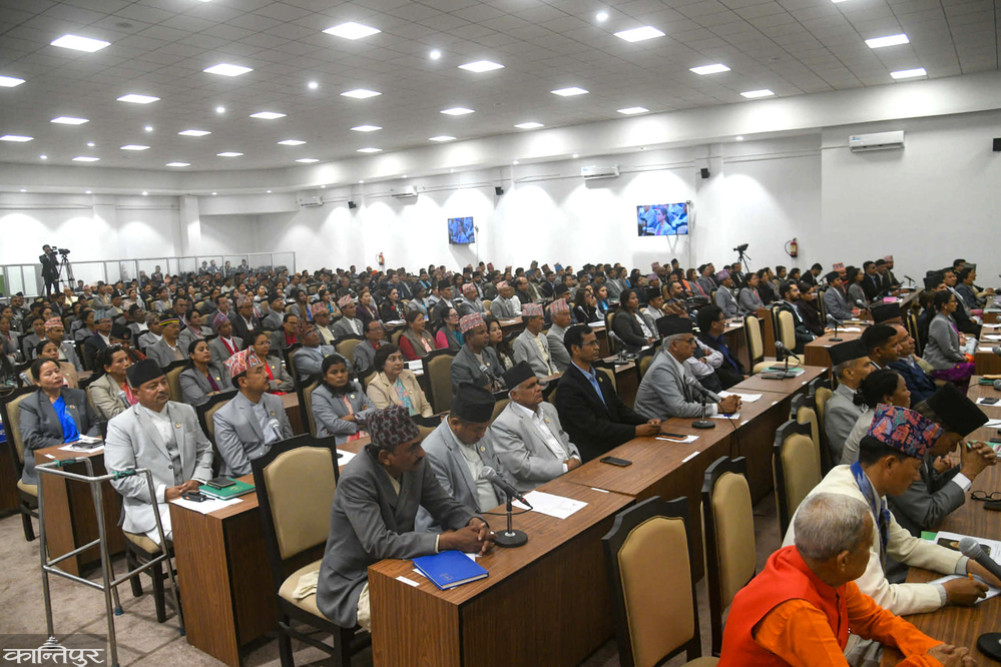
Legal experts say that the draft regulations may have a provision that will be applied like a special law to prevent the suspension of the MP position of Rashtriya Swayamsevak Sangh (RSS) President Ravi Lamichhane, who is facing a money laundering case.
We use Google Cloud Translation Services. Google requires we provide the following disclaimer relating to use of this service:
This service may contain translations powered by Google. Google disclaims all warranties related to the translations, expressed or implied, including any warranties of accuracy, reliability, and any implied warranties of merchantability, fitness for a particular purpose, and noninfringement.
Legal experts and drafters of previous regulations have criticized the provision of 'applicable as a special law' in the draft regulations of the House of Representatives. They have responded that the regulations are being drafted in a way that is above federal law.
Rule 259 (1) of the proposed regulations, which was submitted to Speaker Dol Prasad Aryal by the drafting committee formed under the leadership of Rashtriya Swayamsevak Sangh (RSS) MP Ganesh Parajuli on Tuesday, states that 'notwithstanding anything written in the prevailing law, these regulations shall remain as a federal law and shall be applicable as a special law in the case of the House, committees and members.' Sub-rule 2 proposes a provision that 'this regulation shall remain as a privilege of members of the House of Representatives'. Such a provision did not exist before.
Legal experts say that the provision of 'applicable as a special law' may have been included in the draft regulations to avoid the suspension of the MP post of Rashtriya Swayamsevak Sangh (RSS) President Ravi Lamichhane, who is facing a case for money laundering. Lamichhane's MP post was suspended in the previous House of Representatives after a case was filed for money laundering along with organized fraud. The then Speaker Devraj Ghimire had posted a notice of suspension on 8 Poush 2081, citing the Money Laundering Prevention Act, 2064.
The House of Representatives Rules did not prohibit MPs from participating in meetings when they were not in detention. However, Section (27) of the Money Laundering Prevention Act, 2064 states that 'If any official or employee of a corporate body established under the prevailing law or any public servant is in detention under this Act, such employee, official or public servant shall be automatically considered suspended for the duration of such detention and if a case is filed against him under Section 22, until the case is disposed of.'
After Lamichhane was re-elected in the House of Representatives election on 21 Falgun, the question arose whether he would be suspended or not. Even though a writ petition was filed demanding suspension, the Supreme Court had dismissed the case. Legal experts argue that Lamichhane's MP post will be automatically suspended under the Money Laundering Act. According to them, special law means a separate law made to deal with a special situation rather than a general law.
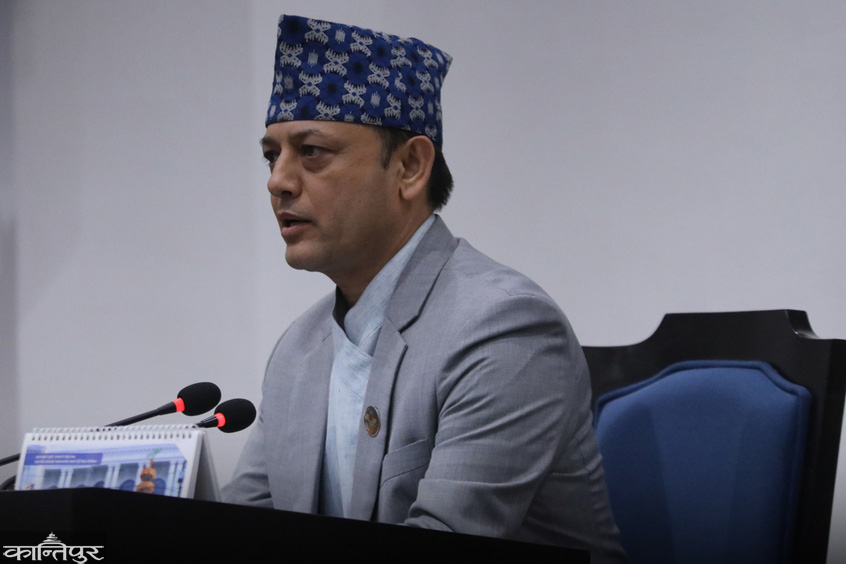 After Lamichhane was suspended in the previous House of Representatives, the Rashtriya Swayamsevak Sangh (RSS) had demanded that a separate provision of the House of Representatives Rules be implemented for MPs. This time, after gaining a majority, the RSP has proposed a provision in the rules that is favorable to Speaker Lamichhane. Now, legal experts say that if someone requests information about an MP under the Right to Information Act, they will be able to show this rule and say that they are not obligated to provide information.
The draft rules will take final shape after being passed by the House of Representatives. Since the RSP has a majority in the House of Representatives, the draft is likely to be passed easily. If passed, the way to suspend Speaker Lamichhane based on the Money Laundering Act will be closed. The House of Representatives regulations provide for suspension of MPs only while in custody. Lamichhane has been released on bail from all courts.
Radheshyam Adhikari, a senior advocate and a member of the task force that drafted the House of Representatives regulations in 2075 and 2079, says that regulations should not be above federal law. ‘Regulations cannot be made above prevailing federal laws,’ he said.
Dev Gurung, who was the coordinator of the House of Representatives regulations drafting committee in 2079, also said that such a provision should not be made in the regulations. ‘This is different from other regulations. Since it is passed by the House of Representatives, it is like a law, but it is not above criminal acts including money laundering,’ he said. ‘In cases where criminal and civil laws are applicable, the regulations cannot be stopped by showing them. It applies only to activities within the parliament.’
Gurung argued that in cases where a person in a public position is subject to suspension under any law, the suspension can be carried out by informing the Speaker or by publishing a notice by the Parliament Secretariat.
Senior advocate Laxman Lal Karna said that there are things that do not need to be written in the regulations. ‘It would have been better if it had not been written. It cannot stop what is said to be done as per the provisions of the law,’ he said, ‘Even though the regulations are called regulations, they are like laws. But they are not above other federal laws.’ Ganesh Parajuli, coordinator of the regulations drafting committee, claimed that the rules were unanimously made after discussions in the working group. He said that he would not comment on other matters.
UML had different opinions on some provisions of the regulations in the working group. Ain Bahadur Mahar, a member of the UML, informed that they had also submitted a supplementary proposal to have an ‘Opposition Day’ one day a week. He also said that they had proposed not to obstruct the regulations.
According to Mahar, UML had demanded some changes in Article 20. Article 20 mentions secret meetings of the assembly. It has been proposed that ‘if the Prime Minister requests that a discussion on any issue related to national security and national crisis be held in a secret meeting, and if the Speaker finds such a request reasonable, he may decide to hold the discussion on that issue in a secret meeting.’ In this, the UML had proposed that only Nepali citizens who have citizenship by descent should be allowed to participate.