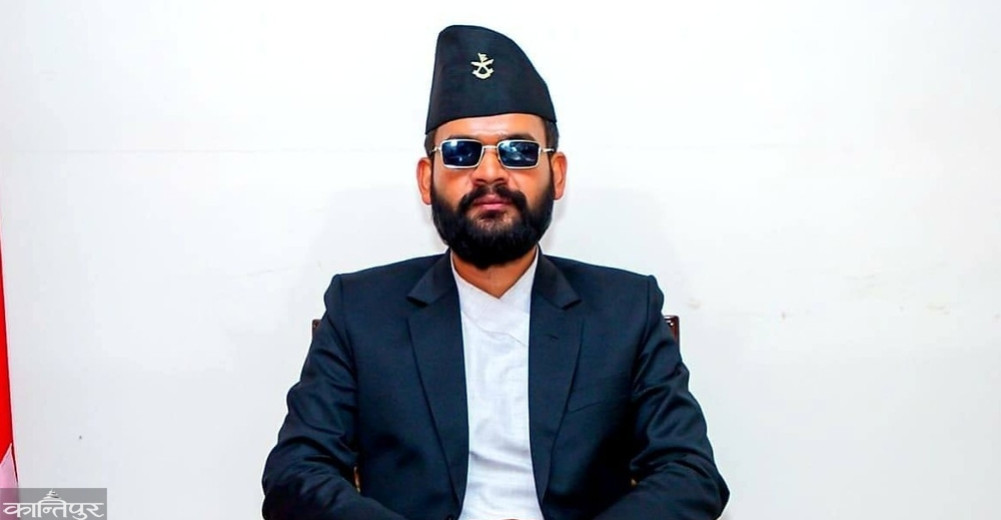
The new government led by senior Rashtriya Swayamsevak Sangh (RSS) leader Balendra Shah may have to make decisions regarding millions of Nepalis amid ongoing tensions in West Asia.
We use Google Cloud Translation Services. Google requires we provide the following disclaimer relating to use of this service:
This service may contain translations powered by Google. Google disclaims all warranties related to the translations, expressed or implied, including any warranties of accuracy, reliability, and any implied warranties of merchantability, fitness for a particular purpose, and noninfringement.
Indian Prime Minister Narendra Modi congratulated the National Independent Party (NISP) on its resounding victory in the elections on Monday over the phone. Modi then wrote on social media, "I extend my best wishes to the new government and express India's commitment to work with them for the mutual prosperity, progress and welfare of the two countries. I am confident that our joint efforts will take India-Nepal relations to new heights in the coming years."
Shah, who has been nominated by the NISP as the future Prime Minister, also thanked Modi and expressed his belief that the existing historical, close and multifaceted relations between Nepal and India will be further strengthened, deepened and result-oriented in the coming days. He also congratulated India for winning the Cricket World Cup title twice in a row. Similar statuses have also been written by NISP President Ravi Lamichhane.
There is widespread interest in what Shah's foreign policy will be, as he is set to become the Prime Minister in a few weeks. Former Nepali Ambassador to India Lokraj Baral says that the success of the next government will also be determined by the foreign policy it adopts. In Baral's understanding, UML Chairman KP Sharma Oli had a tendency to criticize and abuse his neighbors when he was Prime Minister.
'The issue of going to China and participating not only in the Victory Parade but also in the Global Security Initiative (GSI) launched by China raised questions about the diplomatic balance of the Oli government,' he says, 'The next government should not repeat that.' China celebrates Victory Day every year to commemorate the day of its victory over the Japanese invasion during World War II, which it calls the 'Victory Parade'. Questions were raised about Oli's participation there.
The next government led by senior Rashtriya Swayamsevak Sangh leader Shah may have to take a decision regarding millions of Nepalis amid ongoing tensions in West Asia. "If a large number of Nepalis in the Gulf countries have to return, the question arises of how to rehabilitate and integrate them," says Baral. "In the past, there have been examples of having to seek help from neighboring countries even for rescue, which is why we should always pay attention to our relations with our neighbors."
Nepal initially sought help from India to rescue Nepali students when Hamas attacked Israel two and a half years ago. Tensions are currently rising in West Asia. Indian Prime Minister Modi is talking to the prime ministers and heads of government of those countries regarding the security of its citizens. Former ambassador Vijayakant Karna says, "In that case, Nepal may also have to communicate with India and coordinate the rescue of its citizens. We should move forward by clarifying the doubts that were seen in Nepal's foreign relations when Oli was the prime minister in the past."
Thanking Indian Prime Minister Modi on social media, RSP President Lamichhane said, "The RSP and our government will remain committed to strengthening relations based on mutual respect and shared prosperity, and in that process, the RSP will prioritize development diplomacy." Lamichhane said he is optimistic about the partnership with India that will reach new heights through cooperation in the areas of 'connectivity', culture, tourism, energy, and trade.
The party's manifesto, which the RSP made public before the election, states that the changing geopolitics and the rise of neighboring powers will be turned into an opportunity for Nepal's development, keeping the country's sovereignty, geographical integrity, and national interests paramount. ‘For that, we will adopt a balanced and dynamic diplomacy,’ the pledge states, ‘taking into account the strategic interests of neighboring countries and the changes in the global balance of power, we will try to transform Nepal from a buffer state to a vibrant bridge and ensure national interests through trilateral economic partnership and connectivity.’
The pledge also mentions renewing the form of development partnership so that Nepal can also benefit from the remarkable progress made by its southern neighbor India in the past decade. It has also been said that the work and responsibilities of Nepal’s diplomatic mission will be increased and it will not be allowed to become a place of political division.
Newly elected RSP MP and former Education Minister Shishir Khanal said that the policy of the RSP government will also be what the constitution and the country’s foreign policy say. ‘Nepal’s constitution clearly states that there will be a policy of non-alignment, we will not go beyond the country’s constitution and foreign policy,’ he told Kantipur.