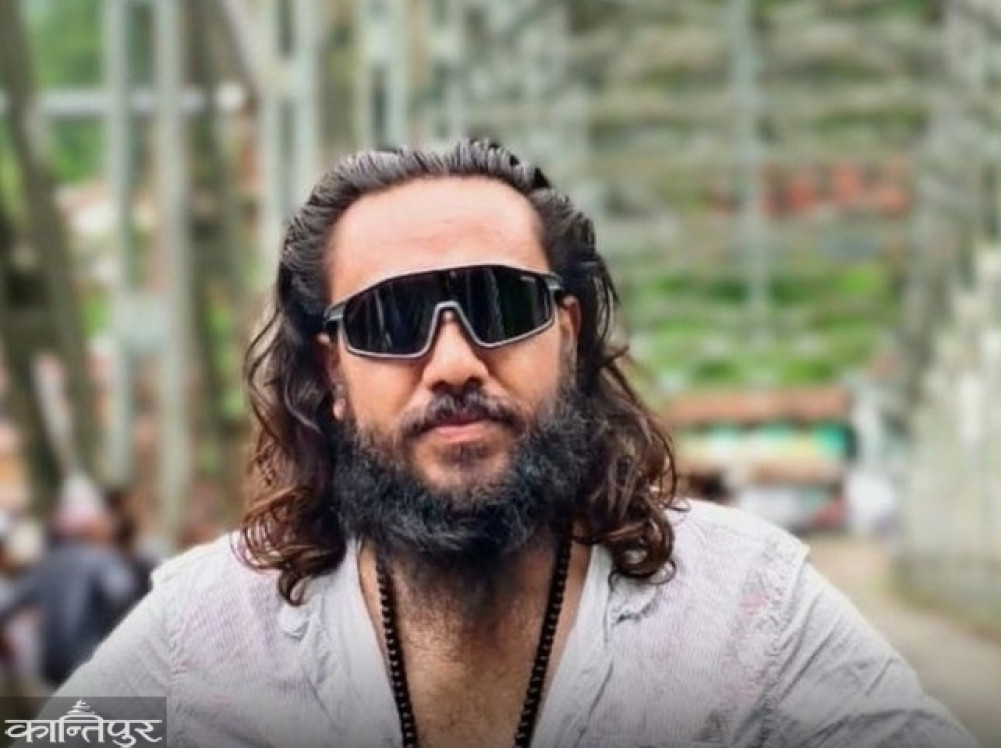
Like the old parties, the Rashtriya Swayamsevak Sangh (RSS) also gave fewer tickets to Dalits, and that too only in places where they would lose. If it had wanted to, it could have developed Dalit leadership by making policy arrangements – JB Bishwakarma, analyst
We use Google Cloud Translation Services. Google requires we provide the following disclaimer relating to use of this service:
This service may contain translations powered by Google. Google disclaims all warranties related to the translations, expressed or implied, including any warranties of accuracy, reliability, and any implied warranties of merchantability, fitness for a particular purpose, and noninfringement.
In the recently held House of Representatives elections, there were 3,406 candidates across the country in the direct elections. Of these, 243 were from the Dalit community, including political parties and independents, but only Khagendra Sunar, the candidate from Banke-3 from the National Independent Party, won.
In Banke-3, Sunar of the Rashtriya Swatantra Party defeated Suman Malla of the UML by a margin of about 10,000 votes, while the other candidates of the Rashtriya Swatantra Party, Bhuvan Tamta of Mugu, Lakhan Kumar Thapa of Rukum East, and Bimal Gadal of Ilam-1, had to settle for fourth place. In Mugu and Ilam-1, the Congress candidate won the election, while the coordinator of the Nepali Communist Party, Pushpa Kamal Dahal, won from Rukum East.
According to political analyst JB Bishwakarma, the Rashtriya Swatantra Party would have had a better chance of winning this time if it had fielded a few more candidates from the Dalit community. ‘But the Rashtriya Swayamsevak Sangh (RSS) too, like the old parties, gave fewer tickets to Dalits, and that too only in places where they would lose,’ he says. ‘If it had wanted to, it could have developed Dalit leadership by making policy arrangements. It could have given tickets to more Dalits in places where they would win.’ According to
Bishwakarma, this has once again raised the question of how influential the caste structure, the politics of ticket distribution by parties, and the psychology of voters are in Nepali politics. He adds, ‘Of the few Dalit candidates who get tickets, the winning base of most of them is weak. This seems to send Dalit candidacies to accept defeat more than inclusion.’ According to him, parties that give slogans of inclusive democracy tend to reserve ‘safe constituencies’ for their own influential leaders in practice.
According to the Election Commission, there were 216 male Dalit candidates and 27 female Dalit candidates. There were 107 independent candidates from the Dalit community, including 92 men and 15 women. There were more Dalit candidates nominated independently than those fielded by the party. ‘It is a serious matter that so many independent candidates from the Dalit community are appearing,’ adds analyst Bishwakarma, ‘this is a reflection of the desire to contest the elections themselves because the party has stopped them.’
The Congress had fielded only Joint General Secretary Prakash Rasaili ‘Snehi’ from Bajhang. He was defeated by UML’s Ain Bahadur Mahar. UML had given tickets to Chakra Snehi from Dadeldhura and Bimala BK from Bardiya-2. Both were defeated. Rasaili, who was fielded in Sher Bahadur Deuba’s ‘base area’, came in fourth, while BK from Bardiya also came in fourth.
Both Padam Bahadur Vishwakarma, who was fielded by the Nepali Communist Party from Syangja-2, and Man Bahadur Sunar, who was fielded from Kanchanpur-3, were defeated. BK from Syangja-2 came in fourth and Sunar from Kanchanpur-3 also came in fourth.
Of the two fielded by the RPP, both were defeated. The bail of Anisha Nepali in Salyan and Bir Bahadur Kami in Bardiya-1 was forfeited.
Challenging the big parties, small and new parties had fielded relatively more Dalit candidates. But none of the Dalit candidates fielded by these parties won. The Nepal Communist Party (Maoist) led by Nekra Bikram Chand had fielded 20 Dalit candidates. The Shram Sanskriti Party led by Hark Sampang, which had won three seats outright, had fielded 8 and Kulman Ghising's Ujjwal Nepal Party had fielded 4.
The Shram Sanskriti Party had fielded Bulan Kumar Paswan in Bara-1, Leela Diyali in Mahottari-1, Indra Bahadur BK in Sindhuli-2, Dhan Bahadur BK in Bardiya-1, Rajan Singh BK in Dang-2, Juthe Damai in Rupandehi-3, Shivlal BK in Rupandehi-5 and Bal Bahadur BK in Jajarkot-1. Shravan Paswan was the candidate in Siraha-3, Meghraj Paswan in Bara-2, Karna Bahadur Nepali in Jajarkot and Gambhir Singh Bhul in Surkhet-2 from Ujjaya Nepal.
United Citizens Party, Federal Democratic National Forum, National Liberation Party, Aam Janata Party, JSP Nepal, Bahujan Ekta Party, Progressive Democratic Party, Miteri Party, Janadhikar Party, Nepal Janmukti Party, Humanist Party, National Republic Party, National Janmat Party, National Janmukti, Nepal Mazdoor Kisan Party, Mongol National Organization, CPN (Pushpalal) and other parties had also fielded 1 to 10 Dalits in the election this time. The deposits of most of them were confiscated.
Analysts say that the reason for the weak victory of Dalit candidates is not only the distribution of tickets but also the psychology of the voters. According to them, the caste structure is still strong in rural society in Nepal. In many places, voters are influenced by the caste identity of the candidate.
Dalit movement leader and former ambassador Padam Sundas believes that this time, when the Rashtriya Swayamsevak Sangh (RSS) election storm has also boosted non-Dalit candidates from the so-called big parties, it is natural for the Dalits who were fielded in small numbers to lose. ‘It is strange that the Dalit candidates who have always lost have won this time,’ he says.
Declining representation
This time, 99 Khas Aryas including 91 men and 8 women, 27 indigenous people including 24 men and 3 women, 29 Madhesis including 27 men and 2 women, 5 Tharus including 4 men and 1 woman, 4 Muslim men and 1 Dalit man have been elected.
The Dalit community is estimated to constitute about 13 percent of the population. However, their representation in parliament is continuously decreasing. Dalit rights activists say that this is worrying. In the 2064 Constituent Assembly, 50 Dalits (8.32 percent) were elected, including through proportional representation. In 2070, this number decreased to 40 (6.65 percent). In 2074, it fell to 20 (7.27 percent) in the House of Representatives.
In 2079, it fell further to 15 (5.81 percent). This time, there is one directly elected member. About 8 Dalit MPs are being elected from the Rashtriya Swayamsevak Sangh (RSS), which has garnered more than 5 million proportional votes. The Congress is fielding 3, and the UML and the Nepali Communist Party are fielding a maximum of 2/2 MPs. In this way, it is likely that about 15 MPs from the Dalit community will be elected to the House of Representatives.
Article 42 (1) of the Constitution ensures the right of socially backward communities to participate in state bodies on the basis of the principle of inclusion. However, its implementation has been weak due to lack of political will. ‘Inclusivity is mentioned in the manifestos of the parties, but it is not seen in practice,’ says Dalit activist Pradeep Pariyar. ‘This is against the constitution, it is against the essence of inclusivity.’