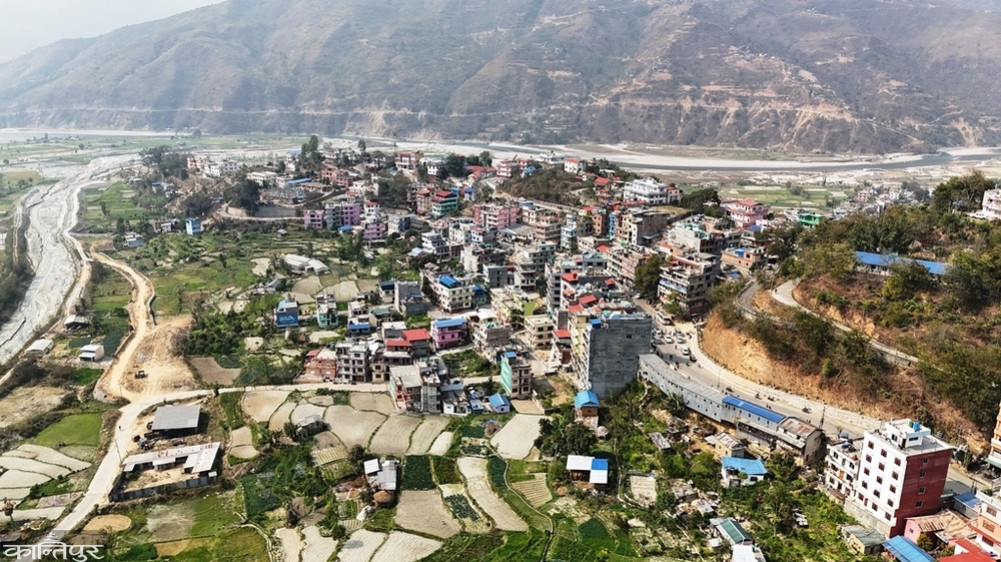
Ramechhap villages are becoming empty due to migration, lack of education, and basic services.
We use Google Cloud Translation Services. Google requires we provide the following disclaimer relating to use of this service:
This service may contain translations powered by Google. Google disclaims all warranties related to the translations, expressed or implied, including any warranties of accuracy, reliability, and any implied warranties of merchantability, fitness for a particular purpose, and noninfringement.
Spread over an area of 1,573 square kilometers in the central hilly region, Ramechhap is 44 percent covered by forests. It is bordered by Okhaldhunga and Solukhumbu to the east, Dolakha to the north, Sindhupalchowk and Kavrepalanchowk to the west, and Sindhuli to the south.
Ramechhap, which has one constituency, has 2 municipalities and 6 rural municipalities. Geographical situation
Geographically, Ramechhap looks like a plow or sock. The lowest elevation of Ramechhap is Kolonjorghat (426 meters), the confluence of Likhu and Sunkoshi, while the highest point is Numbur Himchuli (6,958 meters). There are also many small fertile fields formed by rivers and streams like Tamakoshi, Sunkoshi, Likhu, Khimti, Chauri. Places like Rajamantar, Mungitar, Dyuralitar, Jakhanitar, Sitkhatar, Tarikhet, Khimtibesi, Birtatar, etc. are considered ideal for production and settlement.
Ramechhap is home to Himalayan and hilly mountains such as Gidde Danda (3,148 meters high), Agleshwor Danda (2,295 meters high), Damkoti Danda (2,420 meters high), Sailungedanda (3,148 meters high), and Tamedanda (3,106 meters high). The district headquarters Manthali Bazaar (800 meters high), Ramechhap Bazaar (1,378 meters high), Akashe (495 meters high), Sanghutar (800 meters high), Thosebazar (17 meters high), Galvabhanjyang (18 meters high), and Dhobi Bazaar (1,800 meters high) are the main market areas here. There are deposits of iron, copper, slate, and other minerals in various places in Ramechhap.
More voters than population
Migration has created a surprising statistic in Ramechhap. According to the 2078 National Census, Ramechhap has a population of 170,302. While the population growth rate of 32 districts across the country is negative, the population growth rate of Ramechhap district is minus 1.67 percent.
In the federal and provincial assembly elections held in Mangsir, 2079, there were 180,106 voters here. Now, for the elections to be held on Falgun 21, 2082, the total number of voters has reached 187,952.
There are currently 96,892 male voters and 91,060 female voters in the district. According to the 2078 National Census, out of 82,083 houses in Ramechhap, 14,042 or 17.5 percent of the houses were vacant. The trend of migration had already taken a big shape in Ramechhap 20/22 years ago. The armed conflict increased this trend dramatically. According to the National Census 2058, the population growth rate of this district suddenly decreased. According to the National Census 2058, the population of Ramechhap was 212,408. In the 2068 census, the population had decreased from the previous one to 212,646.
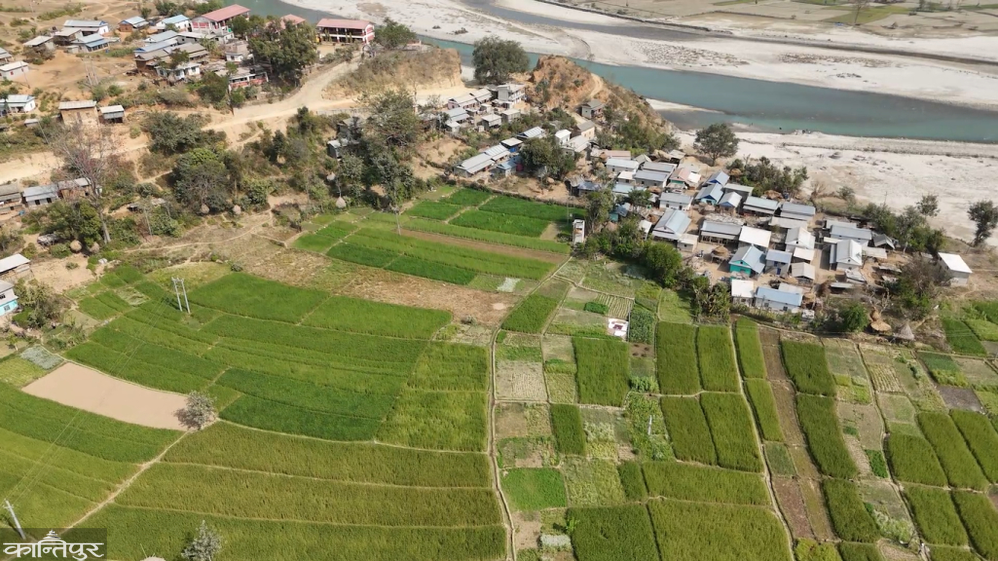
This requires a policy to stop the population in the mountains and hills in Ramechhap, as well as to manage the population in the Terai and cities. If migration is not stopped, only geography will remain in Ramechhap, says Deep Kumar Ghimire, President of the Federation of Journalists, Ramechhap. "If not the people, then for whom is the question of politics and elections a big issue in Ramechhap? The 17 candidates who entered the election fray in the elections to be held on Falgun 21 and the political parties affiliated to them did not seem to have brought any agenda on this," he said.
The informative book 2080 related to Ramechhap district published by the District Coordination Committee Ramechhap presents a clear picture of the direct impact of the population decline in Ramechhap district on village schools. As mentioned in the book, there were 15,477 students in primary grades 1 to 5 across the district as of 2080, of which 7.48 percent or 1,158 have dropped out of school.
Out of 9,888 students in basic grades 6 to 8, 6.41 percent or 634 have dropped out of school, while out of 6,633 students enrolled in secondary grades 9 to 10, 5.26 percent or 349 have dropped out of school. Although the pass rate is 93.72 percent at the primary level, 94.14 percent at the basic level, and 94.14 percent at the secondary level, the overall number of students has been continuously decreasing.
According to the National Census 2078, the literacy rate of Ramechhap is 68.12 percent. Of this, the literacy rate of women is 59.41 percent and that of men is 77.87 percent. Lack of employment, lack of desired education, and lack of health services are the main reasons behind this situation in the education sector. In search of work and facilities, the people of the village are increasingly leaving Ramechhap and migrating to abroad, Kathmandu, and Madhesh.
Natural conditions also pose an additional challenge. Ramechhap is a district with low rainfall. More than half of the 64 wards are drought-affected. Due to drought, there is no farming and wild animals, especially monkeys, are not leaving their crops, making the basis of living in the village even weaker. As a result, villages are becoming deserted and farmlands have been lying fallow for years and are starting to look like ruins.
Due to all these reasons, as the population in Ramechhap is decreasing, education, agriculture and the entire rural life are being pushed towards a serious crisis. Unless employment creation, expansion of basic services and an environment where people can live in the village are created for a long-term solution, it will become challenging to save the villages and schools of Ramechhap, which are becoming deserted, says Ghimire, President of the Journalists' Federation.
Potential of mineral resources
According to the data of the District Coordination Committee, Ramechhap is known as a highly promising area in terms of mineral resources. According to the book published by the committee, valuable minerals such as iron, slate, copper, magnesite, marble, lime and shilajit are found in various places in the district. Iron deposits are found in Those, Gupteshwor, Chuchure, Bamti, Preeti, Sukajor and Ramechhap areas, while slate is found in Gumdel, Bamti, Saipu, Kubhukasthali, Preeti, Duragaun, Betali, Rasnalu, Bhuji, Those, Khandadevi and Gupteshwor. Similarly, copper is found in Rolfu, Kangwadanda, Siruwari, Keurini, Jyamirkhani, Shivalaya, Tilpung, Ambas (Gelu) and Bokseko Pahara (Bhaluwajor) areas, while manganese is found in Duragaun, Betali, Rasnalu, Gupteshwor and Bhuji areas.
Marble is found in Gupteshwor, Bhuji, Himganga and Gelu, while lime is available in Umdi, Himganga, Bhuji, Rampur, Gupteshwor and Roshi areas. It has also been mentioned that silajit is found in the areas of Setopahara, Bhirapani, Pakarbas, Gagal, Lakhanpur and Gauthali Bhir (Bamti). If all these mineral resources can be scientifically excavated, protected and utilized, new possibilities for local employment creation, establishment of industries and overall economic development will open up in Ramechhap district, which can create a strong foundation for leading the district towards prosperity.
Forced to buy water for drinking in settlements on the banks of the Koshi
According to the National Census 2078, the population of the Majhi community in Ramechhap district is 6,288. The Majhi community has its traditional settlement especially around Sunkoshi and Tamakoshi. There are eight municipalities The Majhi community has a significant population in Bhatauli, Mugitar and Wadare of Manthali Municipality-7, Jakhanitar and Gaikhura of Ward 8, Karambot of Ward 2, Manthali of Ward 1, Nabughat, Masantar, Hattitar, Kunauri and Seleghat areas of Ward 6. The Majhi community also lives in Lubhughat, Kothbe of Khandadevi Rural Municipality-1; Sitkha, Dafkha of Ward 3; Puchighta and Rajgaun of Ward 4; and Ratatar, Dhaneghat and Hardeni of Ramechhap Municipality-9. The Majhi community also lives in Likhutamakoshi and Sunapati Rural Municipality of the district.
The Majhi community, who lives on the banks of Tamakoshi and Sunkoshi rivers that flow through Ramechhap, has been forced to pay money to quench its thirst for years, says Shree Bahadur Majhi, acting president of the Nepal Indigenous Nationalities Federation, Ramechhap. According to him, there are currently more than 7,000 Majhi communities in Ramechhap district. 'The Majhi community, who are marginalized communities, have to pay for even basic needs like drinking water,' he says. 'Almost all the Majhi settlements are on the banks of Tamakoshi and Sunkoshi. But we are forced to quench our thirst by buying water drawn from the same Koshi through a lift system.'
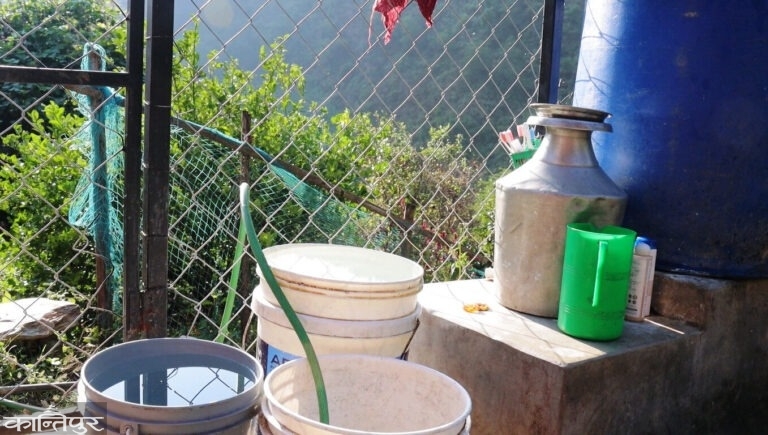
According to Shree Bahadur, the municipality and rural municipality have been repeatedly requested to provide free drinking water to the Majhi community. But so far, no response has been received to those requests. 'There are not many other demands,' he says. 'We have asked many times to provide only free drinking water, and we have also submitted applications. But the result is zero.' On the contrary, he says that in some places, the Majhi community is providing water at their own expense to schools, health institutions and even ward offices. 'What can we say now when we see this situation?' he asks, 'The fate of having to buy water even while living near the river has become the identity of the Majhi community.'
Large-scale pumping drinking water projects incomplete
Residents of Manthali Municipality-4 Salu and 5 Sunarpani are concerned about the stalled drinking water project. The Ramechhap Large-scale Pumping Drinking Water Project, which was started with the aim of supplying water from the Tamakoshi River via lift, was expected to change the daily lives of the locals. However, the project is stalled due to the contractor's negligence, delay and substandard work.
The Ramechhap Large-scale Pumping Drinking Water Project was started from Ashar 2078. The project was targeted to be completed in Ashar 2081. The plan was to provide facilities to 2,400 households in two wards by drawing water from the Tamakoshi River via lift. Januka Karki of Manthali Municipality-5 Sunarpani says that the drinking water problem is due to serious negligence in the work of Sharma-Sagun JV, which was given the responsibility of construction, and the project could not be completed on time. Locals who were excited when the project started in the fiscal year 2078/79 are now disappointed.
According to the Federal Water Supply and Sewerage Management Office, Ramechhap, a budget of Rs 614.9 million has been allocated for the Salu-Sunarpani Drinking Water Project. However, Sharma-Sagun JV has been awarded a contract through the office to complete the work for only Rs 316.1 million. It was extended for the second time until last Asoj. But so far, the work of the plan has remained the same.
The Manthali Pumping Drinking Water Project, which was started with the aim of providing drinking water to 2,741 households in wards 7 Bhatauli, 8 Chisapani and 9 Puranagaun of Manthali Municipality, has also not been completed. The project, which was started with the aim of providing drinking water to 15,125 people by lifting water from the Tamakoshi River, was targeted to be completed by Asad 2081. But the contractor company Sagun Construction could not complete the work on time.
The project, which was launched by the Federal Water Supply and Sewerage Management Office, Ramechhap at a cost of Rs 347.2 million, has been delayed, and locals are frustrated due to the shortage of drinking water. According to the Federal Water Supply and Sewerage Management Office, Ramechhap, the agreement for the Manthali Pumping Drinking Water Project was signed on Asad 23, 2079 BS.
This project, which was started with the target of completing it within two years, i.e. on Asad 27, 2081 BS, has not been completed within the stipulated time. As the work was not completed on time, the office has extended the deadline to the same construction company until Kartik 2, 2083 BS. The office has stated that work on this project is currently underway in full swing.
Multi-purpose covered hall in the district headquarters has been left unfinished for five years. The covered hall under construction on the banks of the Bhuttyaha River in Manthali Municipality-2 has been left unfinished for five years. The construction of the covered hall, which began in Ashar 2077, was aimed to be completed within 18 months.
The Ministry of Social Development of the Bagmati Province Government had signed a contract with Sunkoshi-Giri JV, Kathmandu at a cost of Rs 65.792 million 880.53 paisa. Although more than 60 percent of the structure has been constructed, the work has been stalled for a year as the construction contractors have not been able to install 1,180 remote-controlled automatic chairs.
Local player Ramesh Chapagain says, 'The enthusiasm of the players of Ramechhap increased after the construction of the covered hall started. But the covered hall, which was supposed to be built in 18 months, has not been built for five years. This has dealt a big blow to the development of sports here. ' Surendra Karki, ward chairman of Manthali Municipality-2, said that even though all the structures have been constructed, the covered hall has been abandoned due to the failure to install 1,180 remote-controlled automatic chairs, which are said to have never been used in Nepal. उनका अनुसार पाँच वर्षअघि सुरु भएको कभर्डहल अहिले जीर्ण बन्दै गएको छ । 'बनेका संरचना फुट्ने र भत्किने अवस्थामा पुगेका छन्,' उनले भने, 'वडा अध्यक्षको काम खेलकुद पूर्वाधार संरक्षण नभई कभर्डहलमा पस्ने पशु चौपाया धपाउने काममा सीमित भएको छ।'
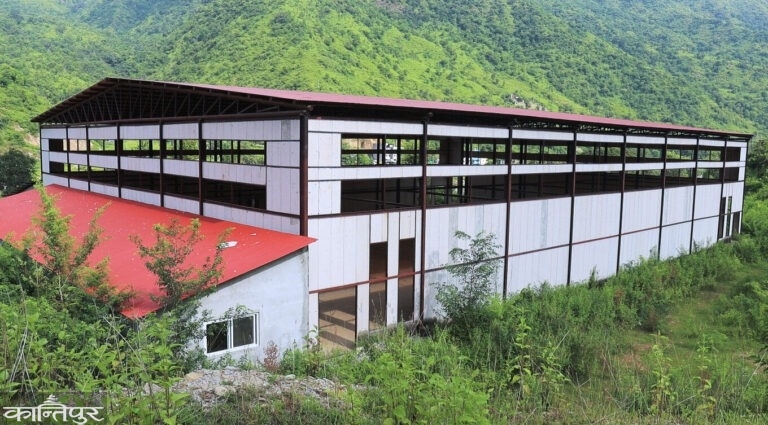
सामाजिक विकास कार्यालय धुलिखेलका अनुसार मन्थलीस्थित बहुउद्देश्यीय कभर्डहल बागमती प्रदेश सरकारको सामाजिक विकास मन्त्रालयको ६ करोड ५७ लाख ९२ हजार ८८० रुपैयाँ ५३ पैसामा निर्माण सुरु गरिएको हो । यसमध्ये अन्य संरचनाबाहेक करिब २ करोड ८५ लाख रुपैयाँ अटोमेटिक चियर जडानको लागि स्टिमेट गरिएको थियो । तर, सोही काम जम्मा ८५ लाख रुपैयाँमा गर्ने गरी सुनकोसी–गिरी जेभी काठमाडौंले ठेक्का पाएको र काम पूरा गर्न नसक्दा योजना अलपत्र बनेको सामाजिक विकास कार्यालय धुलिखेलको भनाइ छ । बागमती प्रदेशको युवा तथा खेलकुद मन्त्रालयबाट सचिव स्तरीय निर्णयमार्फत २०८३ जेठ मसान्तसम्म काम सम्पन्न गर्ने गरी फेरी म्याद थपिएको छ । तर अहिलेसम्म निर्माण व्यवसायीले काम थालेको छैन ।
कभर्डहल मात्रै होइन सदरमुकाम मन्थलीमै निर्माण गरिएको चिस्यान केन्द्र सञ्चालन हुन सकेको छैन । बागमती प्रदेश सरकार र मन्थली नगरपालिकाको ७०/३० लागत साझेदारीमा करिब सात करोड रुपैयाँ खर्चेर निर्माण गरिएको ५०० मेट्रिक टन क्षमताको उक्त केन्द्र अझै प्रयोगमा ल्याउन सकिएको छैन। २०७८ असार मसान्तभित्र निर्माण सक्ने गरी ठेक्का लिएको काठमाडौंस्थित इजि इन्फ्रा प्रालिले झन्डै दुई वर्ष ढिलो गरी २०८० साउनमा मात्र काम सम्पन्न गरेको थियो। परीक्षण सफल भइसके पनि केन्द्र सञ्चालनमा नआउनु थप चिन्ताको विषय बनेको छ।
मन्थली नगरपालिकाका प्रवक्ता गोपाल श्रेष्ठका अनुसार केन्द्रको मुख्य संरचना तयार भए पनि आवश्यक पूर्वाधार घेराबार, कर्मचारी आवास र शौचालय नबनेका कारण औपचारिक रूपमा केन्द्र हस्तान्तरण हुन नसकेको हो । उनका अनुसार चालु आर्थिक वर्ष २०८२/०८३ मा बाँकी संरचना निर्माणका लागि ५० लाख रुपैयाँ बजेट प्रदेश सरकारबाट विनियोजन भएकोमा अहिले काम भइरहेको छ ।
बागमती प्रदेश सरकारको पाँच करोड र मन्थली नगरपालिकाको दुई करोड १० लाख रुपैयाँको साझेदारीमा चिस्यान केन्द्र निर्माण गरिएको हो।नगरपालिकाले आफ्ना ३० प्रतिशत हिस्सासहितको रकम प्रदेश सरकारलाई पहिल्यै बुझाइसकेको छ। साथै, केन्द्रसम्म विद्युत् लाइन विस्तार गरी टिओडी मिटर जडानसमेत नगरकै लगानीमा गरिएको हो। तर अझै पनि आवश्यक संरचना नबन्दा प्रयोगमा ल्याउन सकिएको छैन। यी दुई वटा योजना मात्रै होइन रामेछापमा सडक, अस्पताल, गुम्बा लगायतका आयोजनहरू समयमै काम नहुँदा वर्षौंदेखि अलपत्र बनेका छन् । यसको प्रत्यक्ष मारमा सर्वसाधारण छन् ।
५२ किलोमिटरको सडक ५ वर्षको प्रतीक्षा, अवस्था उस्तै
रामेछाप र ओखलढुङ्गालाई जोड्ने करिब ५२ किलोमिटर लामो सेलेघाट–रामेछाप–साँघुटार सडक कालोपत्रेको काममा चरम ढिलासुस्ती भएपछि यात्रु र सवारी चालकहरू दिनहुँ सास्ती खेप्न बाध्य भएका छन्। निर्माण व्यवसायीले समयमै काम सम्पन्न नगर्दा रामेछाप र ओखलढुङ्गाबाट काठमाडौं आउजाउ गर्ने सवारी साधन पटक–पटक समस्यामा पर्ने गरेका छन्।
यातायात सञ्चालनमा समस्या आएपछि रामेछापका प्रमुख जिल्ला अधिकारी श्यामकृष्ण थापाको नेतृत्वमा गत भदौ ४ गते आयोजना कार्यालय, निर्माण कम्पनी र जनप्रतिनिधिसहित स्थलगत अनुगमन गरिएको थियो। अनुगमनपछि जिल्ला प्रशासन कार्यालयमा आयोजित सरोकारवाला निकायबीचको छलफलमा थपिएको म्याद २०८३ असारसम्म काम सक्ने सहमति भएको थियो।
तर उक्त सहमतिअनुसार निर्माण कम्पनीले काम गर्न नसकेको भन्दै रामेछाप नगरपालिका–३ साँघुटारका स्थानीय माधव ढकालले असन्तुष्टि जनाए। उनले भने, 'अहिले काम भइरहेको जस्तो देखिए पनि प्रशासन कार्यालयमा गरिएको प्रतिबद्धताअनुसारको गति छैन। यही रफ्तारमा अब आउने असारसम्म सडक सम्पन्न हुने कुनै सम्भावना देखिँदैन।' ढकालका अनुसार हिउँदको समयमा जसोतसो सवारी साधन चलिरहे पनि सामान्य वर्षा हुँदा समेत सडक पूर्ण रूपमा अवरुद्ध हुने अवस्था आउँछ, जसले यात्रुहरूलाई घण्टौँ अलपत्र पार्ने गरेको छ।
भारतीय एक्जिम बैंकको सहयोगमा निर्माण सुरु भएको यो सडक आयोजनाको ठेक्का भारतीय कम्पनी टेलिकम्युनिकेसन इन्डिया लिमिटेड (टीसीआईएल) ले पाएको हो। १ अर्ब ९४ करोड रुपैयाँ लागतको यो योजना २०७७ कात्तिक २६ गते सुरु भई २०८० वैशाख २७ गते सम्पन्न हुनुपर्ने थियो। तर पहिलो पटक थप गरिएको एक वर्षको अवधिमा पनि काम नसकिएपछि पुनः एक वर्ष म्याद थप गरी २०८३ असारसम्म पुर्याइएको छ। स्थानीयवासी भने अब कागजी म्याद थपभन्दा पनि प्रभावकारी अनुगमन, निर्माण कम्पनीमाथि कडाइ र समयमै सडक सम्पन्न हुने ठोस कार्य योजना आवश्यक भएको बताउँछन्।
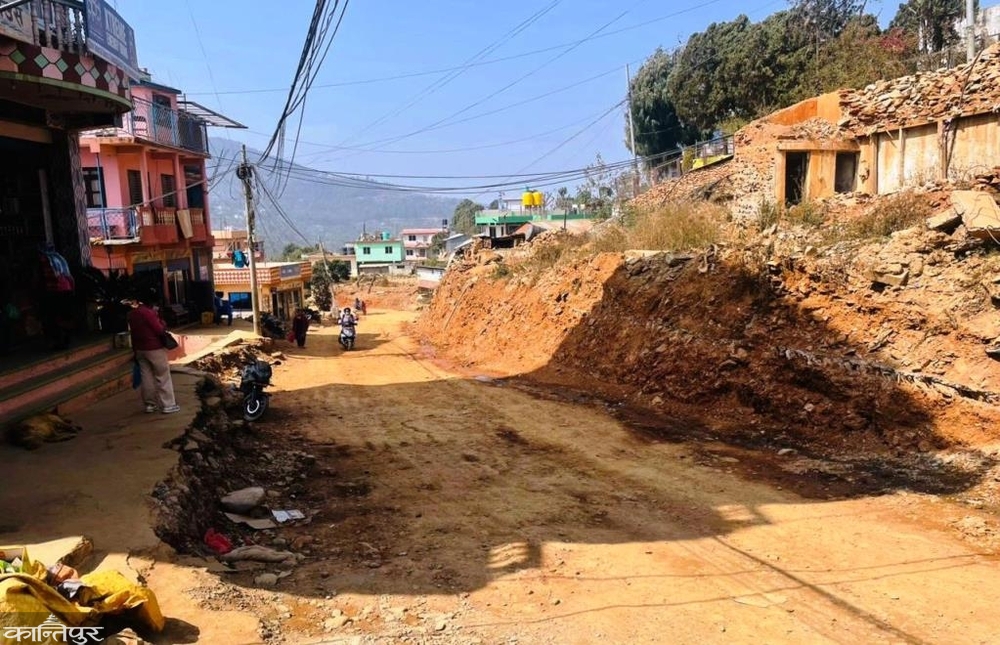
गोकुलगंगा गाउँपालिकामा निर्माणाधीन दुई वटा सडक योजना पनि वर्षौँदेखि अलपत्र परेका छन्। निर्माण व्यवसायीको लापरबाही र सम्बन्धित निकायको कमजोर निगरानीका कारण समयमै काम सम्पन्न नहुँदा सर्वसाधारणले सास्ती बेहोर्नुपरेको छ। गाउँपालिकामा ९ किलोमिटर कालोपत्र सडक निर्माणका लागि २०८० असार मसान्तमा काम सुरु गरिएको थियो। तर बेताली–रस्नालु–गर्जाङ सडकअन्तर्गत बेताली–भीमसेनस्थान खण्ड (४.५ किमी) र दार्खाखोला–बुर्केधारापानी खण्ड (४.५ किमी) अहिले पनि अलपत्र जस्तै अवस्थामा छन्।
गोकुलगंगा गाउँपालिका–५ नामाडीका वडा अध्यक्ष दीपक कार्कीले सडक निर्माणको नाममा कामको गति अत्यन्त सुस्त रहेको गुनासो गरे। उनले भने, 'काम भइरहेको जस्तो देखिए पनि जुन गतिमा हुनुपर्ने हो, त्यो छैन। निर्माण व्यवसायीहरू पटक्कै जिम्मेवार देखिँदैनन्। हामीले पटक–पटक ताकेता गरिरहेका छौँ।' अहिले सडक पूर्ण रूपमा बिग्रिएको अवस्था नभए पनि पानी परेपछि अवस्था भद्रगोल हुने उनले बताए।
यी दुई खण्ड सडक निर्माणका लागि ३० करोड रुपैयाँभन्दा बढी बजेट विनियोजन गरिएको छ। पूर्वाधार विकास कार्यालय रामेछापका अनुसार बेताली–भिमसेनस्थान खण्डका लागि १५ करोड ३९ लाख रुपैयाँ र दार्खाखोला–बुर्केधारापानी खण्डका लागि १४ करोड ८५ लाख रुपैयाँ बजेट छुट्टाइएको छ। कार्यालयले निर्माण व्यवसायीलाई पटक–पटक काम तीव्र बनाउन ताकेता गरे पनि बेवास्ता भइरहेको जनाएको छ। समयमै सम्पन्न हुनुपर्ने सडक योजना अलपत्र परेपछि स्थानीयवासी दैनिक आवतजावतमा समस्या झेल्न बाध्य छन्।