We use Google Cloud Translation Services. Google requires we provide the following disclaimer relating to use of this service:
This service may contain translations powered by Google. Google disclaims all warranties related to the translations, expressed or implied, including any warranties of accuracy, reliability, and any implied warranties of merchantability, fitness for a particular purpose, and noninfringement.
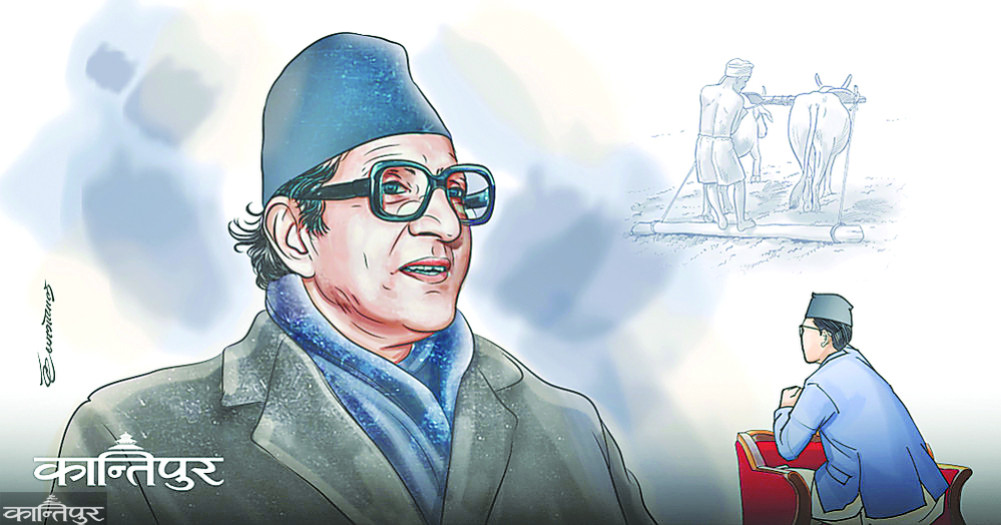
BP Koirala Memorial Day is celebrated on 6th July every year. But lately it has been reduced to a formal political celebration. BP's idea of 'nation first, party later' has now become an old 'adage' hanging on posters.
Because, the practical reality is exactly the opposite. As a result, it seems that the dream of a democratic, socialist and inclusive Nepal seen by BP is getting further and further away.
Contemporary Nepali politics is becoming limited to the game of power without ideas. Theory, philosophy and long-term planning hardly exist. Although the equation of reaching power and maintaining power is necessary, they are starting to look poor from a moral point of view. Alliance formation and dissolution seem like simple arithmetic tests. That is why people's lives, experiences and dreams are becoming a laboratory rather than a destination. BP envisioned a parliament that spoke for the people and resisted. But today the Parliament is struggling to preserve its own existence. There is no healthy debate in the parliament, excuses and insults have started. It seems that the bill that will be presented there is not for the people or is becoming a tool for the balance of power. And the speech to cover up corruption, revenge tactics and the disgusting practice of sharing positions is taking an institutional form.
In the meantime, when the events such as gold smuggling, Bhutanese refugee case, brokering of contracts, tax evasion and manipulation in public institutions are discussed, it seems that the state is becoming a protector rather than a supporter of corruption. Because, the accountable governance system envisioned by BP has today been transformed into a 'party-led' and 'person-centred' structure. BP opposed dynasticism and did politics of struggle. But today every party has become a bastion of dynasticism. Here the children and relatives of leaders get special opportunities. But the dreams of ordinary people end with return tickets. BP's socialism dreamed of making the state people-oriented. But today the state has become a service center for a limited class. What is even more painful is that the attention of politics does not seem to be focused on improving the living standards of the people even when they are being devastated by inflation, unemployment, health crisis, extreme disorganization of the education system and climate disaster. Even when natural calamities such as floods and landslides create a crisis, there is no feeling of having a government. Adequate healthcare facilities are not available in Karnali and other remote areas. Breathing is becoming difficult due to air pollution in the valley. But in the parliament, such urgent matters do not get much priority.
s and even shame in the leadership line is not found. In particular, this day is a call for the reawakening of conscience. People are now looking for not just ideals, but prudent and courageous leadership to realize them. It has become mandatory to establish new political values on the basis of resistance, conscience and honesty based on that. Perhaps this is the true tribute to BP.
– Tekendra Adhikari, Biratnagar