We use Google Cloud Translation Services. Google requires we provide the following disclaimer relating to use of this service:
This service may contain translations powered by Google. Google disclaims all warranties related to the translations, expressed or implied, including any warranties of accuracy, reliability, and any implied warranties of merchantability, fitness for a particular purpose, and noninfringement.
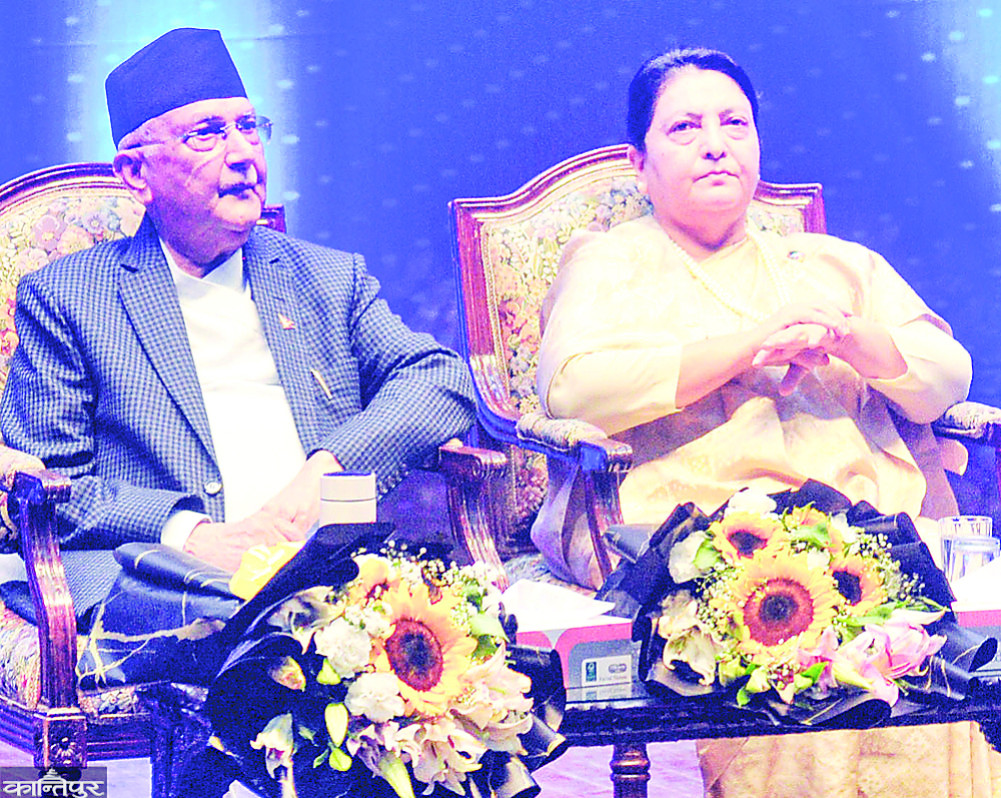
The return to active politics of Bidya Devi Bhandari, established as the first woman president in Nepal's republican history, has brought a sharp wave in Nepali politics.
The return to active politics of Bidya Devi Bhandari, established as the first woman president in Nepal's republican history, has brought a sharp wave in Nepali politics. The news that Bhandari, who held the presidency for two terms (2072-2079), is preparing to present herself as an alternative to President KP Sharma Oli in the upcoming 11th Congress of CPN (UML), has raised deep questions about constitutional dignity, democratic values and the spirit of republicanism.
On the occasion of Madan Bhandari's birth anniversary on June 14, Vidya announced her return to active politics with social justice, equality and socialist ideals through the platform of her foundation. However, many have understood that this step is not only a campaign of personal resolve or ideals, but also a vertical attack on constitutional dignity and a well-planned strategy of satalipsi and factionalism within the UML. Relegating the symbol of neutrality of the presidency to the field of party interests has also raised questions about the credibility of the republican institutions of Nepal. Bhandari's return to the party has highlighted the internal crisis within the UML, efforts to balance power against Oli's autocratic leadership and a new chapter of factionalism based on greed for power. The question is being raised that this move will not only affect the dignity of the republic and the future of UML, but also bring Nepali democracy as a whole into a dangerous mode.
The presidency is the supreme symbol of the guardian of Nepal's constitution and guardian of democracy. This position should be above party interests, factionalism and power games. Bidya Devi Bhandari carried the responsibility of this honor during her two terms as the President. However, his return to active politics has openly challenged this sanctity.
Bhandari's return is not a personal or independent decision, it is a well-planned strategic move within the UML. This move has added fuel to the fire of discontent created by KP Oli's sole leadership and the erosion of internal democracy within the party. With the support of senior vice president Ishwar Pokharel and his warning, it is clear that Bhandari is being pushed forward as a weapon of balance of power against Oli's autocratic style. This move will intensify the polarization within the UML, but it also carries the risk of weakening the democratic culture.
– Santosh Simkhada, Tokyo, Japan