We use Google Cloud Translation Services. Google requires we provide the following disclaimer relating to use of this service:
This service may contain translations powered by Google. Google disclaims all warranties related to the translations, expressed or implied, including any warranties of accuracy, reliability, and any implied warranties of merchantability, fitness for a particular purpose, and noninfringement.
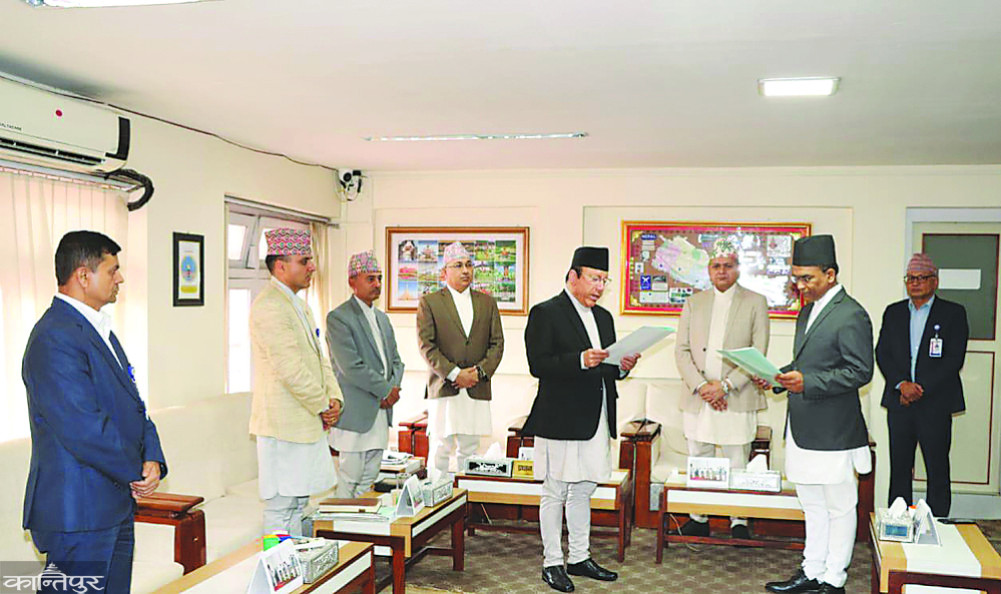
After political tussle, the government has appointed Vishwanath Paudel as the Governor of Nepal Rastra Bank. However, rather than the qualification of this appointee, there has been a debate on procedural opacity and lack of institutional coordination.
The decision taken by the Council of Ministers ignoring the recommendation of the Finance Minister has raised questions about the lack of coordination within the government and the autonomy of a sensitive institution like Rashtra Bank. The intervention without due consultation has raised serious doubts about the dignity of the post of the Governor and the independence of the National Bank.
In Nepal, it is a tradition that the appointment of governors is usually based on political parties or party recommendations. Paudel, who is considered close to the Nepali Congress, is the person who lost the election in Chitwan. However, losing an election is not a proof of one's incompetence. The appointment of a governor is a delicate combination of technical expertise and political balance. Comparatively, Paudel is considered to be competent, polite and knowledgeable about economics. It is unfair to criticize him now instead of evaluating him based on his performance. He needs to be given an opportunity to make the National Bank independent, transparent and efficient. The timing of the
appointment is very sensitive. Nepal is currently on the Financial Action Task Force (FATF) gray list, which is a result of perceived weaknesses in controlling money laundering and terrorist financing. Until it comes off the list, there is a risk of adverse effects on foreign investment, difficulties in international banking transactions and increased uncertainty in the economy. The first priority of the new governor should be to take strategic steps to remove Nepal from this list.
For this, the regulation of banks and financial institutions should be made strict and transparent. The Governor's proactivity in reducing the risk of money laundering by strengthening financial discipline from co-operatives to digital transactions is indispensable. Similarly, the challenge of making the monetary policy stable, inclusive and productive is equally huge. Financial inclusion, promotion of digital banking, gaining the trust of the private sector and maintaining institutional independence should be the primary agenda of the Rashtra Bank leadership.
Criticism of Paudel is more focused on procedural opacity and party affiliation than on the individual. The practice of turning constitutional bodies into political rubber stamps can cause long-term damage to democracy. Therefore, it is necessary to strictly monitor Paudel's every decision and policy, giving him the opportunity to act impartially.
Protection of the institutional balance, procedural transparency and accountable governance prescribed by the constitution is an indispensable requirement today. The direction shown by the leadership of Rashtra Bank now will determine the path of institutions like the Judiciary and the Election Commission of tomorrow. Governor Poudel should take this opportunity as both a challenge and a responsibility so that the independence and credibility of the National Bank is maintained.
– Santosh Simkhada , Tokyo, Japan