We use Google Cloud Translation Services. Google requires we provide the following disclaimer relating to use of this service:
This service may contain translations powered by Google. Google disclaims all warranties related to the translations, expressed or implied, including any warranties of accuracy, reliability, and any implied warranties of merchantability, fitness for a particular purpose, and noninfringement.
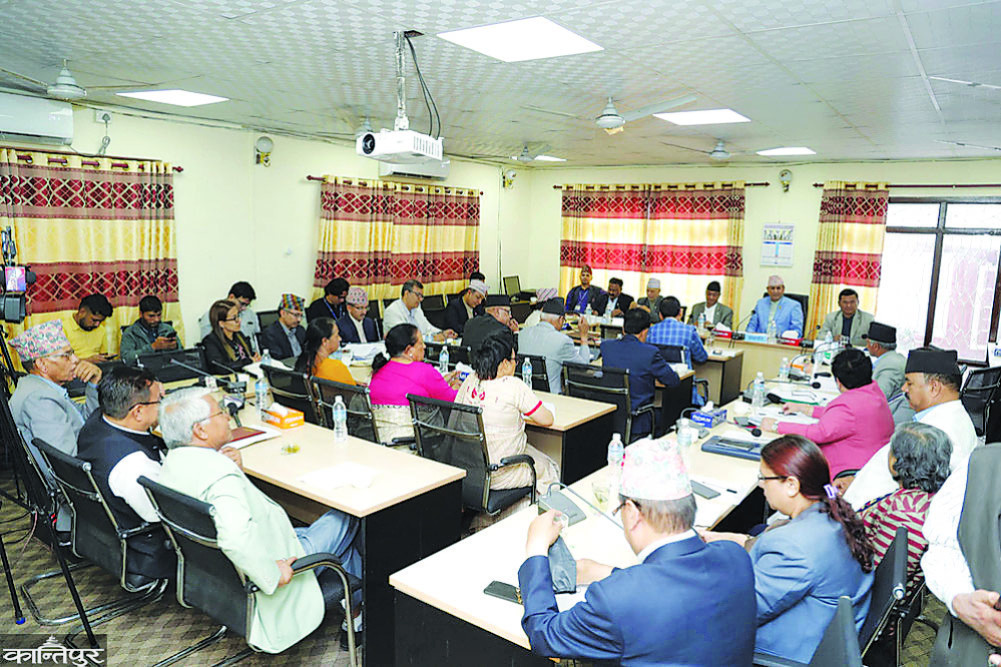
After a long wait, it is a matter of happiness that the Federal Civil Service Bill was unanimously approved by the State Order and Good Governance Committee of the House of Representatives. Because, this bill is a major component of implementing the federal government.
However, some provisions of the bill are showing signs of dampening the public's enthusiasm. A thorough analysis is still needed on the content, legal structure and practical implications of the passed bill. Because the question of whether this bill will become the backbone of the implementation of federalism or just a repetition of the unitary governance system has been seriously raised. In the
discussion, points such as cooling period, retirement age, role of trade union, arrangement of additional secretary, reservation policy, transfer-promotion arrangement etc. became controversial. The passed bill has turned that controversy and ambiguity into an administrative combination document. For example, it has been agreed to keep the cooling period of two years and split the retirement age between 58 and 60 respectively. Although on the surface it seems to solve the problem, there is a suspicion that without a long-term modality, its implementation will be incomplete and more complicated.
Similarly, the bill does not include the basic aspects of transparency, accountability and citizen-centered service delivery in favor of the people pointed out by the former administrators. While maintaining the central structure of the civil service, making the powers of the state and local levels ambiguous and ambiguous is going against the spirit of the federal government.
As mentioned in the news published in Kantipur, even though the committee passed it with political consensus at the last moment, the mention of 'further meeting and finalization' is still a sign that the content of the bill is not complete and mature. Similarly, the quarterly discussion held by the sub-committee in secret meeting has raised questions about transparency. If Parliament is to be considered as the main source of civic responsibility, open discussion and debate is necessary in such sensitive law-making processes.
If federalism is only limited to the naming and demarcation of provinces, there is a possibility that the values of efficiency, accountability and inclusiveness of civil service will be lost. If we are still stuck in a unitary mentality under this or that pretext, the inclusive, accountable and people-oriented governance envisioned by the Constitution will be limited to paper only. In particular, is the bill institutionalizing the federal government system or is it an excuse to strengthen the 'centre' again? A satisfactory answer to this question raised in the mind of the common people was found only after the implementation of the bill as a law!
– Techendra Adhikari, Biratnagar