We use Google Cloud Translation Services. Google requires we provide the following disclaimer relating to use of this service:
This service may contain translations powered by Google. Google disclaims all warranties related to the translations, expressed or implied, including any warranties of accuracy, reliability, and any implied warranties of merchantability, fitness for a particular purpose, and noninfringement.
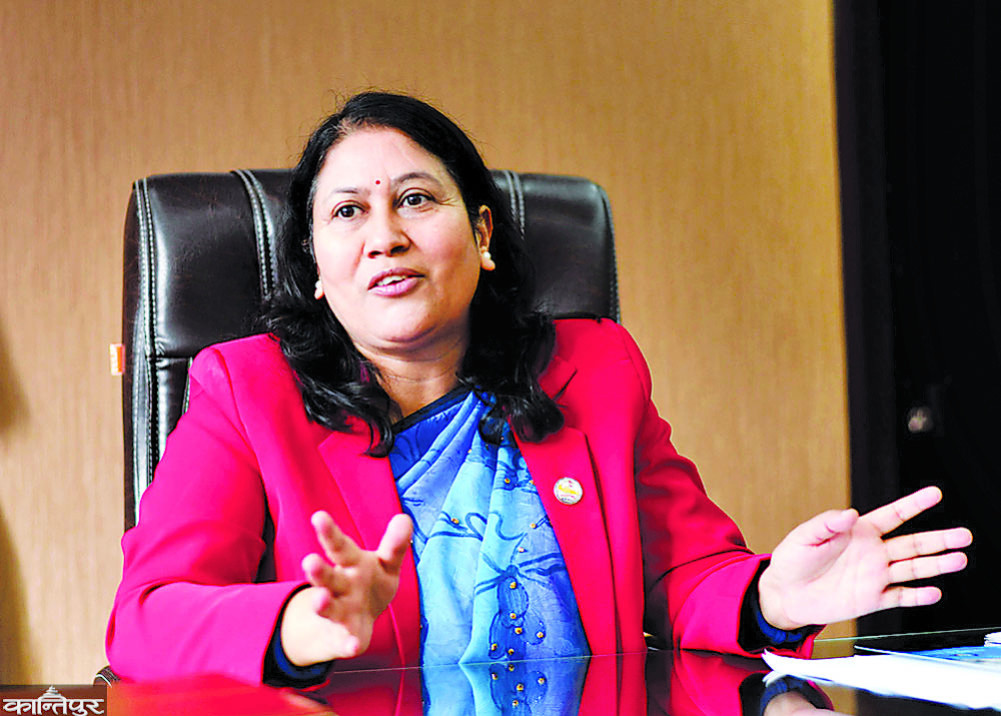
Education Minister Vidya Bhattarai's resignation is not just the resignation of an individual, it is also a symbol of the moral and institutional failure of the governance system led by KP Sharma Oli.
When the minister who leads the backbone of nation building like education raises her hand herself, then it becomes clear that the problem is not in the individual, but in the arrogance and irresponsibility of the entire system. Bhattarai chose self respect over lust for power. But his resignation has further exposed the insensitivity of the government and the attack on public trust.
The education system of Nepal today is stuck in the swamp of directionlessness. Policies are being made but the implementation does not reach schools. Teachers are on the streets, students are confused, the government is silent. Prime Minister Oli's sarcastic comments on the teachers' movement show how hollow his understanding of education is. The resignation of the education minister is a serious political signal in the background of these expressions.
But this crisis is not limited to the Ministry of Education. Incidents like the removal of Kulman Ghising and the pressure put on the Vice-Chancellor Kesharjang Baral of TRI show that under the Oli regime, 'own' is preferred, dissent is suppressed and critics are insulted. Education Minister Bhattarai's resignation is a voice of conscientious dissent against this oppressive trend.
The Ministry of Education is the backbone of national policy making. However, the government has limited education to the taste of votes and power. Teacher recruitment is opaque and the ministry has become a hotbed of internal conflict. In such a situation, no minister can succeed in the long run.
It is clear from the language and decision of the Prime Minister – expecting him to improve education is like looking for water in the desert. Despite the announcement, only a glimpse of arrogance and ingenuity can be seen in the implementation. The resignation of the education minister is a symptom, the disease is the lack of transparency, accountability and cooperation within the governance system.
The solution to this crisis is not in changing people, but in changing policies and trends. Clarity in education policy, transparency in teacher management and collaboration with the local level are essential. Without the ability to digest criticism, the ruler becomes without conscience. Sparks seen today can become fires in the future.
Now the question arises – when will the Prime Minister clarify his approach to education? If this crisis is also tried to be covered with silence, it will be a betrayal of the future of the nation. The people should look with the eyes of consciousness, so that it does not become an ember.
– Santosh Simkhada , Tokyo, Japan