We use Google Cloud Translation Services. Google requires we provide the following disclaimer relating to use of this service:
This service may contain translations powered by Google. Google disclaims all warranties related to the translations, expressed or implied, including any warranties of accuracy, reliability, and any implied warranties of merchantability, fitness for a particular purpose, and noninfringement.
Interrelationship between smuggling crime and politics is not a new topic in Nepal. Recent developments have once again confirmed that organized crime groups are able to escape the legal process due to political access.
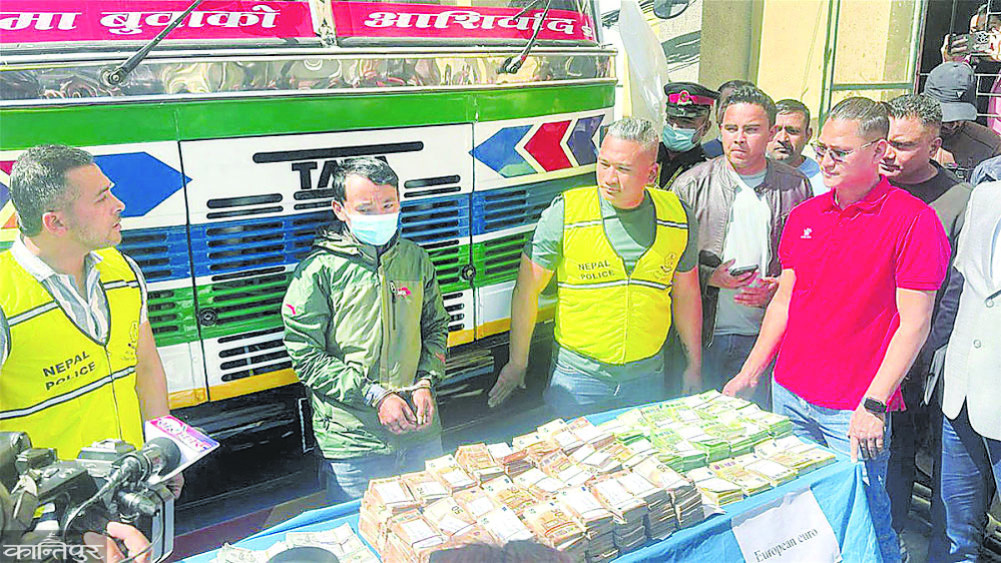
The latest example of this is the revelation that Narayan Paudel of Maoist background was involved in the foreign currency smuggling case worth Rs. 25 crore recovered from Tokha in Kathmandu.
The fact that it is not the individual, but the family involved in various smuggling activities in this incident has raised further suspicions. The
of the incompetence of the state system is clear when digging into the past of this family involved in gold, hundi, foreign exchange and blood sandalwood smuggling. Although they have been repeatedly dragged into the scope of investigations by state agencies, they have been spared due to their influential political connections. This incident has exposed the close relationship between 'politics, crime and power'.
Bhotekoshi area of Sindhupalchok is considered to be a sensitive point for smuggling. Various gangs have been transporting gold, foreign currency, drugs and other illegal materials from here for a long time. There is no clear basis to say that security agencies are not involved in this. Even though the people involved in the plan to send foreign currency to China using the 'false bottom' of the truck have been identified, the fact that the action process is in confusion is a disappointing issue even for ordinary citizens.
This structure of organized crime is growing under the patronage of political parties. Paudel, who was said to be involved in this incident, was staying close to the government. A similar trend has been observed in past smuggling cases. Yet the state machinery seems to be failing to bring the criminals to justice. If this trend continues, it is natural to question the state's policies, security mechanisms and legal regime.
The latest incident has once again raised serious questions. Why often only people with powerful political access are involved in such crimes? Why is it not effective to prosecute them according to the existing law? How fair is the role of the security personnel and the investigation mechanism? Now is the time to find a satisfactory answer to these and many other questions. It is not enough to find the answer, concrete steps have to be taken for the solution. For that, first, strict action should be taken against political figures involved in organized crime. Second, security mechanisms at checkpoints to prevent smuggling should be made more transparent and accountable. Thirdly, it is necessary to make economic crime investigation technology-friendly and efficient.
Therefore, if this type of organized crime is not taken seriously, there will be serious damage to the morality of the state apparatus. Now the time has come to break this cycle of crime under political patronage. No one has the luxury of delaying it still under this or that pretext.
- Techendra Adhikari , Biratnagar