We use Google Cloud Translation Services. Google requires we provide the following disclaimer relating to use of this service:
This service may contain translations powered by Google. Google disclaims all warranties related to the translations, expressed or implied, including any warranties of accuracy, reliability, and any implied warranties of merchantability, fitness for a particular purpose, and noninfringement.
In the general sense, an 'educational visit' is a visit to acquire education. Under this, the students are taken on a visit to the relevant places to observe the study of historical, geographical, cultural etc.
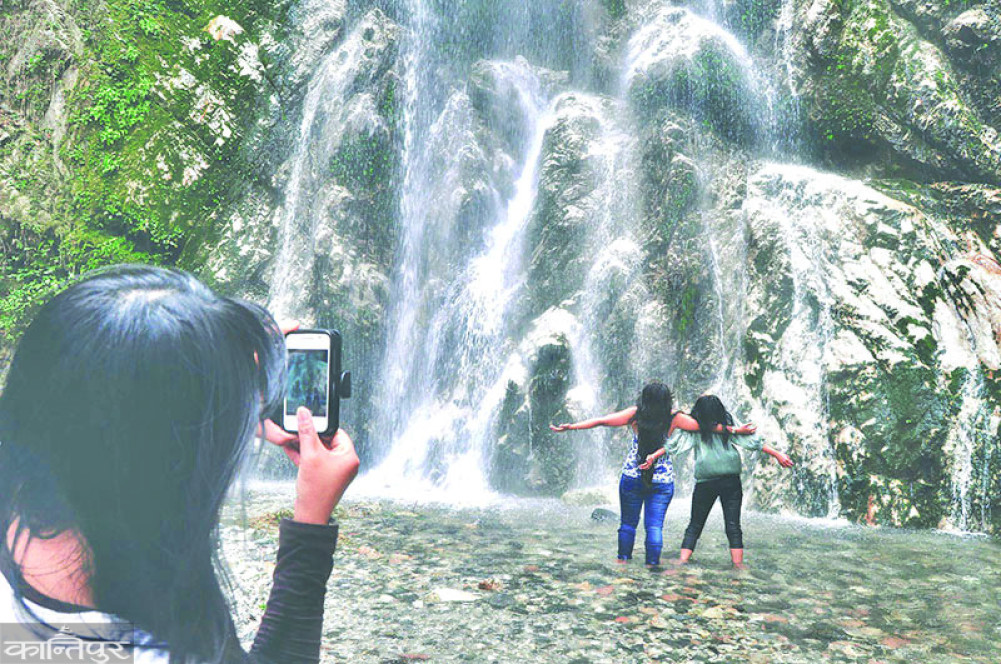
But now-a-days educational tours have started to become just a means of entertainment. Urban students of a playful age go from one city to another city listening to uttaula songs, gossiping, dancing and singing on the bus. None of them have any interest or concern for the natural things outside the bus. Mobile in everyone's hands, busy with it! Even if they have to walk for ten to fifteen minutes after getting off the bus because they are not used to it, it is difficult for them! Junk food is dearer than food. After spending a long day, there is a comfortable hotel for night rest. Photographs are taken throughout the journey. Post on Facebook. They make ticks. enjoy they return How can such a visit be considered an educational visit? In the
textbook, the student reads the theory. They calculate. imagine They try to understand the description of something. Remembers various facts. Enter the required data. If they want, they can see it on Google and YouTube. But in the educational tour, some of these things should be experienced with the feet and seen with the mind. Realizing this, the educational tour would be more entertaining as well as important. But as the desires of children nowadays have deteriorated, it seems that educational tours have become 'voluntary tours'.
Students have read and understood that our country is multilingual, multi-ethnic, multi-cultural and multi-religious. They also have book information about the geographical diversity here. But some of the students in the valley may not have gone out after cutting four banjangs. So they don't know about grains like millet, kaguno, barley, junelo, wheat, fapar. There is no information about words like 'Khala', 'Dain', 'Mio', 'Goth', 'Halo', 'Juwa' and 'Anau'. It is very difficult for them to understand the meaning of such words in
textbooks. Not understanding is not their fault. It is their obligation not to get an opportunity to understand. Mother tongue can also be an additional factor in this. Through educational visits, our students should have the opportunity to understand the meaning of such words, users and with direct objects.
These days, roads have reached villages. The geographical feature of our country is such that no place is far from the valley to the mountainous region, from the mountainous region to the Himalayan and Terai region, from the Terai to the interior Madhesh. They are interconnected. Through educational tours, students should have the opportunity to know the geographical, natural and cultural characteristics of the region, even if only a glimpse, different from the one they live in. The real picture of Nepal is seen not from the village to the city, but from the city to the village. Many students have the idea that 'staying in Nepal is useless'. If it can be explained through educational visits, there may be a change in their thinking. The difficult life of the villagers and their cooperative and cooperative spirit can evoke positive feelings. An empty house, a school without students, a barren fertile land can make love and affection for this country grow. Therefore, it seems that our educational visits must be made project work and experimental with the aim of 'Nepal introduction'.
– Indrakumar Shrestha ,
Bagishwari Mavi, Chayhmasingh, Bhaktapur