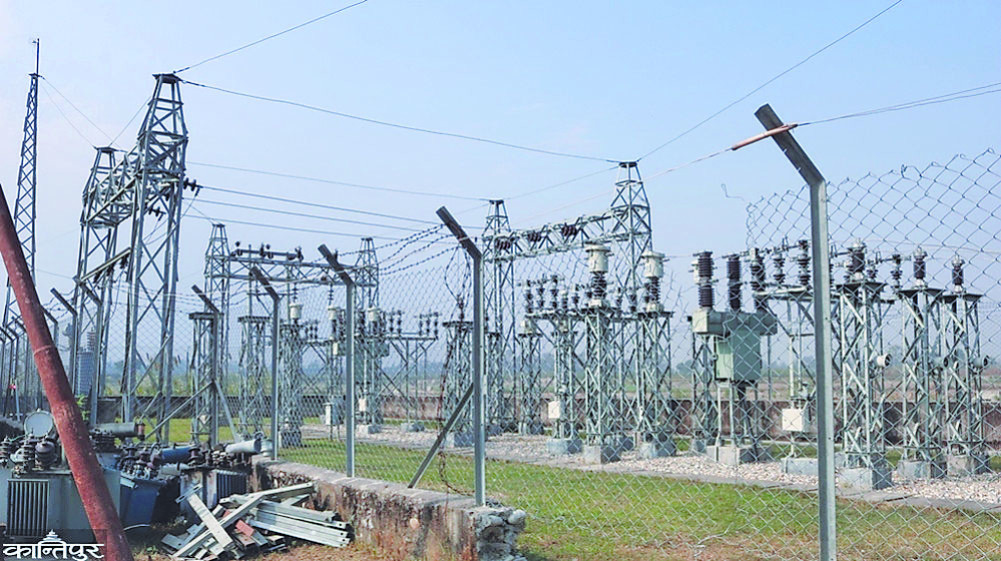
In a country as rich in water resources as Nepal, should we be encouraging increased electricity use or imposing additional tax burdens on it? Attempting to collect more revenue simply by raising taxes without controlling unnecessary expenditures is not a sustainable solution to the problem.
We use Google Cloud Translation Services. Google requires we provide the following disclaimer relating to use of this service:
This service may contain translations powered by Google. Google disclaims all warranties related to the translations, expressed or implied, including any warranties of accuracy, reliability, and any implied warranties of merchantability, fitness for a particular purpose, and noninfringement.
Tax is an indispensable source for the nation's economic development. Based on the revenue collected from taxes, the government operates programs in education, health, infrastructure, security, justice, social security, and development. Therefore, the debate should not be against taxes, but rather in favor of a just, practical, and people-friendly tax system. The purpose of taxation is to strengthen the state, not to impose unnecessary burdens on citizens.
According to general principles, those with higher incomes, greater consumption, and more economic capacity pay more taxes, while citizens with lower incomes receive more benefits from the state. This is the core essence of social justice and the tax system. However, in Nepal in recent years, the mindset of “What can I get from the state?” has become more prevalent than “What can I give to the state?” The blame for this cannot be placed solely on the citizens. When the government imposes taxes without sufficient dialogue and study regarding their purpose, impact, and long-term consequences, such questions arise.
When determining tax rates, the government must equally consider three aspects: the nation’s economic condition, the income level of the people, and the impact of taxes on the economy. No decision should be made solely with the aim of increasing revenue. Equal importance must be given to the effects on production, employment, consumption, investment, and the daily lives of citizens. Rather than the culture of withdrawing decisions only after widespread public opposition, it is necessary to develop a culture of thorough study, consultation with stakeholders, and impact assessment before making decisions. This increases the government’s credibility and reduces unnecessary disputes.
Tax on drinking water, tax on agriculture, tax on street lighting, tax on electricity used by temples and shrines, tax on electricity used for cooking with electric stoves—ultimately, all these decisions increase the daily expenses of ordinary citizens. Since the burden of tax ultimately falls on the consumer, its effect tends to increase inflation.Currently, a new government has been formed in Nepal. Public expectations are high. Amid economic recession, lack of employment, inflation, and declining purchasing power, the people’s primary expectation is relief, ease, and a reduction in the cost of living. Therefore, when preparing the budget, it is equally necessary to focus not only on revenue collection but also on making citizens’ lives easier. Looking at Nepal’s reality, we are among the world’s richest nations in water resources and a country that considers agriculture the foundation of its economy.
In this context, the issue of additional VAT and taxes on electricity tariffs has sparked widespread debate. The question has arisen: In a country like Nepal, rich in water resources, should we be encouraging increased use of electricity or imposing additional tax burdens on it? On one hand, the government runs campaigns saying, “Let’s use electric stoves, reduce petroleum imports, use electric vehicles, increase electricity use in industry, move towards clean energy,” while on the other hand, if it imposes additional taxes on electricity-related tariffs, this creates a policy contradiction.
Even today, Nepal spends a large amount of foreign currency on petroleum imports. If households cook with electricity, industries use more electricity, and the use of electric vehicles increases, the expenditure on imported fuel can be significantly reduced. The direct benefits are a reduction in the nation’s trade deficit, an increase in foreign currency reserves, and environmental protection. In such a situation, a policy that makes electricity use more expensive does not align with long-term national interests. An even more serious issue is that many areas now subject to VAT or taxes are directly linked to daily life. Tax on drinking water, tax on agriculture, tax on street lighting, tax on electricity used by temples and shrines, tax on electricity used for cooking with electric stoves—ultimately, all these decisions increase the daily expenses of ordinary citizens. Since the burden of tax ultimately falls on the consumer, its effect tends to increase inflation.
When the cost of agricultural production rises, food becomes more expensive. When the cost of drinking water rises, every family is affected. When street lighting expenses increase, the financial burden on local governments rises. The operating costs of religious and cultural heritage sites increase. When the monthly expenses of families using electric stoves rise, the government’s campaign to replace gas weakens. All these aspects must be considered comprehensively. The government withdrew the equity fee imposed on education and health sectors after widespread public pressure. This was a positive aspect of democracy. Listening to the people’s voices, admitting mistakes, and making necessary improvements increases trust in the government. Therefore, withdrawing a decision is not a weakness, but rather a sign of responsible governance.
Similarly, it now appears necessary to reconsider the VAT and taxes imposed on electricity tariffs. Even if the government’s objective is to increase revenue, the long-term economic impact must be evaluated. Increased electricity use leads to industrial expansion, increased production, job creation, reduced petroleum imports, environmental benefits, and ultimately a stronger economy. Long-term economic benefits are far more important than short-term taxes. Many countries around the world have provided tax exemptions, subsidies, and incentives to promote renewable energy. If Nepal is to make maximum use of its natural resources, electricity should be viewed not just as a means of revenue collection, but as a tool for economic transformation. If energy is cheap, industries become competitive, new investment comes in, production increases even in rural areas, and the overall economy gains momentum.
The government must also practice austerity in its own administrative expenses. Attempting to collect revenue solely by increasing taxes without controlling unnecessary expenditures cannot be a sustainable solution. The government should pay more attention to increasing the effectiveness of public spending, preventing leakage, expanding the tax base, making tax administration technology-friendly, and controlling tax evasion. The beauty of democracy is that the government listens to public criticism, corrects its decisions if necessary, and moves towards better policy-making. Criticism is not to weaken the government, but to make it more effective. Only a government that can take public suggestions as opportunities for policy improvement, not as opposition, can be successful.
Nepal’s energy future is extremely bright. Hydropower production is increasing. Now, our priority should be to increase electricity consumption, accelerate industrialization, and establish electricity as an alternative to imported fuels. Tax policy should also be formulated in line with this national goal. Today, the need is for a policy that maintains a balance between revenue growth and public interest. The government is the protector of the people, not an institution that adds to their burden. Therefore, it is time to review the VAT and taxes imposed on electricity tariffs with the aim of making people’s lives easier, promoting energy transformation, and strengthening the national economy in the long term.
Listening to the people’s voices on the issue of taxes imposed on electricity tariffs, holding open discussions with stakeholders, and making necessary amendments would be wise. This will not diminish the government’s reputation; it will further strengthen public trust. The foundation of a prosperous Nepal is clean, accessible, and affordable electricity. Therefore, let us move forward with a policy of encouragement, not a tax burden, for electricity. This is the common expectation of ordinary citizens, consumers, industrialists, farmers, and stakeholders in the energy sector from the government—to reconsider and withdraw the VAT and taxes imposed on electricity tariffs, so that energy use increases, the economy is strengthened, and Nepal’s development journey gains new momentum.