The landlords oppressed not only the Kamaiyas and Kamlaris, but also other Tharus. In many places, Tharus were forced to do begari (unpaid work) for the landlords (such as planting and harvesting rice in the fields).
We use Google Cloud Translation Services. Google requires we provide the following disclaimer relating to use of this service:
This service may contain translations powered by Google. Google disclaims all warranties related to the translations, expressed or implied, including any warranties of accuracy, reliability, and any implied warranties of merchantability, fitness for a particular purpose, and noninfringement.
My grandmother sometimes tells stories about landlords. They are not ordinary stories. They are stories filled with pain and anger.
After she was able to plant rice, she went to work in the fields of a landlord in Lalpur village in Kailali, probably when she was eight or nine years old. She cannot say her exact age because she does not know the year of her birth. Her citizenship certificate states 1997. Seeing other women and girls in the village going to work, she too went there in the hope of earning some money.
The landlord did not set a fixed rate of work. After planting rice for a whole day, he would determine the wages by looking at the girls' breasts. Those with big breasts would get a little more money. Those with small breasts would get less. My grandmother still laughs and says, 'I was small, I was given very little (money)' (meaning 'I was small, I was given very little (money)').
He occasionally tells stories of famous landlords of that time like Deshrajwa, Gurungwa, Chaudharya. Even today, just hearing this story makes one shake with anger and humiliation. The display of power by an exploiter over a girl's body in the frenzy of wealth still unsettles the mind.
Grandma was not a Kamalari. She had just gone to work as a laborer. If a daily wage girl had to endure such humiliation, how much violence, humiliation and trauma must those who lived as Kamaiyas and Kamalaris for years have suffered? Those traumas are still alive in the bodies and memories of freed Kamaiyas and Kamalaris.
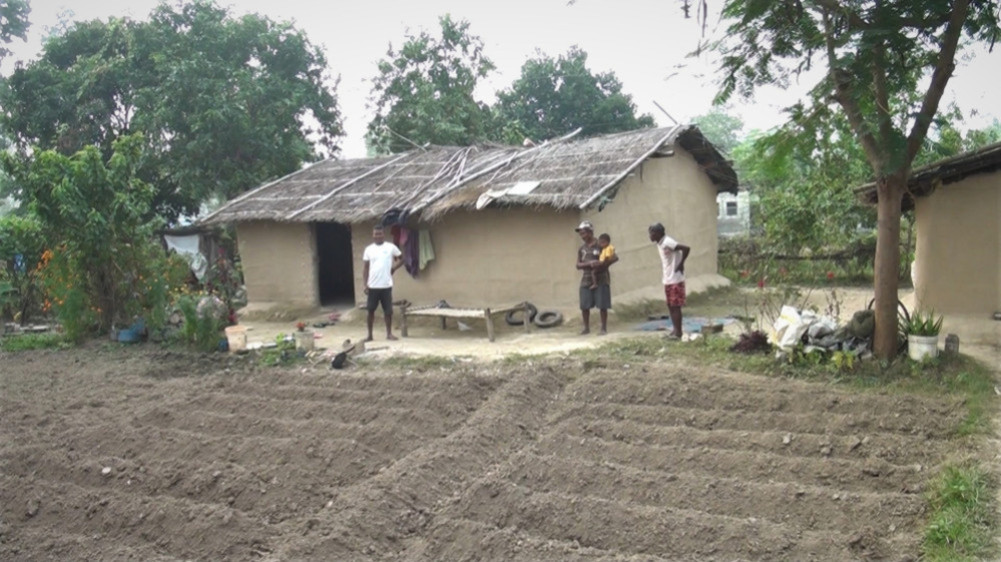
Even today, thousands of freed Kamaiyas and Kamalaris are in our society. They are living on the banks of rivers, near forests, in huts made of straw. They try to forget the traumas of the past and smile, but the situation does not allow it. When it rains, their huts leak. If they do not get work one day, they have to go to bed hungry. On paper, they have been liberated, but they have not been able to free themselves from the trauma of life. In the Tharu language, a man who works or earns is called ‘Kamuiya’, and a woman is called ‘Kamalriya’. Later, these words were Nepalized. ‘Kamuiya’ became ‘Kamaiya’ and ‘Kamalriya’ became ‘Kamalari’. Non-governmental organizations, state documents, and the media established the words ‘Kamaiya’ and ‘Kamalari’. It was established in such a way that today, even in Tharu villages, the original words ‘Kamuiya’ and ‘Kamalriya’ are disappearing.
Not all Kamaiyas are the same
The custom of keeping Kamaiyas was prevalent in Tharu villages. However, the experience of all Kamaiyas was not the same. Large landlords (who owned hundreds of bighas of land) kept many Kamaiyas and Kamlaris. Some Kamaiyas plowed the fields, some looked after cattle and buffaloes, and some raised sheep and goats. Some of the Kamalaris would throw dung, others would wash dishes. In some landlords' houses, there were so many animals that a female worker would only have to do the work of throwing dung.
In addition to the landlords, Tharu farmers also employed Kamaiyas. The villagers called the landlords 'Jimdarwa'. Kamaiyas and Kamalaris often addressed the landlords in front of others as 'Malikwa' and the landlords in front of others as 'Malikwa Hazur'. Tharu farmers were often called 'Kisnwa' in front of others. Kamaiyas and Kamalaris working in the farmers' houses would call everyone in the house by some nickname - like 'Dada Bhauji', 'Kakakaki'. Such addresses were unthinkable in the 'Malikwa's' house.
The life of a Kamaiya living in a Tharu farmer's house was very different from that of a Kamaiya living in a landlord's house. Tharu farmers treated Kamaiyas and Kamalaris as members of the house. With few exceptions, the members of the peasant household worked equally with their Kamaiya and Kamlari. The same food was cooked for the family and Kamaiya-Kamalari.
The Kamaiya in the Tharu peasant household did not even have to wash the dishes they ate. Because washing dishes was considered the responsibility of women. Therefore, the Kamaiya's dirty dishes were washed by the women of the household.
The peasant and the Kamaiya would plow the field together. They would sweat in the fields together. The peasant's women and Kamlari would plant rice together. They would share the household chores. After working for a whole year, the Kamaiya and Kamlari would be paid rice or grain as per the previous agreement. The Kamaiya had the freedom to decide whether to work in the same household the next year or not.
However, the life of the Kamaiya living in the landlord's household was completely different. They were more slaves of the owner than hired workers. Most Kamaiyas were burdened with ‘saunki’, or increasing debt. That debt was never paid off, but rather it kept increasing. As the ‘saunki’ grew, several generations, from father to son to grandson, had to spend their lives as slaves to the same landlord. Not only the Kamaiya, but also his wife and children had to work for the landlord. Even then, the debt was not repaid.
Kamalari: From labor exploitation to sexual violence
Wealthy families used to employ young girls as domestic and farm workers. Parents from poor families who could not afford to feed themselves would forcibly send their daughters to work in the landlord’s house or in the house of a hired maid.
It was customary to employ even seven- or eight-year-old girls who could do some work as Kamalari. These girls were made to work much harder than their age and ability. Their exploitation was not limited to labor. Many girls were victims of physical, mental, and sexual violence.
The forced parents had sent their daughter to work in a brothel, not sold her. Their hope was that her daughter would work and at least get enough to eat. However, most former brothels have the experience that even if they worked, they could not eat enough. The owners and mistresses asserted their authority over the forced brothels. They considered it their right to make young girls work hard, beat them mercilessly, and sexually abuse them.
In some cases, the death of the brothel was made public as suicide. For example, on 29 Jestha 2075, 11-year-old Asmita Chaudhary of Basgadhi Municipality-2, Bardiya, was found hanging in the house of the brothel owner. Activists and organizations working for brothel rights had protested and demanded an impartial investigation, claiming that it was 'not a suicide but a murder'.
The most invisible brothel
When extreme labor exploitation was discussed in the Tharu community, the brothels were the most overlooked. A Bukrahi is a Kamaiya's wife.
A Bukrahi had to work wherever a Kamaiya worked. However, no price was set for her labor. When a Kamaiya's annual wage was fixed, the Bukrahi's labor was considered included in it. Bukrahis did not receive a separate wage.
A Bukrahi in a Tharu farmer's household was called to help with the work during rice planting, rice harvesting, festivals, or when many guests came. In addition, her children were also made to do whatever they could. If the Kamaiya had children of rice planting age, they also had to work without pay. The young daughters of the Kamaiya mainly grazed 'chhegrinhya' (goats) and the sons grazed 'gayarwa' or 'bhaisarwa' (cows and buffaloes).
On the day the Bukhari worked in the farmer's house, the family would eat 'Kaluwa', 'Mizhni' and 'Beri', that is, the three meals a day, at the farmer's house. Just as the life of a Kamaiya was different in the houses of the landlords and Tharu farmers, so was the life of a Bukhari. In the farmer's house, the Bukhari's labor was not valued, but in the house of the landlord, her body was unsafe. Many Bukharis in the landlord's house were victims of rape. The owner could do whatever he wanted with them. Neither the Bukhari could speak, nor the Kamaiya could protest. If they spoke, they would be beaten with sticks or even greater violence would occur.
The landlords in Tharu villages tortured not only the Kamaiyas, but also other Tharus. In many places, Tharus were forced to do begari (unpaid work) for the landlord (such as planting and harvesting rice in the fields). No one could disobey orders. Because the landlords had strong collusion and access to the police, courts, lawyers, and influential people in the local administration. To speak out against the landlords was to risk one's life.
In this socio-political context, the then CPN (Maoist) Kailali and Achham District Organization Committee launched a 'Campaign to Confiscate the Weapons of the Feudals' from 16 to 25 August 2055. During this period, 17 exploiters-feudals were taken into action and 14 weapons were seized, as mentioned by writer Jokhan Ratgainya in his diary.
After that campaign, the landlords started leaving the villages and moving to the cities. The action against them also gave courage to resist among the Tharus, who had been facing oppression for years. Before that, no matter what atrocities were committed, the Kamaiyas and Kamlaris were forced to remain silent. On the other hand, most of the state machinery also stood under the protection of the oppressive landlords. After a difficult struggle and pressure from the movement, the Government of Nepal declared the liberation of the Kamaiyas in 2057 BS. However, since the issue of Kamalari liberation could not become a topic of the Kamaiya movement, they had to wait another 12 years for their liberation. Finally, in 2069 BS, the government announced the end of the Kamalari system.
The barbarity inflicted on Kamaiya, Kamalari and Bukharahis is still fresh in the minds of the people. Some of them are still living with the wounds of their lives as slaves. Their children are growing up hearing stories of the humiliation suffered by their parents and grandparents.
These are not just stories of tears, but are the history of caste discrimination, class domination and violence against women in the structural oppression of Nepali society. If these stories, imprisoned in oral memory, are not written, an important chapter of the humiliation, struggle and resistance suffered by the Kamaiya, Kamalari and Bukharahis generation will be lost from history.